Showing posts with label Debora Blum's posts. Show all posts

Friday, August 24, 2012

10 Clues to the Modern Poisoner

Syringe Needles
Wikipedia Commons
by Deborah Blum

Ever since I wrote my story of early 20th century toxicologists learning to catch killers, The Poisoner’s Handbook, many people have asked me what has changed since then. The short answer is: not much as we might hope.

Contrary to what many people think, except in political killings, poisoners don’t make much use of  exotic new compounds. They use – as they always have – what’s at hand. They kill for the same old reasons -  for anger, jealousy possessiveness, greed. They are rare, as this analysis shows,  farmore rare than other forms of killing. And that’s probably the most important change. Poison homicides don’t occur as often as they did a hundred years ago, mostly because scientists are better at solving these mysteries.

But if you’re the kind of person who likes to be prepared against all possible harm, then I’ve put together this short list of warning signs based on a scatter of recent cases. Don’t take them too seriously, as I said, this kind of thing is rare. But still, there’s a few reasonable assumptions here. For instance, you  should probably pay attention if:
1. Your bowl of Rice Krispies tastes like  solvent.

In January, a southern California man poured the paint remover Goof Off into his wife’s evening cereal snack. After swallowing a spoonful, she turned to her daughter saying “Something’s in it. Something’s in it.” Her daughter called 911. When police came to the hospital, the husband fled the building (he was arrested later at a nearby convenience store). He pleaded guilty in March and was sentenced to eight years in prison.
2. The coffee in your morning cup turns green.

In March a Kentucky man was charged with poisoning his estranged wife’s coffee. She called the police after she noticed the dark liquid in her cup had an oily greenish tint. A lab analysis found a sludge of rat poison in the bottom of the pot. He told  the police  that he was merely trying to make her a little sick. But she said friends had warned her that he planned to kill her after she started divorce proceedings.

3. Your coffee is, maybe, a little too bitter.

In 2010, a Long Island man pleaded guilty to killing his wife by putting cyanide in her coffee. The couple, who had two sons,  had separated after he told her that he’d realized that he was gay. But he later told police he’d also realized that he didn’t want her to be with anyone else.

4. Your iced tea is, maybe, a little too sweet.

In July, police brought murder charges against a Cleveland, Ohio woman, accusing her of poisoning her fiance with antifreeze in 2006. Although evidence of ethylene glycol – the key ingredient in antifreeze – was found early in the investigation, it took police years longer to build a conclusive case for the poisoning itself. Detectives said ethylene glycol, which is known both for  its strong, sweet taste and ability to destroy the kidneys, was mixed into the victim’s iced tea. She was ready, they said, for the relationship to be over.

5. Your mother mixes you up a cocktail when she has never done so before.

One of the more notorious recent poison killers, Stacy Castor of Clay, New York, was convicted of murder in 2007 for killing her husband with antifreeze.  She then tried to frame her daughter for the crime, writing a fake suicidal confession, and serving the girlan unexpected cocktail of orange juice, soda, and crushed painkillers. The girl told police that the drink tasted “nasty” but she swallowed at her mother’s urging. Her survival led to a break in the case.

6. Your husband insists that you take those “special” calcium supplements he’s found for you.

In 2010, a Cleveland, Ohio doctor was found guilty of murdering his wife with cyanide, which he had carefully injected into her calcium supplements. His wife died in 2005 after she collapsed from the poisoning while driving and crashed her car. Before she crashed, she had told a friend that she felt increasingly ill and wondered if it was related to the mineral supplements her husband had provided.The investigation suggested that he was tired of being married.

7. Your wife works at a pharmaceutical laboratory where certain supplies have gone missing.
In March of last year, New Jersey prosecutors charged a Bristol Meyers Squibb chemist with poisoning her husband with thallium stolen from her employer. They were at the time going through a divorce.  Thallium is a potent, systemic poison once widely used as a pesticide until it became considered too dangerous for general use.  Today it’s mostly found in manufacturing facilities only.

8. Your wife takes a sudden interest in growing her own salad greens.

In 2008, the wife of a Missouri police officer decided she was ready to end the marriage but didn’t want to go through a divorce. Instead, she served her husband salad mixed with leaves from foxglove plants in the garden. Foxglove contains the compound digitalis which, in the right dose, can stop the heart. She’d researched the poison in the internet, police said, but she got the dose wrong anyway. Her husband survived and she pleaded guilty to assault in 2010.

9. Your jilted lover adds some secretly acquired “herbs” to food in your refrigerator.
After a London man broke off a 15-year affair and decided to get married, his ex-mistress used an old key to enter his home and add seeds from the monkshood plant (sometimes called the Devil’s Helmet) to some leftover food in his refrigerator. The plant contains an extremely powerful neurotoxin. He died and his fiancee was in a coma for two days.  The killer pleaded guilty in 2010 and was sentenced to life in prison.

10. A cautionary note. If you see serious warning signs and ignore them, you may want to leave a letter.

In 2008, Wisconsin resident Mark Jensen was convicted of murdering his wife Julie by spiking her wine with antifreeze. The actual death had occurred a decade earlier and was at first thought a suicide. Jensen had been having an affair at the time and angry divorce discussions were underway. But Jensen had left a letter in case of her death, detailing her husband’s suspicious behavior. Wisconsin prosecutors were able get this “letter from the grave” admitted under a rule allowing evidence of the dead woman’s state of mind in response to the suicide claims.  Jensen was convicted of murder in 2008; the conviction was upheld in 2010.

And, finally: You begin to realize that your wife just knows way too much about poison. My husband hasn’t let me pour him a cup of coffee since I wrote the book.


Thursday, May 5, 2011

A Tribute to a Long-Lost Child


When I was researching my book, The Poisoner's Handbook, I started by making a list of famous homicidal poisons: cyanide and strychnine, arsenic and antimony. The resulting catalog quickly outgrew my plans for a book of relatively modest length. How would I decide which toxic substances belonged in my particular handbook?

Since my story was of two somewhat renegade scientists trying to establish - or more accurately, invent - the profession of forensic toxicology in Prohibition-era New York, I started researching poison homicides in that time period. I focused on murders from about 1918 to 1935 in that remarkable city. I wasn't looking for famous cases - it was murder as a fact of everyday life that interested me. Those small, slipped-away stories, the cases that haunted me, the lives altered that I couldn't forget, ended up defining my poisonous history of early 20th century America.

And that's why the chapter on arsenic began with a long-forgotten mass murder:

The weather, that summer of 1922, held steady at what the newspapers like to call “fair”, the skies a gas-flame blue, the temperatures hovering near 80 degrees. On the last day of July, as Lillian Goetz’s mother would forever recall, the morning was another warm one. She offered to make her daughter a box lunch, but Lillian refused. It was too hot to eat much; she’d just grab a quick sandwich at a lunch counter.

The 17-year-old daughter worked as a stenographer in a dress goods firm, occupying a small set of offices in the Townsend Building, at the bustling corner of 25th and Broadway. There were plenty of quick eateries nearby, tucked among the offices and shops and small hotels. Lillian, like many of her co-workers, often just stepped over to Shelbourne Restaurant and Bakery, just a half block south on Broadway.

The Shelbourne catered to the office trade, opening in the morning, closing in the early afternoon. Stenographers and secretaries in their bright summer hats and stylish short skirts, businessmen and office managers in their dark tailored suits crowded daily along its wooden counters and small square tables, hurrying through a meal of coffee, hot soup with fresh-baked rolls, sandwiches, and slices of the bakery’s renowned peach cake and berry pie.

According to police reports, on July 31, Lillian ordered a tongue sandwich, coffee, and a slice of huckleberry pie. It was the pie that killed her.

Five other people died as well and more than 60 went to the hospital that day. The scream of ambulances down Broadway was so constant that people called the police department thinking the city had caught fire. The lead suspect - although he would never be charged - was a baker at the Shelbourne, who'd caught a false rumor that he was about to be fired.

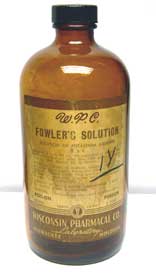
Arsenic, at the time, was remarkably easy to acquire. It was used in popular rodent poisons (my favorite had the very direct name Rough on Rats). It was used as a tonic, in brands such as Fowler's Solution. It was beloved by poison murderers because it was odorless and mostly tasteless. In a white powdery form, like arsenic trioxide, it folded almost invisibly into pastry dough.

Today, thanks to improved regulations, arsenic cannot be so casually acquired. Nor is it in the same homicidal demand. Forensic toxicology has made arsenic far too detectable a means of death. It's been identifiable in a corpse for well over 100 years, these days, in the barest trace amounts. And as a metallic element, it remains in the body (notably in the hair) for centuries. It serves, in fact, as a indelible marker of murder.

The fascinating, twisted story of arsenic then was an obvious choice for my book. The tale of little Lillian Goetz maybe less so. But there was this moment of heartbreak that just stayed with me. I read countless news stories about the Shelbourne killer. There's a moment, in one of them, in which her mother, Anna Goetz, is talking to the police about that rejected box lunch, caught at that point in which she knows, she's sure, that she could saved her daughter's life if she'd only insisted on that homemade meal.

Oh, I could see myself - the working mother of two boys - caught in that same moment, replaying that loop in which I might have rescued my child, could have kept her alive, kept him alive, if I'd only done things differently. One of the tasks that I'd set for myself in the book was - despite my real fascination with the wicked chemistry of poisons - to never glorify the subject. Poisoners represent human evil in my story. A lost child like Lillian reminds us of that, should remind us of that.

Still, when I received an e-mail recently with the subject line "Lillian Goetz", I had a moment where I worried that someone in the family didn't agree with me. In that, I was wonderfully wrong. The message came from Lillian's nephew Steve Goetz, a physiology teacher, and he wrote: When I began the chapter in your book covering arsenic, I was amazed to see Lillian Goetz's story featured. I had never realized that her death was a part of such a large and publicized event. Lillian was my aunt, my father Nelson's older sister. Her death by poison was rarely mentioned in the family, and most of the details were vague.

But though they rarely spoke of her, she was always there, a ghost in the house. Her death rewrote the way they lived. Steve was born in 1943 at Bronx Hospital, the facility that treated the dying girl: When my Grandfather, Lillian's father William Goetz, visited my mother who had given birth to me in 1943 at Bronx Hospital, he told her how very sad he felt revisiting the place. After Lillian's death, her parents (William and Annie) discarded all religious items in their house and were non-observant Jews from that point on. My grandmother Annie rarely left her apartment as long as I knew her, and my 98 year old mother told me the other day that that was also true since at least the early 1930's, when she first met Annie.

Steve also sent me the photograph that I've put at the top of this post. His grandmother, Annie Goetz is in the middle, with a very young Lillian holding one hand and her brother Nelson (Steve's father) holding the other. He even sent an image of the back of the photo, all names carefully written in that lovely cursive handwriting of the past with its lacy capital letters.

I've found myself studying their serious faces, taken during an era when people so rarely smiled for photographs. I've pondered Lillian's sober little face under that white hat, imagined her growing up into a dedicated, responsible young woman. But I know that doesn't really do her justice.

I wrote back to Steve Goetz, asking him if I could share the photo and family information and he answered me in the kindest way: "I had rarely thought about Lillian for most of my life - she seemed to be such a distant figure. I want to thank you for bringing her to life for me as a real person, in a way she had never existed for me before. My only tenuous link to her is her copy of the Rubaiyat of Omar Khayyam, which I've had for many years. It contains a bookmark, a cut-out yellowed newspaper column called Our Rhyming Optimist. Aline Michaelis published 6 poems a week for her column from 1917 for the next 17 years. The poem Lillian saved is called "You Have Come Back."

Since I learned about, and was given the book, I've been intrigued that my aunt, coming from a family that seemed not to place a high priority on education or reading, should have this book of poetry. I've always felt that she must have been an interesting and sensitive person, that I would have liked to have gotten to know."

So this one's for you, Lillian. In remembrance, and regret. And a wish that you'd never ended up in my book.


Wednesday, April 6, 2011

The Chemist as Killer


On January 14, a 39-year-old computer engineer was admitted to Princeton University Hospital in New Jersey with nagging, flu-like symptoms. The man was nauseated, suffering from severe joint pains, wracked by a strange, convulsive trembling in his legs. Doctors at the hospital tried one treatment after another, but Xiaoye Wang only became weaker.

Finally, a nurse at the hospital stepped hesitantly forward. She remembered a 1995 case in China in which a student at Beijing University became mysteriously ill. The cause was eventually found to be poisoning by the toxic element thallium. The young woman received a life-saving antidote although she suffered lingering disabilities from the attack.
And–as the nurse recalled from the highly publicized case–the student's symptoms were eerily similar to Wang's. During the man's hospital stay, he'd developed new signs of worsening illness - he'd lost his hair; his skin had thickened; his hands and feet had gone numb.

The Princeton doctors were dubious about a fairly exotic poison use, but they were running out of ideas. So although they couldn't find an in-state laboratory to do the tests, they agreed to send Wang's blood and urine samples out of state. And to their shock, the tests proved the nurse right. The lab had discovered a shockingly high level of thallium in Wang's body.

On January 25, the hospital contacted the New Jersey Poison Control Center for help. The results were in and the doctors had no idea what to do. They had no experience with thallium poisoning. They needed to know how to save their patient.

As Steven Marcus, head of the poison control center, told the Newark Star-Ledger (which has done a great job of covering this story) his first reaction was suspicion. Thallium is a dangerous and carefully regulated poison, once widely available but mostly found in laboratories these days. "It's either attempted suicide or homicide," he said. Marcus added that he knew of only one good antidote for thallium poisoning, a medication called Prussian Blue.

Rather ironically, the antidote's name derives from another famously lethal substance. Prussian Blue refers to cyanide (a component of the medication) which can be used to produce a royal blue pigment. Some cyanide formulas are very deadly, notably hydrogen cyanide or potassium cyanide. But mixed into the tidy antidote formula (brand name Radiogardase) cyanide merely becomes part of a chemical chain that wraps itself around thallium, binding it up, and allowing the body to remove the poison.

By the time, the New Jersey doctors were able to secure the antidote though, it was too late. Wang was deep into a coma; he died on January 26 leaving doctors - and now criminal investigators - to answer the question raised by Steven Marcus. Was it suicide or was it murder?

I actually devoted a chapter of my book, The Poisoner's Handbook, to thallium because it's such a fascinating poison. But Agatha Christie knew this long before I did - it's the star of her 1961 murder mystery story, The Pale Horse. A key to the Christie novel is that thallium appears to be a near perfect homicidal poison. It's is tasteless, odorless, and mixes smoothly and easily into food and drink. A key to my non-fiction tale of five thallium deaths in 1930s New York is that this is also a highly detectable poison. Or as I wrote in the book:

" In the manner of other metallic poisons, such as arsenic, thallium stayed stubbornly in the body, permeating the tissues for weeks and even months after death. Any knowledgeable forensic toxicologist could find it.

It was, one might say, a chemist’s poison."

Which was exactly what the authorities in New Jersey concluded as well.

They'd found no evidence that Wang was suicidal. But further investigation did find that he was involved in an angry divorce which included disagreements over property division and custody of a two-year-old son. Investigators also discovered that his wife, Tianie "Heidi" Li was a research chemist at Bristol-Myers-Squibb, working in a laboratory that included access to thallium.

On February 8, Li, 40, was charged with murdering her husband. She has since pleaded not guilty and is also seeking to have her bail, currently set at more than $4 million reduced.

Let's acknowledge first that Li has not been convicted of murder. Still her arrest raises some intriguing questions on the subject of poison murders. For instance, does one need a chemistry degree to be a thallium killer?

The quick answer is no, but the killer does need to have some specialized knowledge of the poison and its potential. While the killer in my own book was a high school graduate with no science training, those murders occurred at a time when thallium was a widely available and well-known pesticide. That's less true today. The U.S. government removed it from household markets in 1972 due to its hazardous nature.

So let's also acknowledge that today, when thallium is less publicly visible, one might expect a killer to have some chemical awareness. I am aware of one other well-publicized thallium murder that involved a killer with chemical training and that occurred in Alturas, Florida, in the late 1980s. In that case, a (very) troubled former chemist became annoyed with his neighbors, whom he perceived as noisy and inconsiderate.

The angry chemist, George Trepal, left them an anonymous gift of Coca Cola spiked with thallium. The poisoned sodas killed one neighbor and hospitalized two others for months. Trepal was not a scientist with a happy history. At the time of the deaths, he had a criminal record, having served time for working as chief chemist for a methamphetamine laboratory. In 1991, he was convicted of one count of first degree murder and six counts of attempted murder. He remains on Florida's death row today and is the subject of a book titled Poison Mind.

But investigators were never sure how Joann Curley of Wilkes-Barre, Pennsylvania, decided to kill her husband, Robert, by putting thallium in his iced-tea. Curley confessed to the murder in 1996, after a relentless five year investigation into his death. And Ann Perry of Long Island, sentenced in 2002 for killing her abusive boyfriend with thallium-laced milkshakes, had no special chemical knowledge either.

The acclaimed British author, John Emsley, who specializes in writing about chemistry in books such as The Elements of Murder has suggested that it's mystery writers like Christie who really brought thallium into the public's mind as a murder weapon. Among the examples he gives is the case of Graham Young, a worker in a British photographic instrument company, who killed two of his co-workers in 1971 by mixing thallium into their coffee. 

As news of Li's murder arrest has spread, increasingly the stories have been framed around chemist-as-killer. "Chemist killed her husband with radioactive poison to avoid going through a divorce" was the headline in Britain's Daily Mail. "NJ chemist pleads not guilty to poisoning husband," was a more stately lead in BusinessWeek. And, of course, some of this is just headline writing shorthand for an event.
But make no mistake. The history of thallium homicides mostly serves as a reminder that any of us can play at the poison murder game. That anyone can play at being a homicidal user of chemical compounds. Yes, Dr. Li had specialized knowledge and access to thallium but as a Joann Curley proves, such training isn't really necessary for a determined killer. If Li is convicted, being a research chemist won't have made her anything special. If anything, it'll have led her into being just another over-confident killer who ended up getting caught.

Caught by the evidence provided by a chemist, I might add. 

A version of this post appeared earlier on Speakeasy Science, my blog for the Public Library of Science.