Showing posts with label contributor books. Show all posts

Thursday, January 21, 2010

Diane Fanning and True Crime Facts

by Andrea Campbell
Sometimes the best things are right in front of us. Today I am sharing an interview with our own WCI writer, Diane Fanning. There are some forensic science details, but I thought you might be interested in how a true crime book is created (I know I have always been). Diane is a good friend of mine as well as an interesting writer and person.

Q.: Diane, for WCI readers who don’t know you, please tell us a little about your background.

A.: I’m the author of 10 true crime books and three mystery novels and the editor of an anthology of Texas women writers. One of my true crime books, Written in Blood, was a finalist for an Edgar Allen Poe Award.

I was born and raised in the Baltimore, Maryland, area, moving to Virginia for college. I never left that state until I moved to Texas. I now live in New Braunfels, situated in between Austin and San Antonio, Texas.

Q.: Is it unusual to go to press even if the case has not come to resolution? I thought publishers preferred to go to print after the sentencing phase of the trial.

 A.: It depends on the publisher. Some do, some don’t. Often the verdict or sentencing can be anti-climactic, causing a lower volume of sales. This happens often when the case actually does not go to trial because of a plea bargain. While the story is still on-going, it grabs far more media attention which churns up more interest in a case. But, essentially, it’s the publisher who calls the shots here, not the writer.

Q.: You’ve written quite a few true crime books now. How did you first find the genre as a viable category?

A.: Not until after I got my first contract. I didn’t go after the first true crime book thinking of it as viable or sensible or a good thing for my writing career. I went after that story because I was passionate about it. Ten-year-old Krystal Surles was my new hero, and I simply had to write her story of survival and courage. 
   
Q.: Does it take a lot of gumption to write about crimes that affect many people’s lives, especially the victim’s family? Do you ever get emotionally involved?

A.: Any time you write about real people, you are treading on potentially treacherous ground. I approach each member of a family with respect and assure them that, to me, the victim is the most important person in the story. I ask them to help me to allow my readers to understand the great loss suffered when this person’s life was stolen in an act of violence.

I love it when they share their happy memories with me — the simple stories told with love. But this is the worst time in the life of this family and they cannot always be positive. At those times, I sometimes find myself crying with them.

Q.: How do you begin a true crime book? Please share some of your methodology.

A.: The first thing I do is scan through all the media I can find, looking for the names of the players in the case. Then I plan my approach based on the individual dynamics of each story.

Q.: Your book, Mommy’s Little Girl, is a true crime about what event?

A.: The book concerns the death of little Caylee Anthony shortly before her third birthday, and her mother, Casey Anthony, now charged with her murder.

Q.: In Mommy’s Little Girl, you didn't have access to the principle characters, Casey, Cindy, George or Lee Anthony, yet fully two-thirds of the book is dialogue between these people. Can you speak to that?

A.: The dialogue of these four people is taken directly from official documents or tape recordings or is a re-creation given to me by another person who was present during the conversation. None of it was a product of my imagination. Even when you read what one of them was thinking at a particular point in time, that information was provided by the subject to another person in the story.

 Q.: How did you find out about the forensic science evidence in Florida, and can you tell us what that is for this particular case?

A.: An extensive amount of documents have been released prior to trial because of the Sunshine Law in the state of Florida. More than 9,000 pages have been made public by the State Attorney.

There are items at the location where Caylee’s body was found that link to the Anthony home. Cadaver dogs hit on spots in the family’s back yard and in the car that Casey drove. Air analysis of the car indicated the presence of decomposition and chloroform. Coffin flies were found in the trunk of the car. A forensic analysis of Casey’s computer uncovered suspicious searches.

Q.: When you begin to examine a true crime, how do you approach the various people? Do you try to enter the case without any bias? Is that even possible?  

A.: Essentially, I approach them honestly, telling them upfront that I am writing a book about the case. The approach then differs depending on the individual. Victims’ family members, perpetrators’ family members, law enforcement, attorneys and others all require a different approach that reflects their reason for involvement in the case. I try to enter each and every case without bias because I know that what I read and what the general public believes is not always objective, evidence-based fact — sometimes even the jury can get it wrong.

I have started on some projects thinking the defendant was innocent and changing my mind mid-stream, as I did with the Michael Peterson case when I wrote Written in Blood. I have seen a crime as justifiable until I learned more. Mary Winkler, The Pastor’s Wife, was a case in point there. I thought that she was driven to her acts by brutal abuse by her husband. I came to the conclusion that the abuse was exaggerated and some fabricated after the fact. Matthew was a controlling spouse, but nothing he did was to an extreme that warranted the death penalty. 

Q.: If law enforcement has made mistakes, or even the prosecution for that matter, do you write about that as well? How do you feel about exposing that?

A.: Yes, if I am aware of errors in the investigation or the prosecution, I do point them out. No case is handled perfectly. Some are botched on the law enforcement or prosecution side resulting in an inadequate presentation leading to a lower sentence that is deserved; others result in wrongful convictions. Then there are some errors that are simply mistakes that are insignificant when you view the totality of the evidence.

Q.: Have the people involved ever harassed you? What about readers?

A.: It comes with the territory. Some people are not happy with the verdict in a case and take it out on me. Other readers feel I was too harsh in my portrayal of someone in the book—usually, but not always the perpetrator. But, this is offset by the thank-you notes and pleased e-mails I have received from many members of victims’ families. I also have a copy of one of my books, hand-delivered to me, that contains the signatures of every Texas Ranger in the state.

Q.: You have also written fictional mystery novels. How have you found crossing over genres? Please give a brief synopsis of the titles.

A.: Writing true crime has informed my fiction. Authoring fiction has improved my non-fiction writing. My current fiction focus is on the novels featuring Homicide Detective Lucinda Pierce and is based in Virginia. Pierce faces challenges in her professional and personal lives because of physical and emotional scars. She is tough and self-aware as she fights through the battles of her present and her past.

 Q.: What are your plans for the future?
A.: In general, I would like to continue writing both fiction and true crime. Both satisfy different needs for me. In particular, I am currently under contract to write a true crime book about Betty Neumar, the elderly woman arrested for the murder of the fourth of her five dead husbands. I also have a contract from my fiction publisher to write a fourth book in the Lucinda Pierce series.
Q.: Is there anything else you would like to tell WCI readers?

A.: On my web site, I have a page called the “Reading Room.” On it, there are links to a sample chapter from each one of my published books. It’s a great way to determine which one of them you would like to read. I just started a blog: Writing is a Crime, http://www.dianefanning.blogspot.com, and would love to read your comments.


Tuesday, November 3, 2009

Mommy's Little Girl

by Diane Fanning

More than a year ago, I agreed to write a book about a story that dominated the national media. I finished my manuscript in mid-May this year, and it seems like that day was long, long ago. Today, at last, St, Martin's Press releases MOMMY'S LITTLE GIRL: Casey Anthony and Her Daughter Caylee's Tragic Fate.

I kept photos of Caylee in front of me as I wrote. As a mother, I could not comprehend how any woman could carry a baby in her body for nine long months and then, two to three years later, look at the innocent, trusting face and even think of harming her toddler. I thought of my own daughter often as I researched and dug into the facts of this incomprehensible crime.

I really did not want to believe that Casey Anthony -- or any mother -- could murder her own daughter. But after months of immersion in the available evidence and in interviews with people close to the case, I could reach no other conclusion.

So I was gratified by the reviews the book already received, making months of slogging through the muck worthwhile.

Hal Boedeker of the Orlando Sentinel wrote of MOMMY'S LITTLE GIRL: "Author Diane Fanning tirelessly recounts the young woman's lying ways, theorizes how Anthony might have disposed of her daughter and concludes that Anthony is 'an individual whose self-absorption and insensitivity to others is a destructive force.'"

Mike DeForest of
WKMG-Channel 6 News said in a television book review: "At least for a little while, for people following the Casey Anthony saga, this is basically going to be like a bible for them."


Want additional reading material before picking up the book? See my post, Is Malignant Narcissism the Answer? here at Women in Crime Ink -- or read the first chapter of the book on my website. You can also view video clips of my interview with 48 Hours.

You'll find MOMMY'S LITTLE GIRL in bookstores everywhere today. If you pick up a copy, I'd love to hear your feedback (write diane@dianefanning.com) after you read the book. But whether you read it or not, I am sure you will join me in demanding nothing less than justice for little Caylee.


Tuesday, October 27, 2009

Dittrich's Murder Behind the Badge: True Stories of Cops Who Kill Makes its Debut

by Women in Crime Ink

Most men and women who aspire to be police officers begin their careers with a noble dream of community service, upholding the law, and helping those in need. Yet over time the rigors and emotional strain of dealing with society’s worst element wear on even the most idealistic officers like a sheet of sandpaper, until their compassion is slowly rubbed away.

A few become corrupted and slip into criminal behavior, directly contradicting their oath to guard the public. Even worse, there are some who hide behind their badges to commit the most heinous crimes imaginable.

In a shocking true-crime narrative that reads like a thriller, former police officer, former detective, and mystery writer Stacy Dittrich tells 18 stories about cops who kill. From the brutal to the bizarre, the senseless to the extreme, these men and women abused their power, took human lives, and are now paying the consequences. Line-of-duty shootings aren't featured within the pages of "Murder Behind the Badge: True Stories of Cops Who Kill." Society typically sees these crimes from serial killers, rapists, and other violent criminals.

Some of the officers killed for love, others for money, and still others because of seemingly trivial personality conflicts. Dittrich profiles, among others:
  • New Orleans cop Antoinette Frank, who brutally murdered four innocent people: her own partner, two restaurant owners, and her own father, whom she buried underneath her home.

  • Canton, Ohio, police officer Bobby Cutts Jr., who murdered his former girlfriend when she was nine-months pregnant.

  • Bollingbrook, Ill., police sergeant Drew Peterson, currently indicted in the death of his second wife, and being investigated for the disappearance of his third.
  • California Highway Patrolman Craig Peyer, who pulled over San Diego State college student Cara Knott over a frivolous traffic violation, then murdered her.
  • Prince George County, Md., officer Keith Washington, who brutally gunned down two furniture delivery men in his own home for simply being late with the delivery.
  • Columbia, Mo., officer Steven Rios, who slit the throat of his gay lover after the man threatened to tell everyone, including Rios’ wife and police chief, of their relationship.
  • Gerard Schaefer, one of Florida’s most notorious serial killers, who found it easiest to commit his crimes while working as a police officer and deputy sheriff.
  • New York City cop Charles Becker, the first police officer ever executed for the crime of murder in 1915.

With a foreword written by WCI’s own Pat Brown, "Murder Behind the Badge: True Stories of Cops Who Kill" is already receiving praise:

“As a crime victim myself who went on to become a felony prosecutor, police have been a constant in my life for many, many years. They are some of the most honorable people I have ever known. Dittrich exposes the dichotomy between police who fight crime every day vs. those who have become criminals themselves…a real mind twister!” -- Nancy Grace, host of HLN’s The Nancy Grace Show

"Murder Behind the Badge" reveals the dark underbelly of the cop-shop, the evil that can lurk within. Some of these cases you may have heard about, many you have not. Now, learn the inside details of how a murderer gets a badge and is sometimes protected by fellow officers. Only another cop could walk the public through how a psycho gets on a police force in the first place. Only another cop could explain how the mindset of the thin blue line is sometimes so similar to the mindset of the truly disturbed. Author Stacy Dittrich is that cop. This is the book. In the realm of true crime this is a must-have!” -- Diane Dimond, Investigative Journalist/Author of "Who You Love: Inside the Michael Jackson Case"

"Murder Behind the Badge: True Stories of Cops Who Kill" is now available for pre-order on line and will be in book stores everywhere Nov. 16, 2009 (Prometheus, Hardcover).


Wednesday, July 15, 2009

INTRODUCING CATHY SCOTT & SHERYL McCOLLUM

Women in Crime Ink is pleased to introduce two new regular contributors: True Crime Author Cathy Scott and Crime Analyst Sheryl McCollum.

Cathy Scott is a best-selling author and award-winning journalist who's received more than a dozen awards from news organizations in California and Nevada. Her work—which has appeared in The New York Times, Reuters, George magazine, Los Angeles Times, New York Post, The New York Times Magazine, The San Diego Union-Tribune, and Las Vegas Sun—has taken her to Somalia, Saudi Arabia, and Panama. Dividing her time between San Diego and Las Vegas, Cathy also writes fulltime for Best Friends Animal Society's magazine and Web site. She is a member of the Authors Guild and the Society of Professional Journalists' national Speakers Bureau. She has served as the Nevada chairwoman of the Society of Professional Journalist’s Sunshine Committee, which works to keep government records open to the public. At the University of Nevada, Las Vegas, Cathy was an adjunct journalism instructor for five years, a position she gave up to stay on the Gulf Coast for nearly four months to cover the aftermath of Hurricane Katrina.
Cathy is perhaps best known as the author of seven nonfiction books, including the Los Angeles Times best-seller The Killing of Tupac Shakur as well as the critically acclaimed The Murder of Biggie Smalls. Her other crime titles include Death in the Desert: The Ted Binion Homicide Case and Murder of a Mafia Daughter: The Life and Tragic Death of Susan Berman. Cathy's latest, The Rough Guide to True Crime, is being released August 31. She is currently finishing the case of Barbara Kogan, a Manhattan millionaire's widow who was indicted late last year for the contract murder of her husband nearly two decades ago. The book is scheduled for release by St. Martin’s Press True Crime Library in spring 2010.
Cathy has appeared on Unsolved Mysteries, Oxygen network’s “Snapped,” the Discovery Channel, CourtTV, CNN, MTV, Uncovered TV, Talk Books, and National Public Radio.

Women in Crime Ink is also welcoming Atlanta-based Sheryl McCollum, renowned crime analyst and college professor. She is the Director of the Cold Case Investigative Research Institute. Under Sheryl's direction, the Institute has been responsible for helping renew interest in cases that were deemed unsolvable. Sheryl has been involved in a number of notable investigations, including the disappearances of Natalee Holloway, Chandra Levy, and Amber Hagerman, as well as historical cases such as the Atlanta Child Murders and the Moore's Ford Bridge Lynching.
Sheryl is also the Director of a Metro Atlanta Cold Case Crime Analysis Squad. During the 1996 Olympic Games, Sheryl was Coordinator for the Crisis Response Team, which planned and trained for four years and responded to the Centennial Olympic Park Bombing, providing victim services through the criminal trial seven years later. In the wake of 9/11, Sheryl was Director of the Georgia team that was sent to the Pentagon in Washington, DC (aftermath at left). She is a POST (Peace Officer Standards and Training) Certified Instructor, a Hostage Negotiator, a Crime Scene Technician, and a First Responder. Holding two Master’s Degrees, one in Policing and one in Criminal Justice, Sheryl is also a college professor, teaching Criminal Investigation, Crime Scene, and Forensics.
You can watch her as a regular guest expert on Nancy Grace. Sheryl has also been featured on Fox and Friends and CNN. Most recently, she is co-host of the new program "Fugitive Fridays" on the The Levi Page Show.
Read Sheryl's first piece for Women in Crime Ink on Thursday. And you can expect Cathy's first post a week from tomorrow, on July 23rd.
Please join us in welcoming our newest contributors!


Monday, July 13, 2009

The Enigma That Was Michael Jackson

by Diane Dimond

Let's Admit—there was a dark side.

When I was plying my trade as an investigative reporter, the most famous criminal defendant I ever covered was entertainer Michael Jackson. Boy, did I cover him! From breaking the first news about the molestation claims against him back in 1993, to being the first to report the 2003 abuse allegations of a young boy who was a cancer patient when he first met the King of Pop. I was there for every day of the criminal trial and I wrote a book drawing on what I’d learned about the man over the course of the decade I’d investigated his story.

Now, Michael Jackson is dead at age 50.

Since his death, likely related to his long-term drug abuse and anorexia, I’ve been asked to explain the fascination so many have for this Pop Icon. What was it about Jackson that caused the great worldwide crowds of people we saw to drop everything and gather in public forums to mourn his passing? . . .

The answer, of course, is Michael Jackson’s music. And his dancing. And his song-writing ability. He was, quite simply, a self-taught entertainment genius. His talent reached down deep inside us and made us feel good. We couldn’t help but tap our toes to the rhythm, to have his lyrics burned into our memories.

Michael Jackson was also a pioneer on the racial front. He was the first Black artist to break through the MTV barrier, his highly produced music and videos literally brought the races together on both the dance floor and in society. Who among us doesn’t sing along (or do a version of a "cool" dance move) when we hear Jackson tunes like, "A-B-C," "Billy Jean," or "Beat It"?

Here’s another reason for the massive fan base. We watched Michael Jackson grow up. He was ours, no matter what our color, and we reveled in how this wildly talented 10-year-old could captivate us. Later, we became mesmerized by Jackson’s solo career and his obsessively intricate choreography that made his videos, like Thriller, all-time record breakers.

We introduced our kids to his irresistible music and another generation was hooked.

But Michael Jackson was obsessive about other things too—things that don’t make us feel so good. He was accused of one of the most insidious crimes imaginable: the sexual abuse of a child; not just once, but twice. And from my years of reporting on the case, I can tell you there were other young boys with eerily similar stories of abuse by Jackson, sons of parents too reticent, too embarrassed, or scared to press charges.

In public, Jackson flaunted his fascination with male children. Even after his narrow escape from prosecution in 1993, for which he paid out about 30 million dollars to avoid a trial, he flamboyantly continued to pose with and travel with unidentified young boys. He openly declared there was “nothing wrong” with a 40-year-old man sleeping with another’s boy. He called us “ignorant” for not understanding. Jackson seemed to be daring us to stop him. No one could.

Then he started to collect children of his own. Jackson reportedly paid up to 10 million dollars to a nurse named Debbie Rowe in return for her agreement to be inseminated with the sperm of his dermatologist, Dr. Arnold Klein, and to give him two children and then disappear. His third child was reportedly born to a surrogate mother and another mystery sperm donor. No one stopped Jackson from doing this either. He had the wealth and the celebrity clout to indulge his obsessions.

Michael Jackson never did like to be told what to do. That probably stemmed from his iron-fisted father’s cruel upbringing. So, despite warnings from some in his entourage, Jackson went about his drug taking, children buying, shopping binges and other bizarre behavior and we seemed to look right past it . . . because of the glorious music he gave us. We telegraphed our approval of his behavior by continuing to support and adore him. We set no boundaries and he didn’t recognize any.

Separating the art from the artist has long been a dilemma. History shows we can love the art and not the man. Vincent Van Gogh was certifiably insane. The artist Caravaggio had a wicked temper and committed murder. Yet both were also celebrated as brilliant artists. In the case of Michael Jackson, anointed with titles like King and Superstar, the admiration caused him to believe the rules didn’t apply to him.

In our adoration of the artist, we shouldn’t forget that men of bad character do valuable things that benefit society in all sorts of ways. They build fabulous institutions, they write meaningful books, they entertain us in ways no others can. Good deeds seep out in spite of their flaws. That doesn’t mean their bad acts are okay.


Friday, May 15, 2009

Mary Jane's Grave

by Women in Crime Ink

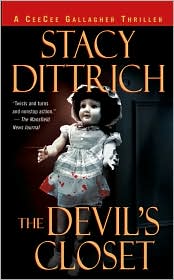
If you've been wondering how life for fictional detective CeeCee Gallagher could possibly get any more difficult, the wait is officially over. Mary Jane's Grave, the highly anticipated second novel of the CeeCee Gallagher detective series is in bookstores now. The follow-up to The Devil's Closet, WCI's own Stacy Dittrich continues taking the reader down a road filled with unknowns, romance, and mystery.

Summary of the book:

“Long known for its history of being haunted by a witch who was hanged and buried there, Mary Jane’s Grave has been a teenage staple for decades. Local historians have since disproved the area as mere folk lore, but when a local teen is found brutally murdered at the grave, Detective Sergeant CeeCee Gallagher is forced to re-investigate the history, and find its link to the teen’s murder. With the aid of her powerful co-workers, Naomi and Jeff Cooper, CeeCee is thrown into the depths of a secret so horrifying; locals have kept it hidden for over a hundred years. Finding the chilling connection between Mary Jane, and an eighteenth century murderess, Ceely Rose, CeeCee refuses to believe in the supernatural occurrences that witnesses claim are taking place at the grave. CeeCee’s investigation takes her across the country in her hunt for the true killer while she tries to keep her relationship with FBI Agent, Michael Hagerman, from unraveling. CeeCee takes readers along with her to face their darkest fears, while holding their breath until the secret of the grave, and the identity of the killer, is revealed.”

Extremely detailed, Mary Jane's Grave tends to be one of those novels that the reader will get lost if one page is missed. Mixing history with modern day policing, the research on this book took Stacy the longest of the entire Gallagher series, as she had to delve into 18th century writing and history. Stacy also had complete access to the case files (investigated by her police department) of some of the crimes that occurred at the actual grave; some of which are depicted in the book.

The novel revolves around the local folklore that surrounds a real grave in Stacy's area in Richland County, Ohio. She combined the myth with a true case of an 18th century murderess whose crimes occurred at Pulitzer Prize winning author Louis Bromfield’s farm-Malabar Farm. (This also happened to be the location of Humphrey Bogart and Lauren Bacall’s wedding and is just a mile or so down the road from the grave). For over 5 decades, people from all over the state have flocked to the “real” Mary Jane’s Grave in Lucas, Ohio (pictured right) to see the burnt cross on the famed witches tree, and to indulge in possible paranormal experiences. Although there is much written about the myth on web sites, there has never been a book written about it, or the murderess Ceely Rose, until now.

Most Recent Reviews:

“A creepy ghost story lies at the heart of Dittrich’s second thriller starring detective CeeCee Gallagher. The crime is horrific and puzzling, and Dittrich does an excellent job laying out a clever procedural that is hauntingly laced with eeriness. A book to send true chills down the spine! Four and a half stars!
--Romantic Times Book Review

“In March 1898, four men killed her infant son, raped her and her daughter Madeline, and burned her as a witch. With her last breath, Mary Jane Hendrickson, using her gift, cursed the men and the grounds where they committed their atrocities. The sexual assault of Madeline left her pregnant. In the present, the grave of Mary Jane was buried by a tree in the middle of an old cemetery where teens fool around scaring one another.

Sergeant CeeCee Gallagher is called to the Mount Olive Cemetery because the murdered body of Keri Sutter was found on Mary Jane’s grave. She had been separated from her friends who swore they saw an old woman and heard the scream of a baby crying though no infant was seen. CeeCee assumes one of the students killed Keri and used the Mary Jane witch tale to frighten the others. Elder Walter Morris suggests CeeCee look up the history. The detective does and learns that twenty years ago another teen was stoned to death on the grave-site; the culprit got away with murder. CeeCee continues investigating into Mary Jane’s life and death tracking ancestry and descendants onto the present in order to prevent more homicides.


A CeeCee Gallagher police procedural is always a treat (see THE DEVIL’S CLOSET) as the sergeant gives her readers a deep look at how she runs an investigation and why she takes some of the key steps that she does. The audience also receives glimpses of her love affair with FBI Agent Michael Hagerman while he deals with a treacherous former wife who will do anything to get him back. The who-done-it is terrific with its ties to the late nineteenth century atrocities as Stacy Dittrich provides a unique voice with a fresh brisk thriller starring a heroine who resonates with readers.” --MidWest Book Review

"...Mary Jane's Grave provides a fast-paced storyline with a ghostly flair, emotional turmoil and multi-generational twists."--Fresh Fiction Book Review


Mary Jane's Grave is available in bookstores and online now. Stacy will be at BookExpo of America in New York City May 29th and May 30th for signings and also June 6, 2009 at the Barnes and Noble in Ontario, Ohio.


Tuesday, May 5, 2009

THE OUTLAW IS IN!

Women in Crime Ink is pleased to announce today's release of contributor Laura James' first book: The Love Pirate and the Bandit's Son: Murder, Sin, and Scandal in the Shadow of Jesse James. (Laura is not related to the James Gang.) In this dual biography of Dr. Zeo Zoe Wilkins and Jesse James Jr., our true-crime historian and attorney Laura James lays out the evidence that the son of Jesse James followed in his father's footsteps to lead a life of train robbery, terrorism, and perhaps even murder. The book contains some big surprises for students of the James Gang.

Below, the publisher has given Women in Crime Ink readers an exclusive peek at what true-crime master Gregg Olsen has called a "mesmerizing book, brilliantly researched and compellingly written." We agree with Olsen's assessment that this story is "classic American crime: a toxic brew of love, lies, mystery and murder." Women in Crime Ink is pleased to bring you this exclusive intro to The Love Pirate and the Bandit's Son. Congratulations, Laura!


PROLOGUE

On March 15, 1924, snowdust coated staid Park Avenue in Kansas City, Missouri. The street was quiet for a Saturday night. There were no wild parties on this frigid evening. Around ten p.m., an exceptionally beautiful woman unlocked the front door of her home at 2425 Park.

She must have known him. She let him in the house. But before long something alarmed her. It could have been the late hour or the reek of alcohol, though she was a stranger to neither. She numbed herself that night, as she usually did, with most of a bottle of Jamaica Ginger. Did she see the man lock the door as he turned to face her? Maybe a snarled threat or a flash of steel warned her that he was not there to make love to her. Instead, her premonition of a violent death was coming true. She surely thought–if she could form a complete thought–of all the friends and lovers to whom she had turned for help in her last few days. She told them someone wanted to murder her. She’d even said it would happen that weekend.

No one was there to help her. Nobody believed her.

She fought for her life. She threw every object within reach. She eluded death with “a terrific fight.” At five feet eight and a hundred and thirty pounds, she could have held her own for a while. But the man was stronger. He chased her into a corner, punched her in the chest, and knocked the telephone from her hands. Chairs were smashed in their duel. In her desperate resistance she got the worst of it. He pummeled her and tore at her plaid dress and underwear. If she cried out in pain and terror, the only one who heard her screams was the man killing her.

It must have been a thunderous blow that sent her spinning into a metal stand. She struck her forehead and collapsed onto the oriental carpet in the living room.

The man grabbed her slender throat and squeezed. He gouged her left eye, blackening it and nearly severing her eyeball from its socket. Perhaps she fainted. But she rallied at the last when he brandished a small, rusty pocketknife. As she held out her hands to protect herself, he slashed them. The face that had aroused the passions of so many men now felt the sting of the blade. He sliced open her cheek and jammed the point of the knife into the side of her neck—once, twice—the deep stabs slitting her jugular. Zeo’s blood gushed forth. Within a few heartbeats she was dead.

The blood-drenched killer dropped his knife. It fell onto the rug a few inches from her dead hand. He assured himself she was irretrievably dead.

Without pausing to wipe himself off, he strode to her dining room. He lifted a large metal strongbox onto the dining table, opened it, and tore through her personal papers. Her blood dripped from his hands onto her letters and documents as he rifled through the box for what he sought.

Papers, books, clothes, and bags were heaped onto the floor as her killer ransacked her house, plunging through the closet, roving through the kitchen, smearing blood on drawers and cupboards, leaving crimson tracks throughout the first and second floors. He pulled up the tacks holding down the corners of her carpets. He pulled letters from envelopes. He searched most of the closets, chests, and shelves.

And yet he did not touch many pawnable items, such as her designer clothes and household items. This man was after particular valuables, things he knew she kept in her home. Nothing less was worth even a moment.

His search completed, he entered a downstairs bathroom and washed away her clotted blood. He found a hand towel and dried himself on it as he returned to the living room. Standing near the dead woman, he threw the towel on the rug. He wadded some papers, put a flame to them, and started a fire near her head. He stuffed a strongbox filled with treasure under his arm.

Maybe he looked at her one last time.

Then it seems he yanked open a window, crawled through, leapt several feet to the ground, and fled the scene of his perfect murder.

It was perfect not because of how he did it. He was an amateur killer. He left bloody prints everywhere, and the fire never caught. It was perfect because of the woman he killed. For no matter who cut down Zeo Wilkins, no matter why, newspapers across the country declared on moral grounds that her brutal death was a fitting end for a vampire. They proclaimed that the case would never be solved, officially or otherwise. Their wishes were granted. A lot of folks would come right out and say it: the bitch had it coming to her, and by golly, she sure got it.


Monday, April 20, 2009

PREDATORS AND CHILD MOLESTERS DESCEND ON BOOKSTORES!

There is no other crime—not even murder—that worries and sickens parents more than child sexual abuse. Parents wonder how to protect their children when almost every day the news reports another incident of someone in authority arrested on suspicion of child abuse. Addressing offenders found in clergy and teachers to family members themselves, former Los Angeles Deputy District Attorney and WCI contributor Robin Sax answers those terrifying questions that parents are sometimes afraid to ask. Predators and Child Molesters: What Every Parent Needs to Know to Keep Kids Safe, A Sex Crimes DA Answers 100 of the Most Asked Questions is in bookstores now and is a must-have for parents everywhere.

With a foreword by Marc Klaas, founder and president of KlaasKids Foundation, this straightforward and clearly written guidebook answers one hundred of the most asked questions that Robin has encountered in her fifteen years of experience as a sex crimes prosecutor. From the definition of abuse to profiles of predators, to how to report an incident and to whom, Robin provides practical, reassuring, and appropriate information.

For ease of use, the book is organized into six major sections:

  • Recognizing Predators: Molesters, Pedophiles, and Opportunists
  • Talking to Kids About Risks and Identifying Potential Problems
  • Recognizing Abuse
  • Reporting Sexual Abuse
  • Going to Court
  • Healing and Moving On

Predators and Child Molesters is already debuting to rave reviews:

“Finally! A hard-hitting Q&A on predators and child molesters. Sax's book is a must read for anyone concerned about the safety and well being of America's children. As a former felony prosecutor of crimes on children, this is Crime & Prevention 101 . . .”
Nancy Grace, host of CNN Headline News' Nancy Grace

"Child Molesters and Predators" answers everything you wanted to ask and tells everything you need to know to prevent your worst nightmare and possible lifelong torment for your child. Sax writes in an easy to read format providing practical answers for keeping youngsters safe. This is a must read for every parent or anyone who cares for kids.
Mark Goulston, Huffington Post

Robin Sax makes it clear that prosecuting children against possible sexual assault begins with every parent in the home. Teaching preventative measures should be as important as teaching children to dial 911.

Predators and Child Molesters is available in bookstores now and online. Robin Sax can be seen frequently as a legal commentator on CNN’s Nancy Grace, Larry King Live, and Fox News covering criminal cases and trials. You can also hear her weekly on Justice Interrupted Blogtalk Radio where she covers the latest news in crime with WCI contributors Susan Murphy-Milano and Stacy Dittrich. Robin Sax resides in California with her husband and three children.

Also out this month: Reaching The Bar: Stories of Women at All Stages of Their Law Career. A comprehensive look into the lives of women lawyers, each chapter is introduced by Robin Sax, who also edited Reaching the Bar.

Congratulations, Robin!


Saturday, March 21, 2009

Punish the Deed


Homicide Detective Lucinda Pierce is back in PUNISH THE DEED by Diane Fanning.

The mutilated body of children’s charity worker Sharon Fleming is found sprawling on the office kitchen’s floor. A note beside her body bears the words: “I was left behind.”

Lucinda must track down this violent killer before he leaves another victim behind. She finds help from the most unlikely source. But is the price too high to pay? You can read the first chapter on Diane’s Web site.

Diane’s Calendar has a list of interviews and booksignings including stops in Williamsburg, Virginia; and in Houston, San Antonio, and Austin, Texas.

The Lucinda Pierce series began with THE TROPHY EXCHANGE—now it continues.


PUNISH THE DEED. Because no good deed goes unpunished.


Tuesday, February 3, 2009

Blog Talk Radio Tonight


Diane Fanning is Denny Griffin's guest on his Caylee Anthony Special on Blog Talk Radio tonight at 7 pm CST . (8 Eastern, 6 Mountain, 5 Pacific)

To listen or call in to the program this evening, go to http://www.blogtalkradio.com/dennisngriffin. The show will be archived on that site shortly after its completion and can be played back as a podcast or downloaded.

Diane is currently working on MOMMY'S LITTLE GIRL, a book about the Caylee Anthony story for St. Martin's Press.


Saturday, January 17, 2009

Women in Crime Ink Joins Facebook!

The Women in Crime Ink fan page is officially up and running at Facebook. The up and coming social network for professionals, and those just looking for friends, boasts millions of members. Although several WCI contributors have their own Facebook page, we thought this would be a great way to come together with all of you!

At the Women in Crime Ink fan page, you can occasionally chat with a regular WCI contributor, talk to other WCI fans, start a discussion about a current or past WCI blog, and browse the WCI bookstore; a one-stop shop with all of the titles by your favorite WCI authors.

When you're done reading the current blog here at WCI, jump on over to Facebook, become a fan, write on the wall, and peruse the WCI bookstore for the latest thriller or true-crime book. We hope to see you there!


Sunday, October 5, 2008

Booksigning - The Devil Comes Out of the Closet

Susan Murphy-Milano

WCI's Stacy Dittrich had her first booksigning since last week's release of The Devil's Closet, her debut crime novel. Saturday's event was held at the Barnes & Noble in Mansfield, Ohio—Stacy's hometown—where for 15 years she was a deputy for the Richland County Sheriff's Office. As the Mansfield News Journal recently reported, Stacy (pictured with daughter Jordan at yesterday's event) retired earlier this year to write full-time.

Any second thoughts Stacy may have had about her decision were shoved aside this past spring, when Stacy's agent received a call from the Academy Award-winning producer of the movie The Devil Wears Prada (based on the novel of the same title). Hollywood is interested in a screen adaptation of The Devil's Closet, which is first in the series of CeeCee Gallagher thrillers. The protagonist was patterned after Stacy, who was a detective specializing in sex crimes.

What this means for readers is that Stacy's novel smacks of the kind of authenticity that comes from pages written by someone who's actually carried a badge and gun and fought crime on the streets—a good gal who understands duty and knows how to take down the bad guys without having to unholster her duty weapon. Like Stacy, I come from a family of law enforcement, so I can vouch for Friday's review from our Sex-crimes Prosecutor that Stacy "captured the essence of what someone on the front lines of crime is really like."

You don't want to miss this book, the first in a series. Stacy's next CeeCee novel, Mary Jane's Grave, is scheduled for publication in 2009. Her first hardcover true-crime book will hit shelves following Murder Behind the Badge, another true-crime title expected within a year.

Stacy's next signing for The Devil's Closet will be on Saturday, October the 11th, at the Barnes & Noble in Westlake, Ohio. If you're in the area, stop by from 2:00 to 4:00 that afternoon for an autographed copy. But get there early. According to one of the fans who attended yesterday's signing in Mansfield, "lines were out the door." The 200 copies the store had in stock sold out very quickly.

"For a debut novel," B&N store manager Rich Krizan said, "it was a great success—one of our best."

Krizan was quick to add that a new shipment is expected this week and that the author will be stopping by the store to sign copies for those who didn't get one yesterday.

If you make it to the Westlake signing on the 11th, send your photo with Stacy to womenincrimeink@yahoo.com and we'll post it, like this pic from yesterday's signing, with fan Jo Ann Krausman. Thanks to Jo Ann for sending this in, and congrats, Stacy!


Friday, October 3, 2008

Introducing CeeCee Gallagher . . . A Detective You Must Meet

by Robin Sax

I know you may find this hard to believe, but as a prosecutor there are very few mysteries that really knock my socks off. As a matter of fact, I generally loathe reading crime novels—they make me crazy with their pages laced with inaccuracies, distorted reality, and misconceptions. And there is nothing worse, in my opinion, than spoiling my future jury pools with bad or—even worse—wrong information that so many folks soak up in today’s paperbacks.

It is for this reason that I don’t watch Law and Order, CSI, The Closer, or other crime shows. I will say there has been improvement over the years but if I see one more show where the D.A. is an unethical, evidence-hiding, win-at-all-costs jerk, I may puke.

That’s just not how it is. Most cops, prosecutors, judges, and even defense attorneys are simply doing the best job they can with the facts and the cases before them. Prosecutors and police officers are real people with real feelings, cares, worries, and passions, just like defense lawyers and defendants.

And no one, in my opinion, has captured the essence of what someone on the front lines of crime is really like better than Stacy Dittrich has in her heroine Cee Cee Gallagher, whose first appearance is in The Devil’s Closet, which Dorchester Publishing releases this month. (View trailer here.)

Cee Cee Gallagher is a detective at the top of her game. She knows the ins and outs of suspects, crimes, and police work. No matter what the challenge is, Cee Cee not only comes through, but does it with flying colors. But even more impressive than Dittrich’s accuracy is her ability to describe what goes on behind the scenes in police life and investigations.

Drawing from her own professional background and personal experience, Dittrich skillfully explores what it’s like to be a woman and a police officer, raised in a law enforcement family, and dealing with the issues that all women (no matter their field or career) deal with all the time—career pressures, love, family, and fidelity.

Part high crime, part love story, this book was rarely out of my sight from the moment I picked it up until I finished it (less than 24 hours later). Anyone who picks up The Devil’s Closet will want to dive into the next book in the series, Mary Jane’s Grave. It will be out on the stands in June 2009—so long a wait, but so worth it.