Showing posts with label Mysteries. Show all posts

Friday, January 21, 2011

The Importance of Fun


Let's face it, we're pretty serious around here. On any particular day at Women in Crime Ink, you can pretty much count on the topic involving some sort of crime and somebody has gotten, if not dead, hurt. Typical subjects revolve around murder, rape, assaults, bank robberies, stalking: think major crimes. We write about the worst of humanity, the real bad guys.

Now, please don't misunderstand. It's not that these evildoers, as George W. Bush described bad folks, control our lives. Even while working, they're a small part of the equation. We all have family and friends. And even at work, we're around more good people than bad ones. Take me, for instance; people often ask if writing about murders isn't depressing, if it doesn't expose me to the dark side of human nature. Yes, of course it does. I honestly could go without ever looking at another autopsy photo and feel pretty good about it. On the other hand, say I do 100 interviews for a book, which is an average number. I'd be willing to bet that 95 of the people will be pretty decent folks, considerate, for the most part honest, concerned about their fellow human beings.

Still, writing about sensational murder cases can get pretty heavy, and it's always nice to take a break. So a week ago, I packed my bags and took off for the small town of Jefferson, Texas, for a three-day book club extravaganza, the Pulpwood Queens' Girlfriend Weekend.

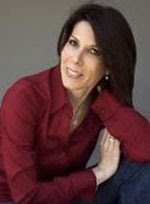
Now, I may be breaking the rules here. One of my fellow authors, Jamie Ford (Hotel on the Corner of Bitter and Sweet), rightly pointed out that what happens at Girlfriend Weekend stays at Girlfriend Weekend. But I had so much fun, it's pretty hard not to spread the word. That's me peeking from the back in the opening photo with Jamie, Kathy Patrick (The Pulpwood Queen's Guide) and Shelly Rushing Tomlinson (Suck in Your Stomach and Put Some Color On).

There were, I think, about forty of us, authors from all over the country. Some talked about their first books, others were working on our tenth book or more. Many are fixtures on the NYTimes list: not just Jamie, mentioned above, but the delightful trio in the photo to the right: Fannie Flagg (I Still Dream About You), Mark Childress (Crazy in Alabama), and Pat Conroy (My Reading Life). What's amazing is that all of us would fly and drive to get to this small East Texas town while most of the country was socked in with a horrific winter storm. But we did. As did the club members, wonderful, warm-hearted women, all avid readers. They came from both coasts, Florida, and the frozen north. Amazing.

The reason is Kathy Patrick and the Pulpwood Queens. For those of you who haven't had the pleasure, Kathy is the PQ's founder, and eleven years after opening her first club, she has 400 branches and more than 3,500 members across the globe, running it all out of her combination beauty parlor/bookstore, Beauty and the Book. In addition to picking wonderful books to read and discuss, Kathy is a champion of literacy. This year's GF Weekend raised more than $6,000 for the Dolly Party Imagination Library Literacy Foundation.

So, this is a brief synopsis: Thursday evening we authors all played waiter, serving dinner to the Pulpwood Queens. (Here I am with my table, the great gals from Lake Charles, La.) Then, over the course of the following two days, Friday and Saturday, we took our turns on the stage. Kathy and author Robert Leleux (The Memoirs of a Beautiful Boy) kept the conversation moving. When it was my turn, I discussed my latest Sarah Armstrong mystery, The Killing Storm, the PQ's main selection for this coming July. It was great looking out at such interested faces. It's unusual to be in front of such a large crowd where everyone is actually listening.

In between, we had so much fun. Songwriter/author/Nashville performer Marshall Chapman took the stage both nights, and 12-year-old blues guitarist Matthew Davidson couldn't have been better. The final evening, we all dressed as characters out of a book. I joined a group of Alice in Wonderland wanna-bes, and we danced to Jefferson Airplane's White Rabbit. (I was a mischievous Cheshire Cat.) Our choreographer and leader was Marsha Toy Engstrom, the Book Club Cheerleader. Let it suffice to say I was relieved that we didn't later turn up on YouTube.

The point is that all of us need love and fun and good times in our lives. I sometimes worry that we're addicted to the bad news in the headlines and we don't take time out to realize how truly glorious life is, how many outstanding people are out there. I drove the five hours home to Houston that Sunday afternoon smiling all the way, and I've felt better for my sojourn ever since.

So, that's my recommendation for all of you. And, if you're into books, especially the ladies out there, take a look at starting a Pulpwood Queen chapter. You'll have a great time with friends, reading and discussing amazing books, and next year you can polish up your tiara, grab your favorite feather boa, and meet me in Jefferson. Because the really good news is that Girlfriend Weekend is an annual event. To introduce you to the amazing Kathy Patrick, I've attached the trailer for her new Internet program.


Saturday, November 6, 2010

Come out and see me!

by Kathryn Casey

Everyone in the Houston area, this is just a short note to tell you that I'll be at Murder by the Book signing my new mystery, The Killing Storm, next Saturday, November 13th, at 3 p.m. It's the third in the Sarah Armstrong mystery series, and, besides fighting a hurricane, Sarah's faced with solving the riddle of cryptic symbols left on the hides of slaughtered longhorns and rescuing a missing 4-year-old abducted from a Houston park. Publisher's Weekly called The Killing Storm the "best in the series to date," and Kirkus noted its "pulse-pounding action."

So drop in at Murder by the Book. I'd love to meet you. Be sure to mention that you're a Women in Crime Ink reader!


Tuesday, March 2, 2010

Forensics Expert Susan Vondrake Stops By

by Andrea Campbell

Today I would like to introduce Susan Vondrake, director of the Research and Development Laboratory with the Illinois State Police. A Renaissance woman in the field of forensic science, Vondrake is also a new fiction writer whose first book will debut shortly.

Q.: What is your book with Oak Tree Press about? Is it finished?

A.: Yes, the book is completed and the first of a series. I plan to publish under S. Connell Vondrake. The book is a completely fictional work not based on any actual case or agency. The book, No Evidence of a Crime, is set in Washington, D. C., and begins with two detectives investigating the murder of a young woman, a murder which appears on the surface to be straightforward, but subtle discrepancies with the evidence start to become apparent. The murder weapon is identified as a Glock handgun, but an eyewitness places the shooter too far from the victim.  

Toxicology finds a high level of alcohol and cocaine in victim’s system, but not in the fetus she is carrying, and DNA links the victim to a gang member -- but she had no apparent gang connections. The detectives ask a forensic scientist to help retest the samples. The new test results soon lead the detectives to realize forensic evidence is being altered.

In No Evidence of a Crime, the clues point to one direction, but there are inconsistencies. The detectives try to force the pieces to fit into the puzzle. When they actually figure out the truth, everything fits together. The same is true in real life. If a control is outside the expected result, or a latent print matches the top of a print on a print card but not the bottom of the print, or a shoe print matches but is the wrong size, all of these things are telling you something. Things like this will gnaw at a good forensic scientist until they figure out what the evidence is telling them, and when they do, they grow as a forensic scientist and the field of forensics grows.

Q.: How did the book come about?

A.: In my current job, I have to drive to different labs around Illinois. I can be in the car six, seven, eight hours in a day. Rather than listening to the radio, I would make up stories in my mind as entertainment for me. A few years ago, I started to put these stories down on paper. Oak Tree Press has been wonderful. In January, I turned the first of three books over to them, and they were very quick in saying they wanted to publish it. I don’t have an agent, just me.

Q.: Can you tell us something about your background, and give us a few words about your crime lab?

A.: I was a forensic toxicologist for ten years with the Illinois State Police (ISP). I then trained people in forensic toxicology for eight years, also with the ISP. In 2003, I became the Director of Training, overseeing training in all areas of forensics, including Latent Prints, DNA, Firearms, Toxicology, Questioned Documents, and Drug and Trace Chemistry. In January of 2009, I was appointed the Director of Research and Development, in addition to continuing my training duties, overseeing the Statewide Training Program.

The Illinois State Police is a very large system, second only to the FBI in size within the US. We have approximately 350 forensic scientists and about 500 total staff. Both the Statewide Training Program and the Research and Development Laboratory have statewide responsibilities within ISP’s Forensic Sciences Command.

Q.: Last year, Congress completed an investigation and report on the state of forensic science; since there is no standardization for all forensic disciplines, do you think the needs of criminal justice are being met?

A.: Let me start by saying, I do believe the needs of the criminal justice system have been met. Throughout my career, I have watched the forensic science community work hard to address most of the issues delineated in the National Academy of Sciences's report, with limited resources and funding. Whether it is through laboratory accreditation, training workshops at technical meetings or individual certification, the forensic community has striven to better themselves as forensic examiners. The IAI certification program of latent print examiners is an excellent example of the spirit of that dedication.  It is a challenging test which is one way of demonstrating the competency of a latent print examiner. 

However, I will also add, I have read the NAS report from cover to cover, recognize the issues it articulates, and believe these issues should not be taken lightly or brushed aside. Our challenges are the new technologies always being developed, which allow us to give better and better answers but cause us to be constantly learning, changing and adapting past practice. How we incorporate these new technologies into our laboratories is paramount to our success as a vital service to the citizens we serve. It is also what drives agencies to submit more and more evidence to take advantage of better techniques and greater sensitivity of results.

I see the NAS review as similar to going to the doctor’s office for a physical, just to see how your body’s holding up; maybe there have been a few aches and pains that caused some concern. If you went to a doctor, and the doctor said you need to eat better and exercise more because you may be on the road to a heart attack, most people would not reply, “No, I’m not.” They would assess what they could do better and how they might improve, maybe eat an apple instead of a candy bar or walk a little more at the mall. The same is true in forensics when reviewing the NAS report. Each individual, their agencies and the community as a whole should assess how they are doing and what they can do better.  If I were a latent prints examiner but had not taken the IAI certification test, that might be an apple I would be chewing on, now.

Q.: How would you suggest that young people interested in a forensic science career proceed?

A.: When I started in 1985, few knew what forensic science was. Now, we can easily have 700 people apply for a forensic scientist position each year so, the interest in the field is there. As long as you have a strong science background, you can become a forensic scientist. If you are interviewing for the job, show your interest in the field (this is not reciting episodes of CSI). Forensic work can be tedious and meticulous. Most scientists are capable of becoming a forensic scientist but, to become a great forensic scientist you need the ability to never give up until all the questions in a case are answered.


Tuesday, September 8, 2009

Jan Burke and the Crime Lab Project

by Andrea Campbell


My friend and colleague, Jan Burke, is the author of 12 novels and a collection of short stories. Her most recent novel is the supernatural thriller, The Messenger. Her works of crime fiction include Bloodlines, Flight, and the Edgar-winner for Best Novel, Bones. Her books have appeared on the USA Today and New York Times bestseller lists, been published internationally, and optioned for film. Her short stories have won the Macavity, the Agatha, and the Ellery Queen Readers Award. She will be a guest of honor, with Lee Child, at Left Coast Crime 2010 in Los Angeles.

Q: Jan, for Women in Crime Ink readers who don’t know you, can you please tell us a little bit about your background?

I'm finishing work on my 14th book. Most of my books are crime fiction, although the most recent, The Messenger, is a supernatural thriller. The one I'm writing now is another in the Irene Kelly series, something of a sequel to Bones.

Q: You’ve been quite successful as a mystery author. Would you talk about your latest books? Who is the character? What is their mission or goal?

In The Messenger, the hero is Tyler Hawthorne, who lay dying on the battlefield after Waterloo when he was offered a ring that would make him a Messenger — able hear the thoughts of the dying and convey their messages to their loved ones. Tyler accepts the bargain to become a near-immortal, forever 24 in appearance. We met him almost 200 years later in Los Angeles, by which time he has come to realize it wasn't such a good deal. Except for the company of Shade — a cemetery dog — he has led a nomadic and solitary life throughout those centuries.

The dying also convey messages to Tyler, and now they are hinting that his long service may be coming to an end. He begins to hope that he can return to a normal, mortal life, and allows himself to grow closer to a woman he has been strongly attracted to — unaware that he is being pursued by an old enemy who will stop at nothing to destroy him, nor that he can only leave his role of the Messenger at a terrible cost.

Q: I’m happy to have you here to talk about a key project of yours: the Crime Lab Project. Please explain what it is and how you got involved.

The Crime Lab Project is a nonprofit that raises public awareness of the problems and challenges facing public forensic science. We see the lack of support given to labs as a matter that has a growing negative impact on many areas, including law enforcement, criminal justice, health, public safety, and national security. It's costly, both in human suffering and economically.

Many people who are devoted fans of forensic science-themed shows and novels imagine forensic science labs to be ultra-modern, fully staffed by highly trained techs who whip out results almost as fast as the evidence comes in the door. The reality is far from this pleasant picture, and we need to wake up.

I got the bucket of cold water tossed on me in 2003. I was teaching a weekend class with a forensic scientist and a homicide detective. I learned — to my shock — that in many parts of the country, DNA was not being used to solve most rapes and murders. Yes, you read that right. Even when DNA evidence had been collected and sent to labs, those labs were so overwhelmed and underfunded that it took six months, a year, or even longer to get lab results.

So detectives were spending many hours on investigations without the help a lab could give them, time that might otherwise have been used on a case without physical evidence. Prosecutors spent hours preparing cases, all the while praying the tests would be completed by the trial date. Detectives and prosecutors hoped that at that point, the evidence would not show that for months (or longer), they had the wrong person in custody.

That same year, in October, I was asked to speak at the American Society of Crime Lab Directors. During that meeting, I heard these same stories again and again. I realized there was a way to "pay it forward" in response to forensic scientists' generosity to writers: writers were often before the public, and we could tell people about these problems. So I called a few friends, and by the time I spoke, I promised ASCLD that we would try to raise awareness. Within a few months, with the help of many of my colleagues in crime fiction, the CLP was born.

We have made progress, but there are still, as of this writing, hundreds of thousands of backlogged cases in the U.S.

Q: Most citizens are completely unaware of their own state’s medical examiner/coroner system and how it works. Is that why you created Forensic Friday: The Death Quiz? What type of feedback have you gotten on it?

Yes, we hope that taking the quiz will be help those who take it to get a sense of what is really going on out there. Death investigations affect so many areas of our lives, not just the solving of crimes. The fact is, in a large percentage of jurisdictions, those in charge of death investigations have received little or no training. ME/C offices are horribly underfunded. Really, it's a shameful situation.

People sometimes say, "Well, what the hell, the dead don't care!" But if you stop to think about it, almost everything the ME/C's office does is on behalf of the living. We pay a big price for our neglect. We mention some of the consequences in the quiz.

As for the quiz itself, the feedback has been great! Most people say, "Thank you! I failed it, but I learned a lot." It's not surprising that most people fail — few of us have seen the reality. We hope those who take it will spread the word about it!

Q.: You do a host of other things to draw attention to the sad state of affairs in crime labs around the country. Would you share some with us? 

In addition to the blog, we have a web site, a presence on Facebook and Twitter, and a weekly news list. We have sponsored email campaigns that alert our members and others of pending legislation affecting forensic science, and have seen them make a difference. We have provided speakers and helped with forensic science programming at conferences and conventions. We've created handouts and pamphlets. We've worked with organizations to sponsor forensic science events. Several mystery conventions, especially Bouchercon and Left Coast Crime, have been very supportive.

Sisters in Crime and Mystery Writers of America have both endorsed the CLP and generously allowed us to publish articles in their newsletters and be a part of some of their events. Members have written letters to the editors of their local papers and blogged about the topic, or mentioned it in interviews. Many of our members are also seeing the storytelling potential here — working backlogs, underfunding, and other problems into their stories and scripts. We've also maintained relationships with ASCLD and other forensic science professional organizations, who have been very helpful.

The CLP Foundation, a 501(c)3 nonprofit that supports our educational and charitable efforts, has allowed us to donate to labs and research, to sponsor educational events, and to provide scholarships to train death investigators.

Q.: I receive a mailing from you called CLP News. Please explain what that is. Also, is it difficult to keep up this newsletter? Do you have help and how do you manage to do it all?

CLP News is a weekly email newsletter containing brief descriptions and links to a selection of news stories about forensic science. It's free. Anyone may sign up for it by sending a blank email to http://www.blogger.com/CLPNews-subscribe@yahoogroups.com

After five years, I've got a system. As the director of the CLP and a crime writer, this is information I would need to be aware of in any case, so preparing it helps me to stay informed. Our members also send me links when they see articles of interest.

Q: What is your mission with getting involved in distributing crime lab information? What do you hope to gain?

Personally? The knowledge that I made a difference and helped others to make a difference, too. Families of victims have thanked us, and that is more than enough reward for me.

Here's the great news: this situation with forensic science can change. We can bring about that change for relatively little investment. Updating and staffing labs may seem expensive, but compared to other costs in the criminal justice system these are miniscule.

Think also about the costs of delayed trials, the cost of housing suspects for prolonged jail time s while tests are being conducted, the cost of investigations when detectives don't really have this powerful tool available to them, the cost of misdiagnosed causes of death, the cost of property loss committed by burglars who might be identified on a first or second break-in rather than a 20th, the cost of not identifying criminals as they enter the country. This list goes on and on. And it does not begin to cover the suffering and emotional costs to victims and their families.

What do I hope to gain? Ultimately, all the good that forensic science at its best can bring to our communities. I hope to see improvements in forensic science — improvement in the ability of our labs to provide it, in the quality of the work, in the efficiency with which it is provided.

Q: Is there anything else you would like to tell Women in Crime Ink readers?

Thanks — I'm grateful for this chance to talk to you, and I hope you will spread the word. Join us! Our membership is free and open to everyone who is willing to help. Most important of all —call or email your Congressional Representatives and Senators and tell them forensic science matters to you!


Thank you for being my guest, Jan.

Jan is currently at work on a new Irene Kelly novel.
Website: http://www.janburke.com/