Tuesday, April 20, 2010
Murphy Milano's Exceptional Victims Handbook is Here!
Just when the public has begun to believe that domestic violence is a crime of the past, the case of "Survivor" producer Bruce Beresford-Redman makes headlines. The case contains all the ingredients of a domestic homicide.
We have seen domestic violence creep back into pop culture and celebrity justice -- a la the Chris Brown and Charlie Sheen cases. There's no arguing that there's a problem, but one can’t help but ask: What can we do?
Leaving the abuse is the only solution, but that's a lot easier said than done. But leaving, and preparing to leave, just got a leap easier thanks to tireless victims' advocate Susan Murphy Milano. In her new book Time's Up, Murphy Milano offers clear directions on how to leave without being killed.
It's an understatement to say Murphy Milano hits the nail on the head (again). She calls the well-crafted, timely guide the culmination of the years she spent helping save the lives of women escaping domestic violence. In this soup-to-nuts handbook of 12 clearly written chapters, she provides the ABCs of getting away from an abusive relationship with your life. Her concrete instructions give victims of domestic violence a stronger position in the criminal justice system.
For example, in Chapter 4 (Declaration of Independence), Murphy Milano describes and prescribes an Evidentiary Abuse Affidavit –- a document to help in the serious, dangerous, and daunting process of leaving an abuser. The concept is simple yet genius: leaving your abuse requires planning. The chapter has a usable sample document. The affidavit is a wonderful tool for documenting injuries or other evidence of violence -- violence that perhaps leads to the affiant's murder -- and offers hope of holding the abuser criminally responsible. With this sample, you would write out your wishes, the details of the abuse, sign it, have someone witness it, get it notarized, and keep it somewhere secure, safe and out of the abuser's reach.
Take these circumstances for example:
You are in a dating relationship. The guy lives out of state. He's angry that you broke off the relationship. You have sense that he is planning to harm you because he can't have you in his life anymore. He leaves threatening messages on your voice mail or in texts that make you uneasy and afraid. His e-mails are emotional and may contain threats of what might happen if you do not come to your senses. Maybe he sends a threatening e-mail threatening to take his own life if you don't return to him. This suicide threat is also a sign you might be in danger. You need to complete this document and follow the instructions provided.
The biggest gem in the book is the recommendation to film the Declaration. From a prosecutor’s perspective -- for so many reasons -- this video explaining why you are leaving, why you are concerned and afraid, describing your history of being battered and/or stalked, will be the best evidence in the worst possible scenario.
If you trust someone at work to record you, or you belong to a church that's willing to make a brief recording for you – take the opportunity to do it, and then send the tape somewhere where the abuser can't find it.
One thing I would add to Murphy Milano's suggestions to victims: if you can't get a will notarized or have a witness present (perhaps because your abuser is watching you, or you need to leave in a hurry), I would recommend creating what is known as a holographic will. This is a will that has been entirely handwritten and signed. Normally, a will must be signed by a witness who attests to the validity of the document. However, in many jurisdictions, holographic wills will be treated equally under the law.
Can you imagine how valuable it would have been for Stacy Peterson’s family to have a Evidentiary Abuse Affidavit and/or video, or a handwritten (holographic) will? Stacy is still missing, and her family has no peace. Most people are convinced her husband had a hand in her disappearance, but she left no message behind. Her children and parents have no idea what to do with her belongings. You can see how far this simple preparation would have gone in the Peterson case.
Escaping domestic abuse often takes many baby steps. Frightened women whose husbands or boyfriends have beaten, threatened or stalked them need some hand-holding through the process. As she has done one at a time in the past, Murphy Milano reaches out a hand in a way she hopes will save far more women and children than she can in person. Now it's up to those women to garner the courage to find the book and use all the advice Murphy Milano studded it with. Do it now! Do it fast! Don't spend one more day in an abusive relationship that could end in death. But, as Murphy Milano warns, plan well for that escape, and don't give the abuser the faintest hint that you are leaving.
Thank you to Susan Murphy Milano for giving us what Nancy Grace aptly describes as a succinct, well-written guidebook that is a must-have for anyone who is a domestic-abuse victim, knows one, or works with abused women. It is Murphy Milano's life dream that this book will be a staple at divorce-attorneys' offices, police stations, emergency rooms, libraries, battered women's shelters, religious buildings, and doctors' offices.
Monday, April 19, 2010
We are All Criminal Profilers of Sorts
by Pat Brown
There is a lot of misunderstanding about what a profiler is and isn't, even within the profiling community. Hollywood hasn't helped much, with shows like Profiler!, CSI and Criminal Minds. The shows may be entertaining, but they distort the profession and process of profiling, turning criminal profilers into glamorous detectives who are a cross between psychics and Freudian psychologists. The methods used to catch the killer are exciting and usually contain some incredibly clever piece of forensic evidence.
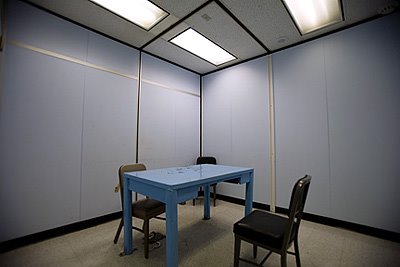
In reality, life for criminal profilers and the cases we work rarely involve dangerous confrontations, chases, and slick labs. We sit in our offices or, if we go to a police department to work, we are put into an interrogation rooms consisting of a table and a couple of chairs. We don't even get nice windows to look out.
If I am on location, I usually stay one week, arrive at eight or nine each morning and leave at five or six in the evening. I come out of my box for bathroom breaks and lunch. I go out to the crime scenes to observe the areas; sometimes I do interviews; occasionally I will do some kind of experiment.
On my last case, I drove my rental car at excessive speed from the crime scene to a convenience store on a curvy country road, timing how long it took me. I had to do the run a dozen times, waiting in the parking lot of the building where a mass murder went down, revving my engine and waiting for a moment when traffic lightened up, when the last car passing left my view and the next car was a good gap behind. Then just before that car reached me, I floored it, sped onto the road and hauled ass toward the convenience store. If someone pulled out in front of me and slowed me down too much, the experiment failed, and I had to do it again. Finally, I got the three fastest times I could manage and drove back to the station.
I was relieved when the detective told me there were no speed cameras on the road, so I wasn't going to have to beg him to "take care of " a thousand dollars worth of fines on behalf of my investigative work. I learned from my experiment that one of my suspects could be cleared; he couldn't have driven from Point A to Point B from the time the crime went down to the time his vehicle passed the camera at the convenience store.
When the week ends, I return to home base and spend hours in my office reviewing the information and analyzing the evidence until I am satisfied. Sometimes I role-play to act out part of the crime so I can see if it could really happen that way. Sometimes I consult with experts to get a more seasoned explanation of forensics or culture or some technical issue I am not that familiar with. When I have a profile that is accurate and clearly explains my determinations and investigative findings, then I am done -- unless some new evidence or information comes to light that changes my conclusions.
There are two methods of profiling: inductive and deductive. The inductive method, which became an FBI methodology, relies on statistical research to determine the likelihood of a certain type of offender or a certain trait to be linked to a crime. The old adage that all serial killers are Caucasian came from this kind of profiling. Research, which included interviews of incarcerated serial killers, concluded that most of these kinds of criminals were white; therefore a crime committed by a serial killer pointed to a white offender. The DC Sniper case caught a lot of inductive profilers off guard. They'd profiled the offenders as white, but they turned out to be African-American. FBI profiles tend to be lists of offender traits developed more from generalizations about percentages of similar crimes rather than a thorough analysis of the individual crime.Deductive profilers analyze the forensic evidence and the behavioral evidence at the scene and draw conclusions specific to the particular crime. Each element of the profile must be supported by that particular crime and not be drawn from general theories. Of course, deductive profilers have studied the research and understand how this knowledge can apply to the case, but they still have to keep in mind not every case will fit, and there will be anomalies. They must depend on the evidence to prove the point.
The murder of Sandra Cantu was one of these cases where inductive profiling would lead to the conclusion that a man committed this sex crime. However, Sandra's killer was a female, a church woman. The evidence actually didn't prove whether the killer was male or female; there was penetration but no semen, so all one could say, deductively, was that someone sexually assaulted the child with a solid object of some sort. On television, most of us commentating tossed out inductive theories as we had no access to the evidence. We said the police were likely looking for a male sex offender in the community. Inductive profiling alone will get you in trouble!The processes of inductive profiling and deductive profiling are somethings all of us do in daily life. We inductively gather information about people and behaviors, and when we are confronted with a new situation and don't have time to think, we apply these generalizations and hope they are right. With more time and evidence, we are able to analyze more thoroughly, and we become deductive profilers.
Juries end up in a terrible situation because they must become profilers overnight. They don't have time to do research to increase their general knowledge of criminals and their crimes; they don't have time to study forensics, psychology, and crime scene reconstruction in order apply good deductive skills to the case; and they have lawyers from both sides, along with prosecution and defense experts, confusing them and sometimes lying to them about the evidence and its meaning.
After going through this crash course in profiling, taught by questionable practitioners, they must render a verdict and decide the course of a human life. And people wonder why I am a proponent of professional juries!If you want to learn more about profiling crimes and give it a whirl yourself, tune into my new Blog Talk Radio show, Profile This! every Sunday evening at 9 PM EST.
Tweet
Labels:
Criminal Profiling,
jury duty,
Pat Brown's posts
Friday, April 16, 2010
The Road to Hell...
Between 1,500 and 1,800 children left orphanages in Russia last year, striking out to find real homes in America. But now, because of the chilling new case of seven-year-old Artyom Savelyev, next year there may be none.
Yesterday, a Russian Foreign Ministry spokesman announced an immediate suspension of U.S. adoptions in Russia, pending an upcoming visit from a U.S. delegation to resolve the issue. It should be noted that other Russian officials disputed this ban, and the State Department says that for the moment it can't figure out who to believe.
Artyom, also known by his American name Justin Hansen, got off a plane from Washington, D.C., in Moscow last week, all by himself, carrying nothing but a backpack with some toys, one pair of outsized underwear, and a letter from his adoptive mother, Torry Hansen.
Did I mention he is SEVEN YEARS OLD?
In the letter Artyom clutched when he got off the plane, where he was met by a driver Hansen hired off the internet to deliver the boy to the Russian Education Ministry, his 26-year-old single mom justified her actions. She said she'd been misled by the Russian adoption agency to believe Artyom was mentally healthy, when, she claimed, he was in fact emotionally disturbed.
"He is violent," she wrote in the letter above, "and has severe psychopathic issues/behaviors." Hansen's mother, Nancy, told reporters later that Artyom grew increasingly disturbed during the six months he lived in their small-town Tennessee home, and at one point threatened to burn it down.
This might be the most glaring headline to come out of the sad story of Russian adoptions gone awry, but it's only the latest in a string of incidents involving these children, abandoned in orphanages, who languish there for several years before seemingly well-intentioned adoptive parents come forward. But during that time unclaimed, in group homes with inadequate attention, the damage is being done.
"Reactive Attachment Disorder" is often used to describe such lost souls, who missed out on the critical bonds formed in early years with a loving parent or adult. They may never have been held, cuddled, hugged. That yawning developmental hole results in a spectrum of behavioral problems, up to and including extreme violence. Was Artyom about to burn down the house? We'll never know. But there have been cases where the other children in the house, even the adults, were at physical risk.
In fact, in the years since Russia opened its borders to allow these kids out in search of new life with a real family, the number of willing families has slowed. The 1,500 figure of last year is much lower than the 5,800 Russian orphans adopted just six years ago. Taking these kids out of moldering group institutions and resettling them into the arms of strangers is no quick fix.
It's a tough and complicated problem. Hansen says the Russian adoption officials knew of Artyom's problems and lied to her about them. She said she was blindsided and eventually had no choice but to do what she did. Here are a few choices she did have, however:
She apparently consulted with psychologists, but never took the boy to see one. She's a nurse. She should know better. She didn't seem to contact anyone back in Russia about the problem, and didn't even seem to think her son should be returned personally. One of her critics referred to her act as 'taking out the garbage.' How much preparation and forethought did she put into her choice to adopt this child in the first place?
Artyom, his Russian driver reported, seemed a likeable and unfazed seven-year-old. He gave away his toys to the people around him, pulling them out of his backpack 'like a magician.' He spoke only English in response to Russian questions, and talked about wanting to go back to his home in the U.S.
He won't be going back. And now many others like him, and even in much better shape than he is, won't be going anywhere either. They've lost that choice too.
Tweet
Thursday, April 15, 2010
Adult? I Don't Think So ...
by Kathryn Casey
Okay, there's no argument; if the facts being reported in the press are true, Jordan Brown committed a horrendous act. He allegedly lay in wait with a shotgun, covering it with a blanket. While his stepmother, eight and a half months pregnant, lay in bed, Jordan aimed at her head and pulled the trigger. Afterward, authorities say he picked up the shell casing and disposed of it, throwing it away as he walked to the school bus from their western Pennsylvania farmhouse.
I'm not usually an apologist. I believe people need to be held responsible for their actions. Still, sometimes there are mitigating circumstances. In this case, however, I haven't seen reports that Jordon's step-mom, 26-year-old Kenzie Marie Houk, did anything to provoke the attack. Certainly the male fetus Houk carried had done nothing wrong. (That's a photo of their funeral on the right below.) Jordan's motive: the one being bantered about is jealousy.
So what's my problem with the case? Sure Brown's young, but isn't the crime more than heinous enough to make the Pittsburgh judge's decision to try him as an adult the right one? If the facts prove true, doesn't Jordan Brown deserve a first-degree murder charge and a possible life sentence without the possibility of parole?
Not in my opinion. Why? Because Jordan Brown was eleven at the time of the February 20, 2009, killing.
Does anyone involved with this case truly believe that an eleven-year-old is an adult? Have they ever had children? Do they interact with children? Come on folks, eleven is eleven, seven years younger than eighteen. It's sixth grade. We're talking about the quarterback on the pee wee football team. The boy hadn't even been to middle school yet.
Disagree? Go stand out on the street and watch the kids in your neighborhood walk to school. Pick out the eleven year olds, and remember what it's like being a little kid. If authorities are right and Jordan Brown murdered his step-mom and unborn step-brother, that's truly a horrible tragedy. Does he deserve to be punished? Absolutely. But does he deserve to be judged as an adult? Not in my opinion. And not in the opinion of Jordan's dad, Chris Brown.
Jordon Brown was eleven years old on that fateful day. He still wasn't sure, according to his father, if Santa Claus existed. Despite the understandable fury over his alleged crimes, the boy needs to be treated fairly, judged for what he is: a child.
Tweet
Chronologically, Jordan was seven years from legally becoming an adult on the day he is supposed to have pulled the trigger. Psychologically, his mind is indisputably that of a child. He hasn't even made it to adolescence. He hasn't had adult experiences, doesn't have the advantage of the learning that comes with aging. Currently the system is doing the right thing, housing Jordan in a juvenile facility. He needs to be tried in the juvenile courts as well. Why? Because that's what he is.
Disagree? Go stand out on the street and watch the kids in your neighborhood walk to school. Pick out the eleven year olds, and remember what it's like being a little kid. If authorities are right and Jordan Brown murdered his step-mom and unborn step-brother, that's truly a horrible tragedy. Does he deserve to be punished? Absolutely. But does he deserve to be judged as an adult? Not in my opinion. And not in the opinion of Jordan's dad, Chris Brown.Jordon Brown was eleven years old on that fateful day. He still wasn't sure, according to his father, if Santa Claus existed. Despite the understandable fury over his alleged crimes, the boy needs to be treated fairly, judged for what he is: a child.
Wednesday, April 14, 2010
Here a Serial Killer, There a Serial Killer
by Pat Brown
What is it about serial killers, above all other kinds of criminals, that makes everyone so fascinated with them, and why are they showing up in every piece of fiction? And why is it that most of the time the serial killers aren't even close to what exists in reality?
I know this is my field, and I specialize in serial killers, but really, aren't there any other kinds of murderers and criminals out there in the world? Remember Agatha Christie? She bumped off lots of people, and the killer had other motives and methods that didn't always involve a gruesome sexual homicide.
I have a good reason why I am feeling surly. I decided to take a day off from work and treat myself to an old-fashioned day in the spring sunshine. I settled into a lawn chair in the yard, a bottle of Perrier and a bowl of grapes alongside in the grass, and simply read. I had the Number One book in my lap, The Girl with the Dragon Tattoo, and I felt a pleasant indolence settle into my body as I started into Stieg Larsson's translated-from-Swedish prose. I picked the book for a couple of reasons: it was getting rave reviews as a piece of fine literature, and my quick scan of the first few chapters promised a journey to a small town in Scandinavia and a mystery of a sort that was hidden in a web of journalism, industrialism, and powerful family secrets ... an intrigue that wouldn't involve the typical present-day fare of "naked dead brutalized woman found in field."It isn't that I can't read a book that includes crimes from my profession but, quite frankly, I was sick of always reading about the same kind of murder. I read The Lovely Bones a bit ago and seen the movie, and the young girl who narrates the story is raped, tortured and murdered by a serial killer right at the outset of the book. Then I read The Shack while I was on vacation in Costa Rica because I had heard it was an inspiring spiritual book. And wham, another serial killer murders someone's daughter, a little girl even younger than the one in The Lovely Bones. I wanted to throw the book into the hotel dumpster, but I carried it home in my luggage and eventually left it in the waiting room of a hospital intensive care unit. Although I didn't go for the message in the book, apparently it helped a lot of people, and I thought someone sitting there with a heavy heart for a loved one might find the book uplifting.
So I wanted a literary book. Something with more to it than another sexual psychopath killing off an unsuspecting female. I didn't want to read about rape and sadism and stranger murder. I thought I had a found an escape with The Girl with the Dragon Tattoo.
(Spoiler ahead!)
The book started out so nicely. It had a complicated assortment of players and one of them, the protagonist, found himself lured to a tiny town, with an interesting collection of residents, where a mystery of some sort was to unfold. A number of readers complained about the mundane descriptions of the food and housing and furnishings. But I rather liked those bits as they took me to another land, developing a cultural picture in my mind that evoked memories of my college days in Copenhagen. Then I got to page 92. The true goal of the puzzle was revealed: the protagonist/journalist was to find out who murdered his employer's granddaughter.
Okay, I wasn't unduly alarmed. Did she discover a family conspiracy to take over the business? Was there a Nazi connection to be discovered in the tidy town? Was there a secret love affair to be kept behind closed doors?
(Spoiler ahead!)
By page 250, my grapes were gone and so was my "innocence." The first disgusting rape scene had been badly digested. I replaced the almost empty sparkling water bottle with a Diet Pepsi. The fruit dish now had cookies on it.
(Big spoiler ahead)
I struggled onward. And then it hit. Page 375. The serial killer showed up. Actually two of them. An incredibly repulsive series of homicides with unsavory biblical connections. The best book in the world (some 24 million books if you include the other two in the trilogy) lost its allure. And then it got stupid. Whereas serial killers are almost always massive financial losers and operate in secrecy, this author turns rich businessmen into a father/son serial killer legacy and allows them to rape the daughter/sister as well to make the story all the nastier. Then ridiculous religious signatures are added to the crime scenes (that none of the detectives ever note and only a teenager and a seriously personality disordered woman pick up on) ... Okay, you have to make fiction more interesting than life. I get it, but I just found the story repulsive and downright silly. I wasted a day off and ruined my diet.
So what is it that causes fiction writers to so often include violent sexual predators as their fictional criminals? How about a good blackmailer, a con artist, a burglar, a kidnapper? How about leaving out the graphic stuff, or is that the whole point? Is that what makes the sales these days? Does a book have to include something gruesome and stomach-turning to be interesting?I really loved the book The Curious Incident of the Dog in the Night-time. There was a murder in this book as well, but it was a dog, not a human. And our detective was an autistic boy. It was a curious book indeed, and I enjoyed every bit of the mystery to be uncovered.
I might just have to start rereading Nancy Drew, The Dana Girls, and The Hardy Boys. I always loved the puzzle of trying to figure out what pieces fit together and then seeing the picture come clear as the final chapter reveals the answer. Maybe I am still a child at heart but I think adult fiction could benefit by cleaning up its act and giving us a mystery that involves our minds and not just our visceral parts. Or maybe I am just getting old and crotchety. Anyone with a good recommendation of a mystery book or series without all the gore and nasty serial murders? I need another day off with a really good book to take me through it. And I need to get back on my diet.
Labels:
Pat Brown's posts,
serial killers
Tuesday, April 13, 2010
Physician, Friend and Mystery Man, Doug Lyle
Doug Lyle is a colleague of mine through the Mystery Writers of America, and he is a friend. To celebrate the arrival of his new book, Stress Fracture, we decided an interview was in order. Doug teaches forensic science online classes for DeSales University's Masters of Criminal Justice program. He has an interesting Web site page called The Writer's Medical and Forensics Lab, and I find him an excellent writer and author.
Q.: Doug, for Women in Crime Ink readers who don’t know you, please give us a little about your background.
A.: I'm a Southerner, having grown up in Huntsville, Alabama, graduated from the University of Alabama for both college and medical school and then did my cardiology training at the Texas Heart Institute in Houston. I now practice cardiology in Orange County, California. I write both fiction and nonfiction, have won the Macavity Award, and been nominated for an Edgar Award. I also consult with the writers of many TV shows, including Law & Order, CSI: Miami, Diagnosis Murder, Monk, Judging Amy, Peacemakers, Cold Case, House, Medium, Women’s Murder Club, and 1-800-Missing.
Q.: You are considered an expert in forensic science. How do you use those skills?
A.: I don't work in the forensic field and do not consider myself an expert but more an interested party. Being a physician, the terminology and the science behind forensic science is not foreign to me, so it wasn’t difficult to educate myself in the field. Now I use it to translate this often difficult science into simple terms for writers and hopefully to help them use this information in their stories. So I'm more or less a translator for fiction writers.
Q.: What are you doing to stay abreast of today’s forensic science?
A.: I read anything and everything that has to do with the field. I stay on top of it through the many scientific blogs, scientific journals, and rummaging around the net. I will say that a lot of my research is stimulated by the questions I receive from writers who want to know some forensic detail for their story. I probably learn more from the questions that are asked than the questioner learns from my answers. I am constantly amazed at the creative mind of fiction writers and the wild scenarios and questions they come up with.
Q.: What do you think about the state of forensics today? Do you see progress being made? Are we staying ahead of the criminals?
A.: Like any science, forensic science progresses in fits and spurts. The hot topic of recent years has been DNA and there have been some incredible advances in this arena. With the new so-called "touch DNA" techniques, investigators are finding DNA samples in places they never looked before. A simple fingerprint will often contain the person's DNA because these prints are made up of oils and skin cells left behind when an object is touched. With the newer DNA testing techniques a single cell is enough for DNA profiling in many cases.
Q.: Thank you for the review copy of your latest book, Stress Fracture. Can you provide a brief book jacket explanation?
A.: Stress Fracture is the first in my new Dub Walker series. It’s set in Huntsville and revolves around the world of murder and forensic science. In the story, a series of brutal killings take place that are very confusing to Dub in that each killing suggests that the killer on one hand is cold and methodical while on the other is frenzied and out of control. It creates a difficult profiling situation and makes tracking the killer problematic. He leaves little evidence behind yet appears to be completely insane, a situation that the profilers call a "mixed presentation." Of course, it becomes personal when a close friend of Dub’s is murdered and both Dub and his ex-wife Claire McBride are threatened directly by the killer.
Q.: Your main character, Dub Walker, is a crime scene and evidence analyst. What is he responsible for? Are you are going to pepper all your stories with forensic science details?
A.: Dub almost made it through medical school but dropped out three months from the finish line when his sister was abducted. He was supposed to meet her at a certain place and at a certain time but was delayed. When he got there she was gone. Never seen again. This drove him into depression, which ultimately led to him joining the Marines where he was an MP and got his head screwed back on. After that, he worked at the Alabama Department of Forensic Science in Huntsville where he gained his expertise in forensic investigations. He also did a stint with the FBI's Behavioral Assessment Unit where he learned more about criminal behavior. He then became a writer and teacher on these subjects, which led to his being consulted on difficult cases around the country. He brings a broad spectrum of knowledge and experience to the cases and has a knack for thinking outside the box.
And yes, each story in the series relies heavily on forensic science. Stress Fracture deals with PTSD as well as criminal behavior and the second in the series, Hot Lights, Cold Steel, which is already completed and will be out in 2011, deals with robotic surgery. So each book contains not only forensic science but also medical science.
Q.: Would you care to share details about your writers' forensic blog?
A.: I started the blog in order to communicate with writers about forensic issues. It is meant primarily for writers though I have readers who cover a very broad spectrum, including police officers, attorneys, forensic experts, and many others. I try to take something interesting that I've seen in my net searches, or maybe stimulated by a question from a writer, or perhaps some crime story that appears in the papers or on television, and use that as a springboard to discuss some forensic technique. When I post things to my blog I always attempt to keep writers in mind and ask myself—What about this story might help a writer with something they're working on or perhaps generate a new story idea? And of course, I learn a lot doing it.
Q.: Is there anything else you would like to tell Women in Crime Ink readers?
A.: Those of you who write, keep writing. Those of you who read, keep reading. We writers love our readers.
Tweet
Q.: Doug, for Women in Crime Ink readers who don’t know you, please give us a little about your background.
A.: I'm a Southerner, having grown up in Huntsville, Alabama, graduated from the University of Alabama for both college and medical school and then did my cardiology training at the Texas Heart Institute in Houston. I now practice cardiology in Orange County, California. I write both fiction and nonfiction, have won the Macavity Award, and been nominated for an Edgar Award. I also consult with the writers of many TV shows, including Law & Order, CSI: Miami, Diagnosis Murder, Monk, Judging Amy, Peacemakers, Cold Case, House, Medium, Women’s Murder Club, and 1-800-Missing.
Q.: You are considered an expert in forensic science. How do you use those skills?
A.: I don't work in the forensic field and do not consider myself an expert but more an interested party. Being a physician, the terminology and the science behind forensic science is not foreign to me, so it wasn’t difficult to educate myself in the field. Now I use it to translate this often difficult science into simple terms for writers and hopefully to help them use this information in their stories. So I'm more or less a translator for fiction writers.
Q.: What are you doing to stay abreast of today’s forensic science?
A.: I read anything and everything that has to do with the field. I stay on top of it through the many scientific blogs, scientific journals, and rummaging around the net. I will say that a lot of my research is stimulated by the questions I receive from writers who want to know some forensic detail for their story. I probably learn more from the questions that are asked than the questioner learns from my answers. I am constantly amazed at the creative mind of fiction writers and the wild scenarios and questions they come up with.
Q.: What do you think about the state of forensics today? Do you see progress being made? Are we staying ahead of the criminals?
A.: Like any science, forensic science progresses in fits and spurts. The hot topic of recent years has been DNA and there have been some incredible advances in this arena. With the new so-called "touch DNA" techniques, investigators are finding DNA samples in places they never looked before. A simple fingerprint will often contain the person's DNA because these prints are made up of oils and skin cells left behind when an object is touched. With the newer DNA testing techniques a single cell is enough for DNA profiling in many cases.
Q.: Thank you for the review copy of your latest book, Stress Fracture. Can you provide a brief book jacket explanation?
A.: Stress Fracture is the first in my new Dub Walker series. It’s set in Huntsville and revolves around the world of murder and forensic science. In the story, a series of brutal killings take place that are very confusing to Dub in that each killing suggests that the killer on one hand is cold and methodical while on the other is frenzied and out of control. It creates a difficult profiling situation and makes tracking the killer problematic. He leaves little evidence behind yet appears to be completely insane, a situation that the profilers call a "mixed presentation." Of course, it becomes personal when a close friend of Dub’s is murdered and both Dub and his ex-wife Claire McBride are threatened directly by the killer.Q.: Your main character, Dub Walker, is a crime scene and evidence analyst. What is he responsible for? Are you are going to pepper all your stories with forensic science details?
A.: Dub almost made it through medical school but dropped out three months from the finish line when his sister was abducted. He was supposed to meet her at a certain place and at a certain time but was delayed. When he got there she was gone. Never seen again. This drove him into depression, which ultimately led to him joining the Marines where he was an MP and got his head screwed back on. After that, he worked at the Alabama Department of Forensic Science in Huntsville where he gained his expertise in forensic investigations. He also did a stint with the FBI's Behavioral Assessment Unit where he learned more about criminal behavior. He then became a writer and teacher on these subjects, which led to his being consulted on difficult cases around the country. He brings a broad spectrum of knowledge and experience to the cases and has a knack for thinking outside the box.
And yes, each story in the series relies heavily on forensic science. Stress Fracture deals with PTSD as well as criminal behavior and the second in the series, Hot Lights, Cold Steel, which is already completed and will be out in 2011, deals with robotic surgery. So each book contains not only forensic science but also medical science.
Q.: Would you care to share details about your writers' forensic blog?
A.: I started the blog in order to communicate with writers about forensic issues. It is meant primarily for writers though I have readers who cover a very broad spectrum, including police officers, attorneys, forensic experts, and many others. I try to take something interesting that I've seen in my net searches, or maybe stimulated by a question from a writer, or perhaps some crime story that appears in the papers or on television, and use that as a springboard to discuss some forensic technique. When I post things to my blog I always attempt to keep writers in mind and ask myself—What about this story might help a writer with something they're working on or perhaps generate a new story idea? And of course, I learn a lot doing it.
Q.: Is there anything else you would like to tell Women in Crime Ink readers?
A.: Those of you who write, keep writing. Those of you who read, keep reading. We writers love our readers.
Monday, April 12, 2010
The Chemistry of Murder
Just for the moment, consider yourself a forensic scientist, an investigator summoned by the police to the scene of a rather puzzling death.
The scene in question is a small, rather shabby apartment in which there has clearly been a gas leak. The cops have opened all the windows to air the place out. In the bedroom at the rear of the dwelling you find a young woman who has clearly been dead for several hours. She lies on the bed - pale, cold and stiff.
Immediately, you realize that something is very wrong with this picture. You have the body sent back to the city morgue for blood tests. And those tests confirm your initial suspicion - the woman did not die of carbon monoxide poisoning.
In fact, further investigation finds that she was suffocated with a pillow before the gas came spilling into the apartment. The killer set the scene hoping that the police would believe it was an accidental death.
So what was the giveaway clue? What made you suspicious when you surveyed that sad little scene?
In fact, this one has an easy answer. If the woman had died of carbon monoxide poisoning, she would not have been pale. Her skin would have been flushed pink; people have actually been known to comment on the healthy look of corpses after a carbon monoxide killing.
There's a very straightforward chemistry to this. When we breathe life-giving oxygen rich air, the oxygen attaches to proteins in blood that carry the gas to every cell in our body. But carbon monoxide (a simple mixture of one carbon atom to every one oxygen atom) bonds much more efficiently to those proteins. I tend to think of it as a chemical thug. It muscles oxygen out of the way, grabs onto the carrier proteins (hemoglobins) and rapidly saturates the blood. That means that even if you are breathing air with some oxygen in it, the carbon monoxide crowds it out.
When enough carbon monoxide invades the blood stream, people die - usually a saturation above 50 percent although some people have been killed by levels in the 40 percent range. Carbon monoxide is a byproduct of the burning of fossil fuels - from gas for lighting, to natural gas for heating, to gasoline in automobiles - and it is an exceptionally efficient killer; in a closed garage, for instance, with a car left running, it has been known to kill people in as little as ten minutes. An analysis by the U.S. Centers for Disease Control estimated that about 500 people in the United States die from carbon monoxide poisoning every year and 15,000 require emergency treatment for exposure to the gas.
These poisonings leave visible evidence behind. As carbon monoxide levels rise, it sets off a reaction that turns the blood a deep cherry-red, a rosy chemical pink. Even the internal organs gain a dark cherry appearance, easily visible on autopsy. If a body is found pale and cold, many things could be responsible for that death - but definitely not carbon monoxide.
The crime scene I described above actually comes from a murder case in my book, The Poisoner's Handbook, and occurred in 1923. Further investigation found that the dead woman's husband had taken out an insurance policy on her life, suffocated her with a pillow, and then - this is the 1920s, when gas lighting is still prevalent - snapped a gas fitting on a lamp in the bedroom and let the illuminating gas flow out, assuming that police would be fooled.
When pathologists took a closer look at the body, they discovered that he had held the pillow so tightly against her that he had left bruises on the back of her head. When the full chemistry workup was done, the scientists found merely normal urban levels of carbon monoxide in the blood - nothing close to lethal at all.The husband went to prison and in this case it would be you, the good forensic scientist, who put him there. If someone tried this today - using, say, a "leaky" gas generator instead of old-fashioned illuminating gas - they too would get caught. They too would go to jail. Because a little chemistry - even as simple a calculation as this - goes a long way in catching a killer.
Tweet
Thursday, April 8, 2010
My Big Mouth
by Robin Sax
I went to law school because I knew I wanted to use my voice to help others, as well as to express myself. I saw the law as a way to get my voice heard.
Unfortunately, I was really miserable during my first year of law school. I hated every minute of my studies and was terrified that I was going to be forever in debt for a career that wasn’t right for me. But one spring day during my first year of law school, everything shifted for me. It was a Saturday, with only a month of classes left. I was arguing Fourth Amendment Search and Seizure in a moot court presentation to a mock panel of appellate lawyers. They grilled me on the law, questioned my analogies, and forced me to think on my feet.
As I was arguing my position, I realized I was actually enjoying myself. I was opinionated and passionate, and everyone was actually listening to my ideas. I realized that not only could I do good work as a lawyer, but it could actually be fun and fulfilling.
My second and third years flew by. Now I knew I was going to be a trial lawyer! I wanted to see the inside of a courtroom and stand up for justice for the underdog or victim. I decided to become a prosecutor. Then I could do the two things I love — educate and advocate. Even better, I could remain committed to always doing “the right thing.” Every decision I made revolved around one central question: “Is what I am doing in this case, with this defendant, in the best interest of the people I represent?”
I began working for the Los Angeles County District Attorney’s Office in 1999. Although I received a great deal of satisfaction handling each of my cases, eventually I wanted to seek justice in other lawyers’ cases, in other cities, counties, and countries. Each and every day in court, I watched the wheels of justice move at pace slower than molasses in winter. I would listen to arguments in court and feel some frustration. I saw things that seemed unjust and unfair.
As a prosecutor, though, I could not speak out on cases being prosecuted in Los Angeles; I could only discuss cases in other jurisdictions. In order to make sense of what I was observing in Los Angeles, I began examining sexual assault and abuse cases around the country. I looked at best practices and missed opportunities to help me understand the victims I was working with.
What shocked me most was how many cases were filled with mistakes, injustices, and plain old mediocre work. It was tough to sit in court and watch these injustices happen day in and day out. So, I thought, “Well, Robin, don’t just think about it, do something!” I did. I began writing, teaching, and advocating. As I did this, I was always mindful of my responsibilities and duties as a representative of the Los Angeles County DA’s Office.
As I was contemplating writing a book about the inner workings of the system (which I later did), I was assigned the case of Thomas Beltran. Beltran was a 30-year veteran Lincoln Middle School teacher from Santa Monica who sexually assaulted a large number of his female junior high students. While the case became an example of best practices (in terms of the sexual assault investigation and coordinated efforts between law enforcement, prosecutors, social workers, etc.), it also presented one of the saddest examples I'd seen of modern-day parents-gone-bad.
Beltran was arrested on a Friday. Through the course of that weekend, top notch Santa Monica Police Department detectives and I worked together. They interviewed a number of teenagers who came forward, contained the classroom, secured the defendant's whereabouts, and obtained his confession to committing all acts with all victims.
As disturbing as the case was, the silver lining was that Thomas Beltran took responsibility early. He confessed both in interview and via lie detector. But that Monday, during a town-hall meeting at Lincoln Middle School, I witnessed parents standing up for him. I heard murmurs of “he’s not guilty,” and cries that the victims weren't telling the truth. I couldn't believe this. In my mind, I thought there were only one of two possibilities: Either these parents were the cruelest I have ever seen, or they were the most naïve parents I have ever seen. I preferred Option Two.
Yet it dawned on me that if the default response of these parents was to doubt the victim, what would happen if their own kids came to them? It was then that I knew I needed to use my experiences to educate and speak out instead of processing justice one case, one victim at a time. Armed with that story, I convinced Prometheus Books to allow me to write Predators and Child Molesters: A Sex Crimes DA Answers 100 of the Most-Asked Questions.
Beltran was arrested on a Friday. Through the course of that weekend, top notch Santa Monica Police Department detectives and I worked together. They interviewed a number of teenagers who came forward, contained the classroom, secured the defendant's whereabouts, and obtained his confession to committing all acts with all victims.
As disturbing as the case was, the silver lining was that Thomas Beltran took responsibility early. He confessed both in interview and via lie detector. But that Monday, during a town-hall meeting at Lincoln Middle School, I witnessed parents standing up for him. I heard murmurs of “he’s not guilty,” and cries that the victims weren't telling the truth. I couldn't believe this. In my mind, I thought there were only one of two possibilities: Either these parents were the cruelest I have ever seen, or they were the most naïve parents I have ever seen. I preferred Option Two.
Yet it dawned on me that if the default response of these parents was to doubt the victim, what would happen if their own kids came to them? It was then that I knew I needed to use my experiences to educate and speak out instead of processing justice one case, one victim at a time. Armed with that story, I convinced Prometheus Books to allow me to write Predators and Child Molesters: A Sex Crimes DA Answers 100 of the Most-Asked Questions.
In February 2009, two months before the release of that book, I delivered notice to the DA's Office that I wanted to resign. Though it was a difficult decision, I wanted to pursue a career in the media. After my experience with the Beltran case, I was driven more then ever to support victims on a macro level.
My boss suggested I wait to resign (to see how I liked being away from the office), so I instead took an official leave of absence from the DA’s office to write books, teach classes, do public speaking, and appear on television as a guest analyst and commentator.
My leave of absence was for a maximum of six months. I had until September to decide whether I was going to pursue justice as a prosecutor or as an author and advocate. During my time away, I blogged, wrote articles, spoke and lectured, and I realized the huge impact one can make on society through the power of the media.
Thanks to my experience as a courtroom prosecutor, public speaking and "performing” are not new for me. Many of the same reasons I love being a trial lawyer -- using my strong voice to share a particular point of view -- apply to my love of communicating via television, radio, and the Internet. I could educate, pontificate, and ensure change. For the first time, I could say it as I saw it was with no censorship, no fear of angering my boss -- just expressing how I felt, purely, simply, and honestly.
I found my public voice growing and actually being heard. People appreciated seeing a prosecutor shaking things up, calling out lawyers, police officers, and others who weren’t living up to the requirements of their positions, letting down the people they were supposed to protect.
The biggest difference between working in the popular media versus the courtroom is that people watch TV, listen to the radio, or read because they want to -- not because they received a jury summons in the mail. They want to hear what I have to say as a spokesperson in the public eye
My other frustration as a prosecutor was seeing how completely different public life is from private sector life. So often I went to work and was amazed that justice was ever dispensed, considering the many shortcomings inherent in the system. I didn’t understand the lack of accountability, the lack of diligence and the overall complacency of a justice system that was supposed to exist to protect our society.
Without even realizing it, I was traveling a new career path as an outspoken advocate and legal commentator. No longer a DA, I'm now a watchdog of the very system I once worked in. Instead of following policy and accepting my marching orders and memoranda, I'm doing what I've always done, one way or the other: "saying it like it is." Only this time, there’s no one hanging over my shoulder vetting my words.
When I officially resigned from the DA’s office in July 2009, I told them it was better for me not to try to walk the extremely tight line between being a prosecutor and an outspoken advocate. I wanted to use my voice in the media without worrying whether it was inconsistent with the beliefs or philosophies of the Los Angeles County District Attorney.
Still, while I had not always been able to speak out and reveal my opinions, as a prosecutor I had a great deal of latitude and discretion in terms of how I handled my own cases. In them, I was making a difference and changing the lives of children who were being abused.
I never actually got in trouble, but I always felt that I was teetering at the edge. That was part of my decision: I wanted to leave before I blew it, while I still had a good relationship with the DA’s office, law enforcement, etc. Besides, I loved the people I worked with. I just wanted us to do better!
Still, while I had not always been able to speak out and reveal my opinions, as a prosecutor I had a great deal of latitude and discretion in terms of how I handled my own cases. In them, I was making a difference and changing the lives of children who were being abused.
I never actually got in trouble, but I always felt that I was teetering at the edge. That was part of my decision: I wanted to leave before I blew it, while I still had a good relationship with the DA’s office, law enforcement, etc. Besides, I loved the people I worked with. I just wanted us to do better!
Now, I represent "the people,” but in a whole new way. Every lawyer has her own story and her own inspiration. Mine just happens to have been written by my big mouth.
Tweet
Wednesday, April 7, 2010
Give to Caesar what is Caeser's
by Kathryn Casey
Easter weekend, I wrote a letter to Cardinal Daniel DiNardo of the Galveston-Houston Archdiocese after the Houston Chronicle ran excerpts from the Cardinal's letter supporting Pope Benedict XVI, basically dismissing as untrue allegations about the pope's actions regarding priests and the sexual abuse of children. I've decided to make this an open letter.
Dear Cardinal DiNardo:
This is a difficult time in the history of the Catholic Church, and a disturbing time for those of us who are Catholics. Current events have many of us questioning our dedication to a church that ignores its own ethics and edicts. As of late, the church appears less committed to justice, accountability, and protecting the innocent than to hiding its own sins.
While I love my faith, it is difficult to overemphasize the magnitude of my disgust at the actions of some of those who have ruled the Catholic Church. My anger has been building for quite some time, dating back to the first revelations of sexual abuse by priests, and examples of church leaders covering up rather than weeding out the offenders. We now know that this cancer which began in Rome metastasized, through not just the U.S., but Ireland, across Europe and perhaps the world.
My husband and I grew up Catholic, and we raised our children as Catholics. We sent our son to a Jesuit high school. We donate to our local parish. We attend mass. We look to church leaders to be strong and wise, fair and just.
There are many questions, however, about what happened while Pope Benedict XVI was Cardinal Joseph Ratzinger. The allegations include that he turned a blind eye to the sexual abuse of children, and that he protected offending priests instead of their innocent victims. And now we have what appears to be evidence that this is not merely speculation but may be true: documents that allegedly implicate the pope in the case of Rev. Michael Teta of Tucson, AZ., a priest a church tribunal found repeatedly molested children, even abusing two boys, a seven-year-old and a nine-year-old, in the confessional, as they prepared for their first communions. It’s charged that although the cardinal/future pope had the authority to act, the man now known as Pope Benedict XVI did nothing to stop Teta for a dozen years.
There are also documents raising questions in a Wisconsin case, where 200 boys were allegedly abused at a school for the deaf. There it's been charged that the cardinal/future pope halted an investigation into an accused priest.
This is wrong on so many levels, but perhaps the most basic one is that it was never the then-cardinal/now-pope’s decision to make. These priests were accused of criminal acts, illegal activities that fell under the authority of civil law enforcement. In Luke 20:25, Jesus says, “Give to Caesar what is Caesar’s, and to God what is God’s.” Although the quote refers to money, it works here as well. These acts didn't take place on Vatican soil, but in Tucson, Boston, Dublin, Rome and cities across the globe. Despite what it may tell itself, the church has never had the right to deprive civil law enforcement of fulfilling its duty to investigate and prosecute dangerous sexual predators.
The church would not be in the crisis it’s in today if it simply acknowledged its obligation to immediately turn criminal allegations over to civil authorities. In all such cases, the church hierarchy needs to refer criminal complaints to local law enforcement, instead of continuing the course church leaders have adhered to in the past: systematically aiding and abetting dangerous criminals, hiding their crimes and moving them to new locations where they claimed more victims.
Cardinal DiNardo (photo right), you are the spiritual leader of Catholics in my part of the world. Today in the Houston Chronicle, I read excerpts from your letter supporting the pope. You wrote: “recent headlines insinuating inaction or culpability by Pope Benedict XVI regarding the crisis are unfair or inaccurate. Any innuendo that he has not tried to tackle cases of sexual abuse by clergy is misleading and harmful to the church.”
Catholics disgusted with this situation are less concerned with preserving the status quo at the church than with holding those responsible accountable and preventing future abuses. Instead of asking Catholics to blindly accept that the pope is innocent of the allegations, why not call for an open investigation into what the pope knew when, and what actions he did and didn't take?
As Catholics, we deserve a church we can be proud of, one that does the right things, even in the most difficult situations. We deserve a church that lives what it preaches, including justice and compassion for the most vulnerable, our children.
Update: I'd recommend taking a look at this op/ed piece from the NYTimes: Maureen Dowd. Tweet
Subscribe to:
Posts (Atom)


by Women in Crime Ink