Friday, October 29, 2010

The Darkest Crimes

by Katherine Ramsland 

Over the summer, a production team for the Investigation Discovery (ID) channel filmed my commentary as the recurring expert for American Occult, a proposed series on extreme crimes with supernatural associations. I have written a number of articles and books about vampires, ghosts, satanic activities, forensics, and serial killers, as well as interviewing occult practitioners firsthand and watching certain rituals. All crime has an element of darkness, certainly, but an obsession with occult power that precipitates murder--especially serial or mass murder--is entirely black.

The producers from M2 Pictures sent me background information on each case before we spent several long days discussing every aspect, from methods to motives. Despite the diversity among these cases, the desire for supernatural power emerged as a unifying theme. (Note: Wanting it is not the same as getting it.) We have centuries of proof to the contrary, but some people still believe that serving Satan with human sacrifice guarantees a larger-than-life return. They like the risk, but they also seek to be marked as “special,” “mysterious,” or in possession of some great secret.

On October 30, ID will show all three episodes--six cases--of these creepy crimes. We go inside the sinister worlds of self-professed vampires, cannibals, and Satanists, to consider the psychology behind the deadly rituals. But let me just say something first about the ID network. When Court TV met its demise a couple of years ago, it left a big hole for crime fans. Investigation Discovery jumped in to fill it and has been building itself as America’s leading source for investigation TV. It’s a cable network, so you have to look for it, but crime fans who try it are pleasantly surprised. ID has done some remarkably innovative series--including one devoted to female offenders. They have formed partnerships with established news organizations and production companies to bring investigative and current affairs programming to (so far) over 71 million U.S. households. Speaking for myself, I’m happy to know that someone is making documentaries about these infamous offenders and crimes. I use them all the time for teaching.

So, back to American Occult. Each episode features two unique stories about mysterious deaths, kidnappings, or rituals. I've published 38 books and more than 900 articles, many of which focus exclusively on occultic crimes, and on the programs I lead viewers through the bizarre twists and turns. Thanks to the cases I’ve explored, I can offer readers an in-depth analysis of the worlds of these killers, explaining their thought processes, their beliefs, even their delusions, as well as how their crimes relate (or don’t) to the broader scheme of some dark subculture.

The showings begin at 8 p.m. ET with “Savage Sin,” in which a tip led police to the mutilated body of a woman in a field outside Chicago. Soon, victim after victim turned up dead, all of them female and all mutilated in a similar manner. Then, a survivor described how she’d been abducted and horribly violated. Her information led to the arrest of the “Ripper Crew," a group of young men (mugshots, above) who purportedly worshiped the devil by cannibalizing female body parts. From this story, we move right to a priest in Ohio who murdered a nun, leaving a ritualized crime scene with an inverted crucifix. Although the case went cold, new leads opened it up and brought the surprising killer to justice.

If you’re still with me, “Blood Lust” depicts a group of students in Fall River, Massachusetts , who discovered the body of a local prostitute. Her skull was completely crushed in what looked like a primeval ritual. Another murder three months later evinced the same pattern, leading investigators to a secret underground cult of devil worshipers. Once this case is cracked, we move on to a real Halloween tale of a woman who’d barely escaped a man claiming to be a vampire. He’d been draining her of blood, fully expecting to kill her, as he’s suspected of having done to many others.

In the final hour, we have “Evil Sacrifice.” In this story, the rumors of a religious cult and a missing family led police to a man who believed he was God. After the cult members left their compound, the authorities discovered a mass grave. Then comes our last story, also from the Midwest: When police responded to an emergency call at the Ohio home of Terry and Marilynn Brooks, they found a shocking homicide and learned that one of the Brooks’ sons had a dark and terrible secret. The photo right is an ID photo of Jerry Brooks' collection of satanic books.

It’s an interesting way to spend the evening before Halloween. 

Dr. Katherine Ramsland teaches forensic psychology and criminal justice at DeSales University in Pennsylvania. Dr. Ramsland has master’s degrees in both clinical and forensic psychology from, respectively, Duquesne University and Jay College of Criminal Justice, as well as a Ph.D. from Rutgers University. Her latest book is The Forensic Psychology of Criminal Minds (Berkley).


Thursday, October 28, 2010

Extreme Measures

by Gina Simmons, Ph.D.

Walking about the tree-lined, red-brick covered campus of San Diego City College, you can feel a hopeful energy. This multi-cultural, inner-city campus attracts bright teenagers, middle-aged professionals, recovering addicts and suburban housewives all seeking some sort of growth and advancement. As former adjunct psychology faculty at City College, I feel a deep sadness about the recent campus murder of 19-year-old student Diana Gonzalez.

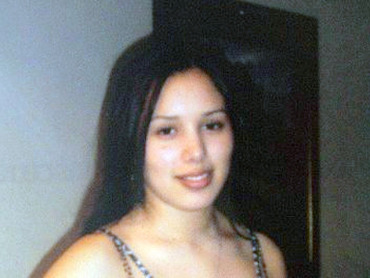
Diana Gonzalez, the teenage mother of a 9-month-old baby, was found brutally murdered beyond recognition, in a restroom. She had recently filed a restraining order against her husband, Armando Perez, 37, though the order had not yet been served. In her police report Diana stated her husband kidnapped and raped her over a three-day period, dragging her to a series of motels. At one point he allegedly strangled her to the point of unconsciousness. Diana's parents were apparently so worried about her that they drove her to and from her night class. When she didn't make it back to the car, they called police.

The San Diego District Attorney's office failed to press charges against Armando Perez on the violence charges Diana reported. District Attorney Bonnie Dumanis refuses to answer questions about the case ,citing "on-going investigation" as the reason. The prime suspect, Armando Perez, remains free. His abandoned car was found in Tijuana, Mexico, a few days after Diana's murder.

Depending on the type of survey used, between 600,000 and six million domestic violence cases are reported each year. In the year 2000, 1,247 women were murdered by an intimate partner. That same year, 440 men nationwide were murdered by an intimate partner. These statistics show how difficult it is to predict which cases will escalate to homicide and which cases will not. Law enforcement and domestic violence experts know the challenges of protecting domestic violence victims. Once two people have sex with one another, they often continue to replay a drama of passion and violence. Studies show that domestic violence disturbance calls often place police in danger. Children in violent homes are more likely to be abused. I've worked with children injured while trying to protect a parent. One of my clients witnessed the beating of a woman by a man and was punched while trying to rescue her. Victims often continue contact with perpetrators, violating mutual restraining orders, frustrating therapists and security professionals alike.

It appears Diana did everything she could do legally to protect herself from further violence. She filed the police report and restraining order, gave consistent statements and attempted to stay away from her husband. However ,he still got to her. He stalked her. Diana's husband allegedly kidnapped her, after lying in wait, and, for three days, raped her. He also apparently stalked her at school. He has been officially charged with her murder with a "lying -in-wait" allegation, making him eligible for the death penalty.

Victims of intimate partner violence and stalking experience significant negative psychological and physical health symptoms. Anxiety, depression, stress-related illnesses and deteriorating health result from living in chronic fear. Dr. Pati Beaudoin says that victims of stalking experience social isolation, exhaustion, desperation, diminished concentration, and communication problems. At a time when clear thinking is required for self-defense, victims often feel cloudy headed, disoriented, numb.

Dr. Brian Spitzberg reports that one type of high-risk stalker is what he calls the organized stalker, a controlling individual motivated by hate. Violent stalkers often have what Dr. Spitzberg calls a power orientation, characterized by domineering behavior, a strong masculine sex role identity, and distrust. These traits, combined with social incompetence evidenced by jealousy, obsessional thinking and a lack of empathy, are strong predictors of violent behavior. Armando Perez demonstrated an extreme lack of empathy by leaving his infant child motherless and his three children from his previous marriage fatherless.

Armando Perez was married to Olga Vera-Perez for 14 years. They created three children. Armando abused Olga by choking her in 2009. He then moved on to abuse Diana. Casey Gwinn, president of the National Family Justice Center Alliance in San Diego, said about this case, "Based on the evidence we had and based on the evidence I've seen, and, as 20 years as a prosecutor, it appears to me that charges should have been filed in this case." Diana reported a history of more than 20 domestic violence incidents involving Perez. "Somebody should have been interviewing her about those," Gwinn said. "If they were misdemeanors the city attorney could have filed them." The system failed to protect Diana Gonzalez.

Threat assessment expert Gavin de Becker cautions against restraining orders in many situations of domestic violence. If someone abides by the law they might be deterred by it so therefore probably don't need one. If the perpetrator engages in criminal conduct, they already show a disregard for the law. A restraining order can provoke the individual to act out violently as they might see the order as a hostile threat requiring retaliation or as a threat to their dominance. In Diana's case, the restraining order had no effect, as it had not been served. The only effect it may have had was to give Diana and her family a false sense of security.

Naturally, anyone in Diana's position would yearn to return to a sense of normalcy after the trauma she endured. Going back to school to better her life and the life of her child was an honorable thing to do. Unfortunately, in domestic violence/stalking cases, a woman faces the greatest danger when she separates from her abuser. To protect yourself from a violent stalker, sometimes you must exercise extreme measures:
  • Take a leave of absence from school, work, or any familiar places known to the stalker.
  • Go to a domestic violence shelter. Shelter services provide a 60 to 70 percent reduction in incidence and severity of re-assault.
  • Consult a threat-assessment professional. You can find referrals from the Association of Threat Assessment Professionals.
  • Consult private security professionals. Follow their advice.
  • Think like a stalker. How could someone find you? Where are you most vulnerable?
  • Leave town. Don't stay with any known relatives or friends. Instead, stay with friends of friends or people unknown to the stalker.
  • Get a second phone number for your personal calls. Leave the old phone number to receive messages so you can screen calls from the stalker and monitor his mood.
  • Get a guard dog.
  • While driving, make sure you're not followed. Test this by making four left turns.
  • Hire a private investigator to monitor your stalker.
Not everyone can afford to implement all of these suggestions. However, you can increase your likelihood of survival the more you take responsibility for your own protection. Law enforcement reacts to crimes already committed or in progress. Depending on police to protect you may not ensure your safety. You may have to do things outside the boundaries of normal life. You may have to take extreme measures.


Wednesday, October 27, 2010

Fact v. Fiction


By Kathryn Casey

A while bac
k when my latest true crime book, Shattered, debuted, I wrote a post on a writer's life, talking about my experiences as a working author. I hope I didn't dissuade any of you from trying it. A couple of my friends have told me that I'm a bit disillusioning on the subject, but I've always believed that people need to hear the truth, and writing is a pretty tough way to make a living. There are those authors who write one book and hit The New York Times list. (Why God, not me?) But for most of us, it's a long, competitive road.

Perhaps part of the reason I see writing as I do is that I've spent so many years writing non-fiction crime books, in other words, true crime. Covering a big case is a monumental task. I manage to turn out about a book a year, but there's always a lot of angst as I work my way through a long list of interviews, collect mountains of testimony and court documents, and spend weeks locked up in a courtroom listening to evidence. It's been tough at times, but as I've probably said here before, because I say it often, the years spent writing true crime have also been an education in law enforcement, especially homicide investigations.

The bottom line is that for the past couple of decades, I've focused on writing about real murder cases. Looking back, it's been a good way to learn a lot about what what happens behind the scenes in a sensational murder investigation. Now, for the other truth: It also plants scenes in your head, ones you can draw from when you take another step, moving from fact to fiction.

I did that about five years ago--actually a bit longer than that--