Showing posts with label Anthony Graves. Show all posts

Wednesday, June 22, 2011

Wheels of Justice Turn Slowly: Update on Anthony Graves

by Rachel Davis
Editor, Women in Crime Ink

The story of Anthony Graves, an innocent man who spent 18 years in prison for murders he did not commit, has been featured many times on Women in Crime Ink by defense attorney and regular contributor Katherine ScardinoIn 1994, Anthony Graves was wrongfully convicted of capital murder in a small Texas town.


Eighteen long years later, the charges against him were dismissed and he was released as a free man. Despite the fact that no amount of money can replace nearly two decades of an innocent man's life, Anthony Graves certainly deserved compensation from the State of Texas for his wrongful imprisonment. Unfortunately, the Texas comptroller denied Anthony's claim for compensation based on a technicality in the order of dismissal for his case. Now, a change has finally come and Graves will get the $1.4 million dollars owed to him for the years of his life that were lost.

Last Friday, June 17, 2011, Texas Gov. Rick Perry signed into law a bill that helps ensure exonerated individuals, like Anthony Graves, will receive compensation from the state for time spent wrongfully imprisoned. HB 417 will effectively close the loophole allowing for denial of compensation claims based on technicalities, such as the one in Anthony's case, where the lack of the words "actual innocence" from his dismissal order precluded him from receiving compensation.

This amendment to Texas compensation laws will allow exonerees to receive $80,000 for every year they were wrongfully imprisoned, provided that they are granted relief in accordance with a writ of habeas corpus (or a demand for proof of evidence of a crime), that the charges against them are dismissed, and that the dismissal is based on an affidavit from the prosecutor that they believe the person to be innocent. The law also allows for exonerees the option to enroll in healthcare coverage provided by the Texas department of criminal justice at the same cost an employee of the TDCJ would pay.

Although the wheels of justice turn slowly, the State of Texas has finally done its part, as required by law, to compensate Anthony Graves for his wrongful imprisonment. Hopefully, this law will also allow for retribution to other exonerees with legitimate claims to compensation.


But as time passes and the story of Anthony Graves' horrific journey to and from death row slowly fades out of the media limelight, let us not forget that Anthony is not the only person to be wrongfully convicted, but is one of the lucky ones whose freedom was restored. No amount of compensation will ever return to Anthony those 18 years.


Friday, January 28, 2011

'A Change Is Gonna Come'

by Katherine Scardino

My client, Anthony Graves, walked out of the Burleson County Jail on October 27,  2010, after having been incarcerated in jail and prison for a whopping total of 18 years.  Out of those 18 years, Anthony was on death row for 14.  Can you close your eyes and imagine how long 14 years is?  And, being locked in a box for that long for a crime that you know in your heart you did not commit.  I cannot imagine the confusion and terror that must build inside after only a very short period of time, not to mention 18 years.

Anthony Graves is free. But what now? Although no amount of money can replace nearly two decades of an innocent man's life, it seems obvious that the state of Texas should take some responsibility for this egregious wrongful conviction and imprisonment. In 2001, Texas passed a law that provided exonerated people monetary compensation for every year they were wrongfully imprisoned. This law awarded exonerated prisoners $25,000 for every year of wrongful incarceration, with a maximum allowance of $500,000 per person. Of course, this was only for wrongful incarceration claims that were approved through the state comptroller's office. From 2001 to 2006, only about half of the claims submitted were approved.

In May 2009, Texas passed the Tim Cole Compensation Act.  This legislation was named after and inspired by Timothy Cole, an inmate who was wrongfully convicted for rape and who received a 25-year sentence.  Mr. Cole died in prison in 1999, at age 39, from a heart attack, after spending 13 years locked up.  Naming a piece of Texas legislation after this man hardly seems like enough to do much for his family’s feelings.  But, this act did, in fact, increase the annual amount a wrongfully convicted man receives for each year, spent behind bars for doing nothing, from $50,000 to $80,000. In addition, the act also provides health insurance and college tuition. However, if someone accepts the state compensation, they lose their right to file a civil lawsuit against the State of Texas. Also, any wrongly incarcerated person who went on to commit other crimes would not be eligible for the compensation.

Currently, Anthony Graves should receive $80,000 for each year he was incarcerated.  That adds up to right under $1.5 million dollars.  I suppose we could discuss how much is really enough, but that may be for another day.  Unfortunately, there is a snafu with Anthony's claim to the state for compensation.

Last October, the district attorney and his special prosecutor held a press conference and stated that after a thorough investigation of the case, they were dismissing the indictment of capital murder against Anthony.  They both said that Anthony Graves was actually innocent of the charge of capital murder.  An Order of Dismissal was prepared by the district attorney and presented to the judge for her signature.  The order stated the following: “We have found no credible evidence which inculpates this defendant.” It was signed by both the district attorney and the judge.  Anthony Graves was released from the county jail that day, and we picked him up and took him home.

Now, several months later and after applying to the proper authorities for the funds under the Tim Cole Compensation Act, we have learned that there may be a problem.  The state has not yet officially responded to our application for funds, but the defense attorneys are anticipating a serious roadblock. We have been told that the words "actual innocence "must be included on the order of dismissal.

To try and straighten out this technical difficulty, we timely prepared and submitted to the district attorney of Burleson County an amended order of dismissal that included those two magic words--words that he had used in front of cameras last October.  Bill Parham, the DA, refused to sign the amended order, which would have assured that Anthony would be eligible for these funds. This is despite the fact that he had no problem discussing Anthony's innocence with the media on the day of the news conference. 

So, here we are, waiting and hoping for a miracle.  Anthony Graves has been learning a lot about life since October.  He has a new computer, a cell phone, a flat-screen television, and most recently, a used car to call his own, and even a job.  Most of those items were gifts to him from his lawyers, family and friends.  It is hard to walk out of jail or prison after 18 years and be expected to simply get a job.  He did not even know how to send an e-mail, God forbid.

But, he will overcome these hardships. Anthony Graves always has met, pondered and mastered the greatest adversities imaginable.  There are some good things that are happening to him, also.  He has spoken at several functions around Texas about his life experiences to try and convince young people to be careful about who they run with and what they put in their bodies.  He wants to do what he can to change lives.  And, he can.  

CBS’ 48 Hours is doing a special program on Anthony's conviction and release.  They have interviewed many people having to do with his case--even the DA who caused the entire fiasco.  Anthony told the reporter that when he was on death row, he entertained himself by singing, and eventually she convinced him to sing the song for her. I spoke with her yesterday and she described for me the scene when Anthony began singing for her and seemingly forgot the cameras were on.  He closed his eyes, and as tears fell down both cheeks, he sang  from his soul A Change is Gonna Come.   She started crying; I started crying.  There but for the Grace of God go I--or you.  

There been times that I thought I couldn't last for long
But now I think I'm able to carry on
It's been a long, a long time coming
But I know a change gonna come, oh yes it will 

- Sam Cooke


Tuesday, November 9, 2010

Seeking Justice

by Katherine Scardino 

Anthony Graves is now 46 years old. He was sentenced in 1994 by a jury to die for committing capital murder in Texas and has been incarcerated since August 1992. In 2006, his conviction was overturned by the appellate court for prosecutorial misconduct. The misconduct was the state’s failure to tell the defense that the co-defendant had been trying to tell the prosecution for a long time that he lied on Anthony, saying that Anthony Graves had nothing to do with this case. The co-defendant was also tried by a jury and sentenced to death. In 2000, he was executed. While lying on the gurney, waiting for his lethal injection, he turned to the people watching this killing, and announced, again, that Anthony Graves had nothing to do with this crime. That is about as powerful a statement as you can get.

One week ago, I received a call from the prosecutor. She told me she was dismissing the case against my client, Anthony Graves. I lost my breath. It was an astonishing statement to hear in a case like this. Anthony’s defense team has been fighting for his innocence for years. I have been on this case only three years, and there have been other lawyers before me. My co-counsel, Jimmy Phillips, Jr., and each and every one of those dedicated, smart lawyers told me that we were representing an innocent man. And, I do not mean “technically” innocent, or “not proven,” or that the evidence was lost, stolen or somehow dissipated over the years. I mean really purely innocent. He did not commit this crime.

So, what happened to make a newly appointed, seasoned, tough prosecutor make such a pronouncement? Especially knowing that it would be one she would have to defend. It is very simple. She and her investigator actually investigated. One would assume that in 1992, when he was accused of this crime, there would have been an investigation. There was, but the investigation was skewed by unethical, dishonest law enforcement and prosecutors who heard what the co-defendant said and believed that the case was over. Nothing would stand in the way of finalizing a serious case in this small county--not even an alibi by the accused.

But, then, there was Anthony’s trial in 1994. Was there some investigation done in that year? No. How about in 2006 after the judges sitting on the Fifth Circuit Court of Appeals in New Orleans reversed this case for a totally new trial? One would think the powers that be in this particular county would do some re-thinking about their position. Sadly, it was not done then either.

Only now, with a jury trial looming in the not-so-distant future, did the prosecution think that perhaps a serious investigation needed to be done. This time it was--and it was done right. This prosecutor and her investigator talked to every person involved in this case. They turned over every stone and looked at every piece of paper. In the end, there was no other conclusion but that Anthony Graves was innocent.

I have been asking myself how I really feel about the awesome experience of seeing this man walk free in the sunshine, wearing a sports jacket and slacks, hugging his mother for the first time in 18 years. I think I am angry. I am angry because people were lazy and ignorant. Anthony is black, he was in a small community and it was 1992. I do not need to say anymore. No one cared. No one wanted to go out of their way to be absolutely certain that all the proper work had been done. And, it wasn’t.

Someone asked me last week, "Does this dismissal reinforce your belief in the criminal justice system?" My response was, “No, it scares the hell out of me.” If one mean-spirited prosecutor, who had the power to make life and death decisions, could do this to my client, he or someone like him could do it to your son or daughter, husband or wife. Then, we had our Governor make a statement like “this shows that our criminal justice system worked.” I tracked down the reporter who published that story and I told him that Gov. Rick Perry had to be joking. How could he say that the system worked, after an innocent person spent 18 years incarcerated for a crime he did not commit? Not to mention that 14 of those years were spent on death row, where Anthony lived in a box and was fed through a slit in the door, with one hour a day alone in an alley-like place where he was exposed to the sunshine.

But, enough about me and my feelings--what about Anthony Graves? How is he doing? Absolutely amazing! This man never gave up hope. He always believed that he would win his freedom one day; he just did not know when that day would come. He maintained his dignity and integrity throughout, which is obvious to anyone who has a conversation with him now. Anthony says he does not want to give those people any more of his energy. No bad feelings from Anthony. He wants to get on with what is ahead of him now during the last half of his life. They took away his best years. You know, those years where you get married, raise children, play baseball with your son. He missed all that. But, he is not angry. One reporter asked him, “What now? Are you going to sue the county? Are you going to try and get your compensation from the state?” Anthony said all he wanted to do was “seek justice.” Personally, I hope that this justice involves compensation from the state.

I think justice would be best served if the prosecutor who failed to investigate this case during his tenure, which caused Anthony’s conviction, would spend 18 years of his life in prison. I suppose I have all the anger that Anthony refuses to acknowledge. That is probably good. Anger at ignorant, arrogant people is a dead-end street. But, in this case, it will be a while before I can say that I am no longer furious at the people responsible for this travesty.


Wednesday, March 26, 2008

Lawyers and Innocent Clients

by Katherine Scardino

One question criminal defense lawyers get asked almost daily is: "How can you represent a person you know or think may be guilty?" That question is usually asked with a snarl on the person’s face. By "snarl," I mean the lip is curled up, eyes are narrowed, and a judgmental and totally disgusted expression is on his or her face. It’s the kind of facial expression that provokes most of us Type A personalities to start screaming and hitting. B
ut, over the years, I have learned to calmly respond to this question this way: Because it is the right thing to do.

I tell my juries that when their son is stopped by a police officer for a traffic offense, after he has had a beer on the way home with one of his buddies, then the lawyer is not such a bad guy (or girl) after all. The officer, of course, smells that one beer and then begins the usual "side of the road" routine - fingers to the nose test, walk and turn, lift your leg, etc. and if you dare to refuse, off to the Station your son will go. Or, even if you don’t refuse, the officer most likely will take your son to the police station and offer him the chance of performing these same tests in front of a video camera and then the grand opportunity to prove his innocence - the intoxylizer. When you, the parent, get that dreaded phone call saying, "Come get me, HELP!" . . . what is the very next thing you will do? Call a lawyer.

But let’s analyze that. Why is it OK to call a lawyer for a child who has been arrested (and you know he is not guilty) but not OK for a lawyer to represent some unfortunate, indigent person accused of murder, rape, or robbery? Not everyone is guilty, believe it or not, and everyone is deserving of a lawyer. Even Atticus Finch knew that - and he lived (on the stage and movie screen) 40 years ago.

In 1997, I tried a capital murder case where the man was accused of murdering his wife and her sister by bludgeoning the two women to death. There were many holes in the story on both sides. The State began a series of shenanigans, ending with Chuck Rosenthal, who was a prosecutor at that time, telling the lab doing the DNA testing not to talk to me. He believed that the lab had "his" evidence and they were not to let me know the results. That was only one in a long line of incidents involving withholding evidence, manipulating the evidence, and generally making every attempt to get an innocent man convicted. He failed. The jury saw through the attempts at "smoke and mirrors" and totally acquitted this man.

I was told that this was the first "not guilty" from a jury in a death capital case in Harris County, Texas in 25 years. While I am not surprised at this statistic, I am morally appalled. Do you really think it is possible to go 25 years and every person accused of capital murder for that length of time is guilty? There is not even one little innocent person in the bunch? I do not believe that, and I cringe to think of the number of people who died at the hands of moralistic, "guilty at all costs" prosecutors.

We now hear of inmates being released from prison because DNA has proven them innocent - and I mean "actually" innocent - not some quirk occurring in the procedure of the trial. That should make every honest, law-abiding citizen shiver with dread. How would you like to be sitting on a jury having to decide whether a person lives or dies - and you make the wrong decision?

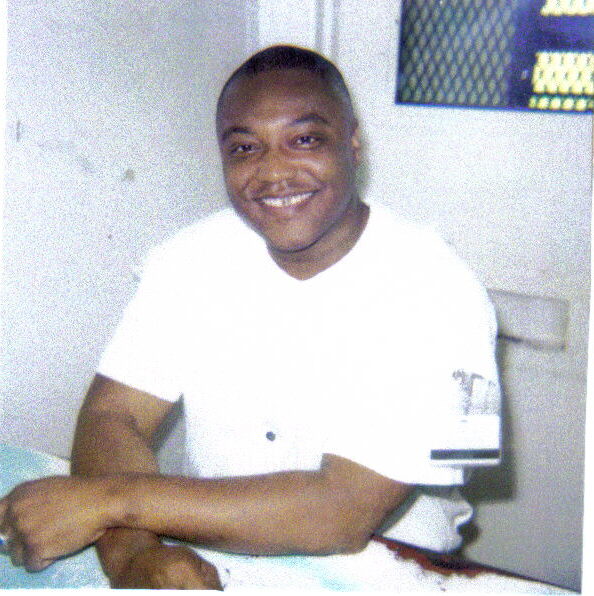
I am now representing a man named Anthony Graves (pictured right). Anthony and a co-defendant, Robert Carter, were charged with capital murder of six people in 1992. In 1994, Anthony was tried in Brazoria County, Texas, on a change of venue from Burleson County after Carter had already been convicted and sentenced to death. Anthony had two lawyers appointed to represent him. Anthony is a soft-spoken, clear headed, fairly smart man. He was about 27 or 28 years old in 1992. He was convicted and sentenced to death after Carter testified against him and told the jury that he committed the killings along with Anthony Graves.

What the defense lawyers did not know was that Carter had told the State’s investigator, a Texas Ranger, and ultimately, the Assistant District Attorney handling the case, that Anthony Graves did not have anything to do with these killings.The night before Carter was to testify in Graves’ trial, the Assistant DA, his investigator, Carter’s lawyer, and one or two Texas Rangers visited Carter in his jail cell. They wanted to know what Carter was going to say about Graves.

Carter immediately stated that Anthony did not have anything to do with the murders. The Assistant DA told Carter that if he did not testify, he was going to charge his wife with capital murder, because he suspected at that time that she had something to do with the killings. So Carter recanted and told the Graves jury that the two went on this killing spree together.

They neglected to tell the defense lawyers that Carter made an exculpatory statement about Graves’ innocence, which they are required to do under our rules of procedure. Ultimately, Graves’ case was reversed for prosecutorial misconduct by the Fifth Circuit, which then ordered a retrial.

During Graves’ appellate process, Robert Carter was executed, but the astounding thing is that on the gurney - about five minutes away from meeting his Maker - he once again said, "Anthony Graves had nothing to do with it." How powerful can that be? But the powers that be in Burleson County still do not believe Carter’s retractions about Graves, and Graves will stand trial again in July 2008.

This is the type of case that defense lawyers lose sleep over! It is a lot easier on the brain and the emotions to represent someone you know or feel fairly sure is guilty. Your work is the same - the intensity is not. So, now, after 24 years of practicing law, when I hear that question "How do you represent people you know are guilty?" I tell them it is easy because there may be that one truly innocent person sitting next to me at counsel table, and I welcome the opportunity to be his lawyer.