Showing posts with label Your Turn. Show all posts

Friday, May 29, 2009

Every Day You Wait . . . Is One Day Longer

by Todd Matthews, Guest Contributor

If you have a missing loved one, not knowing what you can do about it is a huge challenge. Dealing with the situation on the usual day-to-day basis is overwhelming in itself. But not knowing what you can do to make sure all paths are being followed is another issue.

One thing you can do is to make sure your missing persons data is being properly reviewed.

Of course, the information contained in the missing person's NCIC case file is considered for law enforcement only. But rather than the usual phone call to the detective in charge of your missing loved one, maybe you can do some fact checking.

Normally the call consists of asking if there's any new info in regards to the investigation of the missing person. (More often than not, nothing has changed.) But since you may not have any idea of what is listed in the NCIC report, this might be a good time to do some fact checking. Ask the detective to confirm physical characteristics, height, weight, etc.

Do they have dental info listed? If not, do you have the dental info that you need to get to them for inclusion into the file? This is an extremely valuable piece of information! Have here been any DNA family reference samples taken? Mitochondrial and nuclear? Can you confirm the DNA has been included in the CODIS, the national DNA database?

Dates are important as well. There is no database in existence that is immune to human error. Why not double-check the dates involved such as date last seen and date of birth?. For example, numbers such as Social Security numbers are easy to mix up. Are there any birthmarks, tattoos, or other distinguishing characteristics that weren't noted? Do you have a photo that might be of value?

A simple-fact check review can't hurt anything, and might change everything. You are not asking for investigative information. You are asking to verify the very data you helped to provide. During the course of this conversation, it is a good time to ask your law enforcement contact to register as a
NamUs user.

Now is the time when you yourself can get the ball rolling by entering your own loved one into NamUs.
By doing this, a great deal of conversation in regards to your loved one's case begins.

I have seen simple human errors resolved in this manner. Some are minor and do not make an immediate difference, but they still affect the future. Some errors are fairly important and can have an immediate impact on resolution or on how the case is processed internally.


Once your loved one's case is in NamUs, you can work to help make sure all the gaps are filled with accurate information. The only thing worse that a lack of data is inaccurate data. Consider the tiniest details.

Todd Matthews' calling to be a voice for missing and unidentified persons began when he solved the identity of the "Tent Girl," Barbara Hackman-Taylor, after a ten-year journey that ended in 1998. He is also Media Director for the Doe Network, a consultant to Emmy-award winning producer Dick Wolf ("Law & Order"), and on the Advisory Panel for the U. S. Department of Justice NamUS (National Missing and Unidentified Persons System) database project. Todd also hosts a weekly radio show that publicizes unidentified and missing persons cases. A documentary featuring our guest contributor's work was recently broadcast on the BBC. A second documentary about his life is in post-production.


Thursday, May 21, 2009

Dissecting Cindy Anthony's Statement: What "Maggots in the Trunk" Could Tell Us

by Karen Chabert, RN

When Casey Anthony’s car was found, her father went to pick it up at the impound lot. George Anthony stated to the FBI that the smell was immediately identifiable as decomposition. He said he was praying that it would not be the body of his daughter Casey or granddaughter Caylee in the trunk. He should know that smell. He was a law enforcement officer and has smelled that unmistakable odor before. As a forensic nurse death investigator, I can tell you, the smell is one you never forget.

As pieces of information in the disappearance of toddler Caylee Anthony came forward, we heard her mother, Cindy Anthony, cry out to reporters, "There was a bag of pizza for what, twelve days in the back of the car, full of maggots. It stunk so bad. You know how hot it's been. That smell was terrible."

If you take her statement and dissect it (no pun intended), there are many small bits of information that may raise more questions:

· "There was a bag of pizza for . . . twelve days . . ."

If there had been a bag of pizza in the trunk for 12 days, wouldn’t the pizza have been dried up by then, making it no longer tasty to our forensic friends, the hungry maggots?

· ". . . full of maggots. It stunk so bad. . . ."

What is the life cycle of a maggot? From what I have read, the life cycle of a maggot is around 10 days, and by that time, the maggot is now a fly. Cindy didn’t say anything about flies emerging from the trunk. Given the timeline, I would imagine flies would have emerged from the trunk in a small swarm.

· "You know how hot it’s been."

This takes in to consideration the ambient temperature and the temperature in the trunk and the effect of the environment on decomposition. Hotter temperatures cause more rapid decomposition.

So, now that we have considered the maggot theory, I pose the question: What if there were maggots in the trunk?

OK, let’s say the maggots were still in their customary feeding frenzy. Did you know that while maggots are in a feeding frenzy, you can hear them? I’ve read that it sounds like Rice Krispies. Like the smell of decomposition, that would be one sound I would never forget! Talk about goose bumps!

Take it one step further and if we may now presume there were maggots in the trunk, there is a wealth of information that can be gleaned from analyzing those maggots.

Toxicology or drug screens can be performed to test for the presence of any drugs in the body of the maggots' host at the time of death. In my reading, there was a person who died of a cocaine overdose and maggots were feasting in a very speedy fashion. With that said, depressant ingestion by the deceased prior to death would induce the opposite in terms of speed of maggot activity, i.e., they would slow down considerably.

If Caylee was given chloroform as her mother’s chemical babysitter, there might just be a way to tell: Maggots!

Also, DNA analysis of the maggots can be done to determine just who were they feasting on. Yes, human DNA can be extracted from maggot guts to identify the body.

However, I haven’t heard anything about the maggots except from Cindy Anthony. Did she inadvertently let something slip?

Therefore, I submit the question: If there maggots in the trunk, were they collected as the important evidence they have the potential to be? And if so, were they analyzed?

Such evidence could be significant for the Anthony prosecution. If the stomach contents of maggots collected from Casey Anthony's trunk revealed the maggots were feeding on a host with Caylee's DNA . . . that would place the child's dead body in her mother's car.

You may never look at maggots in the same way again. Let's hope you don't have to see them . . . or smell them . . . or hear them. Yikes!

Known as a "Crime Fighting RN," Karen Chabert is a Forensic Nurse Death Investigator, a Legal Nurse Consultant, and a licensed Private Investigator. She is the director of the Legal / Forensic Department of a national consulting firm and President of Dynamic Nursing Associates, LLC. She has been a Forensic Nurse Liaison to Law Enforcement and has worked as a Death Investigator for an urban level one trauma center. Based in New Orleans, Louisiana, she has lectured around the United States and in Canada.


Wednesday, May 6, 2009

YOUR TURN: "The Secret Life of Patsy Ramsey"? What Literature Might Reveal About the Crime Scene of a Beauty Queen

by Mark Soukup, Guest Contributor

When the murder of JonBenét Ramsey hit the news I thought the 6-year-old pageant princess's father John Ramsey was some kind of pedophile and guilty of the crime. I wasn't very interested in the case. But I had just switched to an early shift at work and listened to local talk radio where the case was covered extensively. But when the autopsy report and ransom note were made public, I saw Patsy Paugh Ramsey, the former Miss West Virginia, as the perpetrator.

I also saw the killing as a type of sacrifice. For years I had been reading books on the psychological interpretation of mythology. From what I'd studied, many of the odd and seemingly incomprehensible aspects of the crime could be seen as having symbolic meaning known only to the offender.

This type of attachment to myth and dream symbolism is typical of psychosis. In some cases a psychotic will take destructive action as a means to manifest their psychotic fantasy. I brought this up to the local talk-radio host but the idea was dismissed. I was curious if the idea had come up before, but back then I had no access to the Internet. So I started reading about the case.

Small Sacrifice

The first book I got was Andrew Hodge's A Mother Gone Bad, and in it I found a reference to the Seraph report. That small group of investigators was commissioned by the Boulder police for an assessment of the ransom note and crime. They concluded Patsy Ramsey had sacrificed her daughter. Their interpretation of sacrifice was different from mine but at least I knew the subject had been brought up to police. At this point the case was two years old.

My line of reasoning came from an approach to dream analysis that is used by Jungians called amplification. I took the theme of literature that is prevalent in the case from the ransom note to John Douglas's Mind Hunter to The Bible and looked for common elements. The common elements, if found, would indicate a "complex," a behavior-centering force in the mind of the perpetrator.

A Sacrifice of Biblical Contortions

For example, the role of the Psalms in the case was well known with a possible connection between the ransom amount and a common interpretation of Psalm 118 that mentions sacrifice. Also, the Ramsey family Bible (NIV study version) was open to a passage that has four lines beginning with the letters C, T, B, S—the reverse of the cryptic ransom note sign-off: S.B.T.C.

Further reading of the Psalms revealed a repeated use of words, phrases, and ideas that are common to the crime and to mother Patsy Ramsey's life in general. After careful study, I thought I had the key to not only the identification of the single perpetrator but an indication that the death of JonBenét was not due to an accident, as was the prevalent theory, but was the intentional act of a person in the grip of a psychosis.

By this time I had access to the Internet. I hit the forums with my ideas and was both lauded and rebuffed. The lack of acceptance made me dig even more. I went back to the trail of literature left by Patsy herself and fixed on Muriel Spark's The Prime of Miss Jean Brodie since Patsy had chosen to perform a soliloquy from the novel/play in the talent portions of her pageants. Again, I was looking for an indication of a complex. I started with the movie and found three uses of the word "sacrifice" by Jean Brodie (in film still, above). I thought sacrifice was the centering theme in Patsy's psychosis, which she found unavoidably attractive in Spark's work.

JonBenét and Fruit from the Poisoned Case

It took me several months before I read the book. Just a few pages in was a description of a tea party with two members of the Brodie set where pineapple was served. The appearance of pineapple in JonBenét's digestive tract along with the Ramseys' denial of having served it to her—and the use of pineapple by Spark in her novel—was the first mythic connection for me between the crime and a work of literature Patsy was known to have been intimately familiar with.

A few pages more and the question of the spelling of "possession" came up in the novel. The misspelling of possession in the ransom note was part of the heated conversation of the case on the radio and Internet. A detailed study of the book, play, and movie revealed many, many items common to both the crime and to Patsy and the literature she was known to have been associated with, including the chillingly titled Death of Innocence.

Many, many aspects of the case seemed strange and incomprehensible to investigators and to the public and were attributed to panic, amateurism, desperation with the possible source of ideas for staging found in crime books and movies. My investigation into this theme of literature, to me, has revealed coincidence after coincidence between the death of JonBenét Ramsey and the life of Patsy Paugh Ramsey. A preponderance of coincidence rules out coincidence and out of what seems to be a random jumble comes a pattern; the use of one person by another as an object in a personal psychotic fantasy.

A person in psychosis often sees themselves as either a mythic figure or related to one in some way. They also may see themselves as part of a mythic storyline. They may exhibit behaviors that have a high degree of structure but with a low degree of rationality as they follow the mythic storyline. This story may be self created and/or part of an existing, archetypal, or well- known story that can be easily found in popular literature. It is my opinion that the death of JonBenét Ramsey is the result of just such a psychosis and the evidence for it can be found in the products of the creative life of Patsy Ramsey—her writing, her artwork, her correspondences, her pageant performances, the ransom note and even what was done to the body of JonBenét.


Women in Crime Ink reader Mark Soukup is an amateur art historian who has studied symbolism and the creative process. He is owned by two sheep dogs and lives in Colorado.


Friday, April 17, 2009

Risk Assessment and the Courts

by Karen Borders, Guest Contributor

The most important thing in family law court is keeping stability in children’s lives. Parents get caught up in their own struggles and forget about the impact upon their children when their home life is thrust into the courtroom. More often than not, the children become the pawns in the “game” the parents call divorce. It is nothing more than a strategy to “get” or “win” more, but no one wins in family court, certainly not the children.

The courts try to protect the children by not having them testify and having them talk with a child custody evaluator to try to ease their stress by not being brought into the courtroom. In reality, the children are in the middle of the battle. They are often used as the voice box for the parents, delivering messages back and forth, because the parents can’t bear to speak to one another. No one bothers to think about the negative impact these decisions have on the children who must deliver the messages and then endure the reactions from the “other” parent.


When did society force our innocent children to be treated so harshly and with such a lack of respect? Maybe it would be better to put them on the witness stand as they do in Canada and London. It is the parents who still “dangle their kids like carrots” to hurt the other parent.

Maturity is not often exhibited in family law court. It usually is put on the shelf while the adults—who once loved each other enough to marry and have children—display a pure hatred for one another. One might question if they were ever in the same relationship or had ever cared for each other. Divorce is ugly. What divorcing parents do to their children is even uglier.

I have seen this myself up-close and personal. I tried to be the better parent, to "get along.” The problem is that it takes two rational people to get along with one another for the benefit of the children. It is impossible to do, without the cooperation of a second party. One party can influence the children in a positive way and the other in a negative way, but how can the court tell who is providing which influence? That is the question the court deals with on a daily basis and this is what clogs the system.

The court decided to bring mental health professionals into the equation to try to determine the facts and what would be best for the family. The court calls this process a Child Custody Evaluation, referred to as a "730 Evaluation" in California. Court administrators attempt to ascertain what is really going on and where the children would be best suited to thrive. They also need to decide what is in the “best interest” of the children. We are still searching for how to reach that answer without being any closer to solving the problem after over 30 years of doing things the same old way.

The court sends family members to mental health providers to talk about their family issues and what is happening with their relationships. The evaluators are charged with the duty of figuring out what is going on within the family unit and then determining a child custody plan which they figure is in the “best interest” of the children.

The problem comes when there are any allegations of domestic violence, child abuse, or child sexual abuse. Then the evaluator needs to try to determine if the allegations are true or false. The next problem is the evaluators are not trained investigators and do not know how to investigate these criminal allegations nor do they have training in how to determine if their clients are untruthful.

Evaluators are trained to believe their client’s reality is what the client tells them and not to question what they are told. Therefore, when the evaluator believes what the client tells them, then the problem is that both parents must be considered to be telling the truth. When stories conflict, as they do more often than not, the end result is that the evaluator does not know who is telling the truth.

Then we get to the children. We tell children to tell the truth and try to teach them to tell the truth. But when we are dealing with divorce, the paradigm changes. When parents use their children, they talk to them about things which are inappropriate. They make comments that they want the kids to repeat to the evaluator who conducts the child custody evaluation. Then the children repeat some statements and forget to repeat others. The evaluator does not know what the truth is as s/he must accept statements from both sides as truth because s/he is unequipped to detect deception or to conduct an independent investigation.

Now some evaluators will use personality assessment testing and other measures for the parents involved in the divorce process. These tests show if there are any personality disorders, mental disorders, and sometimes they try to determine if there is a propensity to use alcohol or drugs. What happens after you find out this information? If one parent has a personality disorder or mental disorder, does that in and of itself preclude them from parenting their child? Of course not. There are other factors which have to be taken into consideration.

If a parent has a propensity to use alcohol and/or drugs, how do you prove they are using or that it is affecting their parenting? Parents generally don’t admit they abuse alcohol or drugs, so the testing would not be useful to the evaluator.

The evaluator then has to write a report to the court, which has recommendations on parenting plans and schedules. The report is used by the judge to assist in making the decision about the visitation. Unfortunately, this does not solve the issues, and the parent who is not happy with the results can request their case be evaluated by another specialist. In California, this is called a 733 Evidence Code-Review of a Child Custody Evaluator’s Report.

Most often, evaluations are requested by one or the other parent on a yearly basis for one reason or another. This can cause a backlog in the court system and is not very efficient, as it is costly and does not accomplish the intended purpose. On the other side, the children get subjected to being put in the middle of the parents' ongoing battle and can find stability difficult, if not impossible.

Children deserve stability in their lives. They do nothing to deserve the wrath of their parents or to be put in the middle of fighting. The “best interest” of the children is to come to a quick resolution of the truth of what is really going on in the family. If there are allegations of domestic violence, child abuse, or child sexual abuse then those questions have to be addressed first and foremost.


Is an evaluator qualified to answer or to investigate those allegations when they believe whatever their clients tell them is true? Can they determine the truth from a lie or are they in place to put together parenting plans?

Evaluators were never put in place to investigate allegations of abuse, yet they deal with these issues on a daily basis. Children are placed in their care and their futures in their hands, when the larger issues of their safety and welfare must be addressed. If an evaluator is not able to determine if the abuse allegations are true or false, then how can they determine a parenting plan?

When evaluators cannot determine what is really going on in the family, they are more likely to keep the case open for further evaluation, to review the family at a later date to see if there have been any changes. The problem with this plan is if the abuse allegations are not true, the children are then being subjected to being estranged from the alleged abusive parent without any justification. This can cause a parent to be away from their children for upwards of a year without any evidence against them. Then if they somehow get visitation after that time period, they have to be reunified with their children who they have now been alienated from due to the extensive time period apart.

Child Protective Services (CPS) is often involved. However, sometimes there is not any physical evidence to prove or file a criminal case. This does not mean the abuse did not occur. CPS might close their case "unsubstantiated," which simply means they could not prove or disprove the case.

These children and the possible domestic violence victims deserve to have an investigation to determine if the abuse did or did not occur, during the evaluation process. If domestic violence did occur, then there are specific court mandates which the judge must enforce. We are talking about people’s lives and the futures of the children. These decisions will affect them for the rest of their lives. This is not something to take lightly. It is something to take seriously and to put every effort into doing correctly and to the best of one’s ability.

The answer to the investigative needs for the family law courts is the Family Violence Risk Assessment (FVRA). The assessment is an investigative procedure which is able to investigate the allegations of domestic violence, child abuse, and child sexual abuse to determine the past, present, and potential future risk to the children and parents. The assessments provide evidence based reports in a timely manner, 6-8 weeks, as compared to the normal assessments which on average can take 4-6 months, or sometimes as long as 1 year or more. The assessments provide a final resolution and eliminate the need for expensive yearly annual evaluations.

The Family Violence Risk Assessment (FVRA) program is conducted by experienced investigators and mental health specialists, most Licensed Clinical Social Workers (LCSWs) and Marriage and Family Therapists (MFTs), all specifically trained in these fields. The program is conducted by a collaborative team under the supervision of John McLaughlin and myself. Combined, our firm has over 50 years' experience in law enforcement and mental health evaluations in family violence and child custody issues. The team also includes mental health professionals with Child Protective Services and other child welfare departments. Our experts have extensive experience testifying in criminal, civil, juvenile, and family courts, as well as forensic interviewing. The firm's team and its FVRA program qualify under the Domestic Relations Investigators, California Family Code 3110.

A Family Violence Risk Assessment is not a Child Custody Evaluation. However, we qualify as experts under Evidence Code 730. This is an investigative/assessment process rather than an evaluation. FVRA determines if there is a risk for future abuse or violence based on statistics and probability. It does not provide recommendations to a specific custody plan, but can be used in lieu of or as a compliment to a Child Custody Evaluation. Once there is a determination of risk, the Judicial Officer can then apply child custody plans based on established child custody guidelines.

These evaluations are not costly and are charged to the parents just like the Child Custody Evaluations. They actually end up costing less in the long run because it stops families from going through additional unnecessary evaluations over the years. Once a FVRA is conducted, there is no need to conduct another assessment because the risks to the children/parent(s) have already been established. This stops the game playing in family court and frees up court time for more important issues. This also helps to move the case along quicker, so the other issues can get resolved and the children have the stability they need regarding their living arrangements and visitation schedules.

There are some evaluators who recognize the value in our FVRA and use us in conjunction with their evaluations. This way they know if there is a risk to the children or either parent before they start their evaluation. They find this information invaluable to their evaluations and for setting up parenting plans.

Karen Borders is a retired police officer from Palm Springs where she served for 22 years. Karen has made a lifetime career out of helping victims of domestic violence and abuse. Karen is the co-creator of the Family Violence Risk Assessment program, which is currently being used extensively in family law courts throughout Southern California. As president of Borders, McLaughlin & Associates, Karen provides evidence-based risk assessments in high-conflict family law matters.


Friday, April 3, 2009

Killer Books

by Caitlin Rother

I write about
murder cases day in and day out, and I’m often asked how I keep balance in my life. Readers and friends wonder how I sleep at night. Do I have nightmares? The answer is that I work very hard to relieve stress through exercise and other relaxation techniques—including watching romantic comedies and legal and medical dramas, although I can’t help but watch the occasional crime show as well. They seem to be on 24-7.

But the bottom line is that I am fascinated, not terrified, by these cases. I think many other people are, too, or true crime books wouldn’t sell, and we wouldn’t see so many of these TV shows. It’s just that most people don’t like to admit they like true crime, so they try to hide it as their dirty little secret.

Well, I admit it. It’s a matter of life and death, something we can all relate to, although, thankfully, few of us meet such a tragic end. I think we can all learn from these cases, many of which, as far as I can tell, seem to stem from bad parenting, abuse, and a lack of good role models. Drugs and alcohol often play a role as well.

I was a psychology major at UC Berkeley, and have always been curious to learn how murderers’ minds work. For the same reason I became an investigative reporter, I also love following along as I watch the details of a murder investigation unfold. I’m curious to learn how the killers carried out their plans and how they tripped up so that the investigating detectives could catch them. Watching a good detective at work can be educational as well.

My heart always goes out to the victims and their families, and often, to the killer’s family as well. They’re all losing a loved one, either to death or to prison. So, it’s not that I lack sympathy or empathy—by nature, I’m quite the opposite. But to do this job and to do it well, I have to compartmentalize and neutralize in my mind the actual details of the killing and what the victims must have felt in their last hours, just as any prosecutor, defense attorney, or police officer must have to. That is, until I put it on the page.

Until then, I focus on investigating the back story of the killers, trying to determine what, if anything, happened in their childhood and what in their genetic makeup may have contributed to this violent behavior. That’s because my ultimate goal with these books is to answer the primary question that I believe readers have, the reason they read these books in the first place: What made them commit such a horrible act?

Answering that turns me into an investigator in my own right, so it’s all circular.

Often, the biggest challenge to me is how best to reveal the story behind each case to readers, slowly and in great detail, building suspense and educating them about our justice system and the complex human condition along the way. I do this by using fiction techniques to write non-fiction, an approach I first learned when I worked for The San Diego Union-Tribune. Gradually, as my editors kept wanting shorter and shorter stories, I turned to books so that I could continue to grow as a writer and as a journalist.

So, here I am today, doing it full-time and teaching my students at the University of California San Diego Extension how much fun it is.

For those of you who are interested, here’s a quick run-down of my books:

My first was
Poisoned Love, the true story of the Kristin Rossum murder case, now in its sixth printing and the subject of at least five TV documentary crime shows. Rossum was a pretty toxicologist for the San Diego County Medical Examiner's Office, who was having three relationships: one with her husband, one with her married boss, and one with methamphetamine, which ultimately won out. High on meth, Rossum poisoned her husband with a lethal dose of fentanyl, an extremely potent narcotic painkiller that she stole from work. She then sprinkled red rose petals over his body and claimed that he committed suicide because he was depressed that she was leaving him.

Naked Addiction, a thriller about sex, drugs and murder set into San Diego beach communities, was my second book. Police detective Ken Goode investigates a series of murders of young beauty school students while faced with his own demons, a troubled but flirtatious witness, and a sister who goes missing. The publishing world isn't easy to break into—it took me 17 years to get this novel published.

Twisted Triangle, released in trade paperback in April, gives a whole new meaning to the term “good cop—bad cop.” This book provides a crazy but factual account of a kidnapping, attempted murder, and lesbian love triangle involving two married FBI agents—Margo and Gene Bennett—and a famous novelist, Patricia Cornwell.

My latest book, Body Parts, takes a psychological look at the life of serial killer Wayne Adam Ford, who killed four women, dismembered two of them, then did the rare deed of turning himself in to authorities to keep from killing again. He also confessed to detectives for several days straight without an attorney, helping to identify his victims.

Where Hope Begins, which I co-authored with TV reporter Alysia Sofios, will be released in September. Sofios risked her entire career by helping several surviving female members of the Marcus Wesson family to recover from a cult-like life of polygamy, incest, abuse, and the murder of nine children. Wesson is on Death Row along with Ford.

I’m currently working on my fifth nonfiction book, about the murder of Jackie and Tom Jackie Hawks, who were tied to an anchor and thrown over the side of their yacht off Newport Beach by a clan of outlaws led by Jennifer and Skylar Deleon.

To learn more about me and my books, or to contact me directly with questions or comments, please check my Web site.

Caitlin Rother is the author of four books and has just finished co-authoring her fifth. A Pulitzer Prize nominee, Rother worked for nearly two decades as an investigative reporter for daily newspapers, and has made numerous TV and radio appearances. She speaks to professional groups and teaches journalism and creative writing.


Wednesday, March 4, 2009

Should I Report Child Pornography?

by Heather Steele, Child Sexual Abuse Advocate

There is almost nothing that can provoke despair and shock as powerfully as the discovery of
child sexual abuse images on a computer, iPod, or cell phone of a loved one. Women often confide to me—at presentations, networking events, and cocktail parties—that they have found in their own homes disturbing and revolting images of children being sexually abused.

Apparently, finding child pornography happens to a lot of women.

Many confront their loved one, who is ready for such a circumstance with just the right words of persuasion. Maybe he says the images came from a virus. Or he viewed them just once, they have to do with his abuse as a child, or that he was lured from adult porn sites into child pornography sites progressively. Or perhaps he confesses that he knows his behavior was wrong and will do anything, including therapy, to become healthy. Of course, he swears, he would never touch a child or harm one in any way.

Some women choose to believe these manipulations, preferring to deny the truth of what they have seen. Others remove themselves through separation or divorce.

Yet few find the courage to report the images to the police.

They feel like they can’t bear the public shame, the shock and horror of friends and neighbors, or the pain of seeing a loved one arrested. After all, he was just looking, right? And the children in the pictures are thousands of miles away in
Russia or Thailand, right?

Right?

As painful as discovering the images may have been, the truth is far more agonizing.

In fact, those images are evidence photos of children, mostly American children, some as young as infants, in the act of being raped, often brutally.

The U.S. produces 55% of child pornography in the world, and demands even more than it manufactures, making it by far the largest producer and consumer of child sexual abuse images in the world.

Those kids in the photos? They could be yours, or your friends’, or your neighbors’. They are definitely American children, children we as adults are responsible for protecting.

Their abusers? Their fathers, uncles, grandfathers, teachers, coaches, babysitters, youth pastors, troop leaders, or a variety of other trusted adults in our communities.

If child pornography is reported to the police, those kids have a chance of being rescued from the most heinous abuse known to man.

If it’s not, these American kids may never have another chance to escape their living hell.

And viewers of these rape images of our children? There’s a 98% chance he’s taking part in exactly the same type of abuse he loves to watch.

Studies of child pornography possessors in
Butner Federal Prison (pictured right) in North Carolina in 2000 and 2006, by Drs. Andres Hernandez and Michael Bourke, show beyond the shadow of a doubt that the vast majority of child sexual abuse image possessors molest children:

Eighty-five percent of possessors in the study admitted to having undiscovered child sexual assault victims; 13% denied having victims, but failed a polygraph at the end of the study; and 2% denied having victims, and passed the polygraph—but admitted if the opportunity had presented itself, they would have sexually abused a child.

Those 85% admitting victims had on average 14 victims before they were incarcerated for child pornography. In the 2000 study, 31 child victims were the average for child pornography possessors, three times as many as those incarcerated for child molestation.

So reporting child pornography saves American children, perhaps even children you know and love.

But even more than that, reporting child pornography saves you. It saves you from a life of shame and guilt, knowing that you could have stopped some child’s nightmare and you didn’t. It saves you by knowing that you did the right thing by helping put a child predator out of commission. And it saves you from becoming an accessory to the rape of even more children in the future.

Because if you don’t report child pornography, you enable
child molesters to continue to do what they do best unencumbered and without fear of punishment. And you will never be able to wash away that knowledge. Who should you tell? No matter where you live, you can contact the FBI, which heads up the Innocent Images International Task Force. Click here for the Cyber Tipline or call 1-800-843-5678.

Believe me, as one who knows. No matter what I do, no matter how hard I work to rescue more kids through
Innocent Justice, it will never wash away. I experience that unclean feeling every day of my life. I hope you will never have to.


Heather Steele earned her MBA from the University of Chicago and is a passionate advocate for children in the fight to prevent child sexual abuse and provide justice for child victims. Heather is President of the Innocent Justice Foundation, which works to support law enforcement in investigating and prosecuting child pornography crimes.


Thursday, February 12, 2009

A Day in the Life of a Police Reporter

by Jami Kinton, Reporter
Mansfield News Journal


Most people dread calls at 3 o'clock in the morning.

I look forward to them.

Having several friends who work at the police and fire departments, I know that 99% of the time, a call or text message at that hour means one of three things: A fire, a shooting, or a crash. And a front-page story.

A million things run through your head when you arrive at the scene: Where are the immediate individuals involved? Have they already been transported or are they in any condition to talk? If multiple departments are present, whose case is it and who will comment from that department? Who are family members and who are just spectators? Reporters also have to deal with the fact they're only going to get about 50% of the information they want.

I rarely leave a scene satisfied. I've got eyes, but I can't ever write by instinct or what I thought I might have seen.

Recently, I left a three-vehicle accident where it was pretty obvious that one of the drivers had been killed—but without confirmation from an officer or medical personnel, the most compelling component couldn’t be reported.

It’s frustrating.

With the growing demand for immediate online news, there’s a lot more pressure covering these types of stories.When big stories are unfolding, an editor is sitting by a phone waiting for a call with updates to be able to post online immediately. And if I'm not calling, he's calling me. While readers may appreciate it, I usually don't.

Officers rarely appreciate some nosy reporter asking them for an update every two minutes. But as much as readers complain about “too much negative news,” these stories are the first ones read, evoke an emotional response, and leave lasting impressions. I will never forget covering the story of a woman who had her entire community enthralled by her twisted, almost unbelievable, tale. Within one year, Gretchen Rocks, a 28-year-old Mansfield, Ohio woman, claimed she had been brutally beaten and near death four times.

In June 2007, Rocks was found beaten and blindfolded at the home she shared with her estranged husband. Two months later, Rocks was found bound and gagged in the back of her vehicle. In December 2007, police said she was bound, gagged, and tied inside a plastic bag and left in a Dumpster behind her workplace. She had the word 'liar' carved in her chest (evidence photo pictured above).

She was also the victim of arson, when someone burned her house to the ground on her wedding anniversary.

In June 2008, police found Rocks stuffed in the crawl space of the house she used to share with her husband. She was bruised beyond recognition. When she was released from the hospital, I went to her parents' house to interview her and family members. The house was beautiful, her family was beautiful, she had two beautiful girls and she was a well-spoken, educated young lady. Everything about the setting and her detailed story added to her credibility, and tugged hard at your heart strings.

Rocks claimed, with certainty, her husband was behind the abuse.

In the most recent incident, Rocks said she had been raped repeatedly, beaten, drugged and then taken to her former residence. Having met her husband on other stories, I felt shocked and angry—angry with him and angry with myself. I had liked the guy and I couldn’t believe I’d been so far off-base with my judgment. After interviewing the family for hours, their pastor stopped over to chat with them and I had a chance to talk to Rocks one-on-one.

Although I’d never experienced anything as traumatic, I felt a connection with her.

She was definitely not the stereotypical woman in an abusive relationship. Rocks (pictured below) was pretty, smart, appeared to have a terrific family and was married to a well-known banker. The old saying “if it could happen to her, it could happen to anyone” stayed in my head for a long time after.

Rocks’ husband’s home was searched and her story stayed in the paper, generating lots of talk throughout the community. As time went on, I heard more and more people express skepticism about her story. For many, it seemed awfully peculiar that Rocks appeared on the brink of death so many times, but managed to escape them all.

Months later, I was out shopping and saw a call come into my cell phone from Rocks' mother, Corrine Fleming. Having not heard from her for a while, I was curious. Fleming calmly informed me that her daughter had confessed to police that she’d made up at least two of the incidents.

I was shocked.

Another reporter had worked on the story with me, and we both had stuck up for this girl on numerous occasions, especially within our own newsroom. As the only two reporters who’d actually spoken to her, we felt that few others, with the exception of police, had more authority or knowledge on the subject as we did.

Turns out, we’d both been taken.

As embarrassed as I feel about my own judgment, that case taught me a lot. No one likes to admit it, but we all stereotype and make judgments on others based on how they live, how they speak, and how they look. Perhaps my co-worker and I go swept up in all that, and, outside of writing, lost focus. It happens. Sometimes the closer you are, the harder it is to see what’s really there. Nevertheless, these types of stories will always be my favorite.

Reporters can’t do everything those in law enforcement can do. We can’t get search warrants and we can’t force anyone to talk to us who doesn’t want to. But we certainly do as much as we can to dig, to get multiple sources and information, so that we can deliver the most thorough story possible.

They may turn your stomach and can bring tears to my eyes, but at the same time, these stories give you a good dose of reality and keep you on your toes.

Jami Kinton is a reporter for Ohio's Mansfield News Journal and won an Associated Press award for Best Investigative Reporting in 2008.


Tuesday, January 27, 2009

Murder Survivor

by Jan Williams

December can be a long, dark month for someone living with the grief of bereavement. The media pulls out all the stops, with movies and stories about miraculous reunions, of sadness turned to joy and appreciation, and hard hearts moved to compassion. All of it underlines our great loss. Although this was my second holiday season without my boys, I found it difficult – in part because of the national obsession with the Caylee Anthony murder. Every article rubbed salt in a wound that is too raw and recent, and my heart was wrung with sympathy. My sadness was not just for Caylee but also for her grandparents and the rest of her extended family. You see, I know something of the hell that they are all facing.


On August 8, 2007, my daughter-in-law, Manling (photo left below), ran screaming out of her front door in Rowland Heights, California. The neighbors who rushed to her aid found my 27-year-old son, Neal, lying dead in a pool of blood. He had been stabbed repeatedly. A frantic search found my two grandsons, Devon, who had just turned 7, and Ian, three-and-a-half. They had both been smothered in their beds with a pillow. Manling was in police custody and, within a couple of days, was charged with 3 counts of first-degree murder with special circumstances. In a way, it was the end of my life as well – my life as I knew it had come to an abrupt halt, and I entered the world of a murder survivor.

Having a murder in the family brings along with it a lot of repercussions. You may be suffering unbelievable loss, but you are doing so in public. Reporters staked out my house and office, and my neighbors were asked to comment. I was followed after court hearings. Family photographs taken from my dead son’s MySpace page were plastered all over the front page of local papers. This made it easy for strangers to recognize and confront me in public, as though I was just another character on their favorite cop show. They were eager to pose their theories and hoped for inside information, but they failed to remember that I was a mother with a broken heart.

It was probably a good thing that I was still in shock during those early months.

Sadly, relationships don’t always survive a murder. Some friends watched me as though they expected me to go crazy. Others avoided me like the plague. Even those who were kind and sympathetic at first often quickly tired of the whole thing. As anyone with a long-term illness can tell you, people get fed up if you don’t get better right away. They want you to get back to normal – to be the person you used to be. The trouble is that that person is gone. There is no recovery. You have to reshape your entire life, and that takes time. We are an impatient society and expect a quick fix. So we murder survivors withdraw, little by little, until, before we realize what has happened, we have become marginalized. Loss follows loss!

If you are a fan of murder mysteries, as I was, you may believe that you have a good idea of how the process works. That may not be the case. By the time the police and defense had finished their investigations of the murder site and a hazardous materials cleanup had been arranged, six months had passed. The autopsy reports on my two beautiful little boys weren’t finished until after the first of the year, four months after their murders. Forensics took even longer. On CSI they may get their results in 10 minutes, but the reality was that it took until May 2008, ten long months, for the crime lab to finish their report. These delays caused delays in the court proceedings as well. I anxiously prepared for each court appearance, only to have nothing happen yet again.

The first time I heard any actual evidence was at the preliminary hearing this last November. Those people who wanted me to give them the inside scoop were wasting their time. I didn’t even know that the murder weapon was a sword until I read it in the local newspaper. It was at the preliminary that I learned that Neal had been stabbed 97 times. Ninety-seven times! How can a person stab someone 97 times? I am still trying to absorb it. The rest of the evidence waits for the actual trial. When will that be? Six more months? A year? No one can tell. Until that happens, I am left with a lot of questions and nothing but theories to answer them.

I think the speculation is the worst part – at least for me. I know that I will never understand the why of it, but I still would like to know more about the how. It is the speculation of others that is the most painful though. People who hear about the murders immediately ask, “What did he do?” Like in a rape case where a victim is presumed to have provoked an attack, spectators are certain that my son did something to provoke his murder. Their second question is even worse. They want to know if I had any “inkling” beforehand.

It’s not that I haven’t gone over every moment that I spent with my son and his family, looking for insight. Believe me; I’ve spent many sleepless nights doing just that. Unfortunately, hindsight is very different from real time. In all honesty I can tell you that there is absolutely nothing that would have alerted me to the possibility that my daughter-in-law might murder her family. It never occurred to me. When you know someone, no matter what your relationship (and I thought I had a good relationship with Manling), you may still be shocked if he or she commits murder. Why? You know them and have spent time with them. You know that they are human. And one of our fundamental beliefs about what it means to be a human being, despite all the evidence to the contrary, is that parents will always love and protect their children. The people we read about in the papers that do horrible things, they must be monsters. There must be something that sets them apart. Because if they seem normal, is anyone safe? The answer isn’t something you want to hear.

So, am glad to see the back of December. My journey through grief hasn’t ended, but I have jumped one more hurdle. I’m proud of that. And I hope that Caylee’s family and friends will have the strength to weather their journey. I wish them peace.


Wednesday, December 24, 2008

YOUR TURN: Why Does Everyone in Betty Neumar's Life Die?

by Michelle Feuer

I am thirty-five years old and I should have babies—not grandmothers—on the brain. As a producer for CBS 48 Hours, I rushed short notice to a story in Virginia for a colleague whose grandparent died, which, oddly, was on the same day that my 90-year-old grandparents were coming in from L.A. to Atlanta for a visit. All these grandmothers made me remember a case that I started in May, but which came to a complete halt. The jarring stop contrasts with the international media coverage and piles of investigative work by Pulitzer Prize-winning reporter Mitch Weiss, and the endless stream of oddities that I haven’t found answers to.

Bad Luck Grandmother or Black Widow?

The case of 76-year-old grandmother and hairdresser Betty Neumar made headlines last spring. In May, a source in Augusta, Georgia told me Betty had been arrested for soliciting the murder of her former husband, Harold Gentry, way back in 1986. Solicitation of murder, a murder that happened in 1986? Why should we all be so interested? (This is the second Women in Crime Ink story on the case.)

CBS 48 Hours allowed me to dig deeper. Guided by reports from then-AP reporter Mitch Weiss, who was on the ground in Albemarle, North Carolina (where Betty had lived with her husband, Harold Gentry), I learned that Betty Neumar has five dead husbands—and a dead son.

The Body Count Begins

Betty was in Ironton, Ohio when she met her first husband, Clarence Malone, whom she married at age 18. Shocking for the 1950s, Betty filed a public complaint against him claiming abuse. I could never find a divorce record, but family members now say the couple split eighteen years before Clarence Malone was found dead with a gunshot wound to the back of his head at his auto repair shop in 1970. Betty and Malone had son Gary together who was later to be adopted by Betty’s second husband (see below). No one was arrested for Malone’s murder.

Also known as “Bee,” Betty stayed in Ohio and married James Flynn (Husband #2, who adopted her young son, Gary). And the question marks just keep getting bigger when looking into this stage in her life. Betty reportedly told investigators that James Flynn died on a pier somewhere in New York in the 1950s, and that she had no other information.

Decades later, her son, Gary, would die of a "self-inflicted gunshot wound" after his mother took out a life insurance policy on him, according to her grandson Jeff Carstensen.

Before you can understand the death of her son Gary, you have to understand her move to Florida and marriage to Husband #3, Richard Sills.

Did Husband #3 Know Too Much?

Richard Sills was a Navy guy and in July 1965, Sills was found dead in the couple’s home in the Florida Keys. Betty reportedly told investigators that they were arguing when Sills snapped, took out a gun and shot himself.

Again, the investigation didn’t lead anywhere at the time. After Betty’s arrest this spring, NCIS investigator Mark Barstow found military records about the case, but without an autopsy it wasn’t clear how many bullets entered Sills’ body. Recent reports suggest that Sills may have been shot twice, not once, although there is no solid proof for such claims. The records are simply gone or never existed at all.

The way it has been explained to me is that due to the Florida statute of limitations, Sills’ body cannot be exhumed. Does his death scream motive for Betty’s son, Gary Flynn who died in 1985? Gary Flynn was reportedly in the house at the time of Sills’ death. Was he going to blow the whistle?

More Nuptials, More Funerals . . .

Husband #4,
Harold Gentry, has been the most publicized death and the one that sparked the big dig into Betty's background. In 1968, the couple married in Georgia. At 36, she was the older woman; he was 29. Didn’t he ask about her past? Yes. According to Harold’s brother, Al Gentry, Betty told Harold that she’d been married before, but that her first husband had died of cancer. She worked as a school bus driver, waitress, and did hair. He was gone a lot, driving trucks.

The marriage lasted for two decades until Harold was found dead in the house with multiple gunshot wounds. Al Gentry and his brother, Richard, said Betty collected at least $20,000 in life insurance, plus other benefits from the military and sold the couple's house and other items. The death remained unsolved.

After Gentry’s death, Betty moved on to
Husband #5, John Neumar. They stayed married for fourteen years until he died in October. The cause of death was due to sepsis. Laboratory analysis of the urn and ashes came up with nothing of interest.

Betty’s attorney in North Carolina, Charles Parnell, spoke to CBS 48 Hours on-camera, but sticks strictly to the subject of Betty’s solicitation case. She is currently out on bail, despite suggestions by prosecutors that she may have at least 28 aliases and an overseas bank account. We’d all love to hear Betty’s side of things—especially because there is relatively no paper trail to sort out truth from possible falsehood.

Today, Harold Gentry's brother, Al, still never leaves the house without a gun. He believes that Betty Neumar isn’t done yet. Is he right? Regardless of the answer, the truth should not be buried with Betty Neumar.


Michelle Feuer is a producer with CBS 48 Hours Mystery and lives in Atlanta, Georgia. Her passion is developing shows for CBS which end in remarkable stories being told to millions of people. She refuses to have a boring day and tries to be in the outdoors as much as possible. She is always inspired by her colleague, Jenna Jackson, who got her to blog for Women in Crime Ink.


Wednesday, October 29, 2008

YOUR TURN: When a Convicted Killer's Wrong Makes a School Teacher Write

by Narelle Bitunjac

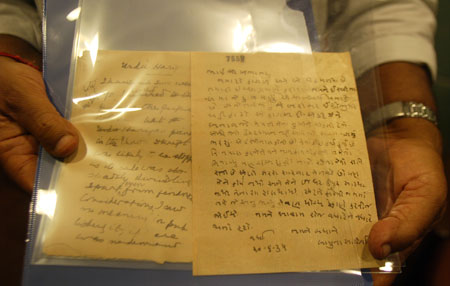
When I open the mailbox and see another letter from John, I always feel lucky. Aside from the fact that his letters are intriguing, there’s something special about someone taking the time to hand write a message and send it by post. Of course, e-mail isn’t an option for John—he’s housed in a prison.

I’m usually terrible at correspondence and rarely remember to send birthday cards. So it was out of character for me, an Australian school teacher, to initiate a "pen pal" relationship with anyone, never mind a complete stranger who resides in an American prison, convicted of murdering his wife.

My interest in John began after I watched a documentary about his trial. His case seemed extraordinary and I couldn’t get him or his situation out of my mind.

I had conversations with friends about John and the fact that he was an intelligent, articulate man who had no history of violence. We analyzed testimony that supported John’s assertion that he loved his wife. We tried to figure out why he’d been convicted given that the physical evidence was inconclusive and the prosecution’s case seemed patchy.

It wasn’t long before I began to feel uncomfortable that I’d become emotionally invested in John’s life and he didn’t know anything about mine. I'd hoped that writing a letter of introduction would balance the scales. It did.

Over the last two and a half years, our correspondence has grown into a friendship. We discovered early on that we were both working in a teaching capacity. He was teaching basic literacy and numeracy skills to inmates and I was teaching much the same thing to my second-graders.

Our early conversations about teaching slowly moved onto more personal subjects. I wrote to him about life as a newlywed and he wrote back about his adult children and the realities of prison life.

The prison stories were usually shocking, sometimes frightening but occasionally funny. I remember that I burst out laughing when he revealed that "chick lit" and romance novels were the most popular books in the prison library. “Closest thing the inmates can get to porn,” he explained.

As interesting as writing to John was, it wasn’t bringing me any closer to understanding how he ended up convicted of domestic homicide. If anything, our friendship made his conviction more difficult to comprehend.

To learn more about domestic homicide and the men who commit it, I began reading court transcripts, academic papers and media reports. In observance of Domestic Violence month, I will share some tips on how women in abusive relationships can lower the risk of homicide:

· Don’t live with an abuse partner. Refusing to live with an abuser significantly lowers the risk of abuse becoming fatal;

· Treat any abuse during pregnancy as an absolute deal breaker;

· Report domestic violence. The incidence of domestic homicide is lower in men who have been charged with abuse;

· Take death threats seriously;

· Hide or remove all guns and ammunition from the home;

· Keep your plan to leave a secret and leave when your partner is not home;

· Take extra care for the first 12 months after separation, especially if the abuser is controlling;

· Take action: speak out and seek help from friends, family, police, and local domestic violence agencies.

I soon discovered that the crime John was convicted of was intimate partner homicide, not domestic homicide. Intimate partner homicide and domestic homicide are erroneously thought to be the same.

Intimate partner homicide involves killing a spouse, ex-spouse, boyfriend or girlfriend and happens at a rate of more than three per day in the United States.

Domestic homicide is a broader term and refers to the killing of children, extended family, current partners, and suicide.

I expected to see a history of controlling and violent behavior in relationships ending in homicides. However, I was surprised to learn how often abuse during pregnancy preceded homicide. In fact, recent studies have revealed that homicide is the number one cause of death for pregnant women.

Having never been a victim of abuse, I've found it difficult to understand why women in abusive relationships don’t just leave. Yet statistics confirm what victims know instinctively–the risk of homicide spikes significantly when a woman leaves an abuser. Violent men don’t step aside and let their partners walk out.

Although this information provided me with some insight into intimate partner homicide, I didn’t feel any closer to understanding why John had been convicted as none of the predictors of homicide applied to his relationship.

I kept reading and eventually found a flip side to the crime lurking in the details of the high-profile cases, those cases which attracted major media attention because the accused wasn’t a serial abuser who’d gone too far. Without a history of violence, the flip-side murders initially seemed random and unbelievable. But there was a common thread, and while it wasn’t as blatant as bruises and broken bones, it was there.

In every case, the accused could be described as: a habitual liar, narcissistic, unfaithful, materialistic, egocentric, charming and manipulative with absolutely no regard for anyone else.

Who doesn’t tell the occasional white lie, flirt every once in a while and think of themselves first? That’s not the same as being a pathological liar, an unrelenting cheat and narcissistic beyond what could be considered a normal level of self interest.

In contrast to the serial abuser, who seeks complete control over his wife, it seems these men wanted to be rid of their wives. They used murder as a cheaper and more permanent alternative to divorce. Most stood to gain financially via life insurance, avoiding costly property settlements, or sidestepping alimony and child support. The "cheaper than divorce" theory is strengthened when you consider that the victims either had children or were pregnant at the time they were of murdered.

I’m still writing to John and given our friendship, I have lost my perspective in terms of his guilt or innocence. A friend asked me recently what I’d do if John told me he was guilty.

I said that John and I rarely discuss his case but if he did confide in me, I would continue writing.

Apart from my friendship with John, which I consider genuine, any details he shared would help me realize my goal of fully understanding this complex crime and sharing that understanding with other women.

Narelle Bitunjac is a 41-year-old elementary school teacher from Sydney, Australia. She is a member of the Domestic Violence Coalition Committee and actively supports its campaign for the introduction of Domestic Violence Fatality Review teams in Australia. This is Narelle's first published piece, written for Women in Crime Ink and subsequently accepted for publication with a quarterly women's journal, Honestly Woman, "an Australian magazine for enterprising women."