Showing posts with label bullying. Show all posts

Monday, May 7, 2012

Why I am Grateful for the Bullies Who Tormented Me


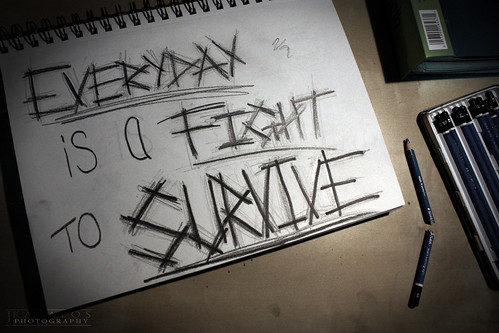
Fight to Surviveby Gina Simmons, Ph.D.

When I was in the fourth grade, a popular girl named Paula led a gang of girls and boys to engage in a disturbing game at recess.  In this game she commanded the boys to ambush select girls, take off their clothes, and toss the clothes into mud puddles. I became one of Paula’s unfortunate victims. At the time my parents were away on a week-long vacation and I was staying with family friends. Humiliated, tearful, and muddy, I went to the principal’s office. I named names. The principal interviewed all of the children involved. He announced “since all of you told different stories I’m going to punish you all. This week you will all be benched at recess.” My sentence came down to a week of humiliation sitting next to my tormentors during every recess period. By the time my parents returned from vacation I had already served my time.

I learned some valuable lessons from this bully, and others I’ve encountered over the years. I learned that popular people and good people aren’t often the same people. I learned that I could suffer humiliation and survive.  This knowledge gives me the courage to take risks that have paid off in my life. I learned that people in authority look for easy explanations and solutions. I now keep my communication clear, simple, and precise whenever I speak with someone in authority. Complexity and political success do not work well together.

Bully prevention programs have become a cottage industry in this country. The tragic suicides of bullied children break my heart and inspire many of us to find solutions to the problem of human cruelty. Social scientists find that when one person comes to the aid of a victim, it encourages others to step up as well. When we motivate children to speak up for others, it can make a huge difference in the life of a tormented child. 

It’s equally important to help our children develop the inner strength necessary to cope with the inevitable injustice and cruelty they will encounter in life. Kenneth Ginsburg, M.D., a pediatrician joined forces with the AAP in their book, A Parent’s Guide to Building Resilience in Children and Teens: Giving Your Child Roots and Wings. Dr. Ginsburg writes that parents can help their children and teens recover more quickly from painful experiences by fostering what he calls the “seven C’s of resilience.” I’ll talk about four of the C’s here: 
    NO MORE BULLYING
  •  Competence: focus on something your child does pretty well, and encourage them to grow in that area. When a child works every day on skill development they can transfer that habit to learning other things important for survival.
  • Confidence: when children develop competencies they grow in confidence. Encourage persistence and effort rather than competition and success. I always tell my children, “I’m proud that you worked so hard for that competition,” not “I’m proud that you won.”
  • Connection: when children feel secure and loved at home they can suffer at school but have a safe place to recover when they go home. For many children home is just another battlefield. Encourage your child to share feelings with someone they trust.
  • Character: children who are taught strong morals and values can find strength in those values when confronted by unethical or cruel behavior. Teach your child to take pride in being a good, caring, compassionate person.
Of course lecturing our children about good character won’t help them learn if they watch us behave badly. In this election year our political discourse remains hostile, rigid, and filled with personal attacks. It might help to listen to your political rhetoric and try to remove the hostile tone. Your children are listening to you, and following your lead.  

Photos courtesy of: j.abalos and Kenziepants.


Friday, September 9, 2011

Scrabble Psychos of the Internet

by Pat Brown

As we always warn children and young adults, the Internet is a world with little law, a Wild Wild West that extends the circumference of the earth and is peopled by every sort of weirdo one can imagine. They are on blogs, Facebooks, Twitter, chat rooms, and, much to my annoyance, my online Scrabble site.

Not that some of us Scrabble players who show up at the local clubs aren't a bit odd (and while nonScrabble players are thinking I am being judgmental, the Scrabble players themselves are nodding their heads and thinking, well, yeah, that's true). But, at the club and the tournaments (that is me in red at a MN tourney in 2005), we have rules–like you have to hold the bag at eye level so you can't peek down into in and look for a blank or an S to make your big play. Although there are still poor losers and those who whine and argue about how things should be done, there is a code and you have to stay within the group comfort zone or you will be ousted.

Online, however, the personality disordered can have a field day! First of all, they can cheat. They can use electronic dictionaries and programs and simply put in the letters on their rack, hit the button and come up with big words. You can always tell these cheaters because while their strategy is terrible, they know words like DROUKED and DAIKER and DUIKER (yes, those really are words in Scrabble). Then there are those who get mad at you if you happen to actually know some weird words because you are a fairly highly rated player and they furiously type in "CHEATER! CHEATER! CHEATER!" even though they should recognize that they are a novice player and you are not.

There are those who lose and immediately whine that the computerized Scrabble game always give them bad letters! If you win, they call you lucky; if they win, they are skilled.

Sore losers and poor players with personality disorders have interesting ways of punishing their opponents which sometimes includes attempting to force you to stop playing so they can get the win. Sometimes they call you names and cuss at you hoping you won't be able to stand it and run away. Other times, they simply don't play for so long that their opponent goes crazy waiting on them (it is a timed game, but they have twenty minutes on their side). I multitask when they do that and I snicker as I watch their time run down; I am not sitting there staring pointlessly at the board, so, haha, it isn't working, buddy. A variation of this is to log off and on and off and on and off and on until the other player feels like a ping-pong ball.

Another interesting childish maneuver is to play gibberish, an entire game of nonsense words that, of course, one must challenge off the board each and every time. Some are not even trying to win; they are just being abusive and getting a kick out of it. Most people will suffer through a whole game of this crap because if they stop playing, they lose and their rating drops. In one of my last games, the player, losing badly, waited until his last play and then he asked me to abort the game....uh-huh. Didn't happen. So sorry. Nyuck, nyuck. The abusers turn me childish in return.

And, yes, the perverts are there as well.

ScrabbleDude: Hi and good luck.
Pat: Hi and good luck to you too.
ScrabbleDude: GOLDEN 22 points
Pat: SINGULAR 70 points
ScrabbleDude: ZEP 53 points
Pat: HAO 18 points
ScrabbleDude: Do you have big tits?

We have antisocial folks on the site who block any communication during the game and there are those who are friendly until they lose and when you type "Good game!" the reply is "Your opponent is not logged on."

At least in the real world where people have to interact face to face, abusive and psychopathic creeps can get cut off or penalized for bad behavior. On the Internet, they can strike over and over, fueling their feeling of power, getting satisfaction every time they get over on another person in the Cyberworld. One has to wonder that this kind of gratification and validation is not a good thing to be so easily obtained by someone with psychological issues. Even worse, teens and grade school children with personality disorders and behavioral problems are finding out that the Internet provides a world without adult supervision and controls; Facebook and chat rooms are filled with teens abusing teens and children getting some very nonhealthy kicks from antisocial behaviors. Probably some of my opponents in Scrabble on the Internet are juveniles and have no adults in their lives paying attention to what they are doing.

The Internet can be a fabulous tool for communication and socialization but if we aren't careful, bullying and predation and harassment will invade our life online and our children may get the brunt of it. We need to be very aware of the dangers of the Internet to our well-being and our children's well-being and make sure we are vigilant about allowing strangers access to our lives and our minds without even leaving our homes.


Tuesday, October 19, 2010

Bullying: A Product of Our Times?

by Katherine Scardino

Nowadays, we raise children in a New World. For most of us, we did not reach maturity after spending our days (and nights) playing video games, sending e-mails, texts and instant messages on our computers, iPads, PCs, smartphones. We picked up our telephone and talked to our friends for hours on end with a parent telling us to “Hang up the phone!” Or, we had actual one-on-one conversations with people. We actually took the time to speak to the person behind the counter at the dry cleaners, the grocery, or the bookstore. We did not get online to order food, books or other household and personal supplies and services.

Could the bullying problem in today’s society be somehow related to our acquiescence as parents in allowing our children to forget how to interact with other people? Could the problem be exacerbated by our lack of parenting in teaching our children how to be sensitive and kind to others?

Recently, some children have done the unthinkable. They have committed suicide. How could this happen in this free, open-to-all society we're supposed to have? How could other children treat their classmates with such cruelty, as if ... ? Some people think the world is a better place now that we are universally connected through technology and the Internet. But, do you really think it is better that young people today are asocial? For the most part, the today's youth have never had to “socialize” the way their parents did as part of their daily routines. I am willing to bet that kids today could go for days on end and never actually speak out loud to another person. We have raised a crop of desensitized zombies--people who have no sense of hurt feelings. That is the only logical explanation for bullying.

Asher Brown was a 13-year-old straight-A student in Houston, Texas. Tyler Clementi was 18, a college freshman who played violin in the Rutgers Symphony Orchestra. Seth Walsh, a 13-year-old from a small city in central California, loved French fries and Pokamon cards. Billy Lucas was a 15-year-old from Indiana who showed horses. Justin Asberg from Minnesota was 15 and posted his cello music on YouTube. Their common element is that these children are now dead. They all committed suicide because they were being harassed, tormented and bullied because their peers thought they were gay, or because they were, in fact, gay.

There are other events of bullying because of race, physical or intellectual disability, socioeconomic status, grade-point average, or any of a multitude of characteristics that may set these children apart from the other “normal” kids. But, it is more likely that a young person will be bullied because of their sexual preference than any other reason. Who are these rude, homophobic, arrogant, spoiled brats? Are they our children who have never had to talk openly with others? Are they our children whose parents were never around to teach them the “softer” side of being human? The side that allows us to look at another person and say, “I am sorry you have this problem. How can I help you?” What has happened to the Golden Rule? Whether you are religious or not, you will have to admit that the “do unto others” rule seems to make sense.

Some of our most respected television actors and actresses, Ellen DeGeneres for one, have stepped up and publicized the problem in various ways--statements in the press, videos on YouTube. But the solution is home-grown. It starts at home with the parents. Parents must realize that they can longer use a television, video game, computer, iPod, iPad, or smartphone as an in-house babysitter. As parents in a free society, we are afforded the opportunity to choose whether to have children. So, upon making the decision to become a parent, adults have to act responsibly and actually be parents.

Do we need a “cultural shift,” as some of the activist groups say, that includes anti-bullying legislation, suicide helplines, training for teachers and other school personnel? If this cultural shift includes getting parents to do their job at home, then that is good. None of us can continue to stand by while our children are subjected to the physical and emotional violence that occurs among peer groups in schools, extracurricular activities, or even in the streets of our own neighborhoods. Protecting young people from bullying is just as essential to their healthy development as making sure they have good teachers and access to health care.

When we hear that the Federal government wants to step in and make more legislation against bullying, we should tell the government, "This is not your job. This is our job." When all people in our society become aware that bullying is not just part of growing up, that it is a form of violence against another human being, then the bullies will get a clear message that their behavior is unacceptable.

But, who are these bullies? Are they just kids growing up tough? Are they truly just mean-spirited, spoiled kids? Are we supposed to teach our kids to be as tough as the bullies are to protect themselves? "Punch the little thug wannabees in the belly!" Is that the solution? It might be in some instances. But, we must not allow ourselves to be swathed in the horrors of indifference. Bullying leads to violence, and that violence can become lethal without responsible intervention. We have to teach our children, our teachers and our coworkers that bullying is not only unacceptable, but it bears consequences that are sometimes unthinkable and irreversible. The bottom line is these lessons start with the parents at home. I can only hope we are not too late.