Showing posts with label Ink Blotter. Katherine Scardino. Show all posts

Tuesday, July 19, 2011

Proof Beyond a Reasonable Doubt

by Katherine Scardino

Proof beyond a reasonable doubt is a tough burden for the State to meet. The article written by Andrea Campbell and published on Women in Crime last Friday, which discussed the many different types of evidence that may be presented in a criminal trial in the United States, within the context of the Casey Anthony trial. The State may obtain a conviction based solely on circumstantial evidence. Circumstantial evidence points to the guilt of the defendant, but is not tangible evidence to connect the defendant directly. In other words, there are no crime scene fingerprints, DNA, eyewitnesses to the crime, etc... pointing directly to the accused as the culprit. The jury may render a verdict of guilty based solely on such circumstantial evidence if the jurors believe beyond a reasonable doubt that this evidence is credible and proven. But, I do not want to write another Casey Anthony article. Let’s look at evidence another way.

I wrote an article a few weeks ago about the recent flurry of powerful men who had been accused of, to say the least, low morals - or as I wrote - acting like pigs. Along with others, I mentioned Dominique Strauss-Kahn and even violated my own rule by lumping him in with those other men, mainly politicians, who seemed to have a problem keeping their pants zipped. Mr. Strauss-Kahn was a little different in that he was actually accused of committing a sexual assault against a maid in his hotel. His position rose to a higher level of accountability and a higher level of loss. He was not looking at an angry, vengeful divorce but the possible loss of his freedom and certainly his reputation and stature in the world.

I think the circumstances surrounding Dominique Strauss-Kahn’s arrest and subsequent public disclosure in shackles are an embarrassment to the United States. We pride ourselves on the basic tenet that here, in the good old USA, a person accused of a crime is innocent until proven guilty. You hear this constantly. Is that really true? I can answer that as a resounding “No." I can stand in front of a jury and state that each juror must believe that the accused person, standing before you prior to the jury hearing all of the evidence, is an innocent person. But, the mere fact that there is a person accused of misconduct standing in the courtroom around a counsel table with prosecutors, a court reporter, a judge and now a jury, is a weight that bears on the side of the prosecutor. The accused should not be judged in the news media like Mr. Strauss-Kahn was. We should never have arrested him without having done the smallest bit of investigation to at least make the evidence appear credible. 

In Federal court, the general rule is that when a Federal Grand Jury indicts a citizen of the United States, the US Attorney’s office has already conducted an investigation sufficient to believe that the accused is actually guilty. Don’t get me wrong - that does not mean that he is truly guilty, but it should mean that the US Attorney has enough evidence to get in front of a trial jury. 

The New York prosecutor jumped the gun on Mr. Strauss- Khan. The media reported that he was hoping to run for Mayor of New York and wanted the publicity. I do not profess to know his reasons with certainty. My complaint with the manner of Mr. Strauss-Kahn’s arrest is that there appears to have been zero work done on the credibility of the State’s evidence prior to his arrest. If the district attorney had done a small amount of investigation, he would have uncovered what he now is stating publicly - that the alleged victim is not a credible person. That does not mean the act did not occur. It simply means that he cannot take his case to a jury because he does not have the right kind of evidence that he can support.

So, what will happen now? The district court judge released Mr. Strauss-Kahn from house arrest. I do not know what other bail restrictions were lowered for him, but the dismissal from the prosecution should be coming soon. Where does that leave the United States? How about red-faced?

Is this a lesson for those of us who appeared so eager to accept the maid’s story as credible? It is easy to jump immediately to a conviction in cases of sexual assault. After all, why would a woman lie about that? In this case it could be money, publicity, attention, a twisted sense of need, or a combination of all of those things. If, in fact, a dismissal of all charges against Dominique Strauss-Kahn occurs, as seems likely, we owe this man an apology.

Which brings me back, briefly, to Casey Anthony and the burden of proof. In cases where the State is trying to terminate a parent’s parental rights - the most serious case in the world of Family Law - the burden of proof is “clear and convincing evidence.” That evidence is weighed by the jury and the side who has the greater weight of evidence wins. That is a lower burden of proof than in a criminal case. Beyond a reasonable doubt is a phrase that is not defined in our Penal Code. It is not the CSI phrase that is used in error - “without a shadow of doubt." Each juror must look at the evidence and form his or her own opinion whether the evidence reaches the highest burden of proof in our country, that of beyond a reasonable doubt. It is my opinion that a capital murder trial where death is an option should not be decided on evidence that is loose or circumstantial. Apparently, the Casey Anthony jury agreed.

So, those of you who are amazed at the verdict, think again. The State decided to seek the death penalty against a woman without having evidence that rose to the highest level of proof, and these twelve individuals analyzed this evidence carefully and all twelve, unanimously, agreed that the proper verdict was not guilty. That does not mean she is innocent. It means the State could not give them enough evidence with which to convict, evidence that rose to the highest level of proof, which was their accepted burden. The jury did what they all believed was right.

Let’s put Mr. Strauss-Kahn and Ms. Anthony together. Mr. Strauss-Kahn’s case should have been investigated enough for the prosecutor to see whether he had sufficient evidence that could rise to that level of proof. The New York prosecutor has publicly admitted he has a problem with his evidence. The prosecutors in the Casey Anthony trial looked at their circumstantial case and believed that they could convince a jury that their evidence did rise to that level of proof. They just made a serious mistake because they underestimated the citizens who they helped choose to render a verdict.

photo credits: Parti socialiste, billaday


Wednesday, June 22, 2011

Wheels of Justice Turn Slowly: Update on Anthony Graves

by Rachel Davis
Editor, Women in Crime Ink

The story of Anthony Graves, an innocent man who spent 18 years in prison for murders he did not commit, has been featured many times on Women in Crime Ink by defense attorney and regular contributor Katherine ScardinoIn 1994, Anthony Graves was wrongfully convicted of capital murder in a small Texas town.


Eighteen long years later, the charges against him were dismissed and he was released as a free man. Despite the fact that no amount of money can replace nearly two decades of an innocent man's life, Anthony Graves certainly deserved compensation from the State of Texas for his wrongful imprisonment. Unfortunately, the Texas comptroller denied Anthony's claim for compensation based on a technicality in the order of dismissal for his case. Now, a change has finally come and Graves will get the $1.4 million dollars owed to him for the years of his life that were lost.

Last Friday, June 17, 2011, Texas Gov. Rick Perry signed into law a bill that helps ensure exonerated individuals, like Anthony Graves, will receive compensation from the state for time spent wrongfully imprisoned. HB 417 will effectively close the loophole allowing for denial of compensation claims based on technicalities, such as the one in Anthony's case, where the lack of the words "actual innocence" from his dismissal order precluded him from receiving compensation.

This amendment to Texas compensation laws will allow exonerees to receive $80,000 for every year they were wrongfully imprisoned, provided that they are granted relief in accordance with a writ of habeas corpus (or a demand for proof of evidence of a crime), that the charges against them are dismissed, and that the dismissal is based on an affidavit from the prosecutor that they believe the person to be innocent. The law also allows for exonerees the option to enroll in healthcare coverage provided by the Texas department of criminal justice at the same cost an employee of the TDCJ would pay.

Although the wheels of justice turn slowly, the State of Texas has finally done its part, as required by law, to compensate Anthony Graves for his wrongful imprisonment. Hopefully, this law will also allow for retribution to other exonerees with legitimate claims to compensation.


But as time passes and the story of Anthony Graves' horrific journey to and from death row slowly fades out of the media limelight, let us not forget that Anthony is not the only person to be wrongfully convicted, but is one of the lucky ones whose freedom was restored. No amount of compensation will ever return to Anthony those 18 years.


Monday, January 19, 2009

Death Row

by Katherine Scardino

I have recently visited someone on Death Row (Texas Death Row, pictured left). In my 24 years of working in the criminal justice field, I have never been there before. I have heard from other people how depressing it is, but it is impossible to put into words the immediate response your mind has to the meaning of this place. You know that you are walking into a space occupied by people who are looking at an "end date". That is something that none of us have to do. We all know, intellectually, that we will not live forever, and that at one point in time, we will die. But, we do not know when. Many of the tenants of Death Row have a date. They know when their heart will stop beating, when their lungs will no longer take a breath, when their brain will cease to function.

The Texas Death Row is located in Livingston, Texas, in the Polunsky Unit. It is about five miles off the main road and sits alone. It is a sad sight. I went there to visit an inmate named Michael Toney. I had been contacted by a lawyer working for one of the big law firms in San Francisco, the kind of law firm that is able to do free legal work for whomever they choose. It is the type of law firm that those who are involved with it just call it "the Firm". The Firm decided to dedicate free lawyer hours and effort to free Michael Toney off Death Row. The Firm, along with another lawyer named Jared Tyler, who works for the
Texas Defender Service, have been successful in getting Mr. Toney a new trial. That is where I enter the scene.

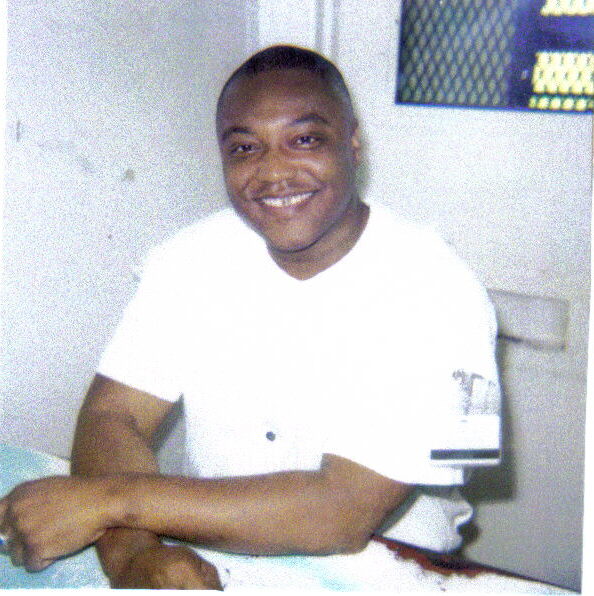
Michael Toney (pictured right) was convicted in Tarrant County in 1999 for a bombing that occurred there in November 1985. Yes, I said "1985". He was accused of placing an explosive device in a briefcase and setting the briefcase down in front of a trailer and subsequently killed three people. He obtained a reversal from the Fifth Circuit and a new trial as a result of misconduct by the State prosecutors in Tarrant County during his trial. It seems that they withheld exculpatory evidence from the defense lawyers, not to mention the fact that witnesses have recanted their testimony and State witnesses had different version of facts used to convict him. You can imagine how bad the problems had to be in a capital murder case in order for the Fifth Circuit to reverse his prior conviction.

I went to see Michael Toney with one of his lawyers, Jared Tyler. Jared and I sat in a cold room waiting for him to be brought in, unhandcuffed, and sat down behind a glass partition on a concrete stool. (Everything that can possibly be made out of concrete is concrete in the Polunsky Unit.) Mr. Toney arrived looking like he had just spent the last 10 years on Death Row. His complexion was pale and unhealthy, which is what inmates look like who have spent many hours in their cell with no access to a regular walk to the store in the sunshine.

I have always wondered about sensory deprivation. Can you imagine not touching another human being for years at a time. There have been many studies about the effect of sensory deprivation on inmates who are segregated or other people who choose to just be alone. Sensory deprivation is the deliberate reduction or removal of stimuli from one or more of the senses. It is one of the most favored measures used by the CIA in its "war on terror". It has so far been used on many detainees at Guantanamo Bay to the extreme - to the point of hallucinations of sight and sound, followed by a breakdown akin to psychosis.

Michael Toney sits in his 60 square feet of space 23 out of the 24 hours each day. During his one hour out of his cell, he must do his errands - like go to the Commissary, bathe, brush his teeth, plus try to work in a little sunshine. Sensory deprivation can change a person’s attitude and personality. It can make you paranoid, psychotic and generally mess up your mind.

I do not want to discuss today the crimes that were committed to cause Michael Toney or any of the inmates to be living at this facility. We all are well aware of the type of crime that results in a death penalty. As I said before, the people who live on Death Row are going to be executed at some point - except for Michael Toney, and I am going to try and work on that. But, they are human beings, even though they are treated and kept as animals. We keep them isolated, alone, no human contact, and then complain when they turn into an animal. We put our captured animals in cages in the zoo, and for the most part, they surely look peeved when I go to visit them. They are angry. The caged animals act angry. We read about an elephant attacking his trainer, a lion mauling a child, or some other horrid act - by an animal who should be in the wild but for us humans who think we must have a sample of their species in a cage for us to look at and point at and laugh at. They act angry - we shoot them. In the Polunsky Unit, when an inmate acts angry, he gets "written up" or deprived of his one hour of sunlight each day. Does anyone other than me see how ludicrous this is?

Michael Toney has something to look forward to. He has hope now. He talked about other inmates being jealous of his new trial. He was ready to get off Death Row and shipped to the Tarrant County Jail, where he will stay until a jury renders a verdict in his next trial. This time, I know that the verdict will be a lot different than the last one and I know that for one reason - all of the evidence will be presented to a jury - not just a part of it.


Sunday, April 13, 2008

Ink Blotter - Meredith Kercher Murder

Ink Blotter

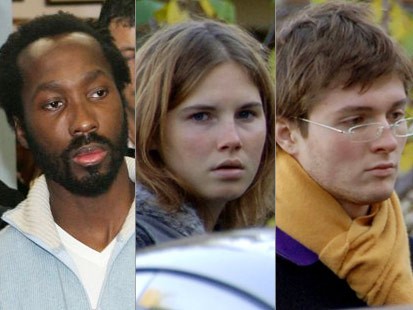
This afternoon, WCI will host a discussion between two of our contributors on the Perugia, Italy murder case featured last night on 48 Hours Mystery. Police theorize that British college student Meredith Kercher was murdered by her American roommate Amanda Knox (pictured center), Amanda's Italian boyfriend (below right), and another man (below left) whose fingerprints were found on the victim's purse. But Italian authorities' theories have evolved as evidence has disproved earlier assumptions. (The first being that Kercher was stabbed to death during a bloody, orgiastic frenzy after refusing to participate in group sex.) Is honor student Amanda Knox the "Dark Angel" she has been portrayed as in the media? Or has this young woman been the victim of an over-zealous prosecution and the media? In our live chat this afternoon, we will ask Sex-crimes Prosecutor Robin Sax and Defense Attorney Katherine Scardino to analyze the case and offer their opinions on key legal issues: coerced confessions, police mishandling of the investigation, DNA evidence and more. You can read background on the case and view film clips from 48 Hours correspondent Peter Van Sant here and here. Watch the discussion unfold in real time at 4:00 EDT today in the Ink Blotter box below. Your participation is welcome!