Showing posts with label Barbara Bentley. Show all posts

Sunday, November 9, 2008

"Prince Charming" - Part 2

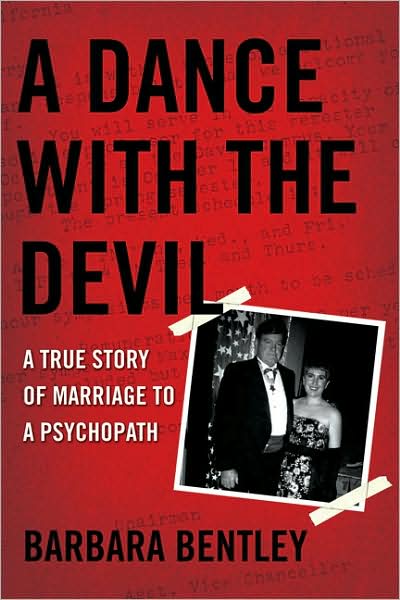
Women in Crime Ink offers an exclusive look at the first chapter of Barbara Bentley's new book, A DANCE WITH THE DEVIL (Penguin). If you missed the initial installment, click here.

Also, make sure to read our guest contributor's "Survivor Story" post from Friday. To participate in a Q&A with the author, visit the Ink Well (see live chat window along right margin) on Monday at 8:00 p.m. EST.

CHAPTER ONE


Part 2

With everyone settled back in the living room, the conversation turned to family. I shared that I didn’t have any children from my first marriage but I did have three sisters and a brother, all younger than me. The two youngest sisters were still at home; the one closest to me (ten years younger) was married and lived in Washington and my brother who had recently been discharged from the Marines. I joked that my parents had two families. I was the first, and when I was old enough to be the live-in babysitter, the rest started popping out. We all laughed.

Ted and Debbie had grown children from their first marriages and they brought us up-to-date with the latest news of who was where and doing what. Then it was John’s turn. I had to try to not let my mouth fall open as he wove a fascinating story.

When John was a young officer he married Sara Brimstone against her father’s wishes, because she was from old money and John was not. Together they had had a girl, Sandy, and a boy, Sonny. When John returned early from a long deployment, he found Sara in bed with another man. They divorced. He fought for custody of the children and won. Whenever duty called John to the sea or sky his Grandmother Dannigan watched the children in Coconut Grove, Florida.

Then John met Cindy Shirrow, an airline stewardess. They married and had one daughter, Estelle Desiree. In less than a year Cindy was killed in an automobile accident. John was in Vietnam when it happened, and his grandmother took one more child under her wing.

John’s fourth child came into his family through his father, who had adopted Francesca, the daughter of a faithful servant. When John’s father died, John assumed the responsibility. It was the right thing to do, he said.

John saw to it that his children were well taken care of as they grew into adults. When he was home he lived with them in his house in Coconut Grove. When he was away, Grandmother Dannigan and her servants continued to care for them. John made sure they went to the best schools, and all appeared to be successful. Sandy was married and going to MIT, Sonny was at NASA’s astronaut school, Desiree was at Julliard and Francesca was at Florida International University and living with John’s Grandma Dannigan.

Just when we thought he was finished, John hung his head. “We’re not very close now. I guess I was away too much when they were growing up. I feel like the black sheep of the family.”

Something stirred inside me. I wanted to rush over and put my arms around him and tell him it was all right, he had done his best. But I had just met this charming man and that would have been too presumptuous. Instead I meekly said, “I’m so sorry.”

Later, at the dinner table, Debbie sat John opposite me. He immediately reached up, ripped at the Velcro, and removed the blue-foam neck brace, saying the doctor recommended he only wear it when his pain was excruciating. Hmmm. . . . Looks even better, I thought. Ted poured the wine and John lifted his glass.

“A toast,” John said. “Here’s to the breezes that blow women’s chemises past their kneeses.” Even I laughed at that.

I looked around at the beautifully, evenly-set table and realized I was fully lulled into the spirit of Debbie’s dinner party. The meal, as always, was exceptional. Wine was plentiful. John, throughout the meal, was completely captivating. He complimented Debbie’s culinary talents, offered lighthearted jokes, and filled the hours that passed with more of his fascinating stories. A real charmer, this one, I thought, who knows all the right moves.

As the evening wore on, I learned even more about him. Before coming to Vestico as a consultant he was with the Federal Contract Administration. The FDA and the CIA, he explained, used the service. He was sent on missions into sensitive areas where it was, as he put it, “best for U.S. government presence to remain unknown.”

Before the night was over, he told us he’d been born in Turrialba and that he spoke Spanish fluently, having first learned it as a child living with his mother’s family in Costa Rica. That was why, he explained, most of his missions took him to Central America.

I interjected that I was a genuine California girl and that I had lived my whole life in one county - from being born and raised in Pittsburg to settling in Concord during my first marriage to migrating to Antioch for affordable housing after my divorce, all within a twenty mile radius. “For a world traveler like you it must sound dead boring,” I said.

“I envy you,” John sighed. “As a child I moved around a lot because my Dad was in the Navy; then I enlisted and the rest is history.”

“My parents still live in Concord,” I added, as if that tacked on some allure to my story. “They moved to California in World War II when Dad’s unit was stationed at Camp Stoneman. The weather appealed to them, so they stayed after Dad was discharged.”

John added that was exactly why he had settled the Bay Area, and then he was off on another story. To me, this dinner guest of Debbie’s was a regular James Bond. As difficult as it was becoming for me to keep my eyelids from drooping, I wanted to hear every word of the story he was telling about a mission in Panama City.

He and another operative, he said, had rented adjoining offices. They were close to completing their mission of forcing a drug cartel out of Colombia. One day, after lunch, John was at his desk in his office when he heard his partner’s office door open. John expected to hear his partner’s footsteps, but instead, he heard the loud rattle of machine-gun fire. Instinctively, he hit the deck, scrambled under his desk, held his breath and waited. The office door opened, and a strange voice said something about “getting the other one next time.”

Minutes later John learned his partner had been killed instantly. That might just as easily have happened to John, I thought, realizing that in real life, this James Bond stuff was horrifyingly brutal. As though reading my thoughts, John looked directly at me when he said, “That’s when I realized I was getting too old for that line of work. It was time to call it quits.”

I sighed deeply. “And it’s definitely time for me to call it quits now,” I announced. “It’s nearly midnight.”

While Debbie and Ted waved to me from the porch, John escorted me to my car, surprising me with his rapt attention. After I was behind the wheel, he asked me to wait while he walked over to his own car. He returned with a paper bag.

“I wish I had something more to give you,” he said, “but this croissant is from a special bakery in San Francisco. I know you’ll like it.” He grinned. “A special pastry for a special gal.”

It was an odd, but interesting, gesture. I thanked him for the croissant and drove away. On the way home I reflected on the entertaining evening and my introduction to an articulate, witty, and amusing man who had impressive credentials and exciting stories, a man who went out of his way to focus his charm and attention on me. But also an older man, I reminded myself. Parked in my garage, I grabbed my purse and the paper bag. What was it about me, I wondered, that made this man decide I was “special”? Although I had certainly learned a great deal about him, what exactly had he learned about me?

Barbara Bentley is a victims' advocate in California, where she was directly responsible for the passage of Assembly Bill 16, which changed California divorce law. A member of STAND! Against Domestic Violence, she addresses women’s and victim’s rights organizations, and her story was featured on Lifetime’s "Final Justice." Find out more about Barbara and her book at http://www.adancewiththedevil.com/


Saturday, November 8, 2008

"Prince Charming" - Part 1

Women in Crime Ink offers an exclusive look at the first chapter of Barbara Bentley's new book, A DANCE WITH THE DEVIL (Penguin).

Yesterday, Barbara wrote a guest contributor piece for us. Today and tomorrow, WCI brings you the first chapter of her story, in two parts.

For a live chat with the author, meet us at the Ink Well (see sidebar of WCI) on Monday at 8:00 p.m. EST.


CHAPTER ONE

Part 1

“Thanks for coming," Debbie said, giving my arm an extra little squeeze of appreciation.

"Hey,” I said, “A promise is a promise.” She had called me earlier that day while I was at work, preoccupied with testing samples in my analytical lab at the Excelsior Chemical Company. When she’d asked me to round out the double date for a dinner party at her house that evening, she wouldn’t take no for an answer, so here I was.

I knew what Debbie was up to. Five months earlier, in February 1981, after I split up with a man who was a close friend of Debbie and her husband Ted, Debbie somehow saw me as her “perfect single woman” friend. Somehow she’d managed to extract a promise from me: that I would help her keep her dinner table evenly set.

The eternal optimist, I wasn’t opposed to meeting new men myself. When I asked about who my date for the night would be, she answered, “Older than you, but you don’t have to think of him as a date. The point is, I know you’ll find him interesting. His great-grandfather was Admiral Peary. Remember? Peary…North Pole? John works over at Vestico with Ted. You’ll like him.”

I wasn’t holding my breath that we’d be a love match, and I was exhausted from working long shifts, but Debbie had a way of talking me into social events, and so I found myself agreeing. Besides, what harm could it cause? It was only dinner.

By the time I’d arrived and she’d greeted me warmly at the door, I found myself relaxing.

“I knew I could count on you,” she said happily, leading me into her living room. “Well, I owe you, big time.” Debbie glanced towards the kitchen, then quickly leaned over and whispered in my ear. “Don’t be put off when you see John. He showed up in a foam neck brace and said he’ll tell us all what happened.” She pulled away, then quickly returned to my ear. “I forgot to mention that he wears a toupee, so don’t stare.” She smiled and, in her sweet normal voice, said, “I’ll be back in a minute.” This should be interesting, I thought, I’ve never met anyone who wears a toupee.

She hurried off to the kitchen where the men had already begun preparing drinks. I sat down on the sofa and looked around. The brass, ceramics, paintings and furniture that Debbie had collected during her time in Taiwan never ceased to impress me, and as usual reminded me of how long it had been since I’d gone off to somewhere exciting. I did a fair amount of traveling for Excelsior, but the places I was sent to could hardly be considered exotic.

“Well, hello there,” I heard a deep voice call. I turned to see John Perry emerging from the kitchen, carrying two drinks. Ted and Debbie followed. Debbie winked at me.

Despite the medical brace around his neck, John was a dashing figure . . . tall, light brown hair, good-looking with a ruddy complexion and mischievous blue eyes. He was well dressed, too, in his tweed jacket and designer silk tie. He strode confidently across the living room. “Rum-and-coke for the lady,” he said, offering me the drink with an impish grin. Debbie was right, I thought. This man was already interesting to me...neck brace, toupee, and all.

“Thanks,” I said, taking the drink. I felt my cheeks flush as he looked me over. I was glad I’d decided to wear my red knit dress tonight. Everyone said red was my best color, and suddenly that seemed important.

Meanwhile, Debbie had set a tray of appetizers on the glass coffee table. John, I noticed, had already fixed a plate and was holding it out for me to take. I thanked him again.

“Debbie,” he said, “you didn’t tell me your friend was such a looker.”

My cheeks burned once more. John settled into a nearby chair, never taking his eyes off me. This was not going the way I had expected. Trying to exert some control, I blurted out, “Why don’t you tell me something about yourself?” And he did. He started out with an apology for the blue-foam neck brace and explained that a baggage cart loaded with heavy equipment had recently plowed into his neck and back while he stood waiting for a taxi at the Mexico City airport. “But it can’t stop an old Navy man,” he said. He launched into his military career and told me that after his last Vietnam tour in 1969, he’d been denied field duty. Because he hadn’t relished the notion of a desk job, retirement was the better choice. He’d been a captain in the Navy, but at retirement received a tombstone promotion to rear admiral.

“Tombstone?” I asked.

“That’s when an officer, at retirement, is honored by a raise of one rank. It depends, of course, on the officer’s service record. Obviously, it provides higher retirement pay.” He raised his glass.

“Guess you got that promotion because of the Congressional Medal of Honor, huh, John?” Ted asked.

I leaned forward. “You received the Medal of Honor?”

We were off and running. John talked about how the VC had swarmed over his unit’s position. They’d been completely outnumbered, casualties incredibly high. He was nearly killed trying to save several of his men. John’s hand slid to the side of his chest and rested there as he continued. “A fifty millimeter machine gun opened me up good.” He patted the spot on his side. “Real good. Right here,” he sighed. “Lost a lung, you know. Still carry the scar.”

We were all silent for a moment while John leaned across the table to fix himself a plate of appetizers.

“No disrespect intended,” I heard myself say, “but war is always horrible. I believe we had no business being in Vietnam.”

John smiled and began to lay out the usual arguments about the importance of fighting communism, but eventually admitted the war had taken its toll on him. “I still have nightmares about the kids I wasn’t able to save,” he said solemnly. He told us he had to shoot one of his own men who fell into a camouflaged, bamboo-stake-filled pit. Debbie gasped and I shuddered. “He begged me to shoot him,” John explained. “When you’re in the service, you go where duty calls and you do what you have to do.”

I looked away, not caring to hear any more war stories. That didn’t faze John, who seemed to relish talking about it. If I had only known then what I know now . . . that most servicemen don’t like to talk about their war experiences. But I didn’t. So, despite my disinterest in the topic, I found myself listening.

He said he’d been in three wars. He’d lied about his age in order to enlist during World War II, and, at sixteen, joined one of the first Navy SEAL units for underwater demolition. “I was a naval aviator in the Korean War. Got shot down once but landed in the water.” He smiled, remembering. “After two tours in the Blue Angels, I went to Vietnam and was given command of the Black Boats, small and swift. They went up the river into North Vietnam. It was dangerous duty. Very dangerous.”

It was clear he loved to talk about the military, about his experiences. “It’s in the blood,” he commented. “I’m tenth generation Navy. Did you know that, Ted?”

Before Ted could answer, John was already into the topic of a film from the 1940s, starring John Wayne. It was the story of John’s father and how he had started the Seabees.

“Because Dad was story consultant on the set,” John said, “I got to meet John Wayne. Matter of fact, the Duke and I got to be real good friends.”

After offering some inside gossip about the Duke, he joined Ted back in the kitchen to rustle up another round of drinks. Debbie immediately pumped me for my reaction to her guest. I conceded the man was certainly interesting. “But,” I cautioned her, “if you’re thinking what I think you’re thinking, forget it. He’s almost as old as my mother.”

“Maybe he is too old for you.” Debbie stood, announced that she was going into the kitchen to put on the finishing touches, and started out of the room. Over her shoulder she added, “Or maybe he’s not.”

“Not?”

“Too old for you. Maybe he’s not.”

Read Part 2 of the first chapter tomorrow. . . .


Friday, November 7, 2008

Survivor Story: One Woman's Dance with the Devil

by Barbara Bentley

I was thirty-five, divorced and not really looking for a man when Rear Admiral John Perry, twenty years my senior, swooshed into my life and swept me off my feet. He moved in almost immediately and for the next nine years we alternated between a normal life and periods of financial stress that almost drove me crazy.

Then John tried to kill me by ether
asphyxiation. Every detail is burned in memory. His right arm flung around my shoulders and pushed me into his chest. My eyes widened. An ether-soaked washrag propelled toward my nose and mouth. I was scared. Adrenaline surged through my body, and my survival instinct kicked into full gear as I jerked my head back and forth. My thoughts raced. Make a moving target. Ether can kill. Think fast. Don't open mouth. Don't let rag stay on face. Don't breathe or you won't leave this room alive.

I wiggled and twisted, struggling to get out of his grip, but I couldn't. Think, Barbara, think. Handicap bar on bathtub wall. Grab it! I held on to the bar with both hands and created enough leverage to partially extricate myself from his bear hug.

My left shoe came off. Fingers tightened around my left wrist.

I thrashed about as the rag neared my face once more.

Must get out. Get to door.

Desperate, I grabbed at the doorjamb with my free hand and pulled myself into the dressing area, right along with John.

Keep mouth shut. Move head back and forth, up and down. Don't stop. Oh my god, I'm gong to die in a hotel room in Virginia.

My right ankle twisted, and that shoe came off. My free hand poked at his eyes but couldn't quite make contact.

Somehow, I survived. . . . Only to be thrown unwillingly into the world of the criminal justice system. By the time I was battered about by the courts . . . the prison system . . . and the parole board . . . I realized that the name was aptly given. The criminal gets the justice and the victim is regarded as some minor part of the whole charade . . . and definitely an inconvenience once the trial is over. All focus is on the criminal. Even the victim’s assistance program failed me.

The one saving grace during this period was the homicide detective whom I credit with saving my life. He went beyond expectations and insisted on arresting John, even when his fellow officers told him he should have just let me go back to California. He knew if I had that I would have shortly been dead.

Five months after the attack—and a month after John’s conviction for first-degree attempted murder—I pondered why this had happened to me. Why would I, a seemingly intelligent woman, become trapped in a web of deceit that almost killed me? Then it dawned on me: I was to write a book to help others.

What I didn’t know at the time was that my story would not be finished for another four years. As a victim of California’s
no-fault divorce law (which was forcing me to pay alimony to the very man who was in jail for attempting to murder me), I would take on the Sacramento lawmakers and become a champion for victim’s rights. I wanted to change the law. And I did.

As I began my writing journey I used my organizational skills to record events and dates on separate index cards. I scoured old calendars, date books, photograph albums, and letters. I rummaged through the cardboard file boxes that contained the miscellaneous paperwork that I had accumulated from John’s home office when I had acted as the west coast investigator for the homicide detective in Arlington, Virginia. Fortunately, I had filed them chronologically.

More than once I would pause and shake my head in disgust. Bile would rise, along with my blood pressure.

Why would the police send out a patrol car on a domestic violence dispute when the hotel clerk called the police to report my husband has just tried to murder me?

Why would John get booked into family court and cause me panic when his bail was lowered to $2,500?

Why was it I who found out the FBI was investigating John for impersonating an admiral when the police couldn’t confirm his identity with fingerprints? That discovery at least got the bail raised back to $25,000 . . . but for attempted murder that still didn’t seem high enough.

Why would the judge give John a five-year sentence that allowed him to make parole in less than a year when he had been convicted of first-degree attempted murder? Why did I have to follow a round-about lead to confirm his parole?

Why did the victim’s advocate at the prison act like I was an inconvenience when I asked why I had not been notified?

Why was I not told when John exited the system? Oh wait . . . it’s because it’s the criminal justice system. I was just the victim. He had more rights than I.


Mind you, I’m not wallowing in victim’s pity. I pulled myself together not long after the murder attempt–I had to in order to have strength to testify against John. Then I moved forward and eventually beyond myself to help others. I wrote my book A DANCE WITH THE DEVIL: A TRUE STORY OF MARRIAGE TO A PSYCHOPATH and I now have the last laugh on my perpetrator. But my efforts dredged up old memories of how the criminal justice system had failed me. Fortunately, some laws have changed but the scales of justice still tip to the criminal’s side. It made me mad then. It makes me mad now.


Barbara Bentley is a victims' advocate in California, where she was directly responsible for the passage of Assembly Bill 16, which changed California divorce law. A member of STAND! Against Domestic Violence, she addresses women’s and victim’s rights organizations, and her story was featured on Lifetime’s "Final Justice." Visit Women in Crime Ink over the weekend for an exclusive peek at A DANCE WITH THE DEVIL. Chapter 1 will be posted here (in two parts, the first on Saturday). Find out more about Barbara and her book at http://www.adancewiththedevil.com/