Monday, January 17, 2011

Dying Bird and Fish Mystery in Arkansas: Solved

by Andrea Campbell

It reads like some kind of horror film, reports of 3,000 (to 5,000) birds mysteriously falling out of the air and dropping dead in Beebe, Arkansas, before midnight on New Year’s Eve. The birds were said to be littering a 1.5-square-mile area, landing on homes, cars and lawns. And then 100,000 dead drum fish are found floating and washing up on the Arkansas River banks near Ozark. It’s some kind of staging for a movie right?

No Film Trickery
Unfortunately, this is not in preparation for a movie, and the residents near the river are being advised by authorities not to eat the dead fish. Uh, yeah, okay—who was even thinking that?

Here we are, welcoming in the new year when thousands of red-wing blackbirds take a dive from the sky in Beebe, and then more than 100 miles away the fish are belly up along a 20-mile stretch. But the Arkansas Game & Fish authorities claimed the deaths weren’t related.

Bebee Residents Sing Bye-Bye Blackbird
Over the holiday weekend, crews arrived suited up in their protective
gear wearing gas masks and gloves, picking up the carcasses. Apparently, blackbird roosts in Beebe are a nuisance because of ankle-to-knee-deep bird droppings in some areas, so the residents aren’t keen on their habits. Ten years ago, wildlife officials lobbed blanks from both shotguns and  a cannon to disturb a roost of thousands, but the black-winged birds decided to come home again.

Scary Elsewhere Too
Arkansas is not the only state getting the same weird vibe. Two million dead fish were found in Maryland along the Chesapeake Bay. They were identified as adult spot and juvenile croakers. Environmental officials there claim the bay area temperatures were colder than usual and, although this fish kill was large, it’s not the biggest; 15 million succumbed to “cold water stress” in 1976.

Louisiana birds took some headlines, too, when 500 of their birds decorated a quarter-mile stretch of highway in Pointe Coupee Parish, close to Baton Rouge. The dead there were identified as starlings and more red-winged blackbirds. It’s not looking good for the ed-winged blackbird, I guess. Biologists there are sending the carcasses off to laboratories in Wisconsin and Georgia for testing. In 1999, an estimated 3,000 birds hit the ground in northern Louisiana in a place called Morehouse Parish. It was discovered that those birds died from an E. coli infection located in the air sacs in their skulls.

Not Scary?
No one really sounds alarmed, and scientists say that large numbers of bird deaths are not uncommon. I know that makes us all feel better, right? A website set up by the U.S. Geological Service has a map that shows mass deaths of birds and other wildlife from June through December. Five of the sites list deaths of at least 1,000 birds and many others count as high as 500.

Authority Comments
Some comments from Arkansas officials are that the birds may have been hit by lightning or were stressed out by fireworks displays. Now the fish story is more problematic, as they say that fish kills this size are rare. Many of the fish have been sent to the University of Arkansas for examination and testing. The associate director of the University’s Aquaculture and Fisheries Center was quoted as saying, "It's your classic boom and bust. A group of fish will go into a population boom, and then they're competing for food, so they may not be in really good condition. Then during a cold snap the environment changes with the temperature, and their immune systems are compromised and can't always fight infection." He temporarily ruled out a pollutant because only the drum fish were affected. Keith Stephens of the Arkansas Game & Fish Commission told CNN he agreed and that “… if it was from a pollutant, it would have affected all of the fish, not just drum fish."

Interesting Factoids
There have been some interesting comments batted around over this event, and one comes from Karen Rowe, an ornithologist with the Arkansas Game and Fish Commission. She said birds often become confused and just drop to earth. It seems that blackbirds have poor eyesight, and if they get startled, they fly into the ground.

Fireworks, Poison, Bad Weather, What?
After all the supposition, it appears now that the birds succumbed to a thunderstorm aftermath. After being ripped from their nighttime roosts, they got waterlogged and died from exposure. A tornado blew through the state and killed three people in Cincinnati, Arkansas, so experts think it may have been related. It seems birds get knocked around from lightning, hail and storm updrafts often enough.

The most recent testing results, released Wednesday by the U.S. Geological Survey's National Wildlife Health Center in Madison, Wisconsin, show that red-winged blackbirds died from blunt force trauma on New Year's Eve. The report supports preliminary findings from the Arkansas Livestock and Poultry Commission released Monday.

As far as the fish, well, disease is the cause. An unnamed state official said that it’s not unusual. Since there is no further data on that, I am suggesting that no one around there order fish for dinner.

Bird photo courtesy of the Arkansas Democrat-Gazette/STEPHEN B. THORNTON.


Friday, January 14, 2011

The Psychotic Assassin: Jared Lee Loughner

by Gina Simmons, Ph.D.

A delusional young loner becomes obsessed with a blonde woman. Disgusted with politicians and the government, he writes rambling rants difficult to understand. He hides the truth about his life from his family. He isolates from friends, buys a gun, attempts to assassinate a politician.

While this sounds like the story of accused Arizona mass murderer Jared Lee Loughner, it's actually a synopsis of the iconic 1976 film Taxi Driver, starring Robert de Niro and Jodie Foster. Robert de Niro plays Travis Bickle, a psychotic cab driver in New York City. His attempt to assassinate a politician is thwarted. Through a series of random events, he changes his hostile focus from the politician to the pimp of a child prostitute, played by Foster. He commits mass murder.

The film made news again in 1981 when John Hinkley Jr. attempted to assassinate President Ronald Reagan. Hinkley's psychotic obsession with Jodie Foster's performance in the film reportedly inspired his attack on the President. Schizophrenic individuals, like the rest of us, are influenced by environment, media, family and random events. They don't just interpret those events rationally. For example, years ago, the supermarket chain Alpha Beta had a television slogan, "Tell a friend," to persuade people to shop there. A colleague of mine shared a story about a paranoid schizophrenic who, when told he would be going on a field trip from the hospital to a supermarket, said, "I won't go to Alpha Beta. They want you to 'tell a friend.' I don't want anyone to know where I shop."

According to news reports, Jared Lee Loughner engaged in bizarre, hostile behavior last year at Pima Community College. He later withdrew from the college after campus officials told him he needed a mental health evaluation and clearance before they would allow him to return. He then legally purchased a Glock 9 millimeter semi-automatic weapon and, months later, shot 20 people.

From the evidence reported in the news to date, and from Jared Loughner's disjointed YouTube videos, it appears he suffered from a psychotic disorder. Psychosis consists of a break with reality. The individual's thoughts don't connect with a logical thread. Sometimes they speak in a word salad, as if their thoughts were put into a bowl and randomly tossed. Loughner likely suffered from paranoid schizophrenia. Schizophrenia is an incurable mental illness, with genetic links, associated with significant destruction of brain tissue over time. Symptoms of the disease include hallucinations (sensing things that are not real) and delusions (false beliefs). The disease usually begins in late adolescence and early adulthood.


It appears Lougner's troubles began in his junior year of high school. That's when he broke up with his girlfriend, dropped out of high school, and slowly began to deteriorate. He allegedly abused drugs and alcohol, developed an interest in guns, and suffered from paranoid delusions. These delusions included the belief in mind control and in secret government conspiracies. Some schizophrenics, plagued by delusions of grandeur, believe they possess special powers or special importance.

Schizophrenics can unnerve us. In addition to the fear of death, most humans instinctively fear madness. The insane person doesn't respond to normal social cues, verbal persuasion or even common-sense safety. We feel helpless and confused about how to deal with their bizarre behavior. However, most mentally ill people never commit acts of aggression. The rate of violent acts for the mentally ill closely matches that of the general population. 

Researchers found common characteristics in those mentally ill people at high risk for violence:
  • Usually males under the age of 43
  • Substance abusers
  • Bipolar or depressed combined with substance abuse
  • Income below $20,000 per year
  • History of family violence, criminal activity, or juvenile detention
  • Victimized, divorced, separated or unemployed in the past year
We can see this list of characteristics and wonder why someone could not stop this attack. To prevent other similar attacks by the mentally ill, we need to support:
Families with a mentally ill loved one often live for decades with a chronic anxiety: "Will he commit suicide?" "How long can she stay in the hospital?" "What programs can help him stay on his medication?" "Will the insurance approve this new medication?" The list of worries and dilemmas goes on and on. In addition to this tsunami of worries, mental illness carries with it a stigma of shame and blame. Some families try to hide the illness, growing more isolated even when they desperately need the help of the community. Many bloggers and pundits blame Lougner's family, deepening their devastating pain.

With education, community and mental health support, many psychotic individuals can lead more productive lives. Some can hold jobs and become self-supporting. Others will need care and support for the rest of their lives. Mental illness is not an individual problem. Mental illness poses a problem for families, communities, nations and international relations. Public figures bear a greater responsibility for the power and influence they wield. In the interest of good judgment, I suggest posing the editorial question, "How would a paranoid schizophrenic gun nut view this ad or speech?" Or ask, WWTBD? (What would Travis Bickle do?)


Thursday, January 13, 2011

Tu be or not Tu be

by Anne Bremner

In the ever-evolving investigation into the death of Michael Jackson, there has been yet another bizarre twist: Dr. Conrad Murray has lodged his defense as suicide by Jackson. But there was another bizarre twist before of great note; the one-minute YouTube video released by Dr. Murray in August 2009, a sort of infomercial for the old PR tactic of answering the question you wish was asked. In this instance, a PR ploy that may well have backfired.

While YouTube is unquestionably an effective vehicle for producing and disseminating an unassailable statement, the public is not that easily duped. Evading cameras, microphones and probing questions--understandable. When that silence is broken by an obviously orchestrated statement such as Murray's, however, it is redolent of propaganda. Truth isn't delicate, fragile or easily shrouded. It can withstand being scrutinized, poked at, and examined from every angle. We, the public, have a healthy skepticism towards anything too slickly packaged. This is déjà vu all over again.

YouTube allows us to create our own entertainment, create instant celebrities--the piano playing cat, skateboarding bulldog, Snowball the disco cockatiel. It is a forum for raw footage of everything from natural disasters and amazing accidents, to horrifying incidents--the honor killing of a young woman by her own family, protests that turn into riots, or the abuse of power. It is predictable that such a powerful medium would mutate into an easily accessible marketing tool. 

Murray's tape, however, is a prima facia case of exploiting the medium, some would say, not well. The slickly produced video is out of place among the delightfully homespun wobbly, grainy, videos we find so endearing. The obvious splice in Murray's short video brings to mind (for those of us old enough to remember) the Nixonian 18-minute gap in the Watergate tapes. It raises our curiosity, prompting us to ask, "What was left out?"

Couldn't this man make it through a 60-second statement without requiring editing?

Disseminating information on YouTube is the cyber equivalent of a driving a top-speed funny car dragster--a short burst of excitement that requires the ability to maneuver a vehicle at lightening speed, and more importantly, bring it to a stop. As any lawyer who has represented a high-profile client will tell you, we spend far more time and effort keeping clients out of the public eye, flying under the radar. High publicity, sensational cases require meticulous handling, from the basics of keeping a client safe and safeguarding their privacy, to preserving their legal rights, staunching the flow of misinformation, and conducting independent investigation while responding to media, law enforcement and government inquiries.

While many lawyers utilize the advice and services of public relations professionals, there is a danger in confusing clever PR for skilled lawyering. In many cases, the lawyers and PR agents involved in a case early on will be replaced or dismissed as a case gathers steam and proceeds through the judicial system. One of the difficulties of taking on a client in those circumstances is undoing the damage that well-intentioned but detrimental PR may have already done--clients who have said too much, said the wrong thing, given the wrong impression. PR professionals can often have divergent purposes from defense lawyers. PR may concentrate on salvaging a career, public image, and even arranging paid appearances or book deals without an eye to how that may play out to a jury later.

As we often say, silence requires no PR. In this case, it may turn out that the evidence will exonerate Dr. Murray if it proves impossible to isolate, from a medically convoluted sequence of events, a single act that irrefutably lead to Jackson's death. Witnesses can and do lie, but evidence never does. In the certainty that evidence will exonerate, no words are necessary. The problem with self-serving statements is that they are often made by individuals whose credibility is already in dispute. I laughed at my 20-something neighbor's reaction to Murray's video. "The dude has passed the point where we're just gonna take his word for it. Dur," my neighbor said.

As the medium evolves, so will its implementation. I love it as a forum for all sorts of wacky, fascinating, shocking, inspiring and entertaining moments. As a lawyer, I would approach its use with great caution. Tu-be? Dancing Cats, singing dogs, surfing squirrels. The rest, at least for now, is not tu-be.

Now, Dr. Murray is presenting his defense in person. From the sublime to the ridiculous, the resulting disbelief may remain the same.


Tuesday, January 11, 2011

Biggie Smalls and Tupac Shakur Cold Cases Heat Up

by Cathy Scott

A couple weeks ago, I sat down with CNN's anchor/reporter Ted Rowlands and producer Michael Cary to talk about the Tupac Shakur and Biggie Smalls murders. In Anderson Cooper's resulting blog post, Rowlands and Cary quoted a former Los Angeles Police Detective as saying, “Suge Knight ordered the hit [on Biggie Smalls]."

Smalls, 24, Brooklyn-born Christopher Wallace and also known as the Notorious B.I.G., was gunned down in L.A. while driving away from a VIBE magazine album release party at the Petersen Automotive Museum on March 9, 1997. Investigators suspect the killer was a lone gunman in an early model Chevy Impala who opened fire on Biggie's Suburban in a drive-by. Witnesses described the gunman as a thin-faced African-American man wearing a suit and a bow-tie.

The accusations toward Knight, who at the time ran Death Row Records, were from the mouth of one Russell Poole, who was one of many detectives who once worked on the Smalls murder investigation. Poole added, when he spoke with the CNN crew, that he believes the murder was organized by Reggie Wright Jr., who headed security for Death Row.

Poole went on to say he believes Knight ordered the murder of Tupac Shakur as well, even though Poole never worked on the Tupac investigation, after Shakur, 25, was gunned down in September 1996 near the Las Vegas Strip.

Bold words. The problem, however, with Poole's statements, which have become almost a mantra for him, is that there isn't a scintilla of evidence pointing to Knight as either committing or ordering the murder of Biggie Smalls. The LAPD launched both criminal and internal investigations into just that, to no avail. And Biggie Smalls' mother, Voletta Wallace, in 2006 sued the city of Los Angeles and the LAPD for a cover-up and sloppy handling of her son's case. 

Investigators have long suspected that Biggie was killed because of an East Coast/West Coast rivalry between the rappers, who were from opposite coasts, which they have said may have caused the death of Shakur six months earlier. Wallace's family's suit against the LAPD was dismissed in 2010. Still, Voletta Wallace has said many times she has faith that her son's killer will one day be brought to justice.

But Detective Derrick Parker, a veteran of the NYPD specializing in hip-hop related crimes, told People magazine, "No disrespect to the LAPD," says the police officer nicknamed the "hip hop cop," "but every time they get a new set of detectives on it, it fizzles out. They lose a lot."

Poole is one of those officers who rotated in and out of the Smalls case. If Knight is, in fact, responsible for Smalls' murder, where's the evidence? Bring it forward. I'm not saying Knight is a Boy Scout. Far from it. It's common knowledge that he grew up on the streets of Compton and was a member of the Mob Piru gang.

And it's not as if the cops haven't tried to get Knight. In the aftermath of both murders, police in a variety of jurisdictions have hauled him into both county jails and prison for everything from outstanding traffic warrants, possession of marijuana, and violation of parole. He served time. But he has never been identified by the LAPD or the Las Vegas police as a person of interest, let alone a prime suspect, in either murders.

I was told by a source about a year and a half ago that a multi-task force had been formed to look into both Smalls' and Tupac's murders as a part of an in-depth gang probe. So far, the members of that task force have been silent. When the task force eventually winds up its work, maybe we'll then see whether Poole's words ring true. Until then, and without evidence, it's an empty accusation.  

Knight, who was behind bars serving out a parole violation at the time Smalls was killed, has denied he had anything to do with the murder. And Reggie Wright has also said he had nothing to do with the killing. 

As for an LAPD cover-up, Los Angeles City Councilman Bernard Parks, who was chief of police at the time of the Smalls murder, said, simply, that allegations of a police cover-up are "absurd." 

Click here to read CNN's blog.


Monday, January 10, 2011

Sisters Released For A Kidney

by Katherine Scardino

The story of 35-year-old Gladys Scott and her 38-year-old sister Jamie Scott has been all over the national news this week. The Governor of Mississippi had decided to release the Scott sisters from state prison after they'd each served 16 years of a life sentence for aggravated robbery of $11.

First of all, the amount of the robbery is immaterial to me. I think most people would agree that sticking a gun in the face of a citizen and demanding all his money warrants a serious sentence, assuming that the state has proven their guilt beyond a reasonable doubt. (Remember, I am still a defense lawyer.)

Back in 1993, Gladys and Jamie were involved in an aggravated robbery of two citizens of Mississippi. The use of a weapon in a robbery means that the range of punishment can be increased. We know that the victims of this robbery must have been scared for their life, so they gave the robbers all they had--$11 in cash. A life sentence may be a bit much. I have represented people who stole a lot more than that and did not receive life sentences. But, their actual sentence is not the issue of my troubles with this matter.

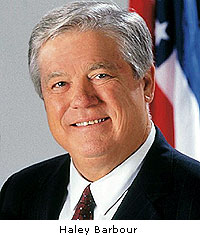
What troubles me is that Governor Haley Barbour released the women so the state of Mississippi could avoid having to pay the medical bills for Jamie Scott’s kidney transplant. Jamie has been ill for a while and apparently needs a new kidney, which I presume is a very expensive medical procedure. So, Gov. Barbour agreed to the release only if Gladys would agree to give her ill sister one of her own kidneys. As a result of the release, the state of does not have any medical expenses.

Sixteen years ago, a judge or jury in that state felt that this crime warranted life sentences for both Gladys and Jamie. The NAACP and many other people have petitioned, complained, and written about the unfairness and obvious racism involved in these sentences for many years, but to no avail. The NAACP claimed that these women were symbols of the heavy-handed sentences given to African Americans, and the influential civil rights group engaged in a long-standing campaign to secure their release. Nothing happened as a result of their efforts to get them released.

Before Jamie became ill, no one could give a rat’s you-know-what about her or Gladys and the length of their sentences for an $11 return on an aggravated robbery. But with the prospect of huge medical expenses looming in the future of the state’s coffers, all of a sudden this governor becomes magnanimous in his decision to release the women.

This case supports my belief that many ridiculous rules and laws can be undermined and terminated if they cost too much. Take capital murder, for example. It is unbelievably expensive to finance a death capital murder trial in any jurisdiction, whether it be a large county or a small county. As a result of the cost, some, if not most, small counties elect not to prosecute for a death sentence to avoid the millions of dollars it could cost the taxpayers.

So, here in Mississippi, the bastion of equality and fairness, this governor has elected not to pay for Gladys Scott’s medical expenses incurred while spending years in a state prison. Maybe that is a good financial decision for Mississippi, and it is obviously a good decision in all respects for the two sisters, since they are now free. But the crux of my issue here is that they have gained their freedom not because it is the right thing to do, not because justice and fairness require it. No, Gladys Scott and Jamie Scott are now walking among the free people in the state of Mississippi for one reason only: money. It is always about money, and do not ever forget it.


Friday, January 7, 2011

Does Lack of Desire to Prosecute Matter for Prosecutors Deciding Lindsay Lohan's Fate?

by Robin Sax

TMZ reported today that the Palm Desert Police Department has turned its investigation over to the Riverside County District Attorney's Office,  who will decide whether to charge Lindsay Lohan with battery.

They went on to say, “The case would be an uphill battle, because alleged victim Dawn Holland says she will not cooperate and does not want Lindsay prosecuted." But do prosecutors really think lack of cooperation makes a case unprosecutable? The answer is no.

In California, the only crime in which a victim has a legitimate say in whether or not to cooperate is in sexual assault cases. A victim's desire to prosecute or not may be relevant to the decision by the prosecution on whether they file charges, but it is not outcome determinative. Victims of a crime are merely witnesses to a case. They are not a party to the suit. The D.A. is, therefore, not their lawyer, nor do they have the client decision rights that one would have in a civil case.

Frankly, as a prosecutor, sometimes a non-cooperative witness is the best type. There is no better way to prove a case than to show that the witness is under the power and control of an influential person. A non-cooperative witness could have been paid off,  wayed, or influenced by other pressures. A skilled prosecutor will use examples of controlling behavior and even a change in stories to show the power and sway of the defendant. Then, they will take statements during the heat of the crime and early in the reporting as a method to impeach the witness, prove the power and control and the underlying case.

The early reports and statements (as opposed to the ones on the stand) are usually viewed as most honest and telling because they are often made before a witness has a chance to lie, fabricate, or be swayed.  As such, if Dawn Holland lies, those early reports will come in to impeach her and to corroborate the true version of the facts.

It will be interesting to see if the D.A. in Riverside determines that the lack of desire to prosecute holds here, when they regularly prosecute domestic violence cases, gang cases, and other batteries when the victim is undesirous. I know, because I worked in that exact office in addition to my time in LA.  And the most successful cases were the ones where the victim did not want to be there--no issues of an axe to grind, no issues of falsifying charges to 
gain advantage in some other case.

I am not saying that this case is the strongest in the world, nor am I saying that Dawn Holland is either a good person or a good employee. As a matter of fact, her blabbing to the media and HIPPA violations are worthy of the loss of her job and the punishment that is likely to come.

Still, the bigger questions remain, regardless of the Dawn Holland incident. Why  in the world did Lindsay not take a drug or alcohol test?  Why was she out past curfew? Why even be in a situation that reeks of a violation?

There is only one answer that makes sense and it's not really news. The reality is that Lindsay Lohan is an addict. Addicts are desperate and will do desperate things, including battering someone to cover up their use and abuse. The only thing that remains  to be seen is can Lindsay Lohan get out of her own way, help herself and get some control over her terrible addiction and demons?


Thursday, January 6, 2011

The State's Burden of Proof: 2 Cases 25 Years Apart

by Susan Murphy Milano

Robert Dianovsky maintained that his wife Peggy left their home voluntarily and took a bag of clothing with her when she vanished in September of 1982. Peggy Dianovsky left her yellow Chevrolet Nova behind and never picked up her last paycheck from her employer, Dominick's. Blood was found spattered at the top of the stairway in the Dianovsky home, but none of it was ever collected for analysis.

Robert took the boys and moved to Arizona sometime after 1982. He also filed for divorce, claiming Peggy abondoned him and the children. He was charged in 2003 with Peggy's murder. Their three sons went to the police in 2002 after tape recording a conversation with Robert where he made suspicious statement about Peggy's disappearance. One of the Dianovsky children says he witnessed his mother's murder, and all three of them say they saw Robert abuse and threaten Peggy. They claim they repressed the memories of the events but recovered them in therapy sessions as adults. One of Robert's friends also testified that Robert asked him for a gun in 1982 to "get rid of" Peggy. Robert also claimed his wife was having an affair.

In all, six hours of audio were taped when Dianovsky's three sons confronted and accused him of their mother's murder. The sons contend their father killed Peggy Dianovsky on September 12, 1982, in their Schaumburg, Ill., home during a brutal beating.

On the tapes, the accused man says, "I hit her pretty good." He also admits to previously saying his wife would never get out of the marriage alive. Dianovsky also said that he cut off his wife's tennis clothes in a jealous rage, and that his grown sons can tell their kids, "Your dad did something to her."

The trial took place in Cook County, Illinois, before a judge rather than a jury. Judge Robert Porter acquitted Robert after an eight-day trial in November 2004. He stated that Peggy probably had in fact been murdered after her disappearance, but there was insufficient evidence to prove that Robert did it.

The relevance of the Robert Dianovsky case, in my opinion, is important in the upcoming Drew Peterson trial as it pertains to evidence, as well as the State's burden to prove that Peterson murdered Kathleen Savio. Drew Peterson is awaiting trial for the murder of Kathleen Savio, his third wife. The State in this case is working on the admittance of hearsay testimony. Below is my explanation of hearsay as it would apply to the Peterson case.

Hearsay is an out-of-court statement "offered for the truth of the matter asserted" and is not subject to cross-examination, typically because the declarant or speaker is unavailable. This applies to Stacy Peterson because she is not "available." Such statements are deemed unreliable because of the obvious fact that they can easily be fabricated and can not be tested through cross examination.

One basic way to get around hearsay is to seek admission, not for the truth of the statement itself, but for another highly relevant purpose. For example, let's say I am charged with intentionally shooting my daughter's boyfriend (which is not beyond the realm of reason) while the two of them are harmlessly playing tie-up. Prior to bursting into the room and firing, I was told by her ex-boyfriend that the new guy was in the process of raping her. My defense is not intentional murder, but, rather, manslaughter because I believed the ex, who has since fled to Costa Rica and is unavailable at trial. Here I would offer his statement of rape, not because it was true, but because of the effect it had on my mental state, a very relevant fact in the case. Again, I am not offering it for its truth and therefore whether it was fabricated is not in issue. Whether the statement was made and whether my response was reasonable (based upon my credibility) can all be determined by the trier of fact at trial because I, not the ex, would be subject to cross-examination. In any event, statements can be admissible solely for their impact upon the listener (if relevant in a case) and not for the truth of the statement.

This approach should be very relevant to the statement Anna Domain (Kathleen Savio's sister) could testify to, "that Kathleen asked her to care for her kids." This is dynamite. Not offering it for the truth that Peterson said he wanted to kill her, but for the independent impact it had on her and her mental state to seek care for her children. Anna Domain could testify to her observations regarding Kathleen's credible belief that she needed to secure care for her kids because she was going to die soon. This really should have tremendous impact on the State's case, assuming Anna Domain is well prepared on the stand. And fear is hearsay with no subsequent act reflecting impact on her mental state.

Now for the exceptions, which have literally swallowed up the general rule. Since the beginning of time, Courts have recognized certain fact patterns that contain such inherent elements of reliability that they overcome the need for cross-examination. All of this is based on a notion of getting all relevant information to the jury that is subject to a prejudice in the analysis of the defendant. For the State this stuff is worth fighting over because it usually means game over for the defendant. Certain fact patterns below have crystallized into exceptions.
  • Dying Declaration - declarant unavailable says just before dying to witness "Mr. X shot me." This is admissible based upon the notion that people who are dying do not typically have a motive to lie. Witness will testify as to demeanor of declarant.
  • Excited Utterance - declarant screams "the plane is going to crash into the house" and witnesses doesn't see the plane. Here admission is based on the fact that when people are experiencing a startling event under stress they don't have time to fabricate.
  • Present Sense Impression - this is the same as above, except the witness also experiences the same event as the declarant, and therefor the declarant's statement is relevant.
The exception used the most by prosecutors, and the one that is highly relevant for Peterson purposes, is a Statement Against Interest. For example, if I told you that I "did dope and shit," the statement would be admissable based on the theory that people do not make up highly negative evidence against themselves, especially facts that would subject them to criminal prosecution.

This is highly relevant for Stacy's statements to Pastor Neil Schori and Mike Rossetto that she provided an alibi, because it shows that she was willing to obstruct justice at Peterson's direction regarding Kathleen. Now maybe during the admissibility hearing the witnesses were weak on the statement, or just did not provide enough detail regarding the circumstances of the meeting with Stacy to overcome the highly prejudicial impact of the statement.

The state's case has more twists and turns than a tornado. Will Drew Peterson be acquitted? Is the State's case strong enough? No one really knows what the outcome will be. What we do know is what Peterson said in interviews when Stacy vanished. Just as Robert Dianovsky said 25 years earlier, "It's where she wants to be." Drew Peterson echoed those same words in media interviews shortly after Stacy Peterson disappeared October, 28, 2007.


Wednesday, January 5, 2011

A New Year's Mystery: Former Bush Aide's Murder

by Donna Pendergast

As the rest of us were making preparations to ring in the new year, a grizzly discovery was being made in Cherry Hill, Delaware. On New Year's Eve, the body of John Wheeler III, 66, was discovered when the contents of a garbage truck were emptied iat a local landfill. Indentifying information was found on his person. Police have declined to say how Wheeler was killed, but his death has been ruled a homicide.

Wheeler, a Republican stalwart, served in the Reagan and both Bush administrations. After graduating from West Point in 1966, the Army officer served as a captain in Vietnam. After he retired from the military in 1971 as a decorated veteran, he attended Harvard Business and Yale Law schools.

Determined to honor the service of Vietnam veterans, he served as the first chairman of the Vietnam Veterans Memorial Fund and passionately led the fund-raising effort to create the memorial on the National Mall in Washington, D.C. He also served as the first chief executive of Mothers Against Drunk Driving (MADD). A more recent crusade involved bringing the ROTC back to ivy league campuses.

Recently, Wheeler served as special assistant to the secretary of the Air Force from 2005 to 2008 when he became the special assistant to the acting assistant secretary of the Air Force for Installations, Logistics and Enviroment. His most recent work was as a defense consultant to the Mitre Corporation, a non-profit organization that manages work for the U.S. Defense Department. Wheeler also wrote a manual on the effectiveness of biological and chemical weapons, which recommended that the U.S. not use biological weapons.

Wheeler was last seen Tuesday night stepping off of an Amtrak train from Washington at the Wilmington, Delaware, station. His body was discovered when an employee at the landfill observed his body falling off the dump truck into a trash pile. By backtracking the truck's route, police have been able to determine that all trash collection stops made by the truck before it arrived at the landfill involved large commercial disposal bins. These bins were located in Newark about twelve miles west of Wilmington. Police are now reconstructing the last few days of Wheeler's life in an attempt to shed light on his murder.

The conspiracy theorists are already running amok with theories that sound like the start of a government conspiracy thriller. The Internet has been abuzz with dark suggestions about covert involvement in Wheeler's death. Many are suggesting that Wheeler was privy to some secret information that he acquired over the course of his distinguished career. They dismiss as unlikely the idea that a random act of violence such as a mugging would result in a body being disposed of in a trash container. They further argue that the method of body disposal is more consistent with a targeted hit. Wheeler's connection to and involvement with the Mitre organization has also been the subject of much speculation.

There are a number of questions surrounding Wheeler's murder. Was he reported missing before his body was discovered in the landfill? From where, exactly, along his route home did he disappear? What did he do in the days before his untimely death? What do his cell phone records reveal about who he may have been in contact with in his last hours? Perhaps, as the answers to these questions are revealed, investigators will have a clearer picture as to whether Wheeler's death is run-of-the-mill random violence or whether there is something more sinister afoot.

Although Wheeler's death does seem strange for an act of random violence, as a prosecutor for 24 years, I can vouch for the fact that strange things happen every day in the big city. Women in Crime Ink will keep you updated on any unusual developments on this unfortunate end of a distinguished life.

Statements made in this post are my own and not intended to reflect the views, opinion or position of the Michigan Attorney General or the Michigan Department of Attorney General.


Tuesday, January 4, 2011

Plagiarism: The Crime of Literary Theft

by Dr. Lillian Glass

Taking Your Car Or Your Intellectual Property - You Still Feel Violated

If someone takes your car and tells everyone they bought it when they actually stole it, you would feel violated and devastated. You would feel that way because someone took something of yours that was not theirs. You would feel upset because you worked so hard to earn the money to buy that car, and now it is gone.

If someone takes the exact words from a book you have written without giving you credit and places your material in a book they wrote, telling everyone that it was their material when they actually took it from you, you would feel violated and devastated as well. You would feel upset because you worked so hard to create that material.

The first example, the theft of a car, is a criminal matter in a court of law. The second example, someone taking what you have written and passing it off as their own, is a civil matter pursued in a court of law.

Whether a criminal or a civil matter, the resulting emotions that arise from both of these actions are identical. When you discover that someone has taken something of yours, especially something for which you have worked so hard to acquire or to create, you are angry, upset and feel violated. It doesn’t matter if it is a material good, like a car, or intellectual property, such as text in a book or lyrics for a song.

Marsha Petrie Sue, Copyright Infringer, Also Accused of Plagiarizing Intellectual Property

When I discovered that Marsha Petrie Sue, a professional speaker from Arizona, took the exact words I wrote in my 1992 book He Says She Says and put them in a book she wrote in 2007 called Toxic People, I was upset. I discovered what she had done because I was doing an Amazon search for one of my books, also titled Toxic People, which I wrote in 1995. When I discovered she used the same name as I had for my earlier book, I purchased her book. I was even more shocked to see my material in her book.

Marsha Petrie Sue also had the audacity to post the material from He Says She Says on her websie without attributing it to me. Instead, she gave permission to others to freely use and freely disseminate my work, but only if they included her website address to help promote her business.

So, I took the matter all the way to a United States Federal Court in Los Angeles where a unanimous jury of eight last month found Petrie Sue liable of copyright infringement. Now she will forever be known as a copyright infringer.

As this case became public--with every television venue picking up the story from ABC, CBS, NBC, CNBC, FOX, to Bloomberg, Businessweek, Yahoo! and Breitbart--I received supportive feedback and comments, and even questions like this one from crime reporter and radio host Levi Page, who asked, "Wonder who else she ripped off?"

Apparently Marsha Petrie Sue may not be a stranger when it comes to copying other people's materials without attribution and claiming them as her own. Stanford University Professor Robert Sutton back in 2008 openly assuced Petrie Sue of plagiarism in a post he wrote on her Amazon blog (which has hence been removed).

He wrote to Petrie Sue that she "took nearly word-for-word from an article." In addition, he wrote, "There are some words ommitted, but there is no attribution to original source and note below how you have pretty much simply removed some of the words from the opening of the original article. Note that I am a professor at Stanford, and directly taking text from a source without providing any attribution fits our definition of plagiarism."

The professor concluded his admonishment of Petrie Sue by writing: "Perhaps Amazon blogs don't need to follow the Stanford honor code, but I would never use so much text from another source without attribution, and I think that nearly all other universities--and authors--would agree that acknowledgment of the source is appropriate."

Fighting The Case For Everyone Who Writes Or Creates

I not only fought this legal battle against Marsha Petrie Sue for my own rights, but for the rights of anyone else who creates--any writer, songwriter, composer, artist, photographer, sculptor, architect, or designer.

No matter if someone takes your car or your intellectual property, know that you have rights through the legal system. No one has any business taking what is rightfully yours, and they must be stopped at all costs.


Monday, January 3, 2011

2011: Yea or Nay?

by Stacy Dittrich 

I can’t help but steal a fabulous quote from a journalist friend of mine, “Hey, 2010! Take your place in the history books and get lost.” Personally, it was the most wretched and god-awful year I’ve had in recent memory, business-wise.

But when the future seems hopeless, I look at my children and husband as reminders of just how lucky I am that they are with me and in good health. Regardless, if I could submerge 2010 in a vat of acid and toss it off a cliff, I would gladly do so. Since I have long tabooed the phrase “the next year couldn’t possibly be worse" (yeah, it can), I decided to play Positive Polly and give my predictions about the world of crime in 2011. 

Casey Anthony

Casey Anthony will marry her cellmate—a gal we know only as Pat, (pictured right with Casey). Although they only speak to each other through the small metal slits of their respective cell doors, their relationship will blossom faster than you can say "Thelma and Louise." Not to mention, Pat will think those pictures of Casey kissing another girl are pretty hot. Casey requests to have Zanny the Nanny as her maid-of-honor. Jose Baez will be Pat’s best man, and the televised nuptials will take place on the eve of Casey’s lethal injection.

George and Cindy will separate. George will take a job with Bates Amusement Company touring the country as a bona fide carnie. He’ll take great pride in his work as the Kiddie Kopter operator, commenting on how all of the little girls remind him of Caylee. Cindy will travel throughout the country in her search for Caylee who, as we all know, is still alive. 

Joran van der Sloot 

Joran’s reign of terror will end abruptly this year when he is murdered under an air of mystery inside his cell at Castro Castro prison. The last person to see Joran alive will be his cell mate, Rico, after giving Joran a full-body massage and pedicure. After the autopsy reveals that Joran had stage 4 anal cancer, officials will close the death investigation because they determined he would’ve died anyway. His body will be donated to the Peruvian Center for Maniacal Mass Murder Studies. 

Colton Harris-Moore, aka “The Barefoot Bandit” 

After caving in to pressure by the ACLU for unlawful prosecution, Moore gets a full pardon by President Obama. Moore will go on to write a best-selling book on his adventures. The book, titled Barefoot and Brainless, will be made into a mega-hit movie starring Ashton Kutcher, and Moore will land his own reality show. Finding himself with millions in the bank, Moore will eventually buy the Bahamian island where he was previously apprehended. 

Nancy Grace

Bombshell! Nancy’s star will continue to rise this year, culminating in her appointment by Obama as the new Crime TV Czar. She will obtain her concealed carry permit and will be offered her third television show, “Gunning Down the Bad Guys with Nancy Grace,” by ABC, for another $40 million. On the home front, John and Lucy will get two new English bulldog puppies for their birthdays. They name them Cleet and Roscoe. 

Jane Velez-Mitchell 

Jane will leave HLN this year. She has issues.

She will embark on a nationwide search and rescue of stray and farm animals. After being caught red-handed releasing chickens from their respective coops, Jane will be arrested, but the charges will eventually be dropped. PETA will name Jane their “Woman of the Year,” and she will be appointed as their CEO. Her platform will be to work alongside Michelle Obama in turning all school lunches vegan.

Me

My dreams will come true this year. My book sales will make Stephanie Meyers’ look like chump change, and I’ll make millions from the movie adaptations. I’ll get to buy my longed-for beachfront double-wide trailer in North Carolina where I’ll spend my days with a bad weave, driving a luxury Kia that I can now afford, and sipping red wine from a box. I’ll be offered a spot on the new show, “The Real Housewives of Bumpkin County,” and get caught up in a scandalous and sordid affair with my landscaper, Horatio (pictured below). 


Women in Crime Ink 

The fabulous alpha-women at the blog step up their game and get offered a television show. They instantly become bestsellers and knock the likes of Clancy and Patterson right off the list. Grisham who? Their television show becomes so successful, it leads to the demise of "Glee," which sparks riots nationwide. As indictments get handed down against the gals of Women in Crime Ink for inducing panic, they are given a full pardon and their taxes are doubled by President Obama. After appointing the WCI ladies to the head of the US Crime Commission, he promises not to run for president again in 2012. Obama appoints Dr. Lillian Glass as the Director of Homeland Security for her uncanny ability to read the terrorists’ body language.

Here at Women in Crime Ink, we frequently discuss disturbing and emotional topics. I’m glad we are able to deviate from that every so often and make our readers smile. I am humbled and honored to be surrounded by such an amazing group of women—and equally amazing readers. So here’s to 2011. I hope it turns out to be a wonderful year for everyone!


Saturday, January 1, 2011


From all of us at Women in Crime Ink, wishing you a safe, prosperous, and happy New Year! Welcome 2011!