Showing posts with label Andrea Yates. Show all posts

Tuesday, April 27, 2010

Postpartum Depression: A Silent Killer

by Katherine Scardino

I was horrified to hear in the local news that Houston is home to another mother who has killed her baby. Najres Modarresi joins Andrea Yates as another Houston mother who is now accused of the capital murder of her two-month-old son, Masih. As someone who grew up in an area and during an era where psychological issues were just not allowed, it has been an education for me to learn how serious postpartum depression can be for some women.

Hearing the facts of the Modarresi case, any rational person would be initially enraged. Ms. Modarresi first lied to police and accused “two black men” of accosting her and kidnaping her baby. This led Houston police on a wild goose chase for a couple of days, even to the point of issuing an Amber Alert for little Masih. Ms. Modarresi eventually led police to a muddy stream and pointed out where her infant lay buried in the dirt and muck. Autopsy results showed the baby's lungs contained mud and other particles, which means he had been buried alive.

It wouldn't be difficult for any normal person to wish Ms. Modarresi the maximum punishment for this crime. However, we have to remember all that our society learned during and after Andrea Yates’s two trials. Initially, Ms. Yates was found guilty of murdering her children. Then, after an appeal and a reversal, she was retried and found not guilty by reason of insanity in 1996. Andrea’s case had national appeal, and everyone seemed to have an opinion about her state of mind when she drowned her children. Observing the progress of the Yates case taught me about the seriousness of postpartum depression. I learned that there are four levels of depression: mild, moderate, severe and psychotic. It appears that a person can bounce into a depression at any one of those four levels at any time. The question a lot of people had about Andrea Yates had to do with her treating psychologist. Why didn't he see the severity of her condition?

It was reported that Ms. Modarresi was prescribed mood-altering prescription drugs. So apparently she also has a doctor who is, or should be, fully aware of her condition. How can this disease overcome a mother who is under medical treatment?


It is surprising to learn that around 50 to 80 percent of all women experience some degree of emotional problems following childbirth. Only about one in 1,000 new mothers graduate to the most extreme and rarest disorder, postpartum psychosis. The mildest form of postpartum depression, more commonly known as “baby blues,” usually lasts only a few weeks. If the moodiness lasts longer, the new mom may be suffering from a more severe condition, a mood disorder called postpartum depression. If a new mother experiences the more severe condition, she may lose her connection to reality. The break is debilitating and known as postpartum psychosis. There is no logic to this psychosis. The mother doesn't know right from wrong nor the consequences of her actions. She may feel that she is “saving” her child by killing him.

So back to the question of how the treating physician can fail to recognize severely depressed and psychotic patients. It's possible for the depressed mother to go to sleep slightly or moderately depressed and wake up in a psychotic state. This shift can happen quickly and be deadly.

If a new mother suffering from this type of depression doesn't get to a doctor before her symptoms escalate, it becomes more and more likely that a tragedy like the Modarresi case will occur. Then the mother is charged with murder or capital murder. Capital murder is applicable when the victim is younger than two years old; conviction carries the possibility of the death penalty. By the time she is sitting in front of a jury of her peers, the mother looks and sounds sane. She's been under psychiatric treatment for most likely a year or two. The jury looks at her and finds it hard to believe that this defendant was insane at the time of the offense. Insanity is a hard defense. But there is no doubt in my mind that at the time of the murder, Ms. Modarresi knew neither right from wrong nor the consequences of her actions. Unfortunately, nothing we do now can bring back this two-month-old baby boy.

The good news about the Yates case and now the Modarresi case is that women today are much more aware of the symptoms of postpartum depression. They can express themselves and explain their feelings candidly to their doctors without feeling ashamed and degraded, like they are the scum of the earth. These cases have given credibility to this dreaded disorder.

There is also hope for the future in recognizing and preventing postpartum depression. The Melanie Blocker Stokes MOTHERS Act was recently passed into law as part of President Obama’s healthcare reform bill. This act provides for research, education and screening for postpartum depression and related mood disorders. Hopefully, it will lessen stigma attached to maternal mood disorders and get more women the help they so desperately need before more young lives are lost to this disease.


Tuesday, December 2, 2008

What Ever Happened to Jane?

by Vanessa Leggett

Last fall, I wrote about a writer friend of mine who'd found herself in a moral quandary. The subject of her first true-crime book was on trial for murder. Again. My friend's publisher wanted her to attend the second murder trial for an updated version of her book. That was all well and good—until my friend learned she would not be able to cover the proceedings. She had been named as a witness.

So that we're all on the same page, we'll revisit my first story, "Jane's Affliction," and then I'll fill you in on what happened with my friend:

Meet Jane

I have this friend. We'll call her Jane. She's a journalist and true-crime author. For reasons that will shortly become evident, Jane would prefer to remain anonymous. Actually, she'd rather be forgotten altogether, and by one person in particular: a prosecutor who recently tagged her.

See Jane Subpoenaed

I learned of Jane's predicament by e-mail. In my Inbox was a message with the subject line "Whoa! What does this mean?":

I just got my mail out of the box and found a big package from the [redacted] DA's Office. In it was the transcript of my interview with [the Defendant] and a note that said here are copies of your reports and transcripts of your involvement in the [redacted] case. . . . What does this mean? Is this a hint that I'm going to be called to testify?

It was more than a hint, she soon discovered, when the subpoena arrived. Prosecutors wanted Jane to testify in a capital murder trial in California.

During Jane's research ten years ago, she'd interviewed the man who would go on trial for his life a second time—not for the murder Jane wrote about, but for another killing. In the 2007 capital murder trial, the prosecution wanted Jane's testimony to show a consistent modus operandi in the separate slayings.

Problem was, this writer did not want to testify. The issue was not over a breach of journalism ethics; Jane never promised this particular source confidentiality. In fact, what she learned during her interview had already been published in Jane's book.

For Jane, the sticking point was that the prosecution stated its intent to seek the death penalty. Jane is against capital punishment.

See Jane on the Fence

Jane sought my advice because she remembered a subpoena I received in a murder case. I was practically in tears when I discussed my situation with her. So when Jane e-mailed me, she expected I would empathize. And I did, to a degree.

But my dilemma had been different from Jane's. My concern was with protecting my sources. Jane is bound to protect a core belief. And she is tormented by the thought of violating it:

The more I think about it the more uncomfortable I am. They're going for the death penalty. And I'm just not sure I can help put someone to death, even if he is a murderer. . . .

See Jane Suffer Subpoena Syndrome

Something about reading an official document that "commands" you to do something you consider fundamentally wrong messes with your mind. Reason tends to leave as abruptly as the subpoena arrives.

I suspected that Jane, a best-selling author with many years on me in the business, was suffering from something that afflicted me early in my writing career: subpoena syndrome.

I tried to break things down into terms she could live with. I reminded Jane that this type of proceeding, a capital case, contains two trials: In the first, called the "guilt/innocence phase," a defendant's culpability is determined, and if found guilty, the accused is convicted. In the second stage, known as the "punishment phase," a penalty is assessed.

Jane was told she would testify as part of the case in chief, not during the stage in which the death penalty is considered. This meant that Jane's testimony should have no bearing on whatever penalty was decided. Even if she were to testify during the punishment phase, the decision as to whether the man will live or die would not be left to Jane.

In my reply, I tried to ease Jane's conscience: "You need to put the death penalty out of your mind. Prosecutors may seek it, but it's up to the jury to choose death as a punishment."

The way I saw it, the decision would be out of her hands. But Jane could see nothing but blood on her hands if she testified.

See Jane Take a Stand(?)

Taking the stand at any stage of a trial where execution is an option, Jane reasoned, amounts to helping the prosecution put a man to death:

[I]n my heart, mind, in every limb of my body and soul, I think the death penalty is wrong, utterly wrong. So how can I grease the wheels to it? . . . Beyond my moral and ethical beliefs, I also disagree with their death penalty decision because it gives [the Defendant] what he wants. And it seems to me that to [him] the greater punishment, the more horrible punishment, would be life in prison since that's the very thing he did not want.

Jane never expressed doubt about the man's guilt. What she's uncertain of is her ability to testify, if doing so might result in the state taking a man's life. But if she refused, Jane could wind up in a jail cell for contempt of court.

See Jane ______________

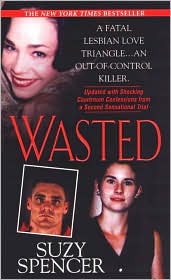
So what did Jane do? . . . It's not a secret anymore, nor is the identity of my friend, Suzy Spencer. Today, her publisher re-released her first book, WASTED, and you can read all about the capital murder trial that Suzy was caught up in.

An Austin Chronicle reviewer called the book "everything a true crime book should be: lean, fierce, and unsparing." The story is riveting. From the back cover:

In 1995, Austin, Texas was rocked by the brutal murder of a lesbian princess named Regina Hartwell. Even though Regina's body was burned beyond recognition, within days police had two suspects. One was the beautiful ex-cheerleader who was the object of Regina's desire. The other was a man who would take the fall for murder. . . . In this new edition of her bestselling book "Wasted", true crime master Suzy Spencer chronicles a fatal love triangle—and lives driven out of control by sexual desire, drugs, and shocking childhood demons. Four years after Regina Hartwell's murder, a new charge was brought against one of her suspected killers. Now, Suzy Spencer adds a new chapter to "Wasted"—detailing a killer gone wild, a nerve wracking legal standoff, the shocking twists that would take place in a second, explosive trial. . . .

Long story short, Suzy did not dodge the trial. She flew to California, not in compliance with the prosecution's subpoena, but at the request of the defense. Her presence meant she would have been available for questioning by either side, though she might have refused to answer for the State. She did not end up testifying at all. Court was canceled that day—in part, Suzy explained, because Justin didn't want any witnesses testifying on his behalf for fear it would ruin his chance of receiving the death penalty.

In the end, Justin Thomas was convicted and sentenced to death. Without putting Suzy on the stand, the State opted to use a portion of the transcript from her taped interview, which was introduced in the punishment phase. As it turned out, Justin's own words netted him a death sentence.

After Suzy's legal battles with this book and with BREAKING POINT, on the Andrea Yates case, she considers the 10th anniversary edition of WASTED her "good-bye" to true crime. Her entry into true crime—hitting the New York Times best-seller list with her first book—was as unconventional as her exit. The "true crime master" has converted to sex book mistress, working on a memoir of sex in America for Berkley. Few would blame her for trading Draconian courtrooms for Hedonism resorts.

As for Justin Thomas, he is now #G11032 at San Quentin State Prison, home of Scott Peterson and Richard Ramirez. Like most prisoners of California's Death Row, Justin will probably die waiting to be executed (assuming the current moratorium is lifted). If so, his "death sentence" will have been converted into what he feared more: the rest of his life in prison, with little hope of his suffering cut short.

That statistics indicate Justin Thomas will not be executed at all should bring Suzy some measure of relief. But not enough to stay in true crime.


Thursday, November 27, 2008

HAPPY THANKSGIVING FROM WOMEN IN CRIME INK

All of us at Women in Crime Ink give thanks to you for making our unique crime blog a success. We appreciate your readership as well as your insightful commentary. To all of our guest contributors, thank you for your thought-provoking stories.
To mark the holiday, our regular contributors are noting what we're grateful for this Thanksgiving. We invite you to use the comments section to share with us whatever blessings you're counting. Thanks for reading Women in Crime Ink. Happy Thanksgiving to all!
Pat Brown - Although the world is struggling with disasters, violence, economic, moral and ethical problems, I am thankful that there are still many, many kind and loving people who wish to do right in the world, who live a principled and responsible life in spite of the attitudes and conditions which plague the societies they live in.

Andrea Campbell - I am grateful that forensic science keeps progressing and is working better than ever. Personally, I am happy to have good health for me and my family. And I am also warmed by the camaraderie that I share with the other important women here at Women in Crime Ink.

Kathryn Casey -
I'm more grateful than I can say for family and friends, including all the wonderful people I've met this past year through my association with Women in Crime Ink. Even though the world is a tumultuous and sometimes dangerous place, there's so much that's positive. We write about bad people at WCI, those who do terrible things, but the truth is that the bad folks are vastly outnumbered by the good ones, another reason to feel good this Thanksgiving.

Diane Dimond -
This Thanksgiving makes me stop and reconsider the last year. No, the economy isn't great, no, our politicians still aren't doing their best for the country (mired as they are in their own partisanship), no, there is no peace in the middle east. But I have a loving family who are healthy and happy. We have warm homes and food on the table. And I'm most thankful that the miserable demon known as
Tony Alamo is in prison. He has tortured children in the name of God for long enough!
Tina Dirmann - I'm thankful for all the work, despite the horrible economy. I'm thankful that I'll be surrounded by dear friends this turkey day. And I'm thankful the
Hawks family finally found justice in the courts this year.
Stacy Dittrich - I am most thankful for my husband and daughters, and the fact that we are healthy! On a lighter, more humorous note—I'm thankful for annulments and second marriages . . . I'm thankful that I didn't grow up with a ridiculous name like Joran Van der Sloot . . . I'm thankful that in less than a month I will basking on the sunny beaches of Florida laughing at my fellow Ohioans . . . I'm thankful for the medical phenomenon known as plastic surgery and those wonderful plastic surgeons who lowered their rates during this economic crisis—my thighs and the thighs of millions thank you as well . . . and I'm damn thankful for being alongside the most audacious group of women known as Women in Crime Ink!
Diane Fanning - I am thankful that my daughter moved to Austin and is now only an hour away, that I was able to celebrate my 25th anniversary in Jamaica with the man I love and that we live in a nation that has chosen to step into the future with optimism and hope.


Cynthia Hunt - I am thankful that despite the fact that doctors believed my mom and younger sister would die of their brain and heart anuerysms nine years ago, they are miraculously still alive.That makes me thankful every day, every hour, every minute. I am thankful to live in a nation where brave men and women fight to protect my freedom and the First Amendment. Finally, I am thankful for Coach Nick Saban who has taken Alabama to #1 in the college football rankings. Rolllllllll tide!


Jenna Jackson - I’m more thankful this year than I’ve ever been . . . for: My twin boys—that they’re here, running around, laughing, counting, and singing their letters. My job—that I’m still riveted by the people and their stories after a decade at the same show. My family—that we become better friends every year and I know they always support me. My friends—that they get me through every single day, enjoying the good and more than surviving the bad.


Kelly Siegler - When we see the tragedies that happen to wonderful people in our world through no fault of their own, it makes me more grateful to God for my family. Donna Weaver - I am grateful to be surrounded by the warmth and love of friends and family—especially Lauren, Leanna, Gabby, Gracie, and Emma. I am also thankful that disgraced FBI agent John J. Connolly was finally brought to justice this month when a Florida jury convicted him for a murder committed twenty-six years ago. A very Happy Thanksgiving to one and all!Michele McPhee - I am thankful for the cops who put their lives and families on hold every holiday to maintain public order. Susan Murphy-Milano - I am grateful for the ability to provide hope to victims of crime. Sometimes it is by shining the light via the media or a simple blog. Other times, I can relocate a woman in danger, taking her with her children far enough away from her abusive husband where she and her children are having their first safe and peaceful holiday meal and know all is well. Connie Park - I'm thankful for all the blessings God has given me in my life: my family, friends and all the people who had such a positive impact on me throughout my life. I hope that I can make a difference, even if it's a small one, and give back what I've received. Happy Thanksgiving, everyone! Donna Pendergast - I'm thankful that despite current tough times, I live in the best country in the world. I'm thankful that I have a roof over my head, a job that pays my bills, a hot shower in the morning, a warm bed at night and enough food to eat in between the two. I'm also thankful that my darling nephew Brandon who was born with a severe heart defect is well and thriving. We continue to pray for our miracle baby. Lucy Puryear - I am thankful for second chances—second marriages; Andrea Yates' second trial that allowed her to live and be treated in a psychiatric hospital; and second helpings at Thanksgiving dinner. Peace and goodwill to all. Robin Sax - I am thankful to have a forum to learn, write, and connect with the most amazing group of women . . . ever. Katherine Scardino - I am so very thankful that for the first time in a very long time, my life feels as if it is in order! My children are grown, educated, employed, married and happy. I am grown, educated, employed, not married and happy! I am so grateful to be in a country that is more than bountiful in its riches, even in what we may think are hard times. We still have so much to be grateful for—and the most important one is that we live in the United States. Happy Thanksgiving!


Tuesday, October 14, 2008

Is Casey Anthony Another Susan Smith?

by Lucy Puryear, M.D.

I am often asked by the media to comment on cases where mothers have harmed or killed their children. I frequently am called by attorneys asking for help in their cases where a mother has killed her child.

Because of my work in the Andrea Yates case it is hoped that I may be able to offer some psychiatric defense for other defendants. If the alleged murderer was suffering from psychosis then a verdict of Not Guilty by reason of insanity may be successful. Many attorneys wrongfully assume (or hope against hope) that if the mother they represent has killed her child then she must be "crazy." I am sure she is "crazy" in some form, but not always in a way that mitigates her responsibility for the crime.

It is impossible for me to forget the case of Susan Smith. It was October of 1994, and I was a second-year resident in psychiatry at Ben Taub Hospital in Houston. I was learning how to diagnose psychiatric illness and treat psychiatric emergencies. We were also being trained in detecting whether someone was fabricating or exaggerating their illness for some secondary gain. It was not at all unusual to interview persons who were trying to get prescription medications from naive young doctors, or who wanted to be admitted to the hospital for a warm bed and three free meals.

But as I watched Susan Smith on television tearful and begging for the lives of her children, I felt tremendous sorrow and grief for her. I could only imagine how devastating it would be if I had been accosted and my children kidnapped. Her grief felt in sharp contrast to the drug addict trying to convince me they were terribly anxious and needed me to prescribe Valium. I knew one women was in real pain, and the other just trying to manipulate me.

The nation and I were shocked to learn that while Susan Smith sobbed, her children were strapped in to their car seats, at the bottom of a lake. The person responsible for their deaths? Their mother.

In the Casey Anthony case we have a mother who allegedly killed her child, stored her daughter's body in the trunk of the car, and then began to party. Only when questioned did she report that her daughter had been missing for some time.

Unlike Susan Smith, we never saw her on television begging for her child's return. We did see her at the disco and at Target, acting as if life couldn't be better. Even if she didn't murder her cute-as-a-button daughter, why is she acting so blase about the fact that her daughter is missing? Unexplainable.

What are the possible reasons a mother could kill her child? From a psychiatric point of view, I think there's something seriously wrong with someone who murders her own child. It doesn't mean I think they shouldn't be punished, but I also think that a diagnosis of some type can be made. Let's start with the "easier to make the connection" psychiatric disorders:

1.
Psychosis: A person hears voices telling them to harm their child or has a delusion that makes them believe their child needs to be saved from evil or their child is evil and the world needs to be saved. This was true in the Andrea Yates case; she believed her children were being taken over by Satan, and in order to save them from hell she had to send them to heaven while they were still innocent enough for God to take them. This can happen to women who become psychotic for the first time after delivery, or in patients who have previous diagnoses of schizophrenia or bipolar disorder. This can be prevented with appropriate psychiatric intervention and medication. Mothers can be treated and children do not have to die.

2. Depression: A mother can become so severely depressed that she wants to kill herself but feels that her children would suffer without a mother. She kills the children before she attempts to kill herself. Sometimes she is unsuccessful at taking her own life and must face the emotional and legal consequences of her choice. This can happen in severe postpartum depression or in cases where a mother is depressed due to financial or marital stresses. She believes she is protecting her children from being left behind to suffer. Depression can also be identified and treated and lives saved.

3. Borderline Personality Disorder: This is a complicated diagnosis and varies in severity from individual to individual. The characteristics of this diagnosis are mood lability with terrible feelings of depression, loneliness, emptiness, and despair. This mood symptoms are often accompanied by substance abuse, risk-taking behavior, and suicidal thoughts with less serious attempts. These attempts are often seen as cries for help. Persons with BPD form intense chaotic relationships which are often passionately good early on and then become disappointing and passionately bad later on. This disorder usually occurs in people who have histories of childhood abuse, abandonment, parents with disorder, or other chaotic, "not safe," inconsistent attachments to caretakers. Borderline Personality Disorder is hard to treat. The treatment consists of long-term psychotherapy and medication.

Although I have not personally interviewed Susan Smith, this is most likely her diagnosis. She was raised by a violent alcoholic father who later committed suicide when her mother divorced him. Her mother remarried a man who molested Susan for many years without reprisal. Susan began to engage in relationships with married men while she was in high school and was in the middle of a divorce and rejected by her lover when she released the parking brake in her car and watched her children drown. She knew what she was doing was wrong, but at that moment was feeling such despair and hopelessness that it felt like a way to make life less complicated. She also believed that without her two children her boyfriend might take her back. She was terrified to be alone without a man in her life to allow her to feel complete.

4. Narcissitic Personality Disorder: This is an unfortunately common personality disorder that often does not cause the person who has it much discomfort. Persons with this type of character have little regard for needs or feelings of others, but use others to meet their own needs and desires. Often those with this type of disorder are successful in their business or careers and can appear outgoing and charismatic, but they draw people to them for their own personal gain. If a loved one or colleague stops being useful to them then they can be easily disposed of without much pain. If there are problems in their lives, they are blamed on the inadequacies of others. Narcissistic individuals have a hard time taking personal responsibility. The causes for this disorder are not entirely clear, but often there is a childhood history of being highly adulated by parents, not made to take responsibility for mistakes with parents often helping to cover-up or fix problems, and having things given without having to learn the value of hard work and disappointment.

I don't know Casey Anthony's history, but her behavior certainly fits one who has little regard for others, is primarily interested in her own welfare and happiness, and will go to great lengths to escape consequences or punishment. Susan Smith confessed to what she had done and felt remorse. Casey Anthony continues to lie and deceive.

5. Antisocial Personality Disorder: These are the people who fill our jails. People without conscience, morality, or the ability to live within societal norms. I can give too many examples of this. . . . Mothers who drown their kids to get back at cheating boyfriends . . . Mothers who leave their kids alone to go hang out at the crack house . . . Mothers who abuse and torture their children for . . . enjoyment. At the moment there is no treatment for this disorder. Therapy as an adult doesn't work. Early childhood intervention is most likely the key. There has been one study published that links those in jail to having had mothers who had postpartum depression. By the time someone reaches jail it is mostly too late.

Mothers will continue to kill their children. Jail may most certainly be appropriate for some individuals, but it is not a deterrent to other mothers. Fortunately there are some causes of maternal filicide that are very treatable with proper screening, identification, and treatment.

The Mother's Act in Congress failed but will be brought out again for another vote. This law would require more money be earmarked for the recognition of, treatment for, and research of postpartum psychiatric disorders. (If only it been part of the "pork" in the bailout, like the Parity bill which mandates insurance companies pay equally for psychiatric illnesses.)

Early childhood intervention to prevent child abuse, neglect, ensure quality education and day care, and support for single mothers could go a long way towards decreasing the incidence of antisocial personality disorders. Susan Smith could have benefited from intensive therapy and intervention by someone to stop the abuse by her stepfather. We have the means and the knowledge to stop some of these heinous crimes.

Casey Anthony? There was a book written in 1954 called The Bad Seed. A good read.


Friday, June 20, 2008

Mothers Who Kill

by Lucy Puryear, M.D.

I can imagine few things more horrific than a mother killing her own child. Mothers are warm, kind, nurturing people who would rather die than have anything happen to one of their precious children. But as we know all too well mothers do kill, and unfortunately it's all too frequent.

There are mothers who kill because they want
revenge against their boyfriends or because they are desperate to keep the man they love. These women, like Susan Smith, the mother who drowned her two children in the lake while they were asleep in their car seats, are criminals. Although women like Smith (pictured right) may have many mitigating circumstances that make them feel desperate and alone, all of them have alternative choices besides killing.

There are some women who, feeling trapped in an untenable situation, decides that the only way out is suicide. But before they do this, they take the lives of their children. This sounds illogical to you and me, but consider the tragic case in Texas where a mother hung her four children before hanging herself. She was a 25-year-old Mexican immigrant, who had a restraining order against her common-law husband for domestic violence. She was working at Wendy's in order to support herself and her family. She was depressed, financially in crisis, and away from her extended family.

It is believed that this was an example of
altruistic filicide, motivated by a mother's love and her belief that her children's deaths were better than leaving them in this world without a mother. Were this woman to have lived she would have been tried for murder, but is she the same type of criminal as the examples above?

Today is the seventh anniversary of the Yates children's death at their mother's hand on June 20, 2001. She was tried, convicted, and sentenced to life in prison with the option of parole after 40 years. Due to non-factual testimony by Dr. Park Dietz, the State's highly paid expert, Andrea Yates was given a new trial five years after her original conviction. This time the jury found her not-guilty by reason of insanity. She was sent to a maximum security state psychiatric facility in Vernon, Texas. She was no longer a criminal.

What few realize is that Ms. Yates remains under the jurisdiction of the courts. Although no longer in maximum security, she will remain in a state hospital until a judge determines that she is no longer a danger to herself or others. Even if she were well this is unlikely to happen.

So why rehash the Andrea Yates case? Yes, I testified that she was psychotic at the time of the drownings (hearing voices speaking to her from the TV, believing that she was invaded by Satan and that he was trying to ruin her children through her and send them to hell) but I've had many arguments with others who believe that although mentally ill, she was responsible for the killings and should be punished. I'm not going to continue to try to change the minds of others about this particular case.

I do want to talk about postpartum psychiatric disorders, which are real and treatable. In the case of postpartum psychosis, if recognized and treated, mother's and children's lives can be saved. Andrea Yates is not an isolated case. There were two more incidences reported in Texas within a few years after the Yates tragedy. Those are just the cases that made the news and only in Texas. These were also women who heard God or Satan speaking to them and believed killing their children would somehow save them or save the world. Putting these women in jail or executing them will not stop maternal filicide from happening.

It is estimated that between 1 and 2 women per 1000 deliveries will develop postpartum psychosis. This is a psychiatric emergency. The psychotic thoughts revolve around the baby and often include thoughts of harming the child and themselves. The only way to treat these disorders is through prompt diagnosis and medical treatment. A mother who is psychotic should never be left alone with her child.

Criminologists and forensic psychiatrists are desperate to understand why people commit crimes and how to prevent them from doing so. Many criminals have been so damaged in childhood that changing their character and behavior is impossible. But postpartum psychosis and infanticide is preventable.

Andrea's treating psychiatrist took her off her anitpsychotic medication two weeks prior to the drownings. She was seen by him two days before the drownings. Although mute and catatonic he sent her home. She had been hospitalized twice, and despite medical records that doccumented she was still paranoid and ill, she was released. It is not noted in the records that at any time anyone asked her if she had thoughts of harming her children.

On June 4-7, 2008, Houston was host to the 22nd annual conference of Postpartum Support International. Supported by the Yates Children's Memorial Fund (YCMF) of Mental Health America of Greater Houston (MHA) and Texas Children's Hospital, over 300 attendees heard lectures about about postpartum psychiatric disorders, their recognition and treatment. The more we educate health care providers, mothers, and those who love them the more lives will be saved. The more we talk the more mothers will feel safe to speak out loud the confusing feelings they are experiencing. The more we destigmatize postpartum psychiatric disorders and make it safe to ask for help, the fewer tragedies will end up on the front page of the newspaper.

Andrea Yates was not a woman destined to be a killer. She came from a good family, was highly educated, and loved her children enormously. It could have happened to you or me or to any other woman who delivered a baby. Society let her down. Doctors let her down. Our criminal justice system initially let her down.

We can't stop every mother from taking the life of her child. There are those who do so that we can find no explanation for why they made that choice. And those mother's should be punished. There are many who say that Andrea Yates got away with murder, that she should be punished and suffer for what she did. She does, every day when she opens her eyes and remembers Noah, John, Paul, Luke, and Mary, and remembers how they died.


Thursday, March 27, 2008

Mystery Man - Coming Soon!

Who will it be? Some clues: This award-winning journalist has spent two decades covering crime for one of the nation's most prestigious magazines. In his articles, he's delved into the psyches of such notorious women as Andrea Yates, Darlie Routier, and Clara Harris. And when we describe him as "award winning," we're not kidding. His prizes include a National Headliners Award and a "Writer of the Year" award for the City and Regional Magazine Awards. He is a four-time finalist for the National Magazine Awards, the magazine biz's equivalent of the Pulitzer Prize, and his work has been included in such publications as Best American Crime Writing and Best American Magazine Writing. A documentary filmmaker as well as a television producer, he has sold options for about a dozen of his stories to various film studios. Two were turned into network movies for NBC and CBS, and a third story has been optioned as a feature film by Jennifer Aniston’s production company. He has appeared on CNN, Court TV, Dateline, Fox News, and a host of newsmagazine shows. Still unsure? One final clue: He has the cover story for the March issue of the magazine he writes for—and did we mention he also serves as Executive Editor? We're delighted he'll be guest blogging here at Women in Crime Ink this Saturday, March 29th. His subject? A tantalizing case being produced for 48 Hours. Don't miss our debut Mystery Man. He's worth getting up early on Saturday morning to read!


Monday, March 24, 2008

What Does it Mean to be Crazy?

by Lucy Puryear, M.D.

You may be surprised by my title and use of the work "crazy." That's not exactly a politically correct medical term, but when you listen to a psychiatrist's private conversations it's one that's used frequently. It's shorthand for, "Boy, did I just see someone who was really sick." What is meant by that is that the person in front of us is either acting bizarrely (standing in the middle of the street gesticulating wildly and talking to the sky) . . . listening to voices in his head or responding to visions you and I can't see (if you've ever had a really high fever you might have experienced this; it's called delirium) . . . believes something entirely off the wall (the CIA has planted a bug in my head--remember you have to be careful with delusions, one day the CIA may indeed be capable of that!) . . . or his speech is so unintelligible he doesn't make sense to anyone (the technical term is "word salad," a little of this, a little of that . . .) .

So when I'm speaking with a group of psychiatrists I'm pretty sure we all know the shorthand. But when you are trying to translate "crazy" to a courtroom it becomes much more complicated. The medical and legal definitions are entirely different.

In the Andrea Yates trial I was asked to determine if Yates (pictured above) was legally insane at the moment she drowned her children. So I had to put my medical definition through the lens of a legal one: Was Andrea Yates legally insane at the time she killed her children?

There is no standard psychiatric definition of the word insane and it's not one we use in regular conversation. In a courtroom in Texas insane means the following: does the person know at the time the crime was committed the difference between right and wrong? From a medical understanding of psychotic illness (crazy) that definition is hard to interpret. Obviously the jury found it difficult as well. In the first trial she was found guilty, in the second trial, not guilty by reason of insanity.

To make matters more confusing, the legal definition of insanity changes depending on which state you live in. You can commit the same heinous crime and be insane in Texas, but by definition not insane in Connecticut. Excuse me for saying so, but that's CRAZY. Whereas Texas uses a much older and more constricted definition of insanity (McNaughton Rule), Connecticut uses a more modern definition (American Law Institute). The advocates who worked so tirelessly for the defense in the Andrea Yates trial have been working to have the legal definition of insanity changed in Texas to a more modern standard. Good luck getting that passed in a state that still struggles over the execution of those with mental retardation.

There's a new case getting the attention of the media here in Houston that will test the stomachs of those chosen to sit on the jury. Joshua Royce Mauldin (pictured left) is currently on trial for putting his two-month-old baby daughter in a microwave for ten seconds. She suffered second- and third-degree burns over parts of her body and currently is living with relatives. Mr. Mauldin has pled not guilty by reason of insanity. According to the Houston Chronicle, he has a history of mental illness and claims to have heard voices. He felt a "weird sensation" come over him right before he put her in the oven.

I have not interviewed Mr. Mauldin or consulted with any of the psychiatrists who have. Is he legally insane? I don't know. That's going to be for the jury to decide. The jury will have to make sense of a complicated psychiatric history and conflicting testimony from mental health professionals. Is he crazy? No doubt. Is he sick? Absolutely. There's something seriously wrong with someone who can do that to another human being. But in the state of Texas the defense will have to prove that at the time of the crime he didn't know what he was doing was wrong. In this instance, I bet that will be a hard case to make.


Tuesday, March 18, 2008

OD'ing on Power

Hunt for Justice by Cynthia Hunt


Justice has a way of catching up to people.

I found it more than ironic that disgraced former Harris County District Attorney Chuck Rosenthal (pictured left) is now citing memory problems caused by prescription drugs as the reason he deleted thousands of e-mails subpoenaed in a federal lawsuit in Houston. Rosenthal, who was considered the most powerful prosecutor in Texas just a few months ago, now faces a possible federal contempt citation over the deleted emails.

Racism, Adultery & Pornography found in District Attorney's E-mails

Other Rosenthal e-mails released as part of the lawsuit pushed even Houston Republicans to demand that their fellow Republican resign. The most controversial e-mails were racist jokes. One e-mail entitled “Fatal Overdose” had a picture of a black man flopped out on a sidewalk surrounded by chicken bones and watermelon rinds. Other emails contained sexually explicit video clips.

Then there were the e-mails of an illicit nature that the married district attorney sent to his secretary with whom he admits having an affair. Yes, this is the same Chuck who wears a “What Would Jesus Do” bracelet around the courthouse. We all know Jesus had a few things to say about hypocrisy.

Rosenthal Blames Memory Problems

Now Rosenthal wants a black U.S. district judge to believe that memory problems caused him to delete e-mails in this civil rights lawsuit. Rosenthal has also testified that, oops, the memory problems caused him to testify incorrectly in this trial—opening him to a perjury charge.

Rosenthal is pushing the limits of even the most judicious, slow-to-decide among us.

Has Rosenthal Forgotten Andrea Yates Faced More than Memory Problems?

This is the same district attorney who charged Andrea Yates (pictured below) with capital murder. Yates is the Houston, Texas mom who drowned her five children in the family bathtub in 2001. The same D.A. who then pursued the death penalty against this sick woman.

Back then, Rosenthal chose to ignore the overwhelming evidence that this mother was suffering from the most serious kind of mental illness—a psychosis which is a complete loss of contact with reality. Evidence proved Yates was seeing images and hearing voices that didn’t exist and that she believed she had to kill her kids to save them from hell.

I was there reporting from the scene the day Yates drowned her five kids. Journalists quickly discovered Yates had been recently released from a mental hospital—not because she was well but because her health insurance company demanded that she be discharged.

I pursued this story for months looking for the darkness in Andrea Yates. Despite my dozens of attempts, I couldn’t find a single living person who had anything bad to say about Andrea—not one. The prosecutors couldn’t find anyone either. Heck, you could throw a rock within 10 feet of me in any direction and find someone with a criticism of me. Yet this killer had nothing but a stellar record of kindness and goodness dating back to childhood.

She also had a long and well documented record of mental illness and suicide attempts. On that tragic day, she was described as mute, walking in circles, and pulling her hair out.

The county’s own psychiatrist, who examined Yates immediately after the murder and for the year following the crime, concluded Yates was completely insane. That didn’t matter to Rosenthal.

During the trial, medical imaging proved Yates’ repeated psychosis had left the former high school valedictorian and nurse with brain damage. Her rambling jail cell letters to her mother with misspellings of common words supported that evidence.

Famous Hollywood Psychiatrist also Faced "Memory Problems" & Lied

Rosenthal and his team of assistant district attorneys swept into the courtroom and paid famous forensic psychiatrist Park Dietz $50,000 in taxpayer money to testify that Yates knew what she was doing when she drowned her kids and that she understood it was wrong.

He also incorrectly testified that he had consulted on an episode of Law & Order that followed this same plot line—mother drowns kids but gets off because jury finds her insane. Rosenthal’s prosecutors told the jury that Andrea Yates loved the show Law & Order and lifted her murder plot from the show. The jury convicted her and sentenced her to life in prison.

Now we know that Dietz lied to the jury. There was no such episode of Law & Order. The conviction was overturned. Yates was tried again four years later and found not guilty by reason of insanity.

Under Rosenthal’s leadership, hundreds of thousands of dollars of taxpayer money was wasted and even many die-hard death penalty advocates were a little sickened by his handling of the Yates' case.

My Memory of the Good Rosenthal

As a citizen of Harris County, I once contacted Rosenthal’s office because I was being threatened by a man. A judge had issued a restraining order against the man, but as a reporter I know how those often come just before the woman is killed.

I spoke to Rosenthal himself and he was quick to make me feel safe. He also listened to my situation and said he would file charges as soon as the law allowed him. That was the Chuck Rosenthal who was tough on criminals—the one victims loved—the one who used the law to nail the bad guys.

Remember This, Chuck

Yates’s medical records and experts proved that her treating psychiatrist, a man who obtained his medical degree in Pakistan, had given her enough strong psychotropic drugs during the weeks leading up to the murders to drive a sane person to kill. Now Chuck Rosenthal wants us to believe prescription drugs caused his brain to have memory problems, which caused him to possibly commit two crimes—lying to a jury and destroying evidence. Is he crazy?