by Andrea Campbell
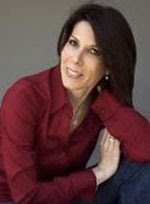
My friend and colleague, Jan Burke, is the author of 12 novels and a collection of short stories. Her most recent novel is the supernatural thriller, The Messenger. Her works of crime fiction include Bloodlines, Flight, and the Edgar-winner for Best Novel, Bones. Her books have appeared on the USA Today and New York Times bestseller lists, been published internationally, and optioned for film. Her short stories have won the Macavity, the Agatha, and the Ellery Queen Readers Award. She will be a guest of honor, with Lee Child, at Left Coast Crime 2010 in Los Angeles.
Q: Jan, for Women in Crime Ink readers who don’t know you, can you please tell us a little bit about your background?
I'm finishing work on my 14th book. Most of my books are crime fiction, although the most recent, The Messenger, is a supernatural thriller. The one I'm writing now is another in the Irene Kelly series, something of a sequel to Bones.
Q: You’ve been quite successful as a mystery author. Would you talk about your latest books? Who is the character? What is their mission or goal?

In The Messenger, the hero is Tyler Hawthorne, who lay dying on the battlefield after Waterloo when he was offered a ring that would make him a Messenger — able hear the thoughts of the dying and convey their messages to their loved ones. Tyler accepts the bargain to become a near-immortal, forever 24 in appearance. We met him almost 200 years later in Los Angeles, by which time he has come to realize it wasn't such a good deal. Except for the company of Shade — a cemetery dog — he has led a nomadic and solitary life throughout those centuries.
The dying also convey messages to Tyler, and now they are hinting that his long service may be coming to an end. He begins to hope that he can return to a normal, mortal life, and allows himself to grow closer to a woman he has been strongly attracted to — unaware that he is being pursued by an old enemy who will stop at nothing to destroy him, nor that he can only leave his role of the Messenger at a terrible cost.

Q: I’m happy to have you here to talk about a key project of yours: the Crime Lab Project. Please explain what it is and how you got involved.
The Crime Lab Project is a nonprofit that raises public awareness of the problems and challenges facing public forensic science. We see the lack of support given to labs as a matter that has a growing negative impact on many areas, including law enforcement, criminal justice, health, public safety, and national security. It's costly, both in human suffering and economically.
Many people who are devoted fans of forensic science-themed shows and novels imagine forensic science labs to be ultra-modern, fully staffed by highly trained techs who whip out results almost as fast as the evidence comes in the door. The reality is far from this pleasant picture, and we need to wake up.
I got the bucket of cold water tossed on me in 2003. I was teaching a weekend class with a forensic scientist and a homicide detective. I learned — to my shock — that in many parts of the country, DNA was not being used to solve most rapes and murders. Yes, you read that right. Even when DNA evidence had been collected and sent to labs, those labs were so overwhelmed and underfunded that it took six months, a year, or even longer to get lab results.
So detectives were spending many hours on investigations without the help a lab could give them, time that might otherwise have been used on a case without physical evidence. Prosecutors spent hours preparing cases, all the while praying the tests would be completed by the trial date. Detectives and prosecutors hoped that at that point, the evidence would not show that for months (or longer), they had the wrong person in custody.
That same year, in October, I was asked to speak at the American Society of Crime Lab Directors. During that meeting, I heard these same stories again and again. I realized there was a way to "pay it forward" in response to forensic scientists' generosity to writers: writers were often before the public, and we could tell people about these problems. So I called a few friends, and by the time I spoke, I promised ASCLD that we would try to raise awareness. Within a few months, with the help of many of my colleagues in crime fiction, the CLP was born.
We have made progress, but there are still, as of this writing, hundreds of thousands of backlogged cases in the U.S.
Q: Most citizens are completely unaware of their own state’s medical examiner/coroner system and how it works. Is that why you created Forensic Friday: The Death Quiz? What type of feedback have you gotten on it?
Yes, we hope that taking the quiz will be help those who take it to get a sense of what is really going on out there. Death investigations affect so many areas of our lives, not just the solving of crimes. The fact is, in a large percentage of jurisdictions, those in charge of death investigations have received little or no training. ME/C offices are horribly underfunded. Really, it's a shameful situation.
People sometimes say, "Well, what the hell, the dead don't care!" But if you stop to think about it, almost everything the ME/C's office does is on behalf of the living. We pay a big price for our neglect. We mention some of the consequences in the quiz.
As for the quiz itself, the feedback has been great! Most people say, "Thank you! I failed it, but I learned a lot." It's not surprising that most people fail — few of us have seen the reality. We hope those who take it will spread the word about it!
Q.: You do a host of other things to draw attention to the sad state of affairs in crime labs around the country. Would you share some with us?
In addition to the blog, we have a web site, a presence on Facebook and Twitter, and a weekly news list. We have sponsored email campaigns that alert our members and others of pending legislation affecting forensic science, and have seen them make a difference. We have provided speakers and helped with forensic science programming at conferences and conventions. We've created handouts and pamphlets. We've worked with organizations to sponsor forensic science events. Several mystery conventions, especially Bouchercon and Left Coast Crime, have been very supportive.
Sisters in Crime and Mystery Writers of America have both endorsed the CLP and generously allowed us to publish articles in their newsletters and be a part of some of their events. Members have written letters to the editors of their local papers and blogged about the topic, or mentioned it in interviews. Many of our members are also seeing the storytelling potential here — working backlogs, underfunding, and other problems into their stories and scripts. We've also maintained relationships with ASCLD and other forensic science professional organizations, who have been very helpful.
The CLP Foundation, a 501(c)3 nonprofit that supports our educational and charitable efforts, has allowed us to donate to labs and research, to sponsor educational events, and to provide scholarships to train death investigators.
Q.: I receive a mailing from you called CLP News. Please explain what that is. Also, is it difficult to keep up this newsletter? Do you have help and how do you manage to do it all?
CLP News is a weekly email newsletter containing brief descriptions and links to a selection of news stories about forensic science. It's free. Anyone may sign up for it by sending a blank email to http://www.blogger.com/CLPNews-subscribe@yahoogroups.com
After five years, I've got a system. As the director of the CLP and a crime writer, this is information I would need to be aware of in any case, so preparing it helps me to stay informed. Our members also send me links when they see articles of interest.
Q: What is your mission with getting involved in distributing crime lab information? What do you hope to gain?
Personally? The knowledge that I made a difference and helped others to make a difference, too. Families of victims have thanked us, and that is more than enough reward for me.
Here's the great news: this situation with forensic science can change. We can bring about that change for relatively little investment. Updating and staffing labs may seem expensive, but compared to other costs in the criminal justice system these are miniscule.
Think also about the costs of delayed trials, the cost of housing suspects for prolonged jail time s while tests are being conducted, the cost of investigations when detectives don't really have this powerful tool available to them, the cost of misdiagnosed causes of death, the cost of property loss committed by burglars who might be identified on a first or second break-in rather than a 20th, the cost of not identifying criminals as they enter the country. This list goes on and on. And it does not begin to cover the suffering and emotional costs to victims and their families.
What do I hope to gain? Ultimately, all the good that forensic science at its best can bring to our communities. I hope to see improvements in forensic science — improvement in the ability of our labs to provide it, in the quality of the work, in the efficiency with which it is provided.
Q: Is there anything else you would like to tell Women in Crime Ink readers?
Thanks — I'm grateful for this chance to talk to you, and I hope you will spread the word. Join us! Our membership is free and open to everyone who is willing to help. Most important of all —call or email your Co ngressional Representatives and Senators and tell them forensic science matters to you!
Q: Jan, for Women in Crime Ink readers who don’t know you, can you please tell us a little bit about your background?
I'm finishing work on my 14th book. Most of my books are crime fiction, although the most recent, The Messenger, is a supernatural thriller. The one I'm writing now is another in the Irene Kelly series, something of a sequel to Bones.
Q: You’ve been quite successful as a mystery author. Would you talk about your latest books? Who is the character? What is their mission or goal?

In The Messenger, the hero is Tyler Hawthorne, who lay dying on the battlefield after Waterloo when he was offered a ring that would make him a Messenger — able hear the thoughts of the dying and convey their messages to their loved ones. Tyler accepts the bargain to become a near-immortal, forever 24 in appearance. We met him almost 200 years later in Los Angeles, by which time he has come to realize it wasn't such a good deal. Except for the company of Shade — a cemetery dog — he has led a nomadic and solitary life throughout those centuries.
The dying also convey messages to Tyler, and now they are hinting that his long service may be coming to an end. He begins to hope that he can return to a normal, mortal life, and allows himself to grow closer to a woman he has been strongly attracted to — unaware that he is being pursued by an old enemy who will stop at nothing to destroy him, nor that he can only leave his role of the Messenger at a terrible cost.

Q: I’m happy to have you here to talk about a key project of yours: the Crime Lab Project. Please explain what it is and how you got involved.
The Crime Lab Project is a nonprofit that raises public awareness of the problems and challenges facing public forensic science. We see the lack of support given to labs as a matter that has a growing negative impact on many areas, including law enforcement, criminal justice, health, public safety, and national security. It's costly, both in human suffering and economically.
Many people who are devoted fans of forensic science-themed shows and novels imagine forensic science labs to be ultra-modern, fully staffed by highly trained techs who whip out results almost as fast as the evidence comes in the door. The reality is far from this pleasant picture, and we need to wake up.
I got the bucket of cold water tossed on me in 2003. I was teaching a weekend class with a forensic scientist and a homicide detective. I learned — to my shock — that in many parts of the country, DNA was not being used to solve most rapes and murders. Yes, you read that right. Even when DNA evidence had been collected and sent to labs, those labs were so overwhelmed and underfunded that it took six months, a year, or even longer to get lab results.
So detectives were spending many hours on investigations without the help a lab could give them, time that might otherwise have been used on a case without physical evidence. Prosecutors spent hours preparing cases, all the while praying the tests would be completed by the trial date. Detectives and prosecutors hoped that at that point, the evidence would not show that for months (or longer), they had the wrong person in custody.
That same year, in October, I was asked to speak at the American Society of Crime Lab Directors. During that meeting, I heard these same stories again and again. I realized there was a way to "pay it forward" in response to forensic scientists' generosity to writers: writers were often before the public, and we could tell people about these problems. So I called a few friends, and by the time I spoke, I promised ASCLD that we would try to raise awareness. Within a few months, with the help of many of my colleagues in crime fiction, the CLP was born.
We have made progress, but there are still, as of this writing, hundreds of thousands of backlogged cases in the U.S.
Q: Most citizens are completely unaware of their own state’s medical examiner/coroner system and how it works. Is that why you created Forensic Friday: The Death Quiz? What type of feedback have you gotten on it?
Yes, we hope that taking the quiz will be help those who take it to get a sense of what is really going on out there. Death investigations affect so many areas of our lives, not just the solving of crimes. The fact is, in a large percentage of jurisdictions, those in charge of death investigations have received little or no training. ME/C offices are horribly underfunded. Really, it's a shameful situation.
People sometimes say, "Well, what the hell, the dead don't care!" But if you stop to think about it, almost everything the ME/C's office does is on behalf of the living. We pay a big price for our neglect. We mention some of the consequences in the quiz.
As for the quiz itself, the feedback has been great! Most people say, "Thank you! I failed it, but I learned a lot." It's not surprising that most people fail — few of us have seen the reality. We hope those who take it will spread the word about it!
Q.: You do a host of other things to draw attention to the sad state of affairs in crime labs around the country. Would you share some with us?
In addition to the blog, we have a web site, a presence on Facebook and Twitter, and a weekly news list. We have sponsored email campaigns that alert our members and others of pending legislation affecting forensic science, and have seen them make a difference. We have provided speakers and helped with forensic science programming at conferences and conventions. We've created handouts and pamphlets. We've worked with organizations to sponsor forensic science events. Several mystery conventions, especially Bouchercon and Left Coast Crime, have been very supportive.
Sisters in Crime and Mystery Writers of America have both endorsed the CLP and generously allowed us to publish articles in their newsletters and be a part of some of their events. Members have written letters to the editors of their local papers and blogged about the topic, or mentioned it in interviews. Many of our members are also seeing the storytelling potential here — working backlogs, underfunding, and other problems into their stories and scripts. We've also maintained relationships with ASCLD and other forensic science professional organizations, who have been very helpful.
The CLP Foundation, a 501(c)3 nonprofit that supports our educational and charitable efforts, has allowed us to donate to labs and research, to sponsor educational events, and to provide scholarships to train death investigators.
Q.: I receive a mailing from you called CLP News. Please explain what that is. Also, is it difficult to keep up this newsletter? Do you have help and how do you manage to do it all?
CLP News is a weekly email newsletter containing brief descriptions and links to a selection of news stories about forensic science. It's free. Anyone may sign up for it by sending a blank email to http://www.blogger.com/CLPNews-subscribe@yahoogroups.com
After five years, I've got a system. As the director of the CLP and a crime writer, this is information I would need to be aware of in any case, so preparing it helps me to stay informed. Our members also send me links when they see articles of interest.
Q: What is your mission with getting involved in distributing crime lab information? What do you hope to gain?
Personally? The knowledge that I made a difference and helped others to make a difference, too. Families of victims have thanked us, and that is more than enough reward for me.
Here's the great news: this situation with forensic science can change. We can bring about that change for relatively little investment. Updating and staffing labs may seem expensive, but compared to other costs in the criminal justice system these are miniscule.
Think also about the costs of delayed trials, the cost of housing suspects for prolonged jail time s while tests are being conducted, the cost of investigations when detectives don't really have this powerful tool available to them, the cost of misdiagnosed causes of death, the cost of property loss committed by burglars who might be identified on a first or second break-in rather than a 20th, the cost of not identifying criminals as they enter the country. This list goes on and on. And it does not begin to cover the suffering and emotional costs to victims and their families.
What do I hope to gain? Ultimately, all the good that forensic science at its best can bring to our communities. I hope to see improvements in forensic science — improvement in the ability of our labs to provide it, in the quality of the work, in the efficiency with which it is provided.
Q: Is there anything else you would like to tell Women in Crime Ink readers?
Thanks — I'm grateful for this chance to talk to you, and I hope you will spread the word. Join us! Our membership is free and open to everyone who is willing to help. Most important of all —call or email your Co
 ngressional Representatives and Senators and tell them forensic science matters to you!
Thank you for being my guest, Jan.
Jan is currently at work on a new Irene Kelly novel.
Website: http://www.janburke.com/
Tweet