Showing posts with label Lisa Cohen. Show all posts

Friday, July 1, 2011

Defining Features

by Lisa R. Cohen

For the last two years, I’ve been in and out of prison. I’m out now, and have something to show for it – a documentary film I directed and produced called “Serving Life” that will premiere on the Oprah Winfrey Network (OWN) on July 28. I’ll be writing about it in my next few blogs. It’s been two years in the making, and I’m mighty proud of our small production team’s heroic efforts. You can watch the promo for it here.

The film, executive produced and narrated by Academy Award winner Forest Whitaker, led us to the infamous Louisiana State Penitentiary, otherwise known as Angola, aka “the Alcatraz of the South.”

I happen to have been to Angola many times in the past, and I know the place better than many. The 26 mile property, contained on three sides by the Mississippi River (except when it floods the levies there as it did last month) is an unearthly world unto itself, a throwback to a long ago time when Angola actually was a plantation, worked by forced emigrés from the African nation it was named for.

My first visit to the maximum security prison was over 15 years ago, and when I arrived this time around, on a sweltering July day, for a week of preliminary shooting, some things had changed. Since the ‘90s, under the current Warden, Angola has had so many outside visitors, they’ve built guest cottages on the premises. So this time we literally moved into the prison. Every morning we’d leave our cozy four bedroom cabin, overlooking a lake filled with with cedar stumps and sinister looking alligators, and head to the prison hospital.

There, tucked away in a corner of a chronic care ward, a group of inmates staffed the prison hospice. Day after day, these volunteers walked the chain length enclosed path from their dorms to the hospital, to wipe a dying man’s fevered brow, change his diaper, and, finally, to hold his hand while he takes his last breath. It’s a burn-out job. In fact it’s not a job at all, it’s all-volunteer. At Angola inmates work every day; the volunteers come to hospice before and afterwards. So it’s no surprise there’s a constant need for fresh recruits.

Our mission was to follow a new crop of inmate volunteers–watch them get picked, get trained, and then find out whether they were up to the task. If a hardened criminal can be taught to perform the ultimate act of compassion, what excuse do the rest of us have?

By last summer we were in full production. That meant weeks on end watching as these men tested themselves. What they learned about themselves, we did too, and the results were both chilling and life-affirming.

The first day at the hospital, I met probably a few dozen inmates. They all looked exactly the same to me, even though at Angola they dress in street clothes, a kind of informal uniform of jeans and colorful t-shirts that advertise the various prison clubs they belong to. But their faces all blurred together, impersonal, hard-lived, and I could only identify them by their charges–murderers mostly, armed robbers, a heroin-lifer, and multiple drug offenders.

As the days passed, though, personalities emerged, and pretty soon these men defined themselves–by their past criminal acts, their current struggle to redefine themselves, and their hopes for the future. (And they all maintain hope, even the ones who are destined to die at Angola, perhaps in a hospice bed.)

I met their children, their sisters, their brothers (some serving time in another part of the prison). I watched them recoil with disgust as they started training, but then come to embrace the most grueling parts of the work. I watched them make each other laugh– and me too–because that’s what you do in real life even in the darkest times.

I spent this week filming on the start of another venture, just the first days of a long, long haul. On Monday I sat in a room in Nashville and listened as a group of women bared their painful pasts. On Monday they all looked the same to me, just like Robert and "Animal" and Stephen did two years ago.

But by yesterday, as I said goodbye and headed for the airport, I’d begun to know their stories of courage and survival. These women were taking shape to me, and their message was that much more powerful. It made me realize, once again, that this is why I do it. And that getting the chance to pass on those stories can make us all a little more human.


Wednesday, May 18, 2011

WCI Featured Author: Lisa Cohen

Today, we’re kicking off our series featuring the authors of Women in Crime Ink starting with the fabulously talented Lisa R. Cohen. Lisa is best known for her book AFTER ETAN, which chronicles the disappearance of 6-year-old Etan Patz, who disappeared while walking to school in New York City on May 25, 1979. The disappearance of Etan Patz was one of the first cases that spawned a nationwide interest in missing children. Never found, Etan was declared dead in 2001. Prime suspect Jose Ramos is currently incarcerated for the sexual molestation of several boys—but he has never been charged with Etan’s abduction. However, in early 2010, the Manhattan District Attorney’s Office reopened the investigation into Etan's disappearance.

Lisa Cohen is also an Emmy-award winning television news magazine producer with more than 20 years of network news experience at ABC and CBS News. At “PrimeTime Live” and then for “60 Minutes II,” she produced reports for Diane Sawyer, Sam Donaldson, Peter Jennings, Cynthia McFadden and others on topics as diverse as the right to bear arms, have abortions and exercise the death penalty. She has covered some of the biggest moments in recent history including TWA 800, the Oklahoma bombing, and the September 11 terror attacks. Her 1996 one-hour documentary for ABC News PrimeTime Live, “Judgment at Midnight,” won multiple awards, including the NATAS Emmy; CINE Golden Eagle; International Film and Television Award; and the Foundation of American Women in Radio and Television “Gracie” award.

In addition to AFTER ETAN, Lisa is hard at work on a long-term documentary following one extraordinary woman who spent a year fighting (and beating) breast cancer, which then inspired her to take on the American health care system. Cohen is also a media consultant and teaches journalism/television production. She is an adjunct professor at Columbia University’s Graduate School of Journalism,and recently was a Princeton University Ferris Professor of Journalism.

Lisa has received critical acclaim and stellar reviews for AFTER ETAN, including:

"When our son, Adam, was abducted in 1981, my wife, Revé, and I felt no one could really understand what we were going through. Then we met Julie and Stan Patz and found that we were members of a horrible but exclusive club. Their courage inspired us then and inspires us now. Reading AFTER ETAN, made me even more grateful for dedicated public servants like the incredible prosecutor who ultimately produced some measure of justice for Etan. Every American needs to know Etan's story."
John Walsh, “America’s Most Wanted”

An engrossing account of a watershed missing-child case...

…The author tells the complete, heartbreaking story, from day one of the boy’s disappearance to his family’s continuing efforts to bring a rapist and killer to justice. First-time author Cohen, who covered the case for 60 Minutes and PrimeTime Live, admirably avoids a hysterical approach to the shocking subject matter. Instead, she lets the disturbing facts speak for themselves. The author had access to an astounding amount of information, including multiple interviews with Patz’s parents and former chief prosecutor Stuart GraBois…

...A masterful combination of deep human interest and detailed criminal investigation into a parent’s worst nightmare."
Starred Review, Kirkus Reviews

In the first-ever book on this celebrated case, Lisa Cohen finally gives us the answers behind the most vexing child kidnapping since the Lindbergh Baby. It’s a harrowing portrait of a family's grief and an engrossing detective story. A powerful lesson in humanity tested and triumphant.”
Nicholas Pileggi, author, Wiseguys, Goodfellas, Casino

For more on Lisa Cohen and AFTER ETAN, visit her website here.


Wednesday, June 9, 2010

Get to know Jose Antonio Ramos


by Lisa R. Cohen

As I wrote in my last post, Cyrus Vance Jr. is beginning his new term as Manhattan's District Attorney by taking a different tack than his predecessor, the legendary Robert Morgenthau.

Morgenthau meted out criminal justice in New York City for three decades until finally retiring in January. Throughout almost his entire reign, he demurred from pursuing the infamous Etan Patz case. "Not enough evidence," he'd say, on the few occasions he even deigned to comment.

The case involved the disappearance of six-year-old Etan Patz off the streets of New York on his way to the bus stop, walking the two blocks on his own for the first time ever. He was never seen again. The mystery sparked a nationwide manhunt and a shift in our cultural sense of safety.

Even if you didn't read my last post, you would know from reading any one of numerous headlines, or watching ABC News Nightline's lengthy top story last Friday, that Vance has revealed he's taking a fresh look at the 31-year-old case with an eye to (hopefully) bringing charges against Jose Antonio Ramos.

Ramos is coming to the end of a very long prison stint in Pennsylvania for molesting two boys back in the '80s. He's due out in November 2012, unless a new charge can start the clock ticking again. Since there's no statute of limitations for murder, nor, in some situations, for felony kidnapping, the Patz case might be the way to do it. But people need to know more about Ramos to understand why people like Stuart GraBois, a former Assistant U.S. Attorney, have fought so hard for so many years to keep him locked up.

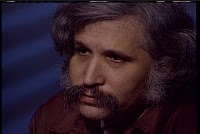
Ramos's mug shot, grim and forbidding, has been splashed across the tabloids for years, but few have ever really talked to him, or even met him.

I have, and it's not an experience I'd want to repeat. When he refused to talk to me for my book, AFTER ETAN, I was disappointed. But part of me was glad not to face the barrage of invective and crazy I'd been through on the first go round, for a prison interview I produced at ABC News back in 1991, the only time Ramos has ever talked on camera.

Ramos has been locked away since a June day, much like this one, in 1986, when he was arrested in his converted school bus by the side of a highway. He'd gotten stuck there when the bus sputtered to a halt, just as he was about to hit the interstate heading across state lines.

He was trying to escape the Pennsylvania State Police, who'd put out a BOLO (Be On the Lookout) for him, once they'd heard the story of a sweet faced eight-year-old I call Joey. Joey and his parents walked into a Western Pennsylvania barracks, sat down in front of a video camera, and with little hesitation and no artifice, Joey told police that over a period of two days Jose Ramos had anally and orally assaulted him several times.

Joey didn't appear traumatized, just slightly uncomfortable, mostly unaware that he would be affected for the rest of his life. That's exactly the kind of victim Ramos would go after. A boy, often, although one father I talked to said Ramos used to wheel his pre-verbal twin toddlers off to babysit for hours at a time, and we'll never know what happened to them on his watch.

But usually his target was a boy, one whose parents were either very open, absent or in some way marginalized - impoverished, or a junkie or alcoholic ... maybe just hapless.

Ramos was very attentive to both parent and child. He looked menacing, but his voice was soft and mellifluous. After a while, he'd offer to take the boy fishing, or to the movies, eventually on sleepovers; a welcome break for a beleaguered single mom. He talked about wanting to be a father figure, giving these little "friends" of his what they desperately craved - attention and affection.

On at least one occasion, another (four-year-old) victim told police Ramos threatened to kill him if he alerted anyone. But sometimes a child was so eager to please, he'd simply go along with Ramos's seduction, not understanding what was happening. Maybe some of it even felt good. That was the plan, to create a victim who had "participated" and so was just as much to blame. Joey hadn't been coerced in a classic sense, and in a way, that was part of the damage done.

I met Joey four years after Ramos had gotten to him. He was a likeable boy, but he seemed numb and slightly sad. In those four years, he'd been attacked countless times over, by other kids who knew what had happened, and who hurled offensive slurs, ostracizing him. His own brother, fearing he'd be tainted by association, was the worst offender. Joey's grades had tanked. He had recurring nightmares of Ramos chasing him. It was heartbreaking.

When I interviewed him for the book, Joey, now an adult, told me that was worse than the sexual abuse. By then he was old enough to understand what had really happened to him, to suffer anguish because he hadn't put up a fight, and to turn his loathing inward. His family hadn't had the resources to get him treated properly. Again, heartbreaking. Ramos left a swath of such victims around the country, wandering from one to the next. When I heard he'd settled for awhile near a home for Downs' Syndrome children, and even targeted some of them, it literally made me nauseated.

Since that June day in 1986, Jose Ramos hasn't had access to a young victim. In two years, if and when he walks free, he'll have been without for 27 years. Maybe he'll be too old, too wary, too chastened to stalk again. I very much doubt it.

I hope he never gets that chance. But if he does, take a good look. Get to know this face well.


Thursday, May 27, 2010

Red Letter Day for Etan's Family

by Lisa R. Cohen

 On Tuesday I called Stan Patz. "Hi," I said. "Am I the first of the legions of annoying media calling you today to check in?"

Patz is the father of Etan Patz, the famous missing six-year-old who disappeared 31 years ago Tuesday, the day now marked as National Missing Children's Day. He vanished during a two-block walk from his downtown New York home to the school bus stop.

His mother (above, with Etan) kissed him goodbye on the sidewalk in front of their loft apartment, and he set off, taking that walk on his own for the very first time.

Last year, when I wrote the book about this then-30-year case, the only book ever written on it, I called it AFTER ETAN: The Missing Child Case That Held America Captive. There was a "Before Etan," and an "After Etan."

Before Etan, parents didn't have the image of that beautiful blond-haired boy, an image of what could be their own child's fate, lurking in their hearts. After Etan, they did, and for many, the world changed forever.

The case has never been officially solved, although the book details the best convincingly detailed argument for what happened that day, and then tells what happened in the twisting, turning years following, as law enforcement struggled to make sense of the mystery, unraveling clues over time. Because it's this incredible, ongoing mystery, every year, on May 25th, the media calls come in, a trickle over the last several, but the day is always marked by someone.

"I think it's going to be a pretty quiet one," Stan replied to me. "I'm not anticipating a lot of attention." Which, to Stan (below left), is good and bad. He hates attention, but on the other hand, he's fought for 31 years to keep people interested in solving this case.

"I was wrong," he wrote to me later that day. "A Wall Street Journal reporter has interviewed me at length, and his photographer was just here to take pictures."

"There is news," he continued, and I could almost hear the excitement in his words on the page. "The new Manhattan District Attorney has announced he's re-opening the case."

I got the call from the reporter himself soon afterwards and filled him in on some of the background of the case. I told him that this break was a testament to the tenacity of Stan and his cohort, the former Assistant U.S. Attorney Stuart GraBois, who had stood by Patz, followed the case for more than two decades, and had himself broken it, zeroing in on a most viable prime suspect.

Jose Antonio Ramos (right) has never been charged for Etan's abduction and murder, although in 2004 he was found legally responsible for Etan's death in a civil suit Stan Patz brought against him.

The former Manhattan D.A., Robert Morgenthau, had the case for decades but always insisted he didn't have enough evidence to prosecute. His spokesperson would always follow up with a "can't comment on an ongoing investigation," and no one could know exactly what their case was.

The new D.A., Cyrus Vance Jr, now says he's willing to take a fresh look. It doesn't mean they're about to convene a grand jury, or charge Ramos, or anything that concrete. But it does signal a willingness to go after Ramos for what many close to the case believe is the heinous crime he committed all those years ago. For that, and for the fact that he's not blindly sticking to the status quo, Vance (left) is to be commended.

There is no statute of limitations on murder. It's unclear, based on New York state law, if there's a statute of limitations on the kind of kidnapping charge they might be able to bring against Ramos.

Stan Patz is especially pleased because of a looming deadline. In 2012, Ramos will have served the full term for two other child molestation cases for which he was convicted. He was put in jail by prosecutor GraBois (right), not for the Patz case, but because of it. It was GraBois's gusto that led him to pursue the other cases when he couldn't nail Ramos on the Patz case. Ramos, it turned out, was a serial pedophile, but over the last 25 years, he's successfully been kept away from an entire generation of small victims.

But in two years, Ramos will walk free. Stan Patz and Stu GraBois want to make sure that won't happen. The wheels of justice grind slowly, and two years isn't very long at all by that measure.

Stan was grateful, after all, that Tuesday wasn't such a quiet day. And today, at last, there's a measure of hope.


Tuesday, May 11, 2010

The China Syndrome

by Lisa R. Cohen

Over the last six weeks, a spate of horrific crimes, mostly against children, have stunned the Chinese public, cast a pall over schoolrooms there, and opened the window a sliver onto the disparities between crime - and punishment - between our two cultures.

To begin with, violent crime is rare in China. Also, none of these incidents involved the American weapon of choice - a gun. Few Chinese own guns, and instead the
rampages were committed by knife- or hammer-wielding madmen.

The crime spree began on March 23rd, when eight children were stabbed to death while waiting to go inside their school in the southeastern province of Fujian. Four died immediately, four more in the hospital. They were mostly first graders. The mother above left grieved for her murdered child.

Just three weeks later, a man brandished a meat cleaver at children and bystanders outside another school, this time in southern Guangxi province. He hacked to death a student and an elderly woman, and injured five others, chasing his victims through their village before being detained by police.


Then, in the space of ONE WEEK, three more incidents seemed to turn the attacks into a sociological phenomenon. In the first, the killer entered the school itself, and stabbed an astounding 17 children, along with a teacher, as the assailant bolted from room to room. The very next day, another knife wielding attacker slashed his way past a school security guard and two teachers to injure 28 children, five of them critically.


But amazingly, that wasn't the worst of it. Less than 24 hours later, a crazed man also walked into a school, also with an 8 inch blade, evaded the elderly porter at the front door, barricaded himself inside a ground floor first grade classroom, and turned on the class of 37 students.


Only seven of the children were left unharmed. Government officials didn't report any deaths, but bystanders said otherwise, citing at least four of them. They described scenes of gore and carnage that will haunt them forever.


And finally, this past weekend, a man stabbed eight more people to death, including his mother, wife, and daughter. This one wasn't school related, but the knife wielding slasher image is all too vividly imprinted here as well.

They say that guns are so much worse than other weapons because they so neatly and easily dispatch their victims. When you lose your temper with a loaded gun in your hand, you don't have time to calm down in the split second between the pull of the trigger and the bullet leaving the chamber. But there's something about the gore of knife violence, the insanity that must be in play for someone to swing a blade around, to get that close to other humans in order to inflict your damage. Especially such young ones.

The victims' tender years are an especial affront to the Chinese public. The government's official 'one child' policy means a society where parents who lose a child...lose their whole family.

What is going on??? According to news reports out of China, including one by fellow journalist and friend Barbara Demick, the LA Times Beijing bureau chief, China's social structures are also under attack. Chinese internet forums are jammed with opinions. The assailants were an unemployed teacher, an unemployed health professional, an unemployed insurance salesman. You get the pattern. Two of the schools were known for catering to wealthy and privileged parents.


"We should think about these cases from a deeper side," read one post. "The voices of weak people were ignored, and then they took revenge on society."


Such critics posit that Chinese society has changed so fast, traditional infrastructure is collapsing, giving way to commercial free-fall. One Chinese newspaper featured an online poll citing that 64% of respondents believed the first attack, the one that started the series, was due to social inequalities - "the widening gap between rich and poor in China." In a (very expedient) trial, the assailant, Zheng Minsheng (he's the unemployed health professional), said he was angry after being jilted by a wealthier woman.


And that's another big difference between our two cultures. Zheng's trial disposed of, he was too, executed on April 28th, a little over a month after the attack took place, just a few days after the death sentence was approved by the People's Supreme Court. One month from the crime to the punishment. In this country, Mr. Zheng wouldn't have gotten much past an arraignment.

Will such swift justice deter the next in this crime wave? Maybe, but the two most recent acts of carnage occurred after Zheng was put to death, so it's doubtful. Some in China fear their culture will have to take more far reaching, global steps to curb the violence. For future generations.


Wednesday, May 5, 2010

What are Prisons Really For?


By Women in Crime Ink

 We've asked our contributors a few questions about the prison system. What is its purpose -- punishment, rehabilitation, or separating criminals from society? Is the system accomplishing that purpose? If the purpose is keeping criminals apart from the rest of society, are there alternatives besides incarceration in prison cells? 

Kathryn Casey:
It depends on the case. For those with life without parole, prisons are nothing more than a holding area, some more humane than others, where dangerous folks are segregated to keep society as a whole safer for the rest of us. For those who might someday get out, prison is primarily punishment, but it does offer, for those who reach out for it, a chance for rehabilitation.

Most of the prisons I've visited, and I've been in plenty down here in Texas, offer literacy and GED programs. Illiteracy is incredibly high behind bars. Yet I remember years ago meeting a convicted murderer who finished high school, got a bachelor's and a master's degree while serving a 60-year sentence. When I talked to him, he was working on a Ph.D. through a correspondence course. An inmate has to seek out the opportunities, and few do. For most offenders, the time in prison is simply punishment and wasted years.

One of the disappointing things is that there's so little treatment for sex offenders and violent criminals in prisons. Most aren't given any treatment at all until shortly before release, despite studies that show these types of ex-cons have high recidivism rates and require years of therapy, if there's any hope at all of preventing future crimes.

Donna Pendergast:
 The prison system aspires to rehabilitate offenders, but it isn't the purpose of the system -- only a goal.

The purpose of prison is to isolate offenders from society to protect the public and to punish offenders.  Unfortunately, although prison may not be a preferred experience, the amenities offered to offenders sometimes strain the bounds of belief. Libraries more extensive than in a prosecutor's office, large screen TVs, and well-equipped work out areas are standard fare at most prisons.  These privileges should be earned, not mandated.  I am not at all for any kind of abusive treatment of prisoners, but the prison experience should not be a posh one. That's why I am such a fan of Sheriff Joe Arpaio, whom I have posted on before.  Although he presides over a county jail rather than a prison, he makes sure that it is not a pleasant experience.  His standard retort to complaining prisoners is "If you don't like it, don't come back.

Katherine Scardino:
Jurors want revenge for a really heinous crime.  A kidnapping, rape or any crime involving a child induces immediate wrath on the defendant.  There is no discussion of rehabilitation.  I truly believe that a juror couldn't care less whether the prison system allows for counseling, education or any other individual assistance. The only issue is "how much does it cost?"  Your question: "why do we have a prison?"  It is, as Kathryn said, a "house" for people who have violated our laws. In capital cases, there are serious problems relating to sensory deprivation, where humans are kept in a box 23 out of 24 hours a day, and fed through a hole in the door.  This is inhuman and more than punishment. But, we say, they deserve this. These people hurt my family, my society, and should not be allowed to join the rest of us. No one disagrees with it. But prison should be more than a holding cell. Prison should be a place where bad people have an opportunity to learn about being better and returning to society as different people -- instead of learning how to be worse than they were when they entered the prison system. This does not help any of us.

Andrea Campbell:
Just as there are different camps on most major issues of any importance, there will always be disagreement on why offenders should be punished, how offenders should be punished, and what constitutes punishment. The common dictionary says quite generally that punishment is loss, severe treatment or suffering. Our prison systems are based on the concept that corrections serve these functions:  1) retribution, 2) deterrence, 3) incapacitation, and 4) rehabilitation. I think we also need to consider two other functions are enumerated: reintegration, and control.

But what about retribution for the victims? This system dictates that the severity of the offense should match the level of incarceration. If some petty, non-violent crook gets nicked, he might be able to do his time at an “honor farm.” Likewise, if a man has been convicted as a murderer, maximum security is probably what he’s earned. This methodology even weighs the type of probation on the same scale. In the aftermath, the probationary attention to follow-up and detail befits the crime similarly. Citizens should like this system, because they feel it shows the moral imperative of “getting tough on crime.” We might think about a new, modern Justice Model of punishment.

Like a “Just Desserts” concept,  it rejects the notion of rehabilitation as key and aims to avoid sentencing disparities. It seeks to match the punishment to the crime with room for variation, with a major difference up-front: To do a re-evaluation of the offender's past record. Then it would institute the type of justice a particular community wants reflected onto the behavior of its citizens. The foundation for the policy is that everyone is responsible for his/her own actions; that rational thought brought them to this end; that the criminal should bear the blame for his/her acts; and that the public needs protection and should be able to legislate punishment according to proscribed dicta of constitutional severity. As far as corrections, I think prisons should be privatized.

Pat Brown:
I think we have to look at two types of prisoners: those who can be rehabilitated and deserving of rehabilitation, and those who can't be rehabilitated nor deserving of rehabilitation. The latter are excessively violent repeat offenders, violent sexual predators and serial killers. Therapy does not "cure" arrogant psychopaths lacking in remorse or empathy; they will always be a danger to society, and they deserve no sympathy from us. Put them away and keep them away. Furthermore, we shouldn't be wasting taxpayer money allowing them to amuse themselves studying and getting degrees while their victims are rotting in the grave or living lives or psychological, physical or economic poverty.

The former group can be divided into two subgroups: those who are willing to be rehabilitated and those who are not. Prisoners should earn their right to favors by the society they have abused and when they earn that consideration by good behavior and hard work, then they can be moved to a rehabilitation facility where they can earn an income and pay for their education and vocational training like citizens do on the outside.

Lisa Cohen:
This topic resonates particularly for me. For most of the last five years, I researched and wrote a book (AFTER ETAN: The Missing Child Case That Held America Captive) about the long, horrific “career” of Jose Ramos, a serial pedophile who damaged countless helpless children in the '70s and '80s (including Down's Syndrome and mentally challenged boys). He was finally locked away from any future victims in 1986 and has served the last 25 years in prison.  A generation of children have been safe from him. But in 2011, he’ll max out and will walk free unless someone can figure out a way to stop him. He’s never completed a sex offender program and has never taken responsibility for the worst of his crimes.

The father of Etan Patz, the boy Ramos almost certainly kidnapped, raped and killed, has said Ramos should never be released from prison.  “He’s a predator,” Stan Patz told me,  as well as a 60 Minutes audience, “and he should never be allowed near children again. He should be kept behind bars until he’s too old to walk.” His is a compelling argument.

But for the last year, I’ve been involved in a very different project, albeit on a related topic. "ONE LAST SHOT: A Story of Redemption," is an ongoing documentary I’ve been directing. It tells the story of inmates at maximum security Angola Prison, home to Louisiana’s Death Row and some of the most hardened criminals you will ever meet. Half of them are killers; 85 percent will die at Angola. The particular inmates I’m focusing on staff a hospice at the prison, where they help dying fellow inmates to a humane death, something most of them cheated their own victims out of.

I’ve now spent time with several of these men. Many committed their crimes decades ago. So did Jose Ramos.  They are soft-spoken and articulate. So was Jose Ramos whenever I talked to him.

But I watch as these hospice volunteers clearly care about their dying patients. They feed them, clean them, comfort them.  Sometimes they change their diapers.  They watch them slowly waste away and eventually die, holding their hands as they slip away.  They treat each other and their hospice colleagues with respect.  They speak eloquently of developing compassion, of nurturing their humanity. They say they seek redemption.

They seem different than Jose Ramos, and they want to send that message via this documentary. As I continue to film, I hope to learn for myself whether that is true.  If so, then programs like prison hospice, inmate counseling, religious rehabilitation, are worthwhile and need to be promoted.  I’ve heard over and over while at Angola the credo: “A man’s entire life should not be judged by his worst act.”  

Cathy Scott:
I'll quote my friend Kevin Powell, an author and a Brooklynite through and through who cares about his rundown community and is running for a seat in U.S. Congress.

One leg of his campaign platform is "rid the 'hood of crime and pollution." He says that includes redirecting imprisonment dollars into education and enhancing "alternative strategies to lower incarceration rates." He also calls for abolishing the death penalty. "These actions," he says, "will reduce the rates of recidivism while creating opportunities for success." As the late Chief Justice Warren Earl Burger once said in his "Factories with Fences" speech, "We need prison reforms that will encourage offenders to earn and learn their way to freedom." I'm with Powell and Burger. Change is needed, and giving inmates the tools they need is paramount for them to live as non-offenders and contributing members of society outside the prison walls.


Friday, April 16, 2010

The Road to Hell...

by Lisa R. Cohen

Between 1,500 and 1,800 children left orphanages in Russia last year, striking out to find real homes in America. But now, because of the chilling new case of seven-year-old Artyom Savelyev, next year there may be none.

Yesterday, a Russian Foreign Ministry spokesman announced an immediate suspension of U.S. adoptions in Russia, pending an upcoming visit from a U.S. delegation to resolve the issue. It should be noted that other Russian officials disputed this ban, and the State Department says that for the moment it can't figure out who to believe.

Artyom, also known by his American name Justin Hansen, got off a plane from Washington, D.C., in Moscow last week, all by himself, carrying nothing but a backpack with some toys, one pair of outsized underwear, and a letter from his adoptive mother, Torry Hansen.

Did I mention he is SEVEN YEARS OLD?

In the letter Artyom clutched when he got off the plane, where he was met by a driver Hansen hired off the internet to deliver the boy to the Russian Education Ministry, his 26-year-old single mom justified her actions. She said she'd been misled by the Russian adoption agency to believe Artyom was mentally healthy, when, she claimed, he was in fact emotionally disturbed.

"He is violent," she wrote in the letter above, "and has severe psychopathic issues/behaviors." Hansen's mother, Nancy, told reporters later that Artyom grew increasingly  disturbed during the six months he lived in their small-town Tennessee home, and at one point threatened to burn it down.

This might be the most glaring headline to come out of the sad story of Russian adoptions gone awry, but it's only the latest in a string of incidents involving these children, abandoned in orphanages, who languish there for several years before seemingly well-intentioned adoptive parents come forward. But during that time unclaimed, in group homes with inadequate attention, the damage is being done.

"Reactive Attachment Disorder" is often used to describe such lost souls, who missed out on the critical bonds formed in early years with a loving parent or adult. They may never have been held, cuddled, hugged. That yawning developmental hole results in a spectrum of behavioral problems, up to and including extreme violence. Was Artyom about to burn down the house? We'll never know. But there have been cases where the other children in the house, even the adults, were at physical risk.

In fact, in the years since Russia opened its borders to allow these kids out in search of new life with a real family, the number of willing families has slowed. The 1,500 figure of last year is much lower than the 5,800 Russian orphans adopted just six years ago. Taking these kids out of moldering group institutions and resettling them into the arms of strangers is no quick fix.

It's a tough and complicated problem. Hansen says the Russian adoption officials knew of Artyom's problems and lied to her about them. She said she was blindsided and eventually  had no choice but to do what she did. Here are a few choices she did have, however:

She apparently consulted with psychologists, but never took the boy to see one. She's a nurse. She should know better. She didn't seem to contact anyone back in Russia about the problem, and didn't even seem to think her son should be returned personally. One of her critics referred to her act as 'taking out the garbage.' How much preparation and forethought did she put into her choice to adopt this child in the first place?

Artyom, his Russian driver reported, seemed a likeable and unfazed seven-year-old. He gave away his toys to the people around him, pulling them out of his backpack 'like a magician.' He spoke only English in response to Russian questions, and talked about wanting to go back to his home in the U.S.

He won't be going back. And now many others like him, and even in much better shape than he is, won't be going anywhere either. They've lost that choice too.


Friday, March 26, 2010

We Should All Be "Violently Enraged"

by Lisa R. Cohen


On Wednesday, pediatrician Earl Bradley shuffled into a Delaware courtroom, shackles and handcuffs accessorizing a gray prison jumpsuit above white sneakers. It was the first time he'd been seen publicly since the last time I wrote about his case here, almost a month ago, when he was indicted on 471 counts of child molestation.

Some in the audience, parents of his victims, cried openly. Others tried to get a closer look as Bradley moved to the lectern and
pled not guilty to all 471 counts. These were all brutal acts that took place during thousands of visits to BayBees Pediatrics (below right), the private practice where countless
parents in the sleepy fishing village of Lewes, population 3,000, trustingly took their children. From the outside, the office looked more like Disney Land, with a miniature Ferris wheel and colorful merry-go-round beckoning children. But inside, authorities say, it was a true house of horrors.

From as far back as 1998 until his arrest in December of 2009, prosecutors charge, Bradley forced at least 102 children as young as
three months old to engage in sexual acts, including vaginal intercourse and oral sex with him. Often he took the kids to a basement room after the exam, without their parents. "Come down to my toy chest and pick out a prize," he'd tell toddlers and older kids alike. They'd be gone just a few minutes -- but long enough for him to do unspeakable things and damage them forever. The children would return to their parents, toys in hand.

Sometimes Bradley assaulted his victims right on the exam table, with prolonged internal exams, as when, for instance, one 12-year-old came in complaining of a sore throat and pink eye. According to police reports, Bradley penetrated her for two minutes, then gave her a toy meant for a toddler. Another mother complained that Bradley conducted a four-minute internal exam on a child brought in for ADD.


Yet another mother reported her three-year-old leaving the exam to ask her, "Why did Dr. Bradley kiss my tongue?" The mother went to the police with the same question.


But the complaints and outrage went on for years before Bradley was finally arrested this past December. And perhaps the toughest, most important question that bears answering is: Why did it take so long? Especially since police had fielded enough complaints by December 2008 to ask a judge for a search warrant to raid Bradley's office.


The warrant was denied. The judge said there wasn't enough probable cause. The name of the judge isn't being made public. That's probably good for him, because a lot of the folks in Delaware would jump all over him.


During the ensuing twelve months, Bradley continued to sexually assault dozens more of his patients -- 47 of them, the indictment says. Now the finger-pointing has gone beyond the shortsightedness of an unnamed judge. Delaware press and residents want to know why the prosecutor's office didn't persist in getting into that examining room to do their own examination. An excellent article by the Wilmington (Delaware) News-Journal's Cris Barrish, who's been covering the case, raises a lot more questions.

Why didn't police go to another judge? Or ask the judge to do something else -- sign an arrest warrant, for example, which would have allowed the cops to get in there and possibly catch Bradley incriminating himself? Or ask for federal help? Or report Bradley to the state medical board for misconduct?


Prosecutors have responded that they feared notifying the medical board would have tipped off Bradley, since he'd have been informed of their action. But it might have stopped him from
molesting all those little girls in 2009 (only one of his victims so far was male). We know that girls ran from him screaming and crying, that he yelled and raged at them, demanding they obey. We know that his face at such times was terrifying -- "violently enraged," according to the arrest affidavit. And we know that at least five of his victims appeared to lose consciousness or stop breathing during the attacks.

We know all this because now, 47 victims later, there's more than probable cause. There's video. When Bradley was finally arrested, video files seized from his computer replay all the scenes described in the affidavit, and more. When the Feds were finally called in, it was to help access the files.


The video came from a camera Bradley himself set up, probably to enjoy his conquests over and over again, after the fact. But here's the really stunning part: police
knew that Bradley had installed a camera in his office as early as December 2008, around the time they were asking for the search warrant, and that the doctor could view the video remotely from his home.

And yet they didn't push the case further until new victims came forward in the months ahead.


Hindsight is 20/20, as they say. And it didn't help that the police investigator in the case retired in early 2009, when it was taken over by a new detective. But in this case, foresight and good old common sense should have provided a pretty clear picture.

Wednesday, the judge upped Bradley's bail from $2.9 million to $4.9 million -- cash. That's $10,000 for each count. A case review is now scheduled for May 19th, but Bradley's public defender said he doubts it will take place, since it would be based on the prosecutor preparing to offer a plea deal. That's not going to happen. Bradley's lawyer is talking insanity plea.

One of the mothers who cried at Wednesday's hearing said,"I just want to see him rot in hell."