Showing posts with label Survivor Stories. Show all posts

Sunday, May 3, 2009

Survivor's Story: Delivered from a Living Hell

by Dori Wheeler, Guest Contributor

I grew up in a violent atmosphere. Abuse of all kinds, physical, verbal, emotional, and as I got a little older, I was molested at school. I started to drink at the tender age of 11 to kill the pain. A few short years later, I was an alcoholic. A real party girl.

Since my dad was a police officer for New York State, I had to "prove" myself, party hardier and hang out with the older kids to gain their trust. In the mean time, I had destroyed the trust at home. I remember coming home at sunup when I was 15 and my dad calling me a "drunken slut." To this day those words still burn.

When I was out one night, drinking with an acquaintance, he started to manhandle me—groping and pawing. I tried to fend him off, but he was much stronger. I screamed, "NO! Please, no!" But it didn't faze him. I was raped.

I was devastated. I didn't know what to do. So I got myself cleaned up the best I could and snuck back into the house. I didn't dare tell a soul. If this got back to my father, I knew he'd blame me because I was drinking. So it was my "dirty little secret" for many years.

As with many people who grow up in violence, I sought out violent men. When I was 29 I got sober. I still didn't say a word. Finally, I couldn't bear the pain of the secret—feeling filthy, disgusting, and ashamed. I was 35 and pregnant with my last child when I finally told my husband. That was the beginning of the healing. Up to that point, I had been a victim. From that day forward, I was a survivor!

But because of the abuse I endured throughout the years, I am 100% disabled. I have severe depression and Post Traumatic Stress Disorder. I also have four herniated disks from being beaten. Please don't let this happen to you! No child, man, or woman should ever have to endure abuse of any kind—especially sexual. No matter what you think might happen, tell someone! It's a terrible crime! You didn't do anything to ask for it. It is not your fault! For your own sanity, you MUST tell someone you feel you can trust. Please don't live the shame, the hell, and the guilt that I lived!

I wrote this poem of my experience in hopes that it might help at least one person. If I can help one person, my pain wasn't all in vain. . . . This is my story:

The Tear

Face hidden in shame.
A lonely tear drips off her nose.
For who else can she blame?
Dignity gone with her torn clothes.

Society tells us how to look, how to dress.
No matter how beautiful they say she is
From inside her mind, she's a huge mess.
She hears, Don't do this, Don't do that.
Get good grades, read your books.

She fears the wrath if she tells.
So damned alone, nowhere to turn.
What to do, what to say?
Nobody will believe her anyway!

Innocence taken in the name of love
Even though she's black and blue
She looks to the sky, to Heaven above.
Abandoned she feels
No one has a clue.

He didn't listen as she screamed, "NO!"
Battered, bruised, innocence gone.
What can she do, where does she go?
It's all your fault, surely they'll say,
You've been asking for it anyway.

She carries this alone and close to her heart
Never saying a word to anyone.
Time goes on, years they fly,
Then one day she just falls apart.
Lonely tears roll down her chin.
He cares enough to ask her, "Why?"
Can she trust him with what lies within?

Years of guilt, years of shame,
No matter how she dressed or what she wore
She carried all the blame
Just so Daddy would not call her Whore!

In that moment, day and time
She decided she must tell.
She stopped right there, stopped on a dime
To let go the years of her living Hell.

He wiped the tears from her chin
He felt her pain, ever so sad.
He said, "Now your life can really begin."
The shame she carried, thinking she was bad,
She could finally let go and let him in!


Saturday, May 2, 2009

A Teenager's Story - Part II

by Tivona, Age 14

Click here to read Part I of Tivona's story.

My uncle, who sexually abused me, has "explained away" most of his actions with excuses. When approached about his inappropriate behaviors, he responded by being insulted and became extremely defensive. Although never acknowledging the abuse, he never once denied it either. His response to the police, and I quote, “If that’s what she said happened, then it must have happened. . . . I just don’t remember.”

During my short time in therapy, I have learned that pedophiles are like any other predator. They stalk and hunt children as their prey. Many predators, like mine, will spend weeks, months, and even years grooming their victims. They are calculating, manipulative, and very, very patient when it comes to achieving their goal. Molesters are charming. They get along with everyone and are usually popular. They can be upstanding members of the community and tend to present a perfect image. Like my uncle, they are “great guys” and “everybody’s friend.” They are charming and intimidate other adults into believing they are above reproach. Their behavior is a controlled public image–for I know all too well about their private behaviors.

My counselor says she has never met a “child molester she didn’t like.” Today, I wonder if he is capable of feeling, let alone harbors a conscience. And did he, in all those years of wonderful memories, ever really love me? Is he sorry for the destruction he has caused in all of our lives, even though he refuses to admit it? I'd like to know WHY? Why did he chose to cross that line of trust? And HOW? How could he show up year and year, event after event, just pretending, never showing how he was hurting me and how he had hurt my aunt and his granddaughter before me (those who chose to harbor that pain internally for years until I told).

How could he torture us all like that with his "games"? Yes, I know I will never get the answers that I want or deserve but I continue to silently wonder. . . . Like any other addict, when asked, he creates excuses for all around him to explain his behavior and he has placed the blame for his behavior solely on me (just like he said he would). He has made me lose faith in myself, all in an attempt to control me.

There are mornings when I wake up that I don’t recognize the “girl in the mirror.” I feel as if my spirit has been surgically extracted. There are days I act like a wounded animal: crying, attacking, and retreating. I am working to understand this is not my fault.

I ask for reassurance that my perpetrator was a liar when he said that I had control and could stop it anytime. I agonize over the line of appropriate touch at the same time my hormones are throwing me into that “time of my life.” I am filled with confusion, anger, and premature sexualization at a time when I’m already battling those issues.

Talk about the “straw that could break the camel’s back.” I struggle with the fact that my uncle made me feel as an accomplice in this whole lie. The pain is similar to jumping out of an airplane without a parachute. I mourn the loss of my relationship with my aunt. I have bad dreams; break into tears for no reason and battle anger–at my perpetrator and my extended family for letting this happen to me.

I can say: I take it day by day. Sometimes minute by minute. Sometimes I have to remember to breathe.I want consequences for my uncle’s behavior. Today, the reports have been filed, the secrets are out. So how can he be free to just roam about? Don’t I have the right to be Safe, Strong and Free? (Don’t so many other victims have that same right?)

The Prosecuting Attorney refuses to file charges because there were no witnesses and they can’t see my broken heart and soul. It’s his word against mine. Without formal charges, his name will NEVER be on a sexual predator list. Many others aren't either because only 1 in 16 offenders are actually prosecuted if you can believe that! And only 6% of those people will ever spend time in jail! Are your kids safe?

There has been no justice. Even after justice is served, this case will be over for those of you reading and those who have worked on my case, but for me and my family, this is still just the beginning–a new beginning, I hope, but a part of our lives we will never forget.

My advice to you? Educate your children. Set “rules.” We like rules and it’s easier to tell when a rule has been broken. Teach your children age-appropriate information about their bodies. Tell them it is OK to say “NO.” And, that it’s OK to break a promise they might make about sexual abuse.

Teach your children that a person who sexually abuses a child can be anyone and that they need to tell even when the offender is someone they like, love or even live with. Finally, let your child know that if sexual abuse happens to them, they are still a good person, they are still lovable and that you believe them and will love them no matter what!

Instead of just responding to the aftermath of abuse, why not focus on prevention? This is a widespread illness that requires new attitudes and change. I know that first-hand from my own experiences.

Child sexual abuse is an adult problem–the responsibility shouldn’t all be placed on us as children. Sometimes, even if we know it’s “OK and right” to tell, it is still hard for us to do. Please watch out for us. . . . Look for the signs and report them. . . . Education is a powerful tool–let’s use it! I am hoping that the America I grow up in will be better for my children.


Friday, May 1, 2009

A Teenager's Story - Part I

by Tivona, Guest Contributor

I’m not a famous author, model, or actor. I’m not Super Girl trying to save the world or Super Villain trying to destroy it. I’m not anyone special except to my family. I’m just an ordinary, fun loving, moody teenager. I’m just trying to grow up and live an average life like everyone else. I’m 14 and looking forward to high school.

Yet, there are days when I wake up and feel like I can’t relate to anyone else in the world. I want to be a ghost and disappear. . . . There are days I wish I weren’t here. During the day, I maintain A’s in school, I sing, draw in my journal, hang out online with my friends, and play the saxophone. I am an avid hunter and am a half back on my soccer team. Yet at night, when I crawl into my warm bed–surrounded by my soft blankets, my cats and more stuffed animals than you can count, I feel so alone. So isolated. Like no one else in the world knows how I’m feeling. It’s at this time that I have to deal with my own private monsters and demons.

In the dark, I feel like no one could understand me. I’m not worried about the typical teenage stuff because my life over the last four years hasn’t been really ordinary. It’s been conventional on the outside while pain and guilt raged on the inside. Quietly, I’ve suffered. How could I tell anyone that I was a victim of sexual assault? Who could I tell and who would believe me?

As the daughter of someone in law enforcement and the niece of an attorney, I have always been told, and led to believe, that if you do something wrong, you are punished. There are consequences for your behavior. Today, as I write you my story of sexual abuse at the hands of a loved one, my abuser is free to roam the streets of our town because the Prosecuting Attorney refuses to follow up on my claims of abuse.

I know it is hard to listen to these accusations. I know it is hard to comprehend that “this” person can do “these” things but there is a “silent epidemic” occurring in this country and it is harming those of us you have “sworn” to protect! Please take a minute to listen to our “cries for help.” They are not false or “made up.” They are very real. In some of our lives, there are truly monsters who hide “under our beds” and “in our closets” at night just waiting for the darkness so they can “attack.” We rely on you to help and we need you NOW more than ever!

I truly believe that society has the resources to put an end to this epidemic. At the very least, we can drastically reduce it. Why don’t we? Are we too afraid it can happen in our own homes and that’s scarier to acknowledge than believing it is the horrible monster we see on "Law and Order” that is causing this destruction? Perhaps you misread the statistics?

Talking about sexual abuse of children is crossing into frightening, unfamiliar territory for many people. We live in a very confusing society with hypocritical views on sex and sexuality. We are uncomfortable talking about sex, but we are willing to have it sold to us through songs, magazines, TV and advertisements.

I know that healing is a process, a journey. I know I will never forget the assaults and abuse but I hope to grow from this experience and I want to help others “escape” and grow too.

PLEASE JOIN ME AND USE YOUR VOICE TO HELP STOP THIS CYCLE OF VIOLENCE IN OUR COUNTRY.

Child sexual assault is the world’s deepest, darkest, best-kept secret. How many are out there, I guess we will truly never know. I am asking, pleading with you to take a stand. Remind all those who choose to seek out the children, that their behavior will not be tolerated no matter who they are. I believe I did the right thing by finally “telling.” I truly hope that my openness can save other children. I told the police. I was open and honest, even though it was extremely embarrassing to retell my story to one stranger after another. I believed in the process of the justice system.

All I am asking is that the justice system “believes in me too!”

Here’s my story, it began in 1994: People talk about “Princesses.” Royalty really isn’t my thing– I enjoy the “supernatural”–vampires, really. Nevertheless, for years, I was truly a “Princess” in my family. The “first born” for both sides of extended family, I entered this world in grand fashion (an emergency C-section because I had stopped breathing). For my loved ones, I truly was a miracle and a blessing. I grew and thrived from the attention and you can truly say I was "spoiled rotten.”

So many camera flashes have gone off in my face over the years it’s amazing I am not blind. As an avid hunter, my grandfather had me appreciating nature as soon as I could walk and follow in his footsteps. Even my name, Tivona, means a “love for the outdoors." This man was my “hero.”

When I was 10 years old, my perfect, innocent “happily-ever-after-fairytale-princess” life and childhood began to crumble. That was the year my grandfather died. That was the year that my whole world began to shatter into small pieces and fall apart around me. It was at that time my uncle would also begin to “groom” me for his own sexual pleasures and means of “control.”

It began with slow rubs and touches and progressed from there. During this time, my uncle gradually eroded our appropriate adult-child boundaries, built a wall of secrecy around us and finally established compliance through my fear. Over the next three years, I was repeatedly reminded that this was “our little secret” and I mustn’t say a thing. He told me that I would be to blame if anyone discovered our secret little game. He repeatedly told me: “This would really hurt your mom if she knew” and he emphasized that he would go to jail if I told. Each time he said that, a part of me died.

I betrayed what I knew was the “right thing to do” because I was afraid “no one would believe me” and because I didn’t want my close knit family to fall apart. It just seemed easier to close my eyes, retreat to the darkness in my head and “go along” than upset anyone. My life became a fraud and a fiction.

Do you know how much energy is consumed to keep a secret hidden from ourselves and our families? As a family member, he had seduced us all. He had our devotion and love. He was trustworthy and “above reproach.” His popularity within our family covered behaviors that should never have been tolerated. He was a trusted friend and relative; a pillar of the community. He would never do anything “shady” or inappropriate. That is what he hoped everyone would believe if I ever told our “secret.”

By creating an untarnished image, he has convinced my beloved aunt and his children that he is innocent and that I am lying and trying to destroy his pristine image in our lives and our community.

Click here to read Part II of Tivona's story.


Sunday, November 9, 2008

"Prince Charming" - Part 2

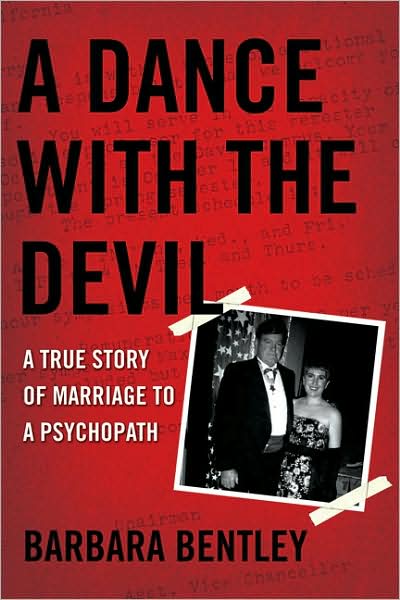
Women in Crime Ink offers an exclusive look at the first chapter of Barbara Bentley's new book, A DANCE WITH THE DEVIL (Penguin). If you missed the initial installment, click here.

Also, make sure to read our guest contributor's "Survivor Story" post from Friday. To participate in a Q&A with the author, visit the Ink Well (see live chat window along right margin) on Monday at 8:00 p.m. EST.

CHAPTER ONE


Part 2

With everyone settled back in the living room, the conversation turned to family. I shared that I didn’t have any children from my first marriage but I did have three sisters and a brother, all younger than me. The two youngest sisters were still at home; the one closest to me (ten years younger) was married and lived in Washington and my brother who had recently been discharged from the Marines. I joked that my parents had two families. I was the first, and when I was old enough to be the live-in babysitter, the rest started popping out. We all laughed.

Ted and Debbie had grown children from their first marriages and they brought us up-to-date with the latest news of who was where and doing what. Then it was John’s turn. I had to try to not let my mouth fall open as he wove a fascinating story.

When John was a young officer he married Sara Brimstone against her father’s wishes, because she was from old money and John was not. Together they had had a girl, Sandy, and a boy, Sonny. When John returned early from a long deployment, he found Sara in bed with another man. They divorced. He fought for custody of the children and won. Whenever duty called John to the sea or sky his Grandmother Dannigan watched the children in Coconut Grove, Florida.

Then John met Cindy Shirrow, an airline stewardess. They married and had one daughter, Estelle Desiree. In less than a year Cindy was killed in an automobile accident. John was in Vietnam when it happened, and his grandmother took one more child under her wing.

John’s fourth child came into his family through his father, who had adopted Francesca, the daughter of a faithful servant. When John’s father died, John assumed the responsibility. It was the right thing to do, he said.

John saw to it that his children were well taken care of as they grew into adults. When he was home he lived with them in his house in Coconut Grove. When he was away, Grandmother Dannigan and her servants continued to care for them. John made sure they went to the best schools, and all appeared to be successful. Sandy was married and going to MIT, Sonny was at NASA’s astronaut school, Desiree was at Julliard and Francesca was at Florida International University and living with John’s Grandma Dannigan.

Just when we thought he was finished, John hung his head. “We’re not very close now. I guess I was away too much when they were growing up. I feel like the black sheep of the family.”

Something stirred inside me. I wanted to rush over and put my arms around him and tell him it was all right, he had done his best. But I had just met this charming man and that would have been too presumptuous. Instead I meekly said, “I’m so sorry.”

Later, at the dinner table, Debbie sat John opposite me. He immediately reached up, ripped at the Velcro, and removed the blue-foam neck brace, saying the doctor recommended he only wear it when his pain was excruciating. Hmmm. . . . Looks even better, I thought. Ted poured the wine and John lifted his glass.

“A toast,” John said. “Here’s to the breezes that blow women’s chemises past their kneeses.” Even I laughed at that.

I looked around at the beautifully, evenly-set table and realized I was fully lulled into the spirit of Debbie’s dinner party. The meal, as always, was exceptional. Wine was plentiful. John, throughout the meal, was completely captivating. He complimented Debbie’s culinary talents, offered lighthearted jokes, and filled the hours that passed with more of his fascinating stories. A real charmer, this one, I thought, who knows all the right moves.

As the evening wore on, I learned even more about him. Before coming to Vestico as a consultant he was with the Federal Contract Administration. The FDA and the CIA, he explained, used the service. He was sent on missions into sensitive areas where it was, as he put it, “best for U.S. government presence to remain unknown.”

Before the night was over, he told us he’d been born in Turrialba and that he spoke Spanish fluently, having first learned it as a child living with his mother’s family in Costa Rica. That was why, he explained, most of his missions took him to Central America.

I interjected that I was a genuine California girl and that I had lived my whole life in one county - from being born and raised in Pittsburg to settling in Concord during my first marriage to migrating to Antioch for affordable housing after my divorce, all within a twenty mile radius. “For a world traveler like you it must sound dead boring,” I said.

“I envy you,” John sighed. “As a child I moved around a lot because my Dad was in the Navy; then I enlisted and the rest is history.”

“My parents still live in Concord,” I added, as if that tacked on some allure to my story. “They moved to California in World War II when Dad’s unit was stationed at Camp Stoneman. The weather appealed to them, so they stayed after Dad was discharged.”

John added that was exactly why he had settled the Bay Area, and then he was off on another story. To me, this dinner guest of Debbie’s was a regular James Bond. As difficult as it was becoming for me to keep my eyelids from drooping, I wanted to hear every word of the story he was telling about a mission in Panama City.

He and another operative, he said, had rented adjoining offices. They were close to completing their mission of forcing a drug cartel out of Colombia. One day, after lunch, John was at his desk in his office when he heard his partner’s office door open. John expected to hear his partner’s footsteps, but instead, he heard the loud rattle of machine-gun fire. Instinctively, he hit the deck, scrambled under his desk, held his breath and waited. The office door opened, and a strange voice said something about “getting the other one next time.”

Minutes later John learned his partner had been killed instantly. That might just as easily have happened to John, I thought, realizing that in real life, this James Bond stuff was horrifyingly brutal. As though reading my thoughts, John looked directly at me when he said, “That’s when I realized I was getting too old for that line of work. It was time to call it quits.”

I sighed deeply. “And it’s definitely time for me to call it quits now,” I announced. “It’s nearly midnight.”

While Debbie and Ted waved to me from the porch, John escorted me to my car, surprising me with his rapt attention. After I was behind the wheel, he asked me to wait while he walked over to his own car. He returned with a paper bag.

“I wish I had something more to give you,” he said, “but this croissant is from a special bakery in San Francisco. I know you’ll like it.” He grinned. “A special pastry for a special gal.”

It was an odd, but interesting, gesture. I thanked him for the croissant and drove away. On the way home I reflected on the entertaining evening and my introduction to an articulate, witty, and amusing man who had impressive credentials and exciting stories, a man who went out of his way to focus his charm and attention on me. But also an older man, I reminded myself. Parked in my garage, I grabbed my purse and the paper bag. What was it about me, I wondered, that made this man decide I was “special”? Although I had certainly learned a great deal about him, what exactly had he learned about me?

Barbara Bentley is a victims' advocate in California, where she was directly responsible for the passage of Assembly Bill 16, which changed California divorce law. A member of STAND! Against Domestic Violence, she addresses women’s and victim’s rights organizations, and her story was featured on Lifetime’s "Final Justice." Find out more about Barbara and her book at http://www.adancewiththedevil.com/


Saturday, November 8, 2008

"Prince Charming" - Part 1

Women in Crime Ink offers an exclusive look at the first chapter of Barbara Bentley's new book, A DANCE WITH THE DEVIL (Penguin).

Yesterday, Barbara wrote a guest contributor piece for us. Today and tomorrow, WCI brings you the first chapter of her story, in two parts.

For a live chat with the author, meet us at the Ink Well (see sidebar of WCI) on Monday at 8:00 p.m. EST.


CHAPTER ONE

Part 1

“Thanks for coming," Debbie said, giving my arm an extra little squeeze of appreciation.

"Hey,” I said, “A promise is a promise.” She had called me earlier that day while I was at work, preoccupied with testing samples in my analytical lab at the Excelsior Chemical Company. When she’d asked me to round out the double date for a dinner party at her house that evening, she wouldn’t take no for an answer, so here I was.

I knew what Debbie was up to. Five months earlier, in February 1981, after I split up with a man who was a close friend of Debbie and her husband Ted, Debbie somehow saw me as her “perfect single woman” friend. Somehow she’d managed to extract a promise from me: that I would help her keep her dinner table evenly set.

The eternal optimist, I wasn’t opposed to meeting new men myself. When I asked about who my date for the night would be, she answered, “Older than you, but you don’t have to think of him as a date. The point is, I know you’ll find him interesting. His great-grandfather was Admiral Peary. Remember? Peary…North Pole? John works over at Vestico with Ted. You’ll like him.”

I wasn’t holding my breath that we’d be a love match, and I was exhausted from working long shifts, but Debbie had a way of talking me into social events, and so I found myself agreeing. Besides, what harm could it cause? It was only dinner.

By the time I’d arrived and she’d greeted me warmly at the door, I found myself relaxing.

“I knew I could count on you,” she said happily, leading me into her living room. “Well, I owe you, big time.” Debbie glanced towards the kitchen, then quickly leaned over and whispered in my ear. “Don’t be put off when you see John. He showed up in a foam neck brace and said he’ll tell us all what happened.” She pulled away, then quickly returned to my ear. “I forgot to mention that he wears a toupee, so don’t stare.” She smiled and, in her sweet normal voice, said, “I’ll be back in a minute.” This should be interesting, I thought, I’ve never met anyone who wears a toupee.

She hurried off to the kitchen where the men had already begun preparing drinks. I sat down on the sofa and looked around. The brass, ceramics, paintings and furniture that Debbie had collected during her time in Taiwan never ceased to impress me, and as usual reminded me of how long it had been since I’d gone off to somewhere exciting. I did a fair amount of traveling for Excelsior, but the places I was sent to could hardly be considered exotic.

“Well, hello there,” I heard a deep voice call. I turned to see John Perry emerging from the kitchen, carrying two drinks. Ted and Debbie followed. Debbie winked at me.

Despite the medical brace around his neck, John was a dashing figure . . . tall, light brown hair, good-looking with a ruddy complexion and mischievous blue eyes. He was well dressed, too, in his tweed jacket and designer silk tie. He strode confidently across the living room. “Rum-and-coke for the lady,” he said, offering me the drink with an impish grin. Debbie was right, I thought. This man was already interesting to me...neck brace, toupee, and all.

“Thanks,” I said, taking the drink. I felt my cheeks flush as he looked me over. I was glad I’d decided to wear my red knit dress tonight. Everyone said red was my best color, and suddenly that seemed important.

Meanwhile, Debbie had set a tray of appetizers on the glass coffee table. John, I noticed, had already fixed a plate and was holding it out for me to take. I thanked him again.

“Debbie,” he said, “you didn’t tell me your friend was such a looker.”

My cheeks burned once more. John settled into a nearby chair, never taking his eyes off me. This was not going the way I had expected. Trying to exert some control, I blurted out, “Why don’t you tell me something about yourself?” And he did. He started out with an apology for the blue-foam neck brace and explained that a baggage cart loaded with heavy equipment had recently plowed into his neck and back while he stood waiting for a taxi at the Mexico City airport. “But it can’t stop an old Navy man,” he said. He launched into his military career and told me that after his last Vietnam tour in 1969, he’d been denied field duty. Because he hadn’t relished the notion of a desk job, retirement was the better choice. He’d been a captain in the Navy, but at retirement received a tombstone promotion to rear admiral.

“Tombstone?” I asked.

“That’s when an officer, at retirement, is honored by a raise of one rank. It depends, of course, on the officer’s service record. Obviously, it provides higher retirement pay.” He raised his glass.

“Guess you got that promotion because of the Congressional Medal of Honor, huh, John?” Ted asked.

I leaned forward. “You received the Medal of Honor?”

We were off and running. John talked about how the VC had swarmed over his unit’s position. They’d been completely outnumbered, casualties incredibly high. He was nearly killed trying to save several of his men. John’s hand slid to the side of his chest and rested there as he continued. “A fifty millimeter machine gun opened me up good.” He patted the spot on his side. “Real good. Right here,” he sighed. “Lost a lung, you know. Still carry the scar.”

We were all silent for a moment while John leaned across the table to fix himself a plate of appetizers.

“No disrespect intended,” I heard myself say, “but war is always horrible. I believe we had no business being in Vietnam.”

John smiled and began to lay out the usual arguments about the importance of fighting communism, but eventually admitted the war had taken its toll on him. “I still have nightmares about the kids I wasn’t able to save,” he said solemnly. He told us he had to shoot one of his own men who fell into a camouflaged, bamboo-stake-filled pit. Debbie gasped and I shuddered. “He begged me to shoot him,” John explained. “When you’re in the service, you go where duty calls and you do what you have to do.”

I looked away, not caring to hear any more war stories. That didn’t faze John, who seemed to relish talking about it. If I had only known then what I know now . . . that most servicemen don’t like to talk about their war experiences. But I didn’t. So, despite my disinterest in the topic, I found myself listening.

He said he’d been in three wars. He’d lied about his age in order to enlist during World War II, and, at sixteen, joined one of the first Navy SEAL units for underwater demolition. “I was a naval aviator in the Korean War. Got shot down once but landed in the water.” He smiled, remembering. “After two tours in the Blue Angels, I went to Vietnam and was given command of the Black Boats, small and swift. They went up the river into North Vietnam. It was dangerous duty. Very dangerous.”

It was clear he loved to talk about the military, about his experiences. “It’s in the blood,” he commented. “I’m tenth generation Navy. Did you know that, Ted?”

Before Ted could answer, John was already into the topic of a film from the 1940s, starring John Wayne. It was the story of John’s father and how he had started the Seabees.

“Because Dad was story consultant on the set,” John said, “I got to meet John Wayne. Matter of fact, the Duke and I got to be real good friends.”

After offering some inside gossip about the Duke, he joined Ted back in the kitchen to rustle up another round of drinks. Debbie immediately pumped me for my reaction to her guest. I conceded the man was certainly interesting. “But,” I cautioned her, “if you’re thinking what I think you’re thinking, forget it. He’s almost as old as my mother.”

“Maybe he is too old for you.” Debbie stood, announced that she was going into the kitchen to put on the finishing touches, and started out of the room. Over her shoulder she added, “Or maybe he’s not.”

“Not?”

“Too old for you. Maybe he’s not.”

Read Part 2 of the first chapter tomorrow. . . .


Sunday, July 6, 2008

Mystery Man:Kerry Max Cook (Part 4 of 4)

For Independence Day, Women in Crime Ink presents a four-part series written by Kerry Max Cook, a man who struggled for twenty-two years to regain his freedom. This is the fourth installment. Read Part 1, Part 2 , and Part 3 .

by Kerry Max Cook

After I’d lost everything that mattered to me most in the world my freedom, my self-respect, the person I loved the most, I came face to face with the fragility of humankind. And I dedicated my life to forgiveness: of myself, of those I had wronged, and those who had wronged me. I began living the truth that hate only hurts the person who is doing the hating.

In my heart I built a shrine that represented the love I had for Doyle Wayne and I promised him–and myself–that I wouldn’t give up, no matter what.

In defiance of my lawyers, I resumed a media campaign to the press. My lawyers had strenuously advised me against this, saying the press would distort my story and use it against me.

But I had nothing to lose now.

I’d been in prison for over ten years now, with no progress. I’d seen what happens when you let other people control your destiny. It was time I controlled my own, completely.

I wrote to
David Hanners, a reporter at the Dallas Morning News. I told him that if he found anything untrue about my story, I would voluntarily walk into the execution chamber to be executed.

My persistence with David Hanners and the Dallas Morning News produced a gigantic break by bringing me and my story out of the darkness and into the light with the headline “Inmate Was Railroaded" splashed across the front pages.

For the next two years I worked exclusively with David Hanners, and this alliance produced over 40 front-page stories, such as “Convicted Man Called Innocent,” “Key Evidence in Cook Case said to be False" (the aging of the fingerprint) and many, many more.

This helped save my life.

My second break came when I persuaded Jim McCloskey (left) of Centurion Ministries to take on my case.

Centurion is a New Jersey-based, non-profit organization that investigates an inmate’s claim of innocence, and if they find evidence to support the inmate’s claims, they hire an attorney and go into the field to collect the hidden or undeveloped evidence.

I had written Jim McCloskey before, but had only been sent a form letter.

Armed with the Dallas Morning News’ front-page investigative stories, I stuffed an envelope full and again wrote Jim McCloskey.

This time, Jim McCloskey wrote back:

“Before I commit to any case, I require an honest, detailed account of your life and a detailed description of your conviction. An innocent man named Matt Connor once wrote us 60 pages. I know that is a lot, and that was an extraordinary case. I look forward to reading your story.”

All during the day, and well into the night I worked on my response. Finally, I wrote:

“Dear Mr. McCloskey: Enclosed please find my 61-page autobiography. I am one page more innocent than Matt Connor was.”

Jim McCloskey took my case. He hired a Houston attorney named Paul Nugent (on left with Kerry and attorney Scott Howe to his right) and for ten grueling years, it was a David and Goliath-like fight, but we prevailed as a united front.

Paul, Jim, and the Dallas Morning News literally saved my life.

So . . . who DID rape and murder Linda Jo Edwards? Twenty-two years lter, a law-enforcement crime lab discovered semen on a long overlooked piece of evidence and tested it in an effort to answer that question.

The DNA belonged to none other than the original suspect–Linda’s married ex-lover, James Mayfield.

But police and prosecutors had so corrupted their case against him in their blind pursuit of me for over two decades, it made it impossible to legally charge him–even in the face of his genetic fingerprints at the crime scene.

Those who prosecuted me were politicians first. They never admitted their mistake. The truth in this case was never as important as their careers. And their careers blossomed.

District Attorney Jack Skeen was nominated “Prosecutor of the Year” by the Texas State Bar, which is made up of county and district attorneys. Jack Skeen is now a District Judge overseeing justice in Tyler, Texas.

Doug Collard, the policeman who started it all by aging my fingerprint and making it the killer’s calling card? Years later, Collard told a fingerprint licensing board—in addressing a complaint filed against him by a fellow member, after the Dallas Morning News publicized his perjury regarding the "aging" of my fingerprint—he shouldn’t be held responsible for his perjury because the District Attorney’s Office made him do it. He finished out his career with honors and retired a few years ago.

It’s worth noting that Detective Collard’s Response to the Complaint filed against him was deliberately hidden while prosecutors fought up the appellate ladder to have me executed.

District Attorney Jack Skeen argued all the way up to the United States Supreme Court that the guilt of the accused was beyond any doubt because Doug Collard testified that the my fingerprint could only have been left on the patio door of the victim at the time she was raped and murdered, making it the “killer’s calling card.”

I did finally get an apology but it didn’t come from the police or the prosecutors–even in the face of DNA exoneration. Ironically it came from the only person involved in my case that had the courage to admit he really was a criminal: Shyster Jackson.

The most significant lesson I learned serving 22 years of a wrongful conviction is the power of forgiveness. The ability to forgive gave me the power to be free.

I was imprisoned on the worst death row in America and now I was free. Death row might have had my body, but it didn’t have my mind. As Eleanor Roosevelt once said, “The future belongs to those who believe in the beauty of their dreams. “

I never let go of mine.


Saturday, July 5, 2008

Mystery Man: Kerry Max Cook (Part 3 of 4)

In honor of Independence Day, Women in Crime Ink presents a four-part series written by a man who struggled for twenty-two years to regain his freedom. Below is the third installment. Read Part 1 and Part 2 .

by Kerry Max Cook

When I arrived at the
Texas Department of Criminal Justice in the summer of 1978, I entered the most violent and primitive prison system in North America—a hate factory so dangerous and barbaric, a federal judge declared it “cruel and unusual punishment,” and said it offended principals of human decency in violation of the Constitution of the United States.

There was no security. From the petri dish of prison, the Administration culled the strongest, meanest convicts they could find and used them as inmate “guards.”
  • These inmate “guards” used this privilege as power and ruthlessly ruled over the other prisoners with brute force.

  • Everyone carried a homemade knife and used it to fight to the death.

  • If you got stabbed, it was an inmate orderly who tended to your wound with iodine. If anything else was wrong with you, you got Tylenol, which was dispensed as the prison panacea.
The fight for my life was always on two fronts: the court system—intent on backing the police and prosecutors and executing me—and the prison system full of violent, crazy inmates determined to kill as many of each other it took to feel safe from one another.

Not a day went by that I wasn’t consumed by courtroom images of witnesses, police, and prosecutors all working together to ensure I was convicted and sentenced to death. These images often left me mentally and emotionally crippled with rage and despair.

“Truth-hunger is a hunger just as real as food-hunger,”
H.P. Lovecraft said, and I was starved to understand how I could have been sent to this purgatory.

This is when my transformation began, from a ninth-grade dropout, a 22-year-old kid, really—and therefore, by definition, someone who expects someone else to come to the rescue—into the CEO of my own life, a grown-up who had to fight for himself. And when you’re fighting a legal system, that means getting an education.

In one empty cell, I found an old Webster’s dictionary. And I read it from A to Z, practicing new words on staff and prisoners who often didn’t know what I as talking about. My brother, Doyle Wayne, was my only outside support. He sent me educational books so I could learn how to write and speak effectively.

Because I was classified “
Death Row,” which meant automatic Administrative Segregation, I wasn’t permitted to attend the prison school system. I persuaded them to at least allow me to be sent a GED handbook so I could study from my cell and take the exam directly, and I passed.

Then I enrolled in college correspondence from Sam Houston State University. I had a GPA of 4.0 when the Texas Legislature passed a law banning anyone sentenced to death from taking "in-cell" college courses. The logic was, I was there to be put to death—NOT to get an education. Nevertheless, following a more or less conventional path, after college I went to graduate school. Ignorance of our legal system helped send me to Death Row innocent, so I read law books voraciously.

My most prized possession was a Black’s Law Dictionary Doyle Wayne saved up and sent me for Christmas. He also paid for a paralegal correspondence course and eventually I received a paralegal certificate. Once I was educated, I stuck out my shingle and started practicing as a jailhouse lawyer.

I wrote writs for other prisoners in exchange for stamps and the writing materials I needed daily to fight for my life. I hammered day in and day out on a manual blue Royal typewriter to anyone empowered to help me: The President, the Governor, the Justice Department, and all media outlets.

I also wrote to the
Texas Court of Criminal Appeals, the state's highest appellate court for death penalty appeals. After nine years, they finally wrote back: ruling 8-1 in favor of my conviction and execution.

The Court said my argument that the evidence was insufficient to support a jury’s verdict of guilt beyond a reasonable doubt was overruled because:


  • The eyewitness to the murder had seen me in the apartment at the exact same time the pathologist testified the victim had died, and a policeman testified the fingerprints were left on her patio door.

  • A fellow inmate testified that I had confessed the murder and told the jury things only the real murderer could have known.


In stunning fashion, the highest criminal court in Texas simply echoed the fabrications of the police and prosecutors. It became apparent the appeals court never even reviewed the actual transcripts in the case.

Announcing the high court had cleared the way for my execution, a
Dallas Morning News photograph showed the transcripts of my case sitting in the basement of the Texas Court of Criminal Appeals building. If you look closely, you can see the seal was never broken from when Smith County sent them up.

I had always assumed that anyone given the ultimate penalty was entitled to a meticulous judicial review.

I was wrong.

Darkness came to my Death Row cell, and this time, I had to draw strength from an empty well.

My whole life, my biggest inspiration had been my brother, Doyle Wayne. He was the person who made me believe that nothing was impossible, and no mountain was too high to climb.

Two weeks after the Texas Court of Criminal Appeals cleared the way for my execution by saying nothing was wrong with my conviction, Doyle Wayne was shot and killed. He was in the wrong place at the wrong time and it cost him his life.

I found myself faced with this brutal irony: here I was in prison, branded a murderer, and now I had lost my only brother to a senseless, violent homicide.

I finally understood how Linda’s family must be feeling. It was awful.

I wanted to kill. I wanted to die. I wanted . . . to start over.

So I did.


Kerry Max Cook is the author of CHASING JUSTICE: My Story of Freeing Myself After Two Decades on Death Row for a Crime I Didn't Commit.

The story of Kerry’s struggle concludes here tomorrow.


Friday, July 4, 2008

Mystery Man: Kerry Cook (Part 2 of 4)

For Independence Day, Women in Crime Ink presents a four-part series written by a man who struggled for 22 years to win his freedom. This is Part 2 of his story. Read Part 1 here.

by Kerry Max Cook

So I was charged with capital murder, for the sexual assault and slaying of a woman I'd met once in my life. Although I played no part in her death, the implications of the accusation meant my life was jeopardized. I wasn't a murderer.

But I wasn't an angel either. As a juvenile, I ran away from home a few times, stealing a car or two—usually one to get where I needed to go, and after I ran out of gas, another to get back. One of those cars happened to belong to the sheriff. Definitely the wrong car to steal.

As a result, I wasn’t the most popular person with law enforcement in the small East Texas Town of Jacksonville. Having a police record and a set of fingerprints in the law enforcement database drew attention to me.

At the scene of Linda Edwards' slaying, a policeman found 13 identifiable fingerprints inside the apartment that could have yielded the identity of the killer. “Identifiable” in that each print contained enough points to make a positive identification. But because whoever owned those prints didn’t have a record, police weren’t able to determine the owner. The 13 fingerprints found at the murder scene were destroyed and police and prosecutors settled on me as the suspect.

One of the murder weapons was an orange-handled pair of scissors. On the handle, pressed in blood, the same policeman found a “whorl fingerprint” (left), a type shared by 65% of the people on the planet – including the victim.

But not me.

All ten of my fingers are classified in fingerprint jargon as “tented arches” (right). I don’t have a single whorl digit on any of my ten fingers. Not surprisingly, the policeman dismissed the whorl fingerprint without establishing that person’s identity.

Other evidence was suppressed, bungled, or just plain conveniently lost.

Sworn statements to police, secret grand jury testimony, all told the story of how Linda and I had met out by the pool and I had ended up at her apartment as an invited guest. But the police and the prosecutors hid this critical exculpatory evidence and it wouldn’t be discovered until a new, dedicated defense attorney found it buried in the District Attorney’s files 15 years later.

A drop of blood was found by Linda’s patio door. Maybe it belonged to the killer. You’d think you’d submit it for forensic analysis. But not the police in my trial. They said the reason they didn’t submit if for comparison purposes was because, and this is a direct quote: “It was the same color as the rest of the blood in the apartment.

Then there was the case of the missing ankle stocking. Police and prosecutors contended I had snuck off into the night with one of Linda’s ankle stockings packed full of body parts as a souvenir. But law enforcement never found the stocking.

In Texas, as any other jurisdiction that uses the Death Penalty as a punishment, the crime of murder can be elevated to a capital offense punishable by death if and when the murder occurs during the commission of another felony. In my case one of those underlying felonies the state relied on to make the murder death-penalty worthy was “theft of a stocking.”

Fifteen years later another jury in a separate trial broke open the plastic bag that contained the victim’s blue jeans that had been sealed in a police vault since the first trial. Jurors shook them to determine the victim’s height and out fell the second missing stocking. Apparently it had been shoved up the pant leg of the victim’s jeans.

Evidence at the second trial would show that the prosecution had a win-at-all costs mentality:

  • They coached the only eyewitness to the murder, Paula Rudolph, to change her initial eyewitness account of the murderer to implicate me, and guaranteed her new identification would go unchallenged until an ambush at trial when it was too late by making her unavailable to the defense.


  • The District Attorney conspired with a policeman to fabricate “expert” testimony to make my fingerprint the killer’s calling card.


  • They conspired with the pathologist to change the time the victim died and to create the most inflammatory aspect to the case – missing body parts, carted off in a missing stocking.
  • They deliberately suppressed available evidence that Linda and I had known one another and met three days before she was killed.
  • Finally, they persuaded a convicted murderer to commit perjury in order to guarantee my conviction. Edward “Shyster” Jackson was dubbed the “Star witness for the State.”

Records ultimately proved that prosecutors made him a secret deal: his freedom from a murder conviction and life sentence in exchange for testimony that I confessed to him while sharing a jail cell that I raped and murdered Linda Edwards. Shyster told the jury that the confession story took place in August. Jail records later established that at that time of the purported confession, I was kept in solitary confinement, unable to talk to any other inmates. Those records mysteriously disappeared without explanation.

It was crazy. It was like I was the main character in a John Grisham novel fighting against a corporation that was out to convict me at all costs to escape any appearance of wrongdoing.

After about my fifteenth year on Death Row and days away from execution, Shyster Jackson finally told the truth on an MSNBC Special Report with Geraldo Rivera: “Deadly Justice.”

I was essentially penniless—the $500 my Mom and dad scraped up to hire an attorney just wasn’t enough. I was powerless to counter a parade of perjury, coached testimony, shady agreements, and inflammatory theories.

In a five-day trial I was found guilty of all charges contained in the indictment, despite absolutely no proof to support the allegations of rape, murder, theft of a stocking, or burglary.

One moment I was in the courtroom crying as I reached out to say goodbye to my mama, daddy, and brother, Doyle Wayne, and the next moment I was being given the execution number 600 and pushed into a five-by-nine-foot concrete tomb.


Thursday, July 3, 2008

Mystery Man: Kerry Max Cook (Part 1 of 4)

In honor of Independence Day, Women in Crime Ink presents a Mystery Man Marathon - a four-part series written by a man who struggled for twenty-two years to regain his freedom.

by Kerry Max Cook

Part of any job, whatever you do, is dealing with “bad days.”

The worst day of my life started at the end of the day. It was about 6 o’clock one night, when a co-worker walked up and said, “Kerry, can you come in here for a second?”

I stepped into an adjoining room, which was strangely dark. Suddenly, the room exploded in light. Handcuffs were slammed down on my wrists. I was arrested for the rape and murder of a woman whose name I didn’t recognize. Then things got really bad.

The officers drove me to a police station where I was ordered to remove all of my clothing in front of a young female dispatcher. Nude, I was pulled down a hallway and pushed into a restroom. As the door closed, a volley of punches rained down, slamming me to the floor. Dragging me by my hair into a stall where my head was pushed into a toilet bowl, a police officer screamed "Confess!"

Next I was put on a private plane in the middle of the night and flown to Tyler, Texas. At about 3000 feet up, a detective threatened: Admit to being a rapist and murderer, or be pushed out of a plane.

Twelve hours later, I sat naked in a freezing jail cell on a cold slab of steel, with a new job: to free myself.

At the time, I didn’t know I had 8030 more days to go in this new occupation: it would be 22 years before I’d be able to walk down the street a free man again.

And I didn’t know that meant that I would have to change myself into a completely different human being.

I needed to make sure I didn’t die by lethal injection—or get killed by a psychotic prison inmate before the justice system realized they’d made a terrible mistake. And if I screwed up—if I failed to change—I’d be dead.

Failure was not an option. You hear that all the time in corporate America, where the worst-case scenario means you’re fired. But in my case, if I failed, I would be executed. If I was going to have any hope of succeeding, I would have to become a whole new person.

This is the story of my transformation.

Like many of the best and worst stories in life, this one began with romance. Her name was Linda Edwards. She was 21 and I was 20 when I met her by the swimming pool at an apartment complex in Tyler, Texas, where we both lived.

We talked, we flirted, and Linda invited me to her apartment. We made out, she left a few passion marks on my neck, and we said goodbye. That was it: the first time—and the last time—I ever saw her.

Two months later, I was arrested for her rape and murder.

For the next year, I sat in a solitary confinement cell, awaiting trial—a year in which the police and prosecutors added to my story, by making up one of their own.

It took me 22 years to prove they completely fabricated their case against me.

In the police report, the victim’s roommate
Paula Rudolph, the only eyewitness to the crime, stated that the man she saw in Linda’s bedroom at the time of her murder was the victim’s silver-haired, married, 45-year-old ex-boyfriend, James Mayfield. Paula knew what he looked like. She worked directly for James Mayfield at the local university.

But at my trial a year later, Paula changed her story and said that the murderer she saw was me even though the drivers license photo taken the day the victim’s body was discovered showed that my hair was long, brown, and to my shoulders.

The district attorney’s office had this photograph in their possession at the time of my indictment, but kept it hidden for 15 years, when a defense investigator discovered it.

Immediately after my arrest, the District Attorney placed Paula Rudolph under the “protective custody of the
Tyler Police Department” and made it impossible for my attorneys to question her. Research shows that a witness’s best recollection is moments or hours after witnessing a crime, not a year later.

A local psychologist with no forensic experience was told that I once worked as a bartender in a gay bar in Dallas. He worked that into a profile and labeled me as a maniacal, homosexual killer and a misogynist.

The pathologist changed his original estimate of the official time of death, adjusting it to match the exact time the policeman swore my fingerprint was left on the victim’s patio door, making it the “killer’s calling card.”

Everything hinged on this policeman’s "aging" of my fingerprint. But there is no way to scientifically determine the
age of a fingerprint. The technology didn't exist in 1977, and it doesn't exist today. Still, his claim was the only piece of evidence to support an arrest warrant based on “probable cause.” Later, he restated it under oath to indict me on capital murder charges and bind me over for trial.