by Vanessa Leggett
It's that time of year. For kids, Halloween night means dressing up and venturing out for candy. For party-pooped adults, it means dressing down, staying in, and watching a scary movie.
If you don't like scary movies, you're not alone. Neither does our Texas prosecutor, Kelly Siegler, who put it more bluntly: "I hate scary shows."
And it's little wonder. Like other criminal justice professionals who write for WCI, Kelly might be one of those who look to movies for escape from the real-life horror she encounters day in and day out. Right now, watching a scary movie would be last on Kelly's to-do list. Our "prosecutor for hire" is in the middle of a capital murder trial, where a film of a game warden's shooting death is wearing like the Zapruder reel.
Sounds Like Halloween
If, like Kelly, you don't spend your free time watching scary movies, but your s ignificant other does . . . don't count on shutting your eyes to keep from jumping out of your skin. Usually it's what we can't see that's more frightening—the closed closet door . . . the lengthening shadow of something around the corner . . . the creaking floorboard. . . . Sounds, in fact, can be more frightening than anything seen or suggested on-screen. It only takes two notes from an oboe in JAWS to send chills along the spine . . . or shower sounds and a few strains from the violins of Psycho . . . or a phone's shrill ring, as in When a Stranger Calls and on the other end of the line the killer breathes "Have you checked the children? . . . "
Most of us here at Women in Crime Ink enjoy scary movies, and we like to watch with our eyes open. For Halloween, we polled our contributors for their favorites.
Our Favorite Classics
Every Halloween, Donna Weaver looks forward to her annual dose of Arsenic and Old Lace. Two of Diane Dimond's favorite classics: What Ever Happened to Baby Jane? and Rosemary's Baby. Scary-movie lover Tina Dirmann highlighted Wait Until Dark among several others. And Stacy Dittrich gave Burnt Offerings as her favorite scary movie, while Pat Brown picked The Haunting of Hill House.
"I always thought Shirley Jackson wrote the creepiest stories—more mentally creepy than physically," said profiler Pat, who recalled "the part in The Haunting where the walls are going 'boom, boom' and one woman tells the other to hold her hand until it stops and then, when the noise ceases, she opens her eyes and realizes the other woman is sleeping in a bed all the way across the room . . . eeowww."
No one could argue with Pat that "anything Hitchcock" is scary. 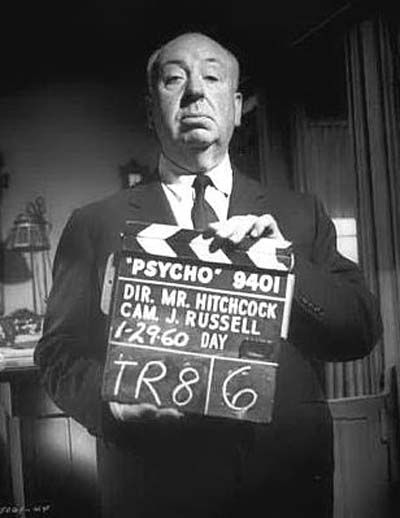 Pat liked The Birds while Diane Fanning cited Rear Window as a favorite. Fanning also mentioned "An Unlocked Window," from the TV series "Alfred Hitchcock Presents." That episode is about a killer on the loose, a man who slips into the cellar window of a medical ward and poses as a female nurse. "That still gives me shivers," Diane said. The chill factor might have been spiked by the set, which was the same house used in Psycho. The Master of Suspense enjoyed tapping into the collective unconscious; he understood the timelessness of terror. Tina Dirmann rents Psycho every year.
Scariest of Them AllBut the "scariest movie ever," according to Tina, is The Exorcist. I agreed, as did Connie Park and Cynthia Hunt. The film was based on the William Peter Blatty novel of the same title. Blatty wrote the book and Oscar-winning screenplay, drawing inspiration from actual exorcisms he'd studied, especially the documented exorcism of a 14-year-old boy in 1949. Actress Linda Blair was cast at the same age. (She is probably still in therapy from that childhood role from Hell.) Because of death threats after the film's release, the young actress had to hire bodyguards.
What made The Exorcist, so scary? Perhaps surprisingly for a "supernatural movie"—its realism, thus the threats against the life of an actress whose lines came from a script, not from possession.
"Nothing is scarier," said Cynthia, "than the reality that there is a demonic spirit world that exists alongside us and that the enemy, Satan, is constantly trying to defeat, infect, and destroy everything that is good."

Fear Factor
A modernized battle between Good and Evil can be found in the 1991 remake of the '60s Gregory Peck classic Cape Fear, which was Katherine Scardino's favorite. It's no mystery our defense at torney found this film scary, since the movie depicts a realistic nightmare of every criminal advocate: A vengeful client who blames his lawyer for a stiff sentence. In Cape Fear, an attorney breaches professional ethics by purposely offering a less-than-zealous defense to a vicious rapist, who, upon his release from prison, stalks the lawyer and his family, targeting the attorney's teenage daughter. . . . Equally afraid of a predator's release would be the D.A. who put him away, so it's no surprise that Cape Fear was also a top pick of our sex-crimes prosecutor, Robin Sax. The 1991 version of Cape Fear was a popular choice among several contributors, including Kathryn Casey. (Other thriller picks: Jagged Edge from Robin Sax, and Andrea Campbell recommends Fallen.)
A number of us found favorites in movie adaptations of novels by Stephen King —Carrie, Misery, and Michele McPhee's favorite, The Shining. Who can forget Jack Nicholson as a madman driving an ax through a bathroom door, announcing "Heeeeerz Johnny!"
An earlier Jack Nicholson scene our resident psychiatrist would rather forget: When Nicholson's character is lobotomized in One Flew Over the Cuckoo's Nest. "I can't watch that part," said Lucy Puryear.
Another hard-to-watch lobotomy is found in Hannibal, the sequel to The Silence of the Lambs. The FBI agent played by Ray Liotta is lobotomized by cannibal psychiatrist Dr. Hannibal Lecter.
The Power of Silence
The majority of our contributors ranked The Silence of the Lambs as their favorite scary movie. Based on Thomas Harris's novel of the same title, the film, like the book, is more thriller than horror flick. While this film is one of my all-time favorite thrillers, I would not classify it as a "scary movie."
That said, out of all the horror films I can conjure, the climax to The Silence of the Lambs contains one of the most frightening scenes ever to flicker across the big screen. You remember the scene, when FBI Agent Clarice Starling faces off with serial killer "Buffalo Bill" in his dungeon-like basement.
Sidebar:  Buffalo Bill was based on a real serial killer, Edward Gein, a quiet Wisconsin farmer who dressed his victims like deer—using their skins and bones for furnishings (like lamp shades and cereal bowls from skull caps) rather than for actual dresses, or female "body suits," as in Thomas Harris's story.
For both Buffalo Bill and Hannibal Lecter, Harris borrows traits from Gein (pictured above). Like Gein, "Hannibal the Cannibal" ate his victims' body parts. Edward Gein also reportedly served as Hitchcock's inspiration for Psycho—filmed a couple of years after Gein's crimes were discovered—as well as "Leatherface" in The Texas Chainsaw Massacre, which chilled our cold-case detective, Connie Park.
But back to the scene from The Silence of the Lambs. You would be hard-pressed to find an actor who has captured the emotion of fear better than Jodie Foster did as Clarice, when her face is framed in the grainy green light from the killer's night-vision goggles. Again, it's what we can't see that makes the heart pound. Don't take our word for it. Watch for yourselves. (Warning: This scene contains language and violence unsuitable for younger viewers.)
Our True Crime Favorites
While The  Silence of the Lambs is loosely based on a real villain, there are a number of other films directly adapted from true stories and true-crime books. Since a number of us write fact-based books, this post would not be complete without mentioning our favorite scary movies based on real stories. Here they are, with contributor nominators in parentheses: The Amityville Horror (Tina Dirmann, Vanessa Leggett, Connie Park, Donna Pendergast); In Cold Blood (Jenna Jackson, Vanessa); Helter Skelter (Tina); The Honeymoon Killers (Susan Murphy-Milano); and The Onion Field (Diane Dimond).
So find yourself a scary movie and enjoy the holiday weekend. Now that you know our favorites, we hope you'll share yours with us. A safe and happy Halloween to everyone.


 by Donna Pendergast