Showing posts with label exoneration. Show all posts

Wednesday, June 22, 2011

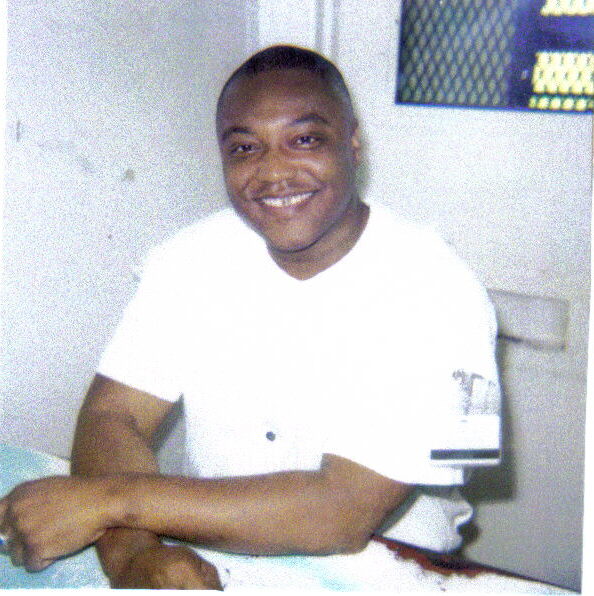
Wheels of Justice Turn Slowly: Update on Anthony Graves

by Rachel Davis
Editor, Women in Crime Ink

The story of Anthony Graves, an innocent man who spent 18 years in prison for murders he did not commit, has been featured many times on Women in Crime Ink by defense attorney and regular contributor Katherine ScardinoIn 1994, Anthony Graves was wrongfully convicted of capital murder in a small Texas town.


Eighteen long years later, the charges against him were dismissed and he was released as a free man. Despite the fact that no amount of money can replace nearly two decades of an innocent man's life, Anthony Graves certainly deserved compensation from the State of Texas for his wrongful imprisonment. Unfortunately, the Texas comptroller denied Anthony's claim for compensation based on a technicality in the order of dismissal for his case. Now, a change has finally come and Graves will get the $1.4 million dollars owed to him for the years of his life that were lost.

Last Friday, June 17, 2011, Texas Gov. Rick Perry signed into law a bill that helps ensure exonerated individuals, like Anthony Graves, will receive compensation from the state for time spent wrongfully imprisoned. HB 417 will effectively close the loophole allowing for denial of compensation claims based on technicalities, such as the one in Anthony's case, where the lack of the words "actual innocence" from his dismissal order precluded him from receiving compensation.

This amendment to Texas compensation laws will allow exonerees to receive $80,000 for every year they were wrongfully imprisoned, provided that they are granted relief in accordance with a writ of habeas corpus (or a demand for proof of evidence of a crime), that the charges against them are dismissed, and that the dismissal is based on an affidavit from the prosecutor that they believe the person to be innocent. The law also allows for exonerees the option to enroll in healthcare coverage provided by the Texas department of criminal justice at the same cost an employee of the TDCJ would pay.

Although the wheels of justice turn slowly, the State of Texas has finally done its part, as required by law, to compensate Anthony Graves for his wrongful imprisonment. Hopefully, this law will also allow for retribution to other exonerees with legitimate claims to compensation.


But as time passes and the story of Anthony Graves' horrific journey to and from death row slowly fades out of the media limelight, let us not forget that Anthony is not the only person to be wrongfully convicted, but is one of the lucky ones whose freedom was restored. No amount of compensation will ever return to Anthony those 18 years.


Tuesday, November 9, 2010

Seeking Justice

by Katherine Scardino 

Anthony Graves is now 46 years old. He was sentenced in 1994 by a jury to die for committing capital murder in Texas and has been incarcerated since August 1992. In 2006, his conviction was overturned by the appellate court for prosecutorial misconduct. The misconduct was the state’s failure to tell the defense that the co-defendant had been trying to tell the prosecution for a long time that he lied on Anthony, saying that Anthony Graves had nothing to do with this case. The co-defendant was also tried by a jury and sentenced to death. In 2000, he was executed. While lying on the gurney, waiting for his lethal injection, he turned to the people watching this killing, and announced, again, that Anthony Graves had nothing to do with this crime. That is about as powerful a statement as you can get.

One week ago, I received a call from the prosecutor. She told me she was dismissing the case against my client, Anthony Graves. I lost my breath. It was an astonishing statement to hear in a case like this. Anthony’s defense team has been fighting for his innocence for years. I have been on this case only three years, and there have been other lawyers before me. My co-counsel, Jimmy Phillips, Jr., and each and every one of those dedicated, smart lawyers told me that we were representing an innocent man. And, I do not mean “technically” innocent, or “not proven,” or that the evidence was lost, stolen or somehow dissipated over the years. I mean really purely innocent. He did not commit this crime.

So, what happened to make a newly appointed, seasoned, tough prosecutor make such a pronouncement? Especially knowing that it would be one she would have to defend. It is very simple. She and her investigator actually investigated. One would assume that in 1992, when he was accused of this crime, there would have been an investigation. There was, but the investigation was skewed by unethical, dishonest law enforcement and prosecutors who heard what the co-defendant said and believed that the case was over. Nothing would stand in the way of finalizing a serious case in this small county--not even an alibi by the accused.

But, then, there was Anthony’s trial in 1994. Was there some investigation done in that year? No. How about in 2006 after the judges sitting on the Fifth Circuit Court of Appeals in New Orleans reversed this case for a totally new trial? One would think the powers that be in this particular county would do some re-thinking about their position. Sadly, it was not done then either.

Only now, with a jury trial looming in the not-so-distant future, did the prosecution think that perhaps a serious investigation needed to be done. This time it was--and it was done right. This prosecutor and her investigator talked to every person involved in this case. They turned over every stone and looked at every piece of paper. In the end, there was no other conclusion but that Anthony Graves was innocent.

I have been asking myself how I really feel about the awesome experience of seeing this man walk free in the sunshine, wearing a sports jacket and slacks, hugging his mother for the first time in 18 years. I think I am angry. I am angry because people were lazy and ignorant. Anthony is black, he was in a small community and it was 1992. I do not need to say anymore. No one cared. No one wanted to go out of their way to be absolutely certain that all the proper work had been done. And, it wasn’t.

Someone asked me last week, "Does this dismissal reinforce your belief in the criminal justice system?" My response was, “No, it scares the hell out of me.” If one mean-spirited prosecutor, who had the power to make life and death decisions, could do this to my client, he or someone like him could do it to your son or daughter, husband or wife. Then, we had our Governor make a statement like “this shows that our criminal justice system worked.” I tracked down the reporter who published that story and I told him that Gov. Rick Perry had to be joking. How could he say that the system worked, after an innocent person spent 18 years incarcerated for a crime he did not commit? Not to mention that 14 of those years were spent on death row, where Anthony lived in a box and was fed through a slit in the door, with one hour a day alone in an alley-like place where he was exposed to the sunshine.

But, enough about me and my feelings--what about Anthony Graves? How is he doing? Absolutely amazing! This man never gave up hope. He always believed that he would win his freedom one day; he just did not know when that day would come. He maintained his dignity and integrity throughout, which is obvious to anyone who has a conversation with him now. Anthony says he does not want to give those people any more of his energy. No bad feelings from Anthony. He wants to get on with what is ahead of him now during the last half of his life. They took away his best years. You know, those years where you get married, raise children, play baseball with your son. He missed all that. But, he is not angry. One reporter asked him, “What now? Are you going to sue the county? Are you going to try and get your compensation from the state?” Anthony said all he wanted to do was “seek justice.” Personally, I hope that this justice involves compensation from the state.

I think justice would be best served if the prosecutor who failed to investigate this case during his tenure, which caused Anthony’s conviction, would spend 18 years of his life in prison. I suppose I have all the anger that Anthony refuses to acknowledge. That is probably good. Anger at ignorant, arrogant people is a dead-end street. But, in this case, it will be a while before I can say that I am no longer furious at the people responsible for this travesty.


Wednesday, August 18, 2010

Eyewitness MISidentification

by Katherine Scardino

My hometown of Houston, Texas, made headlines at the end of July for exonerating two innocent men in one week.

To be honest, I am still angry over the number of years these men spent in prison before being released. I discussed the exoneration of the first man, Mr. Allen Porter, in my last post titled “Free at Last, Free at Last.” The day that post was published on this site, news broke of another Harris County man who was released and exonerated.

Mr. Michael Anthony Green (below right) spent 27 years in prison after being convicted of rape mainly as a result of the testimony of one eyewitness. Other inmates who have been exonerated and later interviewed by the media were quoted as making fairly soft, understanding, Christian-like comments. Mr. Green did no such thing. He was angry. As a matter of fact, on the date the judge acknowledged his innocence of the rape offense, some of his pent up anger burst out at the deputy who insisted on putting him in leg restraints and handcuffs that were too tight for his walk from the County jail to the courthouse -- even though the deputy knew at that moment that Mr. Green was an innocent person. I am afraid that my attitude would be about the same, if not much worse, had I lost 27 years of my life to faulty witness identification and subsequent false testimony. Especially, to top it off -- the icing on the cake -- when an eager officer felt that tight handcuffs were appropriate under the circumstances.

Eyewitness identification is not reliable. From 1990 to 2007, there were 24 wrongful convictions in Texas due to eyewitness identification. The most serious case was that of Timothy Cole, who is not included in the list of 24 exonerated inmates because, unfortunately, he was only officially exonerated posthumously. Timothy Cole (below left) died in a Texas prison in 1999 while serving a 25 year sentence for a rape he did not commit. Nearly a decade later, on April 9, 2009, DNA evidence from the crime posthumously exonerated him and implicated another man as the perpetrator.

In 1985, a young female Texas Tech student was parking her car in a church parking lot across from her dormitory in Lubbock, Texas when an African-American man approached her and asked her to help him start his car. She told him she did not have any cable, and he then reached in through her window and unlocked her door. He then put a knife to her throat and forced her to lie down in her car. The man drove her car to a vacant field where he vaginally raped her. The white female student called the police and during the investigation, she described her attacker.

Timothy Cole was a 26-year-old Army veteran studying business at Texas Tech in 1985. Timothy said he was at home studying the night of the attack. Timothy Cole’s photograph was placed in a photo lineup as a result of a conversation he had at a pizza parlor near the Texas Tech campus with a female detective. Cole was identified by the victim of the rape and was arrested for aggravated sexual assault. The victim of the crime testified at trial and identified Timothy Cole. This identification, along with inaccurate testimony from a forensic examiner, got Timothy Cole convicted of Aggravated Sexual Assault after six hours of jury deliberations. He was sentenced to 25 years in prison.

Now, imagine that you are Timothy Cole. At the time of the rape, he was in college. He had a life, probably a girlfriend or two, and a family -- a past and a future. Until he died in prison in 1999, he had nothing. His appeals were exhausted and nobody could give him any hope that he would ever be released. He was one of those men I have described before. He lived in a box, knowing that he was an innocent person and that no one was doing anything to help find the real perpetrators.

In 1995, one man came forward to accept responsibility for the crime that Mr. Cole was serving time for. Jerry Wayne Johnson wrote to police and prosecutors in Lubbock County stating that he was the guilty party. Keep in mind, however, that this confession came only after the statute of limitations had expired on rape. No one wrote him back. No one did anything. Eventually Mr. Johnson got to the Innocence Project of Texas, where I happily sit on the Board, and told his story. Attorneys at the Innocence Project sought posthumous DNA testing. Cole was cleared by DNA tests in 2008. At a hearing in February 2009, Johnson again confessed his crime before a judge. Mr. Cole was officially pardoned by Gov. Rick Perry on March 1, 2010. Unfortunately, Timothy Cole never knew any of this.

There are many stories like Timothy Cole’s. I will repeat -- eyewitness identification is not reliable. It is the leading cause of wrongful convictions in the United States. Seventy-five percent of the convictions overturned by DNA evidence have involved a mistaken eyewitness.

The Supreme Court of the United States has recognized the uncertainties of eyewitness identification. In United States v. Wade, a 1967 Supreme Court opinion, the court stated: “The vagaries of eyewitness identification are well-known; the annals of criminal law are rife with instances of mistaken identification.”

One of the primary reasons that eyewitnesses to crimes have been shown to make mistakes in their recollection of the attackers is the police procedures used to collect eyewitness evidence. A common eyewitness identification issue arises when a witness or victim is asked to identify a stranger -- either in a line-up, or by viewing a photo spread.

So, how can this problem be solved? It has been recommended that police line-ups be conducted in a double-blind fashion, like any scientific experiment, in order to avoid the possibility that inadvertent cues from the officer who is conducting the line-up may suggest the “correct” answer. That means that neither the witness nor the officer conducting the line-up would know whether the suspect was even in the line-up. Some states have adopted reforms in eyewitness identification procedures. All states should adopt them, but no one wants to admit that they may be wrong. Texas has not adopted any reforms to change much of anything -- including eyewitness identification procedures.


Thursday, October 8, 2009

A Particularly Unsettling Exoneration

by Laura James

The Court of Appeals said the evidence was "overwhelming." Nathaniel Maurice Hatchett confessed to carjacking and raping a woman. The victim identified him as her attacker. He was caught driving her car three days after the crime.

Yet Hatchett
walked out of a Michigan prison after serving 12 years, because the semen found on the victim did not match him. The current prosecutor remarked: "We went back in and did a full investigation. We could have fought for a new trial, but our job is to seek justice. It was served today."

Now for the unsettling part: the prosecutor, trial judge, and Court of Appeals knew at the time of his trial that the DNA from the semen did not match the defendant, but the 17-year-old was convicted anyway. It now appears that the only "overwhelming" evidence in State v. Hatchett was of prosecutorial abuse and judicial incompetence.

They also knew that when Hatchett was caught with her car, the ignition had been popped out. Curious. The carjacker left the victim on the side of the road and took off - with the keys in the ignition. Why would he break the steering column if he had the keys? They also knew some details from the confession did not match the victim's account. For example, the defendant denied robbing her. The most burning question concerned the DNA result. When weighed against a victim's cross-racial identification, even against a confession elicited after several hours of interrogation of a teenager, isn't DNA evidence from semen, in a rape case, a trump card?

Apparently not. Said the trial judge: "[The DNA can] hardly be found to represent a reasonable doubt considering all of the evidence in the case. The court does not find that the laboratory analysis is a fact which would lead to a verdict of acquittal."

DNA - not exculpatory? I find that logic quite strange. By the way, that trial judge is now a
federal judge - appointed by President William J. Clinton.

But surely there are smarter judges at the Court of Appeals level, right?

The appellate decision is
available online. The bizarre logic applied by the unanimous, three-judge panel that affirmed Hatchett's conviction makes for hair-raising reading. Said the Court of Appeals: "We agree ... that while the DNA test results introduce a slight doubt ... there are several plausible explanations for these results." The Court of Appeals goes on to give two "plausible explanations." Not "several." Two.

One: "The victim told the treating nurse that defendant ejaculated 'on' her, and she told the treating physician that she was only 'fairly certain' that defendant ejaculated at all; therefore, it is altogether possible that defendant's semen would not be found in the victim's vagina or in her underpants."

This is quite curious reasoning. Someone's semen was found on the rape victim. Do these three judges have their heads in the sand? How can the judges choose to question the victim's veracity when she described her attacker's ejaculation while simultaneously refusing to harbor any doubt about her identification of Mr. Hatchett as the rapist? They said her evidence was "overwhelming" - and I guess it was, except for the details.

Two: "The donor might have been the victim's spouse." That is a plausible explanation. So why didn't they obtain a racial profile from the DNA? Or better yet, test the husband? When 25 to 40 years of a man's life are on the line, why was that question posed but not answered?

As it turns out, the husband was in fact tested. He did not match the DNA from the semen. The prosecutor
never brought that fact to the attention of the defense attorney, the trial judge, or the Court of Appeals. He is still a prosecutor today - and he actually denies knowingly putting an innocent kid in prison, all evidence to the contrary notwithstanding.

Unfortunately, nothing will come of it. The prosecutor won't be affected. The trial judge now has a lifetime appointment. None of the appeals court judges will even see their names in the paper, let alone be made to feel like court jesters, as they should. Judges William B. Murphy and Donald S. Owens are still sitting on the Court of Appeals.

Mr. Hatchett is the 216th person freed by DNA, his exoneration coming at the behest of the Thomas M. Cooley Law School's
Innocence Project. What a shame for Nathaniel Hatchett that 12 years had to pass before the DNA evidence that was there all along was brought to the attention of fair-minded men.


Friday, June 5, 2009

Blocking Access to DNA Testing

by Diane Fanning

In Louisiana, Kenneth Reed sits in prison convicted of rape. He continues to claim his innocence and file appeals. A simple DNA test could confirm his guilt or throw his 1991 conviction into doubt. The prosecutor is blocking that testing as hard as he can even though though the state of Louisiana is one of forty-six states to give that right to inmates.

For the past three years, an Illinois state attorney has been obstructing DNA testing for Johnnie Lee Savory (right), convicted of a double homicide in 1977 when he was 14 years old, insisting that the jury didn't need DNA to convict. A ridiculous statement considering the fact that there have been 175 exonerations by DNA.

State after state, the story continues--prosecutors balking at the tests that could actually confirm the guilt of the inmate or point to possible innocence. Certainly, all claims of innocence are not valid just as DNA testing is not always the whole answer to every case. But even if it doesn't tell the whole story, it is a vital piece of the puzzle.

Hearing all these prosecutors battle against the revelation of all the facts and truth in a case makes you wonder if they understand the meaning of justice, have any concept of their mission, or remember they are representing us in the courtroom, not themselves. Too many of them have prioritized winning over truth and justice, making a mockery of the law they are sworn to uphold.

Fortunately, not all of the people’s representatives in the court of law have lost sight of the meaning behind their calling. One sterling example of a prosecutor with a clear vision of his mission is Craig Watkins (right) in Dallas County, Texas.

Watkins took office in January 2007 inheriting a staff that possessed a win-at-any-costs mentality embedded in the office culture by legendary Dallas County prosecutor Henry Wade. Wade actually bragged about obtaining convictions on innocent people--he said it proved his tremendous skill as a prosecutor.

In July 2007, Watkins established the Conviction Integrity Unit charged with the oversight of four hundred post-conviction reviews where DNA could provide answers. He staffed it with one assistant district attorney, one investigator and one legal assistant who work in conjunction with the Innocence Project of Texas. It is the first division of its kind in the United States.

Since its inception, the unit has called for testing in forty cases of claimed innocence. As a result, nineteen men were determined to be wrongfully convicted and ten innocent men have been set free from Texas prisons. Barry Scheck of the Innocence Project said: "Sometimes district attorneys are reluctant to admit that a mistake was made. What he proved is if the district attorney's office is not afraid to admit that a mistake was made and correct it, then juries will reward them for it. By doing justice, you establish credibility."

It's not all one-sided in Dallas County as a single viewing of Dallas DNA on the Investigation Discovery channel demonstrates. Many men requesting the genetic testing to clear their names are informed that, to the contrary, it confirmed their guilt. I imagine most of those inmates were just gambling that the science would fail and a mistake in the lab would set them free. A few had probably lied so long, they'd forgotten the truth. Either way, the jury verdict was confirmed as just and true.

There are those out there who are not moved by the thought of an innocent person in jail. They tend to think that those people probably committed another crime and just got away with it--so what difference does it make to keep them behind bars. This cynical attitude overlooks one very important problem--a complication that leaves all of us less safe, by exposing us to the predation of more rapists, killers and molesters.

Every time an innocent person is wrongfully convicted, there is a guilty person--perhaps a very violent person--who walks free able to re-offend. Brandon Garrett, a professor at the University of Virginia School of Law, analyzed 225 cases of DNA exoneration. In 98 of those cases, the new information led straight to the actual perpetrator allowing law enforcement to get the guilty man off of the streets.

Conviction at any cost is simply not in our best interests, even if we never end up in a courtroom on either side of the aisle. Self-preservation alone should prod all of us into demanding that prosecutors in our jurisdiction care more about justice than they do about winning. I don't expect perfection from the state's attorneys--they are human, there will be mistakes.

But I do expect prosecutors to care about these errors, to be willing to admit to them and to do everything possible to restore justice to wrongfully convicted inmates.

After all, as citizens, it is in their best interests, too.