Showing posts with label Cathy Scott's posts. Show all posts

Thursday, October 2, 2014

Crime Writing: The Almost New York Times Bestseller

Fourteen years ago, on October 1, 2000, crime writer Cathy Scott's second book, The Murder of Biggie Smalls, was released by MacMillan. A few weeks later, she received a phone call that it had sold enough copies the first week to qualify the hardcover as a New York Times bestseller. It was fantastic news, something every author wants to hear. But with it came bad news too. Read full article


Wednesday, July 16, 2014

Former Drug Kingpin Rick Ross Pens Book

Rick Ross was a drug kingpin in the 1980s and early '90s running a multi-million-dollar operation that spanned across the U.S. His world came crashing down when he landed in prison during a federal sting operation after he'd left the business and gone legit. But he was lured back in by his main source, who was working for the feds.


Now, Ross has teamed with bestselling crime writer Cathy Scott and released a book that is a unique behind-the-scenes look at how a kid born into poverty in rural Texas ended up a high-profile player in the drug game. It's titled Freeway Rick Ross: The Untold Autobiography, and it is a powerful read. It's a thought-provoking memoir that holds nothing back while making no excuses for Ross's past actions. Here is an excerpt of the just-released memoir.
The San Diego skyline was the vista from my cell on the maximum-security floor of the federal high-rise where I was housed. The Million Dollar View, inmates called it. Looking out at the skyscrapers across San Diego Bay offered me time to reminisce. And reflect.
I ran from poverty, turning to drug dealing to get a head start as an entrepreneur. That was always the goal: Get into the drug business and go legit.
As a young kid in grade school, I wanted to be a Crip, but my mom wouldn’t have it. I never became a gangbanger, though I got close.
At Dorsey High School, playing tennis on the varsity team was the ticket out of the ‘hood. The dream of a tennis career after I made All City took a major shot, however, when
Coach discovered I’d never learned I couldn’t read or write. I wasn’t going to college after all, and I wasn’t gonna be the next Arthur Ashe, so there was no point in staying in school. I put down the tennis racquet and picked up a gun.
I kept a low profile with my street cred. I never joined a gang, never flashed colors. But I always had key relationships with people who did.
One day, I sat on my porch, dead broke and working out ways in my head to earn cash when Mike McLoren, one of the neighborhood homies, dropped by.
“I have a deal for you,” Mike said.
He pulled out a bag with some kind of white powder in it.
“It’s the new thang, man.” He waved the clear Baggie in front of me. “I can sell this for fifty dollars.”
The powder was cocaine. The real shit. Coke was right in front of me, just like in the movie Super Fly. Mike, who’d left South Central Los Angeles to attend college, explained how he’d been selling powder cocaine to students at San Jose State to make extra money. I barely heard the words “students or “San Jose,” or even “cocaine.” I was totally focused on “extra money.” I wanted in on the game.
It was 1979 and I was 19 when Mike introduced me to the drug that would forever change my life. Powder cocaine appeared as a bright, shining star of opportunity. I bought my first Baggie and doubled my money. Powder cocaine appeared as bright shining star of opportunity. I had no doubt it would take me to being rich in a way that up to that point I’d only imagined.
My instinct on breaking into the drug trade was on point: I was a millionaire by my twenty-third birthday. “Rick Ross” became a household name throughout the black ghettos of South Central L.A. and reached halfway across the country. A bunch of homies worked for me, and they had even more people selling for them. We cooked like a hundred kilos every night. We didn’t call it crack. We called it Ready Rock. We maintained houses where buyers drove up to a window to be served, just like at McDonald’s. We had money-counting houses, cook houses, rock houses, apartment buildings, a Laundromat, and a body shop.
I had everything I needed: money, cars, women, and a thriving business. As time progressed, I was making millions every day. By 1985, record executives were chasing me through South Central trying to invest in their artists. I was the man.
I approached the drug dealing as a businessman, even though the government associated me with gangs, like the Hoover Crips. It’s even in my federal file, because the feds said nobody could have sold drugs and made that kind of cash without being a gangster, so I must have been one. They had it backwards and thought the game was tied to gang violence. It was always about business, never about gangs.
Crack was not in the ‘hood before the ‘80s, so none of us knew the side effects that could and would occur amid the crack epidemic that would sweep over black neighborhoods across the land. Even the cops in the area didn’t know what crack was; they didn’t associate the small white rocks they saw on homies as illegal drugs. All we knew was people wanted it; back then, it was a party drug, recreational. Crack was the upper. And it was all about supply and demand. I was a young entrepreneur making a good living and building a business. I wasn't thinking about the repercussions or even that any existed.
Something else I didn’t know: My supplier was a paid federal informant for the CIA.
Most people are still unaware of what really went down in South Central with crack. My raw materials came from Oscar Danilo Blandón, a Nicaraguan national who, unbeknownst to me at the time, had ties to the CIA and sent his proceeds to fund Iran-Contra rebels. I was the first black drug dealer in South Central Los Angeles to forge a tie with a Colombian. I knew him only as Danilo. He supplied me with cocaine at bargain-basement prices that I converted to crack, and I passed on the savings to my clientele.
The U.S. government didn’t sell the drugs, of course, but they did supply the dealer, turning a blind eye to the operation and allowing massive shipments of coke into the U.S. until it became public and they needed a scapegoat—namely, me. The government wanted to put a face on the War on Drugs, and Rick Ross became the image of the kingpin behind it all.
Danilo was hired by the DEA as an undercover informant with the goal of taking me down. He set me up in a sting operation orchestrated by the feds, who arrested me. By my 37th birthday, I was in the pen serving a life sentence without the possibility of parole. While inside, I kept thinking, “What can I do to better myself?” The one nagging thing that always came back to me was to learn to read. It was a second chance. I wanted to get out and help my community, to try and prevent kids from making the same mistakes I made. I couldn’t do that if I couldn’t read and write.
My self-education began by visiting the prison law library every day. I read more than 300 books. Each day I read the Wall Street Journal, Time magazine, or Forbes. Most nights I fell asleep with a book on my chest or next to my pillow. It paid off: While behind bars, I went from being illiterate to over literate.
My name is Ricky Donnell Ross. People know me as Freeway Rick. This is my story.
Freeway Rick Ross is available in paperback and on Kindle and Nook. Click here to learn more.


Monday, February 25, 2013

Armed and Dangerous: Search Widens for Suspect in Fatal Shooting on Las Vegas Strip

Ammar Harris mug shot

The dramatic shooting involving luxury cars on the Las Vegas Strip, which ended in three deaths, including a rapper, can't help but be compared to the shooting just two blocks from where hip-hop star Tupac Shakur was mortally wounded.

The similarities are eery. car-to-car shooting at a busy intersection on the Strip with the gunman fleeing into the darkness; the victim, trying to get away from the gunfire while mortally wounded, ran a red light and ended up in an intersection two blocks from where Tupac was shot.

It was not unlike when Suge Knight, Tupac's record producer who was driving and was struck by shrapnel at the base of his neck, with Tupac, shot multiple times in the passenger seat, took off in his BMW, trying to flee the gunfire. The driver of the Cadillac from which the shooter fired sped away into the night, just as the Range Rover used in the Las Vegas Strip shooting got away.

In this recent case, however, unlike in the Shakur murder investigation, Las Vegas Metropolitan Police are determined to catch the killer. They've already located the Range Rover used in the shooting, and there's been a manhunt for the suspect since it went down just before dawn on February 21. The search has been expanded to include southeast states, where the suspect once lived.

The suspect has been identified as Ammar Harris, 26, who's also known as Ammar Asim Faruq Harris. As of this writing, he was still at large, although the black Range Rover that police said was used in the shooting has been located and impounded. If the motive is known, police have not released it.

Harris is considered armed and dangerous, and, police say, if he is seen, he should not be approached. He has several tattoos, including a small heart below his right eye and an owl that covers his neck and a portion of his chest. Harris, who is a convicted felon, has been arrested in the past for kidnapping, soliciting clients for a prostitute, and sexual assault, according to a news release.

The shooting occurred after an argument at in the valet area of a nearby hotel.

Kenneth Cherry, 27, an aspiring rapper known by the stage name Kenny Clutch, drove his Maserati from the valet area around 4:20 a.m. on February 21 when a suspect in the Range Rover shot at his car as it headed north on Las Vegas Boulevard. Cherry, who was shot in the chest and arm, later died at a local hospital.

Cherry, to escape the gunfire, drove the Maserati into the intersection on the Strip at Flamingo Road, against a red traffic light, and crashed into a taxi, which caught fire, killing cab driver Michael Boldon and his passenger, Sandra Sutton-Wasmund, 48, of Maple Valley, Washington. The Clark County Coroner's Office has ruled all three deaths as homicides.

When I wrote the book, The Killing of Tupac Shakur, it was done in part to help solve the crime that police seemed reticent to investigate in-depth. Today, it's a different story. Had there been videotape at the parking garage set back from the street where Tupac was shot, police perhaps could have better pursued the killer.

There was videotape in the parking garage at the TI (previously known as Treasure Island hotel and casino), where Crips gang member Orlando Anderson stayed with fellow Crips gang members. Anderson is widely believed to be the shooter in the Shakur case.

Why Las Vegas police did not get images from surveillance video in the TI parking garage, to see if a white Cadillac had left the garage that evening, is still unknown.

In the meantime, the killing of Tupac Shakur remains unsolved, at least officially. But the Kenny Clutch investigation appears to be well on its way to the suspect's arrest so justice can be served this time around.


Monday, January 14, 2013

Infamous 'Person of Interest' in Unsolved Murder Case Spotted in Las Vegas

By Cathy Scott

New York real estate baron Robert Durst, who has long been a person of interest in the 2000 murder of Mob daughter Susan Berman and in the 1982 disappearance of his wife first Kathleen Durst, has been seen in Las Vegas on three occasions.

Sin City is where Durst's one-time best friend, Susan Berman, grew up Mob royalty as the spoiled daughter of Jewish mobster Davie Berman.

Durst was spotted by a patron just before Christmas at a Chinese restaurant on Paradise Road near the Las Vegas Strip, at a supermarket on the east side of the valley by a fellow shopper, and at another restaurant in the same vicinity, according to the restaurant's host.

He's tough to miss. Images of Durst wearing wire-rimmed glasses, with salt-and-pepper hair, have been broadcast on TruTV, Nancy Grace, Jane Velez Mitchell, CNN, and on all the national networks.

In 2000, as New York police reopened their investigation into the disappearance of Kathleen Durst, investigators had scheduled an interview with Susan Berman. Durst had reportedly fled New York for Galveston, where he lived in disguise as a mute woman.

Before Berman's police interview was to take place, she was found in her Beverly Hills bungalow, dead from a gunshot wound to the back of her head. Her murder remains unsolved, but police have publicly said Durst, who had been visiting San Francisco where he owns a house, was in California at the time of Berman's murder. LAPD homicide-robbery division publicly said Durst was a person of interest in Berman's case.

Back in Texas, Durst was wanted for questioning when the remains of Durst's next-door neighbor, senior citizen Morris Black, were discovered by a fisherman and his young son floating in Galveston Bay -- except for poor Morris Black's head, which never surfaced. Durst was eventually arrested and charged with Black's murder. In court, he admitted to accidentally fatally shooting Black, and then chopping up the body, bagging the remains and dumping them in Galveston Bay.

Durst hired the best of the best when it came to his defense. Dick DeGuerin, who was named one of the top 100 criminal attorneys in the nation, used a self-defense strategy in court. Jurors bought it; they acquitted Durst of murder in 2003. He pleaded guilty the following year to jumping bond and evidence tampering. In a plea agreement, he received a sentence of five years in prison. With credit for time service, Durst was paroled in 2005.

He bought a high-end, five-family townhouse in Harlem, New York, in 2006. News reports indicated that nearby residents were unhappy with having Durst as a neighbor, especially after a real estate agent told a newspaper that Durst had mentioned renting out part of the property and moving himself into one of the family units.

So far, records at the Clark County Assessors' Office don't indicate that Durst has purchased property in the Las Vegas Valley -- which begs the question: What is Robert Durst doing in Las Vegas?

A second edition of Scott's book, Murder of a Mafia Daughter: The Life and Tragic Death of Susan Berman, is scheduled for re-release in May 2013.


Friday, September 21, 2012

Shocker in the Dawn Viens Missing Person's Case

by Cathy Scott

As promised by Los Angeles County Sheriff's Lt. Dave Coleman in 2011, detectives planned to talk at length with David Viens, who has long been suspected of killing his missing wife, Dawn.

Investigators did more than that. They interviewed David Viens' daughter, from an earlier relationship, about the goings-on immediately after Dawn disappeared in 2009 from the quaint village of Lomita, California.

In 2011, investigators jack-hammered and tore down interior walls of the Thyme Café, owned by Dawn and David Viens. Deputies also used a cadaver-sniffing dog.

They were on the right track. This week, the sheriff's department announced a shocking revelation gleaned from interviews with the daughter and the confession of her father. It is this: David Viens told police he "slow cooked" his wife's body for four days in a brand-new cooker he'd purchased for the cafe. He then hid her skull and jaw in his mother's attic.

David had been having an affair with a younger woman and, a week after Dawn's disappearance, witnesses saw him tossing out Dawn's clothing. Then he moved his new girlfriend into his home. On top of that, the girlfriend took over Dawn's duties at the cafe.

Dawn, who was in her late 30s, was last seen by friends on October 18, 2009 leaving her the cafe.

Not long after her disappearance, however, as law enforcement zeroed in on David, as a deputy tailed him while driving on Pacific Coast Highway, David stopped his car, ran to the cliff and jumped 80 feet to the beach below. He survived but suffered multiple fractured bones and internal injuries. After he recovered, he confessed to police and he was indicted for murder.

Meanwhile, in exchange for the daughter's damning statements about her father David and to secure her eventual testimony in court, the daughter reportedly was given immunity from prosecution. She told deputies that the day after Dawn disappeared, David Viens gave her Dawn's cell phone and asked her to pose as Dawn and send text messages to Dawn's friends and family saying she needed time for herself and would be out of town for a few days. As days turned into weeks, David became the main person of interest.

These kinds of details, albeit some of them grisly, have the makings for a true crime story. In fact, the Dawn Viens story is my next true crime book (I started the manuscript late last year). You can't make this stuff up.


Tuesday, September 20, 2011

A Killer In Our Midst: The John Albert Gardner Story


Crime writers choose the stories we write. Some stories, however, find us. In many cases, it’s the locality of the crime that catches our interest. In other cases, it’s the circumstances. I’m a native San Diegan, so when a high-profile crime happens there, my interest is piqued.

Such was the case with the separate -- but related – grisly tales of the kidnaps, rapes and murders of California teenagers Chelsea King in 2010 and Amber DuBois in 2009. The crimes against these girls were more than disturbing, not to mention particularly sad: two bright, happy teenage girls, with their promising futures in front of them, killed in cold blood under senseless, frightening circumstances.

Their assailant was a disturbed young man -- a sexual predator -- named John Albert Gardner III, who had previously been charged with sexual assault. But Gardner slipped through the cracks, evading notice by authorities, including his probation officer, and left to his own devices to attack again. But, this time, the results were deadly, breaking the hearts of the girls’ families and friends.

California law requires sex offenders to register where they live, not where they go, and, in Gardner’s case, he moved between a couple of counties in San Diego County, dodging registration requirements and evading authorities.

Then, Amber disappeared first, nine months before Chelsea. DNA evidence left at the scene of Chelsea's murder led police to Gardner, who lived with his mother not far from the wooded park where he stalked at least two girls, including Chelsea as she went for an afternoon jog.

It was Chelsea King’s murder that prompted police to dig deeper, at the urgency of Amber’s parents. But it was Gardner, in a successful attempt to save himself, in exchange for prosecutors to not seek the death penalty against him, who led police to Amber’s body.

I began reporting on the Gardner investigation soon after Chelsea's disappearance. Now, I’ve turned the cases into a “true crime short,” which I’ve just released on Kindle, via Amazon.com, and on NOOK, on barnesandnoble.com. The advent of eBooks allows authors to tell victims’ stories without a lot of pomp and circumstance, no book release parties, no book signings, and with a shorter turn-around time to get them in print, albeit electronically.

Thus, I am announcing, on Women in Crime Ink, the eBook release of this true crime short, which I've titled A Killer In Our Midst. It tells the story of John Albert Gardner III, his troubled early years, how he evaded arrest, and the girls he preyed upon.

A Killer In Our Midst is available online at Kindle Book Store and NOOK Books .


Thursday, June 23, 2011

Is Confession Real in Shooting of Rapper Tupac?

Jimmy "Henchman" Rosemond
Something stinks in River City, namely the bold words of a convict named Dexter Isaac who, on the eve of what would have been rapper Tupac Shakur’s 40th birthday, “confessed” to shooting Tupac in November 1994 during a grab-and-run armed robbery at a recording studio in New York City.

Tupac survived that shooting. With him that winter night was rapper Randy “Stretch” Walker, who a year later was shot and killed driving a vehicle. Two years after the Quad Studios event, Tupac, too, was killed in a car-to-car shooting, which remains unsolved but is widely believed to have been carried out by the Crips street gang out of Compton, California.

Isaac chose to announce his so-called confession on AllHipHop.com, a popular rap site. Isaac, in his grand confession, claimed he was paid $2,500 by Czar Entertainment founder James “Jimmy Henchman” Rosemond to pull off the stunt. Isaac also claims he kept “the gold chain” he and a supposed accomplice yanked from Tupac’s neck. The problem with that claim is everything Isaac has said can be found in newspaper accounts of the ’94 shooting. Another problem is that several gold chains, not just one, as Isaac stated, were stolen from Tupac that night.

Isaac’s confession doesn’t add up, and I, for one, am not buying it.

Here’s what actually played out in the late-night hours of November 30, 1994: Tupac was wearing $35,000 worth of jewelry, including two rings, as he and his buddies walked into Quad Recording Studios in Times Square so Tupac could help out a lesser-known performer by rapping on his CD. Hanging out just inside the studio lobby was a man, while another stood outside, both wearing Army fatigues. They jumped all four people, grabbed $5,000 worth of jewelry and chains off Stretch’s neck, then yanked the jewelry from Tupac’s neck.

One of the men grabbed Tupac’s hand and pulled two rings from it. Tupac was shot only after he went for his gun, and they weren’t fatal shots. The perpetrators disappeared into the night.

Tupac didn’t know until earlier in the day that he’d be at Quad studios. Singers are often asked to backup other singers and appear on their CDs, so Tupac, for a fee, agreed at the last minute to help an up-and-coming rapper by performing on one of his tracks. That rapper had nothing to do with Rosemond, and neither did Tupac.

And what did Rosemond have to gain by rubbing out Tupac? The answer? Not a thing.

We’re led to believe by Isaac that Rosemond told him to “Find Tupac, steal jewelry off his neck, keep the jewelry, shoot him, and, in return, I’ll pay you $2,500 for doing it. But give me Tupac’s diamond ring for my girlfriend.”

Hooey, I say. Rosemond doesn’t have a motive. But Isaac does, and that’s cooperating with the feds in a drug-related case against Rosemond where Isaac has reportedly been named as an accomplice. To get himself off the hook, he’s ‘fessing up. Rosemond’s no angel, and I’m not defending him. But facts are facts.

Robbery was the obvious motive for whoever robbed and shot Tupac. Police, however, didn’t check pawnshops for the stolen jewelry and closed the case 30 days later because, as NYPD Detective George Nagy told me two years after the shooting, “Tupac and his attorney wouldn’t talk to us.” So police closed the case.

As for Rosemond, who’s had a federal warrant out for his arrest on drug charges since mid May, was recently taken into custody by federal agents as he left the W Hotel in New York City’s Union Square. Rosemond’s attorney, Jeffrey Lichtman, called the shooting accusation a "flat-out lie," telling Reuters news service that Isaac invented the story to help authorities build their case against Rosemond.

"This is not [Isaac] being a good soldier or clearing his conscience. It's a desperate 17-year-old attempt to reduce his sentence," Lichtman said.

As for 46-year-old Isaac, he’s serving life in prison, for an unrelated murder conviction, at the Metropolitan Detention Center in Brooklyn, which houses federal inmates. NYPD’s Paul Browne told CBS News that his department was looking into Isaac’s claim, and, if it’s determined it’s legitimate, police will interview Isaac.

I’ll be flabbergasted if it pans out. If a man walks into a police station and says, “I shot Tupac Shakur,” the obvious answer would be, “Prove it.” The burden, in this case, lies with the person making the claim.

Scott is the author of The Killing of Tupac Shakur.


Thursday, May 26, 2011

Elizabeth Smart: Hope Faith and Charity

by Cathy Scott

I’m proud of Elizabeth Smart. This week, in U.S. federal court, she faced her kidnapper for the first time since being rescued and told him she's living a good life despite the horrors surrounding what he did to her.

At the sentencing hearing for street preacher Brian David Mitchell on Wednesday, May 25 (which, coincidentally is National Missing Children’s Day), Elizabeth told her captor she believes he’s well aware that what he did to her was wrong. He snatched her at knifepoint in the middle of the night from her bed, dragging her from her family’s home in Salt Lake City, Utah, to a nearby mountain. He raped her continuously over the ensuing months as he held her captive. Those nine months, Elizabeth told Mitchell, are forever lost. But he has not stripped her of her future.

"I want you to know that I have a wonderful life," Elizabeth, now 23, told Mitchell. It took just a minute for Elizabeth to give her short speech as she stood tall and proud, unafraid of her kidnapper.

It brings to a close the saga that began in 2002, nine years ago when, at age 14, Mitchell held Elizabeth against her will in a rustic camp with Mitchell’s wife, , who was convicted of the crime in 2009.

She has moved on. Elizabeth, a harpist, has two semesters to go at Brigham Young University before graduating with a degree in music. Also, she recently returned from a two-year mission in France with the Church of Latter Day Saints. And she works as an advocate for children and victims of crime, especially kidnapping. And she has started the Elizabeth Smart Foundation with her first goal to get a program called RADkids into public schools. RAD, which stands for "Resist Aggression Defensively," teaches children specific techniques to get away from would-be attackers. Through the program, she told CBS affiliate KUTV, "I hope it gives others hope that they can speak out and not be scared to face their captor."

To a waiting crowd outside the courthouse, Elizabeth said, "Today is the end of a very long chapter and the beginning of a very beautiful chapter for me."

The day also marked the first time Elizabeth had directly addressed Mitchell, 57. She spoke at his trial in 2010, but he'd been removed from courtroom because of his disruptive behavior. This day, however, Brian David Mitchell was in court, and he heard Elizabeth’s words loud and clear before he was ushered, in shackles, back to a federal penitentiary—where he belongs—to serve out a life sentence.


Thursday, May 19, 2011

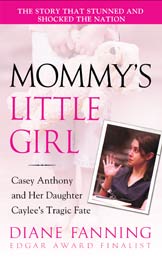
Interview with Diane Fanning, Author of Casey Anthony Book

As the jury selection in the Casey Anthony trial came to a screeching halt this week, WCI's own Diane Fanning sat down with us for a question-and-answer session. Diane authored Mommy's Little Girl, a critically acclaimed, serious look into the disappearance of 2-year-old Caylee Anthony. When court adjourned May 18 in the midst of jury selection, Diane shared her insights about the murder that grabbed the nation's attention as Caylee's mother Casey was charged with the death of her little girl.

Q: Diane, what's your take on the difficulty in seating jurors in this case?

DF: The latest is that Judge Belvin Perry suspended jury selection at lunch time on Wednesday, May 18. Many in the jury pool say she's guilty. One potential juror was released because he posted on Facebook that he was writing a book; another, because she admitted watching Nancy Grace's daily TV [case] coverage

The Casey Anthony case has received more pre-trial publicity than any case, including the O.J. Simpson trial. Surprisingly, though, Mommy's Little Girl has been the only book published on this case. This widespread publicity has made it difficult to find jurors who have not already reached a conclusion in this case. I think the judge would have had a bit easier time if he had paid attention to the media survey that showed the least media coverage in the state was in the Pensacola area. I think he made a mistake going just 100 miles away in Clearwater for the jury panel.

Q: Do you think the media attention in this case has tainted potential jurors?

 
DF: I think it has had an impact on some, but it is still possible to find people who have not been as absorbed in this case and are still capable of making a decision based on the information presented in the courtroom. Personally, if I were on Casey's defense team, I would challenge strongly for cause against any juror who has read my book.

Q: A cottage industry -- mostly T-shirts with a variety of sayings, good and bad, key chains, coffee mugs -- has exploded. Have you seen anything like this before?

DF: Certainly not to this extent. The products started coming out within a month after Caylee was reported missing by her grandmother, Cindy Anthony. Early products included voodoo dolls with Casey's face on them. Now they are everywhere. The two most common you see are ones that say "Justice for Caylee" and others with "Casey Did It." If I were Casey's parent, I would not be bothered by the former, but I would by the latter.  For some reason, though, it is the "Justice for Caylee" merchandise that has raised the Caseys' ire and legal action.

Q: Given your book, Mommy's Little Girl, and your probe, what is the most damning evidence against Casey?

DF: I do not think the jury can ignore Casey's lies or her behavior after Caylee's disappearance. She partied like a single 21-year-old without a care in the world. She never reported her child missing.  Forensically, I think the combination of the testing in the trunk of her car, the anecdotal remarks like the spontaneous utterance of Cindy Anthony ("It smells like a dead body in that car") and the response of the cadaver dogs definitely placed the blame for the death on Casey. The duct tape around Caylee's skull proves murder with malice. Casey's computer searches on ways to kill a child months before Caylee's death seal the premeditation.

Q: As Casey sits through the jury selection process each day, she fusses with her hair, flexes her hands, smiles and jokes with her team of attorneys. What do you make of her behavior?

DF: She is obsessed with herself and she is nervous. Can you imagine sitting in a courtroom looking into the faces of people who say to the court they are capable of sentencing you to death? Casey's stress must be over the top, as well it should be for any guilty person.

Q: Cindy and George lost their granddaughter, but, with the trial and a possible conviction, they face losing their only daughter, should the death penalty be handed down. Do you think that's why they're supporting Casey?

 
DF: They should not abandon their daughter no matter what she has done. But they have gone beyond that by proclaiming her innocence and even obstructing justice when you consider the hair brush incident.  Cindy intentionally gave law enforcement a hair brush that had been used by Caylee and others instead of giving them the one that was Caylee's alone. I think they have adopted the idea that they have lost a granddaughter and now do not want to lose their daughter, too.

Q: Casey refused to see her parents before the jury selection began. Why do you think that is?

 
DF: Only her mother asked for a visit and she did so on the day before Mother's Day.  I think it was heartless to deny that to any mother. But I think the reason Casey did it is because her legal team told her to do so. They knew Casey could not control her temper, could not control her mouth, and was incapable of doing anything during that visit that would not place her in a bad light.

Q: In your in-depth coverage of this case, what was your experience like when dealing with police, private investigators and contacting the family for interviews?

DF: I was knocked into a concrete wall by a member of Jose Baez's entourage. I was threatened by private investigator Dominic Casey. George and Cindy refused to speak to me. The State's Attorney Office was very helpful, and interviews with relatives outside of the immediate family and with friends and neighbors were very worthwhile.

Q: What was the family's response to your book?

A: The family has made no response to the book. I do know from someone who was close to them that they read the book, but I know nothing more. However, I am fairly certain that they did not like it at all.

Thanks, Diane!

Watch for updates about the Anthony case on Diane Fanning's blog, Writing is a Crime, as well as here on WCI.


Saturday, April 30, 2011

How A True Crime Writer Protects Herself From Scammers

by Cathy Scott

Wanna-be scammers sometimes jump out of the shadows to steal authors’ identities to pull off their dirty deeds. Case in point was my own recent encounter with a man who said he was developing the definitive biopic about Tupac Shakur.

That’s been done. Over and over. But no one’s quite hit the mark yet. So, I talked to Mr. Scam, who said he was a producer. The first red flag was his request that I do interviews for his documentary.


I’m used to being at the flip side of a reporter’s notebook, taking down interview notes and quotes. I’m also used to being on the lens side of the camera as the interviewee, especially when it comes to the Tupac story, because of my book, The Killing of Tupac Shakur, about the murder.

 What I’m not used to is being asked to do a producer’s work. They land the interviews, hire the video crew, nail down a studio and on-site locations for the interviews, and typically get on-air talent to conduct the interviews.

But scammer was eager. He didn’t stop calling. Or e-mailing. He wanted to get me immediately signed to a contract–for what, it wasn’t made clear. What did become clear was his burning desire to use my name as part of his project.

How to Spot a Scammer

Unlike other producers who have contacted me over the years, this one didn’t offer his background or even the name of his company. I learned that myself through a simple Internet search. A tap of the Google “send” button turned up a disturbing recent past. He’d been arrested and charged in a multi-million-dollar Ponzi scheme (think Madoff) bilking people and companies out of millions for investments in projects and land deals as illusory as the fabled swampland in Florida.

My scammer’s new con was the promise of a documentary that would never be made using an author’s name to lend it credibility. The author being offered the starring role in that scam was me. In the meantime, my personal predator had already been living large on the backs of others running an old-fashioned con.

FBI to Author: 'He’s Desperate – Give Him Wide Berth'

An FBI special agent, when reached about the case, said the poser was desperate. He’d lost his house and had run out of cash. He was fund-raising his own support. The fed’s advice? “Stay away. And don’t get him angry. You don’t want to be in a confrontation with this guy.”

As business women, we all have to watch for red lights, green lights, and red flags. Not everybody is good at recognizing them. I’m a skeptic at heart. I’ve been in the business of crime news too long not to be. And it’s not just little fish that get fried. Even the big kids occasionally get scammed. Witness the recent porn site ad scam that AT&T and Verizon fell for.

Here’s how to protect yourself from scammers. Recognize the red flag, do your research, and consult with law enforcement.

For Mr. Producer, I have some very public advice: Quit e-mailing, quit texting, quit calling. I know who you are and what you’re trying to pull. Don’t use my name to plan your crime.


(Reprinted with permission from ForbesWoman).


Monday, April 11, 2011

Is Sin City Mayoral Candidate Goodman More Than a 'Mouthpiece?'


Word on the street is that the campaign headquarters of Carolyn Goodman at last Tuesday's election night in Sin City was peppered with mobsters. Old-time mobsters.

"At least 10 were there," the source said.

It's not surprising, considering Carolyn's husband is Oscar Goodman, the self-proclaimed "Mouthpiece for the Mob" who, as a criminal defense attorney, represented the likes of Chicago mobster Anthony "Tony the Ant" Spilotro, once suspected of more than 20 killings, and Philadelphia mob underboss Philip Leonetti. Oscar, currently the mayor of Las Vegas whose three-term sting is expiring, has been vocal about his hopes for his wife succeeding him as mayor.

Back in June of 1999, Oscar Goodman was elected mayor of this gambling mecca. At the time, he said he was proud of his past: "I'm not ashamed of anything." During Goodman's tenure as mayor, he changed his popular "mouthpiece" moniker to "America's Happiest Mayor."
On Tuesday, his wife won 37 percent of the vote, with Chris Giunchigliani coming in second, inching closer to her husband's aspirations for her.

Whisperings, however, at the Goodmans' election-night party, according to the source, were that Carolyn might have been able to pull off an early first in the primary based on name recognition, but when it comes to winning in the run off, it might not be as simple.

That's because Giunchigliani, currently a Clark County commissioner, is known as a politician for the people who runs grassroots campaigns. The personable Carolyn Goodman, on the other hand, is new to politics other than as first lady of Las Vegas for the last 12 years. Mrs. Goodman is more recognized as the founder of a private school, known as a top college prep academy where people with money send their kids

"I am running against a name, let’s put it that way," Giunchigliani recently told The Washington Post. "But I think the public recognizes that the time for that type of leadership style has passed."

Now it's up to the voters. Chris, 57, and Carolyn, 72, will face each other again on June 7 in a run-off election. 

Photos courtesy of the candidates' campaign websites and philly.com.


Friday, March 25, 2011

Los Angeles Street Gangs: Bloods & Crips

by Women in Crime Ink


Following is an excerpt from the book The Rough Guide to True Crime, which includes a section on organized crime. Within that is an overview about the street gangs of Los Angeles.


Successive waves of migration to the West Coast have resulted in California being home to a bewildering array of street gangs, hiker gangs, Triads, and other criminal outfits.


Other lesser-known groups include Mongols MC, a motorcycle band founded in 1969 and based in the southern part of the state (although it has chapters elsewhere, including in Scandinavia). The Mongols have a record of being successfully infiltrated by federal agents, leading to arrests and convictions for violent crimes and racketeering. In October 2008, a judge granted a controversial injunction to ban the club logo, which depicts a Mongolian warrior wearing shades. Also active are the Satanas, a Filipino American street gang in Los Angeles, the United Bamboo Gang, a large Taiwanese Triad; the Mars 18, one of several gangs whose membership is largely drawn from L.A.’s El Salvadorian, Guatemalan and Honduran communities (the gang is known simply as El Criminal in El Salvador); and the Black Guerrilla Family, an African-American prison gang with a tough agenda of overthrowing the government.

Los Angeles is the metropolis of street gangs and gangland criminals. Perhaps its most notorious gangs are two African-American outfits, the Bloods and the Crips. The Crips started in the neighborhoods of West Los Angeles around 1970. The smaller neighborhood gang consolidated and joined forces under the leadership of Stanley “Tookie” Williams and Raymond Washington. Soon, other gangs started renaming themselves, incorporating the word “Crips” into their new names – gangs such as the Main Street Crips, Kitchen Crips, 5 Deuce Crips, and Rollin 20 Crips – appeared on the streets.

There are estimated to be at least 30,000 Crips. But unlike the hierarchically organized Mafia and Asian gangs, this mainly black gang is more of a loose federation. Williams wrote a memoir, Blue Rage, Black Redemption, in which he termed the Crips a “fighting alliance.”

In 1973, a Crips group was formed in Compton, in South Central L.A. It called itself the Piru Street Boys and became powerful and well organized. It has been in the nature of the loosely organized black gangs that bloody feuds develop in the absence of a regimented structure. And so it was with the Pirus, who broke off violently from the rest of the Crips, calling themselves Bloods instead. The rivalry and factionalism continues today.

One of the Crips founding members was a man called Buddha, who wore a blue bandana together with blue jeans and a blue shirt. When he was killed in 1973, gang mourners wore similar bandanas as a mark of respect and, with that gesture, the Crips adopted the gang color that identifies them today. Crips gang members wear blue articles of clothing, shoelaces, hat, hair rollers, and canvas belt. In some cities, members wear light blue. They generally write their graffiti in blue, tagging their gang names on walls to mark their territorial boundaries and to publicly taunt their enemies or rivals. They use terms like “BK” (Blood Killer) and “PK” (Piru Killer). Crips also refer to one another as “Cuzz” and use the letter “C” to replace the letter “B” in their conversations and writings (for example, “Meet me at the cusstop” or “that guy has crass calls”). Conversely, Bloods wear the color red and refer to one another as “Blood,” “Piru,” or “CK” (Crip Killer).

As for tattoos, a teardrop by an eye can indicate that its wearer is a murderer. In the past, black gang members eschewed tattoos, but that’s changed; today, members are tattooing themselves in the same manner as the traditional Hispanic gangs that sport multiple tattoos identifiable to certain gangs, helping police ID crime suspects’ affiliations.


Thursday, March 10, 2011

Remembering Notorious B.I.G. on 14th Anniversary of His Unsolved Murder


"My son's albums, to me, are a celebration of his life." Voletta Wallace, a couple of years after her son's murder on March 9, 1997, said those words in a telephone interview about the murder of Biggie Smalls. She's proud of what her son accomplished in his short life but frustrated that his murder remains unsolved.

Fourteen years after the slaying, the music of Biggie Smalls–a k a Christopher Wallace–is as big as ever. But his murder doesn't appear any closer to being solved than it was shortly after his murder following a VIBE magazine party outside the Petersen Automotive Museum, in Los Angeles, on the eve of the release of Biggie's double-disc album, ironically titled "Life After Death."

No one knows what else Biggie, a New York-based rapper who performed as The Notorious B.I.G., would have accomplished had he not been cut down that fateful March night. He was embraced by his Brooklyn community and rap fans worldwide. What we do know is that Biggie's music, after his death, topped the charts and sold millions of CDs. Like Tupac Shakur before him, Smalls is bigger in death than in life. Biggie was known for his semi-autobiographical lyrics and storytelling and his easy style of rap.

Shakur was killed in Las Vegas six months before Smalls in what some have called eerily similar drive-by shootings. Biggie and Tupac unfortunately became tragic victims of the culture of violence depicted in their lyrics.

Smalls, who died at 24 years old, had been mentoring younger rappers, including hip-hop singer Lil' Kim. On the 14th anniversary of the shooting, Lil' Kim posted her sentiments on Twitter: "On this very day a great soul was laid to rest. Now on this very day we celebrate the rebirth of a beautiful Life! R.I.P Biggie Baby."

Smalls' record producer, Sean "P Diddy" Combs, also took to the pages of Twitter to remember his friend: "Today is #BIGGIEDAY–send me all your videos, links, photos, exclusive content. ALL things BIGGIE so I can tell the world!!"

Spreading the word about her son is music to Mrs. Wallace's ears, to keep her son's legacy alive. But, while Biggie's music keeps his memory on the forefront, his mother, a single mom who worked as a pre-school teacher to support her son, holds out hope his killer (composite sketch, right) will one day be found and brought to justice. Despite the length of time without a named suspect (although a task force in L.A. has been, for several months, looking into the cold case), she keeps the faith.

"I'm not only hoping," Mrs. Wallace told me, "but I am praying that they catch the dog who killed my son. I can't wait. I know that's a trip [to Los Angeles] I'm waiting to take ... to look the murderer in the face."

Cathy Scott's book, The Murder of Biggie Smalls, is a biographical and true crime account of his life and death.