Showing posts with label Prohibition. Show all posts

Tuesday, March 23, 2010

The Strange Death of Mike the Durable

by Deborah Blum

In the winter of 1933, the empty store stayed dark all day, dusty wooden crates piled high behind the windows. But if you lived close by, you knew that the door opened at night and that behind the stacked boxes was a bare-bones little speakeasy, a sofa, four tables, a plywood bar along the back wall, a fair supply of bootlegged whiskey, and a bartender who slept it off at night on the sofa.

The speakeasy, such as it was, kept its owner out of the breadlines. Barely. Sometimes his patrons paid; sometimes they didn’t. They’d empty the ragtag of coins out of their pockets and put the rest on a tab. Sometimes they paid that tab, sometimes not. The worst was old Michael Malloy, who drifted in and out of employment – street cleaner, coffin polisher - according to whether he was able to stay upright. There were nights when the owner would have sworn that he was pouring most of his profits down Mike Malloy’s neck.

Malloy and money were the topics of discussion one night after he’d had passed out again atop the plywood bar. The speakeasy boss, Tony Marino, and several of his friends were playing an idle game of pinochle, drinking some bootlegged whiskey, all of them worrying over money and the Depression’s hard times.

If only one of them had a wealthy relative or, barring that, a sick one with a good insurance policy. The right kind of dead family member would have really come in handy right then. Too bad none of them had an expendable relative. But perhaps, Marino suggested, they could create one -- someone no one would miss, someone hardly worth keeping alive anyway.

As the story was later told, to a man, they turned to look at Mike Malloy, snoring off another bender in the backroom bar. And at the moment, in a ragtag speakeasy in the Bronx, was chosen the worst possible victim of a murder scheme, a man the newspapers would later dub “Mike the Durable.”

The saga of the almost invincible Mike, the improbably cursed murder syndicate, and the investigation that sent all four of those card players to the electric chair, is probably my favorite true crimes story from The Poisoner’s Handbook. It’s just natural Alfred Hitchcock material, with the same macabre sense of the ridiculous, a corpse that just won't go away, that pervades Hitchcock's film “The Trouble With Harry".

I’m not arguing that murder – in this case the death of a harmless and rather pathetic old man – is laugh track material. But this particular story is a dark comedy of errors. And it definitely proves that familiar saying – you couldn’t make it up – reminding us that even the most creative fiction writers can’t always top what people come up with all by themselves.

The conspirators in the Malloy scheme finalized their plans in January of 1933, clustered around a table at that no-name speakeasy. They’d persuaded their amiable victim to pose as the brother of bartender Red Murphy – in exchange for free whiskey – and taken out two insurance policies with a combined payout of $1,800.

In addition to Murphy, the others in the oddly assembled plot included Marino, a fruit vendor named Daniel Kriesberg, and Frank Pasqua, an increasingly money-strapped funeral home director. Their initial idea was simple. Prohibition was still in effect, and New York City was awash in poison alcohol, the product of shoddy home brews, government efforts to contaminate the liquor supply as an enforcement tool, and bootlegger concoctions. They would just provide Malloy with a generous allotment of bad alcohol and watch him go down.

But the old derelict thrived on bad whiskey, drank himself into a stupor every night, and returned the next day. So they decided on poisonous snacks to go with the liquor – bad oysters, rotten sardine sandwiches, sandwiches with metal shavings, sandwiches with glass. He loved those too.

A month later, they had yet another plan. They waited one night until he passed out, carried him to a park bench on a freezing February night and poured water on him. He didn’t even wake up during the soaking. But he was back next night without so much as catching a cold. Finally, the exasperated would-be killers hired a cab driver, Hershy Green, to run over Malloy in a nearby street. But a policeman found him after the accident and took him to a hospital. He was back in the bar, asking for a drink, a few weeks later.

It wasn’t until the end of February that they figured out a way to kill him, using illuminating gas, dense with poisonous carbon monoxide. Finally, they started collecting their insurance money. But unfortunately – at least for them - the story of the indestructible Malloy was too good to stay secret. It started circulating in other bars, making its way round other card games, until the Bronx police picked the rumors and began an investigation.

And the conspirators had other bad luck too. They’d paid a corrupt local doctor to sign a death certificate attributing Malloy’s death to poison alcohol and had their victim hastily buried. But the city exhumed the body. And even though this was several months after the death, forensic scientists could detect lethal levels of carbon monoxide in the old man’s tissues.

Both the cab driver and the physician made deals and testified for the prosecution. And Murphy, Marino, Kriesberg and Pasqua all went to the electric chair in the summer of 1934. A reporter for the now-vanished New York Daily Mirror recorded the execution in crisp staccato: “The kw-e-e- of the dynamo. Two thousand volts and ten amperes. The rip-saw current that tears one apart. Three shocks.” It was, he wrote, “the State’s toast to old ‘Mike the Durable’.”


Thursday, February 11, 2010

Jazz Age Science Enters Courtroom


by Deborah Blum 

The first week of December 1926 was clouded in fog. The mist lapped along the rivers, muffled the harbors, made eerie the dry creak of boats rubbing against docks in the water. 

Far too early one morning a Brooklyn police officer patrolling along the East River caught a half-glimpse of a man hurrying through the fog.  As the figure neared the edge of a wharf, the officer could see that the man walked slightly bent as he carried a heavy-looking bundle. The patrolman shouted for the man to halt but instead he hastily dropped his burden and kicked it into the river.

The officer called again as the man fled. Together with a hurriedly approaching fellow patrolman, he tackled the fugitive to the ground. But the stranger refused to answer any of their questions. They took him to the station house where, in the sudden brilliance of a lit room, the officers suddenly realized that their captive’s trouser cuffs and socks were sodden with blood. Once they’d pried out his name, they hurried to his apartment.  The kitchen was a scene from a horror movie, complete with bloody cleaver and jagged saw on the table and a woman’s body on the floor.

Half a body, actually. Everything below the waist was missing – and the police now deduced, long lost in the East River.

I’ve had a love-hate reaction to this story ever since I discovered it in the forgotten archives of New York City history. It’s terrible and it’s tragic.  It’s soaked in blood, literally. But it has a really terrific twist at the end. And even more important, it’s a classic story of chemical detective work from a time when forensic science was so new that scientists were a peculiarity in the courtroom.

I’ve been working as a science writer for most of my career, first at newspapers (won a Pulitzer in 1992 for writing about primate research) and as a book author. In the past decade, I’ve published books on the biology of sex differences, on the science of love and affection, and on whether it’s possible to prove life after death. I sound, I know, like someone with a short attention span. Mostly I just like exploring the different ways that science changes our lives, alters our history, explains who we are today.

Of course, when I first started thinking about writing a book about poison and murder it was also because I just found the subject fascinating. I grew up with my mother’s collection of early 20th  century crime fiction: Agatha Christie, Dorothy Sayers, Georgette Heyer, Leslie Ford, all of whom found poison to be the most seductive of murder weapons. I liked the idea of trying to catch some of that seductiveness in a book that would also explain the science of how poisons actually work. 

But it wasn’t until I started looking at the early history of forensics that I found a way to tell the story.  My book, "The Poisoner's Handbook," would become the tale of two forgotten scientists – medical examiner Charles Norris and toxicologist Alexander Gettler -- from early 20th century New York City who helped launch the science of forensics in the United States and also solved some of the most famous murder cases of their time.

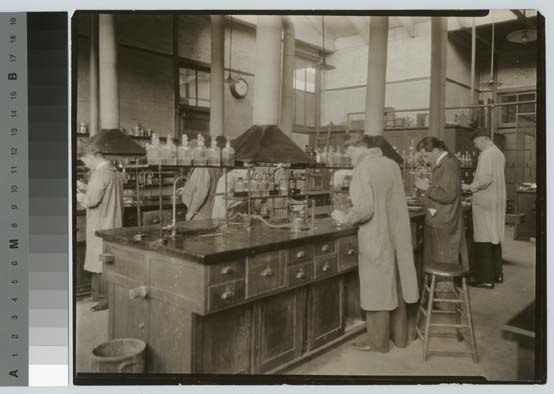
The 1920s was a treasure trove of innovative, dangerous chemistry.  There were compounds created by military innovations of the Great War, by industrial applications, research into new medicines, and the speakeasy culture born with Prohibition, with its smoky jazz clubs and dubious cocktails. Morphine went into teething medicines for infants; opium into routinely prescribed sedatives; arsenic was an ingredient in everything from pesticides to cosmetics.

Against that background, early forensic scientists literally had to invent rules of chemical detection as they went.  Alexander Gettler, for instance, wrote the fundamental paper on cyanide (still cited by the EPA), created the first tests that could prove intoxication at time of death, discovered how to detect chloroform levels in the brain of a dead person, and did some of the fundamental work on the still-dangerous gas carbon monoxide and how it kills us.  He’s still mentioned by experts as “the father of forensic toxicology in the United States.”

The twist on that dismembered body story I mentioned earlier comes from work done by both Gettler and his boss, Charles Norris. As it turns out, it’s not so much a story of death by hacksaw as death by poison. The toxic material in question turns out to be the very lethal gas, carbon monoxide.

Norris was the pathologist on duty the night Brooklyn police discovered the partial body of Anna Frederickson in the apartment of Francisco Travia. By the time Norris arrived at the scene, the police had already charged Travia, a longshoreman, with hacking the woman to death. But Norris, after looking at the body, insisted that they were wrong.

The woman’s face and what was left of her body was flushed an odd cherry red. People who bled to death, he pointed out, tended to be waxy pale. He took the half-body back to the morgue at Bellevue for autopsy and sent tissue and blood samples to Gettler.

If you know carbon monoxide, you know it’s characteristic for people poisoned by the gas to be flushed pink, even after death. Carbon monoxide crowds oxygen out of the blood stream. Its chemistry gives it a more effective grip on blood-borne proteins that normally distribute oxygen.  As the blood is saturated with the by-products of carbon monoxide, a unique chemical reaction causes to become a brighter, pinker color.

Not only does the skin of a carbon monoxide victim become strangely rosy but also internal organs are stained a deep cherry-red. This effect is so persistent that carbon monoxide saturated blood will often remain that startling crimson weeks or even months after death.

Before the Travia case, Gettler had run experiments proving that the body cannot absorb carbon monoxide after death. So when tests showed that Travia’s victim had lethal levels of carbon monoxide in her blood, it was obvious that she had to have absorbed those killing levels while still alive. In other words, she was dead of carbon monoxide poisoning before Travia cut her up.

Faced with the evidence, Travia confessed that he and the victim had been drinking (illegally, since this was during Prohibition) that night. Both had passed out and when he awoke, she was dead. Not realizing that his gas stove was leaky, he was afraid that he’d be suspected of murder. So he decided to make the body disappear, cutting it apart and putting the pieces in the river.

The police refused to accept his explanation or the new strange science of forensics. But when Travia went to trial, the jury believed his story. He was found guilty of illegally dismembering a body and sentenced to a year in prison. If convicted of murder, he would have been destined for the electric chair at Sing Sing prison. The chemical detective work of Norris and Gettler saved his life – and would go on to make forensic toxicology an essential part of solving crimes today.