Showing posts with label Criminal Profiling. Show all posts

Monday, February 18, 2013

The Murder of Cleopatra


Excerpt from The Murder of Cleopatra


by Pat Brown
Publication date: February 19, 2013 by Prometheus Books

Prologue: The Myth of Cleopatra's Death

"When the sun rose over the city of Alexandria on the morning of August 12, 30 BCE, it did not shine down on the great Alexandria of Egypt, but the new Alexandria of the Roman Empire. The air was heavy with resignation and solemn respect for the passing of the queen, and the transfer of Alexandria into the hands of the Roman general Octavian. Cleopatra had provided a dignified conclusion to the great dynasty with her brave, if surprising, exit from the world.

"The story was simple, yet awe-inspiring. Octavian had been in the palace, and Cleopatra in her tomb with her two favorite handmaidens. Somehow, a cobra had been smuggled into the mausoleum hidden in a basket of figs. A soldier delivered a letter to Octavian in which Cleopatra explained that she was about to take her life with a request that her body be buried next to her beloved husband and Roman general, Mark Antony, who had already committed suicide a few days earlier, dying in the arms of his wife.  Octavian immediately dispatched his men to the mausoleum to intervene and stop the queen from this rash course of action. However, by the time the soldiers arrived, Cleopatra was dead. Word was sent back to Octavian, “We were too late.”

Unwilling to believe Cleopatra was truly dead, Octavian hurried to the mausoleum. He was stunned and angered by the sight of the motionless queen. This determined woman who had refused to yield at any time in her life, this enchantress who lured married Roman men into unfaithfulness and turned them against their countries, this queen who had refused to recognize his superiority in life, preferred death over submission to his sovereignty. He would now be unable to bring her back to Rome in shackles and parade her though the streets in his grand triumph—his final coup de grace. Queen Cleopatra, the greatest prize in the entire world, had slipped out of his grasp.

"Hoping she was perhaps in a coma, the sleep that mimics death, Octavian desperately sent for the physician and for specialists in snake venom who might still find a way to save her. But the snake venom experts had no remedies and the doctor pronounced her dead. All of this was witnessed by the soldiers, and after they left, Octavian met with his advisors.

"The story of Cleopatra’s death did not take long to spread beyond the compound and soon the city was in mourning. Later that week, a wealthy friend of Cleopatra's came to Octavian and gave him a large sum of money to maintain statues of the queen. Wishing to prove he was a moral leader who respected the sentiments of his new subjects, Octavian agreed.

"This is the account of Cleopatra’s death, a tale that has been dutifully retold for two thousand years. But the real story of how Octavian got away with the most perfect crime in history, the murder of Cleopatra, has never been uncovered until now."
 
In 2004, I hosted the Discovery Channel documentary, The Mysterious Death of Cleopatra, and debunked the “death by snake theory.” I also stated that I believed Cleopatra was murdered. But I wasn't able to go into my reasoning on the show that was just an hour long. I decided only a book would allow me to present my research and an in-depth analysis, to present a solid profile of history and to reconstruct the events of Cleopatra's life and death.

During the work on the documentary and throughout the next eight years, I spent time in Egypt, Rome, and England working with Egyptologists, poison experts, archeologists, and historians of the ancient world and I began to piece together another, more credible story behind the death of Cleopatra.
• I believed Cleopatra was tortured.
• I believed Cleopatra was strangled.
• I believed Anthony was murdered.
• I believed Cleopatra did not hide in her tomb with her treasure.
• I believed Cleopatra did not bargain with Octavian.
• I believed Cleopatra planned a brilliant military maneuver at Alexandria, her Actium Two, which this time would not have been an escape strategy from a failed naval battle, but a faux naval battle to permit a successful escape from a dire military position that offered little hope of survival.
• I believed Cleopatra never loved Antony.
• I believed Cleopatra never loved Julius Caesar.
• I believed Cleopatra did not have Caesar’s son.
• I believed Cleopatra may have been one of the most brilliant, cold-blooded, iron-willed rulers in history and the truth about what really happened was hidden behind a veil of propaganda and lies set in motion by her murderer, Octavian, and the agenda of the Roman Empire.

And now The Murder of Cleopatra brings this new view of history to you with my full analysis of the world's greatest cold case.           
           
The Murder of Cleopatra is in stores February 19 and available for order now at AmazonAmazon Canada) and Barnes & Noble. Kindle  format is also available in the US and UK and Canada.


Monday, May 17, 2010

Profile of 'The Profiler'

by Cathy Scott

The Profiler: My Life Hunting Serial Killers and Psychopaths, by criminal profiler and WCI contributor Pat Brown, with co-author Bob Andelman, hits book shelves tomorrow (May 18).

Waiting for police to act on the 1990 murder of Anne Kelley, Pat Brown couldn't understand what was taking so long to bring the case to a close. Brown had long suspected a possible connection to the odd man who'd briefly rented a room in her home. At the time unfamiliar with the criminal investigative process, Brown believed the Kelley case was unusual. But as she began exploring unsolved murders in her area, she soon realized the case, unfortunately, was not all that rare.

For example, in Washington, D.C. alone, Brown learned  that the murders of more than 120 women remained unsolved. "Who killed Nia Owens, Dana Chisholm, and Ann Bourghesani?" Brown asks in her latest book, The Profiler.

Who, indeed?

Brown vowed to do something. It was a move that would define her ensuing career as a criminal profiler. "Dead women were turning up everywhere," she writes in The Profiler. "It's like when you're pregnant and suddenly you notice how many other women are pregnant." It was a seminal moment. While she might not have been able to bring the Kelley case to an immediate close, she could help investigators and families figure out who might have killed other women, plus help determine if any of those cases were related, suggesting a serial killer might be on the loose.

She printed photos of 15 murder victims -- all women -- from across the country. She laminated the photos and placed each above the word "unsolved," written in large letters. Next, she hung the photos in a booth she rented at an outdoor festival. Festival-goers were stunned at the display. They'd assumed cases they'd read about in newspapers and seen on TV news reports had been solved. "They never caught that killer either," one person commented, pointing to the photo of a woman in the display.

Eventually, Brown launched a nonprofit group and web site. She took every training course available and read some 400 books on the subject and subtopics. Then she began profiling criminals. When the D.C. sniper in 2002 shot at people and their vehicles, the news media found Brown through her site. The attention catapulted her into the public eye and onto the airwaves, and one mystery case led to another. Today, she travels across the country consulting, criminal profiling and commenting on cases.

The Profiler is the result of that work, looking at individual cases, the evidence and circumstances surrounding them, any similarities to other cases, as well as peculiarities of certain murders. With this book, which Brown calls purposeful, she not only wants to pass on what she's learned and details of the cases she's worked on; she's hoping to see national changes in use of profilers. Her concept would have police departments use criminal profilers as standard tools, either inside the departments or outside, for the homicides they investigate.

In addition, she wants to to see profilers involved early on in a homicide investigation, within the first 48 hours. "What I've learned over a decade and a half of profiling cases is that you cannot bring a criminal profiler in late in the game. The evidence is long gone.

"We have far too many unsolved crimes, we have too little justice, and we have too many killers on the streets repeating those crimes," says Brown, who also received a master's degree in criminal justice from Boston University in 2007. Her aim is for "criminal profilers to be trained, including police investigators. There are thousands and thousands of unsolved homicides across the country."

But with law enforcement funding tight, Brown is realistic and understands fulfillment of her goal will take time. Eventually, she believes, it will happen. "In the long run," Brown says, "It could help save a lot of lives."

The Profiler is available wherever books are sold. Or order it on Amazon.com


Monday, April 19, 2010

We are All Criminal Profilers of Sorts

by Pat Brown

There is a lot of misunderstanding about what a profiler is and isn't, even within the profiling community. Hollywood hasn't helped much, with shows like Profiler!, CSI and Criminal Minds. The shows may be entertaining, but they distort the profession and process of profiling, turning criminal profilers into glamorous detectives who are a cross between psychics and Freudian psychologists. The methods used to catch the killer are exciting and usually contain some incredibly clever piece of forensic evidence.

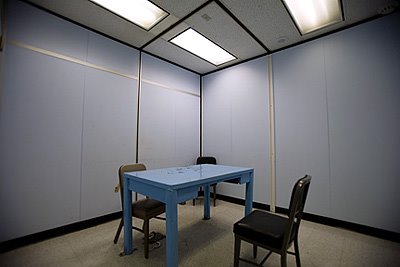
In reality, life for criminal profilers and the cases we work rarely involve dangerous confrontations, chases, and slick labs. We sit in our offices or, if we go to a police department to work, we are put into an interrogation rooms consisting of a table and a couple of chairs. We don't even get nice windows to look out.

If I am on location, I usually stay one week, arrive at eight or nine each morning and leave at five or six in the evening. I come out of my box for bathroom breaks and lunch. I go out to the crime scenes to observe the areas; sometimes I do interviews; occasionally I will do some kind of experiment.

On my last case, I drove my rental car at excessive speed from the crime scene to a convenience store on a curvy country road, timing how long it took me. I had to do the run a dozen times, waiting in the parking lot of the building where a mass murder went down, revving my engine and waiting for a moment when traffic lightened up, when the last car passing left my view and the next car was a good gap behind. Then just before that car reached me, I floored it, sped onto the road and hauled ass toward the convenience store. If someone pulled out in front of me and slowed me down too much, the experiment failed, and I had to do it again. Finally, I got the three fastest times I could manage and drove back to the station.

I was relieved when the detective told me there were no speed cameras on the road, so I wasn't going to have to beg him to "take care of " a thousand dollars worth of fines on behalf of my investigative work. I learned from my experiment that one of my suspects could be cleared; he couldn't have driven from Point A to Point B from the time the crime went down to the time his vehicle passed the camera at the convenience store.

When the week ends, I return to home base and spend hours in my office reviewing the information and analyzing the evidence until I am satisfied. Sometimes I role-play to act out part of the crime so I can see if it could really happen that way. Sometimes I consult with experts to get a more seasoned explanation of forensics or culture or some technical issue I am not that familiar with. When I have a profile that is accurate and clearly explains my determinations and investigative findings, then I am done -- unless some new evidence or information comes to light that changes my conclusions.

There are two methods of profiling: inductive and deductive. The inductive method, which became an FBI methodology, relies on statistical research to determine the likelihood of a certain type of offender or a certain trait to be linked to a crime. The old adage that all serial killers are Caucasian came from this kind of profiling. Research, which included interviews of incarcerated serial killers, concluded that most of these kinds of criminals were white; therefore a crime committed by a serial killer pointed to a white offender. The DC Sniper case caught a lot of inductive profilers off guard. They'd profiled the offenders as white, but they turned out to be African-American. FBI profiles tend to be lists of offender traits developed more from generalizations about percentages of similar crimes rather than a thorough analysis of the individual crime.

Deductive profilers analyze the forensic evidence and the behavioral evidence at the scene and draw conclusions specific to the particular crime. Each element of the profile must be supported by that particular crime and not be drawn from general theories. Of course, deductive profilers have studied the research and understand how this knowledge can apply to the case, but they still have to keep in mind not every case will fit, and there will be anomalies. They must depend on the evidence to prove the point.


The murder of Sandra Cantu was one of these cases where inductive profiling would lead to the conclusion that a man committed this sex crime. However, Sandra's killer was a female, a church woman. The evidence actually didn't prove whether the killer was male or female; there was penetration but no semen, so all one could say, deductively, was that someone sexually assaulted the child with a solid object of some sort. On television, most of us commentating tossed out inductive theories as we had no access to the evidence. We said the police were likely looking for a male sex offender in the community. Inductive profiling alone will get you in trouble!

The processes of inductive profiling and deductive profiling are somethings all of us do in daily life. We inductively gather information about people and behaviors, and when we are confronted with a new situation and don't have time to think, we apply these generalizations and hope they are right. With more time and evidence, we are able to analyze more thoroughly, and we become deductive profilers.

Juries end up in a terrible situation because they must become profilers overnight. They don't have time to do research to increase their general knowledge of criminals and their crimes; they don't have time to study forensics, psychology, and crime scene reconstruction in order apply good deductive skills to the case; and they have lawyers from both sides, along with prosecution and defense experts, confusing them and sometimes lying to them about the evidence and its meaning.

After going through this crash course in profiling, taught by questionable practitioners, they must render a verdict and decide the course of a human life. And people wonder why I am a proponent of professional juries!

If you want to learn more about profiling crimes and give it a whirl yourself, tune into my new Blog Talk Radio show, Profile This! every Sunday evening at 9 PM EST.


Tuesday, August 18, 2009

Criminal Profiling Basics

by Andrea Campbell

In John Douglas’s book, Mindhunter, he describes how he and others on an FBI team compiled the 1992 Crime Classification Manual, one of the most valuable tools used by profilers today. Douglas tells us about the operative style, which involves interviewing convicted murderers and rapists across the country. The task at hand: 1) study the crime, 2) talk to experts, 3) talk to perpetrators, 4) interpret those clues and 5) draw conclusions from patterns.

Douglas says the first step in profiling is advance preparation: checking police files, studying crime-scene photos, discerning autopsy protocols, reading trial transcripts, and looking for clues to motive or personality.

One of the first hurdles FBI agents faced in prison interviews was cutting through self-serving or self-amusing games convicts played. Douglas found he had to portray a persona, to sell the subjects his ideas to keep them interested so they would go along. He also says that contrary to popular belief, “just because someone acts like a maniac, doesn’t mean he doesn’t know exactly what he’s doing.”

Part of the interview process replicated that used by any good reporter: the who (who are the victimizers, who are the victims?), what, where, when, how and why of any story. Key here, along with drawing out the narrative, was observing interviewees’ behavior, including body language, and being able to pounce first. Sexual killers, for example, become skilled in domination, manipulation and control. Some can be quite charming, according to those who met with Ted Bundy. Some were so convincing, Douglas hesitantly admits, that after many interviews, agents went back, checked the killer’s record, and even contacted police in the jurisdiction where the crime occurred, to ensure they had locked up the right guy!

Some of the things FBI researchers found in the course of their conversations: victimizers often had relationship problems with women, and they often dealt with other stressors, such as financial problems or debt. Some had abilities above their job level, some drank heavily, some felt helpless in the face of life's frustrations. Many had a terrible childhood or upbringing. Often agents found killers had taken photos or other souvenirs from their victims. Some visited their victim’s grave site or even rolled in the dirt to relive the pleasure of killing. In the end though, Douglas concludes that serial killers and rapists are hardest to catch of all violent criminals because their motivations are more complex. The patterns are more confusing, since they feel no compassion, guilt or remorse.

Profiling Basics

The premise that all profilers operate under is this: To know the offender, look at the crime. Or, as Douglas says, “If you want to understand the artist, look at his work.” The trick is that there is no trick. Simply put, the criminologist is collecting a bunch of disparate and seemingly unrelated clues and turning it into a convincing narrative. But there is more to it.

In addition to evaluating a wide range of evidence and data, they must walk in the shoes of both offender and victim. They recreate crime scenes in their minds; learn as much as possible about the victims to imagine their horror -- to put themselves in the victims' place and feel the emotions they experienced as they screamed with no hope for help. The other watchwords for the process include: Behavior reflects personality.

First off, the offender is an unknown subject, hereafter referred to as UNSUB. As part of the basic background the criminologist needs to know:

  • What’s in the medical examiner's report, such as the nature and type of wound or wounds, cause of death, whether there was sexual assault, and if so, what kind?

• What was in the preliminary police report?

• What did the first officer see? Was the scene altered? Were there any changes (i.e., dignity moves like covering the face)?

• What do crime-scene photos and schematic drawings (where all directions and footprints are noted) show?

• Time of day, condition of location, signs of a fight, documents, letters, etc.; telephone calls made, position of the victim, check of closets, furniture, blood spatter, collecting of physical, trace, or impressions evidence.

• Anything taken? Even subtle objects like a lock of hair, a barrette, etc. need to be anticipated. (And so as not to be influenced on first pass-through, profilers always request that police notes should be on the back of photos.)

The “victim profile” is prepared. Some questions to be answered are: High- or low-risk victim? What did she say or do? Did she fight back? Why was she selected over all other potential victims? How? Who? In actuality, the victim profile can be every bit as extensive as the killer’s.

Methodology Means more Questions

Criminal (and victim) profiling is knowing about race, personality, job, home life, car, hobbies, familiarity with the area, relationship to police. Was the criminal organized or disorganized? Is there a violent crime in the past? Is the criminal on parole? Are there known stressor factors, such as a commemorative date? Is there any evidence of posing or staging? So many questions, so little time.

As Dr. Park Dietz says, “. . . none of the serial killers . . . has been legally insane, but none has been normal either. They’ve all been people who’ve got mental disorders. But despite their mental disorders, which have to do with their sexual interests and their character, they’ve been people who knew what they were doing, knew what they were doing was wrong, but chose to do it anyway.”

Definitions of some terms involved in criminal profiling:

psychotic — being legally insane, out of touch with reality. (“. . . voices made me do it.”)

psychopath or sociopath — knows right from wrong and consciously chose to do wrong. Lacks conscience or remorse.

necrophilia — sexual stimulation from seeing, touching corpse.

necrostuprum — theft of corpse for sexual pleasure.

lust murder — sexual compulsion to kill.

psychometric tests — administered by a forensic psychologist, they involve motives, background, family life.

modus operandi — What the perpetrator does to commit the crime. It is learned behavior, and it can change.

signature — What the perpetrator has to do to fulfill himself; it doesn't change.

staging — Offender tries to throw off investigators by making them believe a different crime occurred. I.e.: A rapist tries to make his intrusion look like a burglary.

posing — The signature; leaving the victim in a certain posture

serial offender — Doesn't stop till caught or killed. Learns by experience, tends to get better. Virtually all are male.

anthropophagy — Sexual gratification achieved through cannibalism

gerontophilia — Sexual obsession in which elderly victims are raped and murdered.

pedophilia — Having sex with children

Myths or common beliefs:

• Serial killers want to be caught. Not really. They're demonstrating their power over society by coming close to getting caught, and then showing their smarts by evading capture. They keenly desire infamy, but they would rather their fame be anonymous.

• Crime is all about people who know each other. Not any more, although family associations are statistically still the most violent.

• Witches, werewolves and vampire stories may be about actual murderers. True.

• Compulsion to kill: When circumstances didn't favor the success of their crime, perpetrators refrained from committing it. They were not compelled to act.

Bibliography: • Douglas, John and Mark Olshaker. Mindhunter: Inside the FBI’s Elite Serial Crime Unit. New York: Scribner, 1995. • Feldman, Philip M. Criminal Behavior: A Psychological Analysis. New York: John Wiley & Sons, 1978. • Kelly, Delos. Criminal Behavior: Text and Readings in Criminology. New York: St. Martin’s Press, 1990. • Mactire, Sean. Malicious Intent: A Writer’s Guide to How Murderers, Robbers, Rapists and Other Criminals Think. Cincinnati, Ohio: Writer’s Digest Books, 1995. • Roth, Martin. The Writer’s Complete Crime Reference Book. Cincinnati, Ohio: Writer’s Digest Books, 1990. • Territo, Leonard and Max. L. Bromley and James B. Halsted. Crime and Justice in America: A Human Perspective, St. Paul, Minnesota: West Publishing Company, 1995. • Wingate, Anne, PhD. Scene of the Crime: A Writer’s Guide to Crime-Scene Investigations. Cincinnati, Ohio: Writer’s Digest Books, 1992.


Saturday, April 11, 2009

Criminal Profilers Don't Profile on TV

by Pat Brown

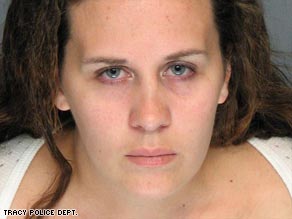
The Sandra Cantu case took a bizarre twist today with the arrest of a female suspect. A 26-year-old Sunday school teacher, Melissa Huckaby, (pictured left) has been charged with kidnapping and murder. I am more than glad there has been arrest in this case and that there will be some justice for the family of Sandra.

But, as I was reading comments posted about this morning's news story, I noticed quite a few haranguing criminal profilers and police experts who had appeared on television for theorizing the crime was committed by a male sex offender (A similar bashing occurred after some television talking heads (not me) said they thought that an angry white man was responsible for the string of shootings eventually linked to John Muhammad and Lee Malvo) This time, the posters are claiming the experts are sexist; always blaming men for violent crime and they also accuse profilers as profiling the crime incorrectly. Criminal profiling is said to be bunk, and talking heads are brainless morons.

Let me address the issue of being sexist first. Sorry, guys, but most violent offenders are men, and that is a fact. Yes, women do commit crime, and women do kill, but the majority of violent criminals are men. It is just biology-- get over it.

Now, to profiling the Cantu case wrongly.. No one on television profiled the Sandra Cantu case. Experts were asked questions about what they thought might be possible, based on publicly released information (and often this is misinformation). The experts responded with a 30-second answer--on a good day, maybe a whole minute. They addressed some probability based on what they heard five seconds ago from a reporter's update on the story. A good portion of the time, a talking head is unable to provide in-depth commentary, and so the viewing public only gets a quickly tossed out idea; a thought which can stir interest in the topic and add to the discussion, but can hardly be considered a scientifically derived, carefully analyzed explanation of the events.

The Sandra Cantu case is a perfect example of this. I did a lot of interviews this week for CNN. Not one time during the last seven days did I ever give a profile of the child's murder or a profile of the killer. How's that, you say? Didn't I hear you give an answer when the host asked you to profile the homicide or the offender? Yes, I gave an answer, but it wasn't a profile. It was commentary. A profile is something one spends hours working on, sometimes weeks, sometimes months. A profile require access to all the case files, all the crime scene and autopsy photos, all interviews and reports. One doesn't profile a case and hand over to law enforcement an analysis that isn't based on evidence and scientific methodology (well, one shouldn't anyway). The final criminal profile should have each inference explained carefully and supported by the facts. Investigative avenues are then suggested based on the conclusions the profiler has arrived at. The profile should never infer that investigators not pursue all leads-- even those not aligning with the profile. Any profiler's theory, like any detective's theory, can turn out to be wrong (which is why it is called a theory) because certain evidence was unavailable, a piece of evidence was tampered with, or because there could be two explanations for the same evidence. The profile is to be an aid, a tool, and not an absolute.

One cannot profile on television because one has such limited information, and a good portion of it often turns out to be untrue. Even when one is profiling a case for law enforcement, a new piece of information can completely change the theory of what occurred. So you can imagine how difficult it is on television to be one hundred percent correct with one's conclusions.

Here is what I said about the Sandra Cantu case:

The killer lived in the trailer park. I based this conclusion on the abduction, the body dump site, and the suitcase. Sandra was unlikely to have left the park on her own, so her killer had reason to be there. The body was dumped just down the road, meaning the panicked killer wanted to get rid of her body quickly, but didn't want to go to take too long to do it. The killer also wanted to be comfortable dumping the body in a familiar area. The killer did not abduct Sandra using his car because if she had been killed in the car or at some outside location, the killer wouldn't have needed a suitcase to transport her; he would have just opened the door and pushed her out.

The accused killer of Sandra did live in the park. Melissa Huckaby was living in a trailer with her grandparents, the pastor of a local church and his wife. Her daughter also lived in the trailer home and often played with Sandra. Sandra was not pulled into any car, but visited the Huckaby home. Melissa Huckaby was the last person to see her and told the police that Sandra had stopped by to ask to play with her daughter, but she had told Sandra her daughter had some chores to do and she couldn't play right then.

Next, I said the killer likely killed Sandra within an hour of her going missing. I based my statement on two points. The first one is a general truism: when a child is abducted by a sexual predator they are almost always killed within an hour or two and sometimes within minutes. The assumption by almost everyone at that point in the news cycle was that Sandra had been abducted by a child predator because almost all little girls who go missing are killed by serial killers. The other reason I believed Sandra was dead within a short period of time was because she was fully clothed. I surmised the killer might have lost control of Sandra for some reason and tried to subdued her or lost control of his emotions and was too rough with Sandra. Sandra might have been killed without a sexual assault ever happening.

I felt the offender was not all that experienced and did not plan the crime. The offender was sloppy and careless and it seemed like the dumping of the body was out of panic and not particularly well thought out. It seems Ms. Huckaby possibly went off on Sandra for some unknown reason at her home, killed her, and then hurriedly got rid of her body.

The last answer I gave on Friday night was concerning the suitcase Huckaby claims she had left outside in the driveway and which was stolen. During the interview I was led to believe that a report had been made to the police concerning the suitcase theft on the day Sandra went missing. This bit of misinformation prevented me from considering Huckaby as a suspect. If Huckaby had used the suitcase to dump Sandra's body, she would NOT have reported it missing to the police. She did not expect the suitcase to be found, and she would not want to draw attention to her home. Until she thought the suitcase could be linked to her, she had no need to mention it.

So, based on the "fact" the suitcase had been reported missing and was the suitcase Sandra was found in, I surmised three things. One, Sandra definitely was dead quickly on the day she went missing (because someone needed a suitcase THAT day); two, the killer did not plan the crime; and three, the killer was inexperienced and not all that bright. I said something to this effect on CNN Headlines: "He probably grabbed her, something went wrong, he killed her, and now he had a body in his house and no way to get it out without being seen. He remembers seeing a suitcase out by the Huckaby house and thinks, yeah, okay, I will grab that (and psychopaths often do things impulsively because they see something or think something will be useful to them or because they find stealing not a big deal). So he jumps in his car, snatches the suitcase, comes back, puts Sandra's body in it, and zips out of the park to get rid of her body.

Well, that probably would have been the scenario IF the story about the suitcase theft being reported had been true. The next morning, I learned that Huckaby had been arrested, and that she had not reported the suitcase missing, or even mentioned it, until after the suitcase was found and the police were ripping apart the Huckaby home. THEN she realized (if she is guilty of this crime) that she needed a good story as to why Sandra's body ended up in her suitcase, so she came up the suitcase theft story. Huckaby also gave a number of stories with conflicting information in police interviews, which no doubt made them focus on Huckaby as Sandra's killer.

So this crime turns out allegedly not to have been committed by a male nor a sex crime (that we know of). The case is an anomaly, much like the Elizabeth Smart kidnapping in Utah in 2002. The Smart case created a monster: families of missing children now believe their children will be found alive because Elizabeth Smart was. Proof that a child can be found alive after such a long time has created a huge amount of false hope and expenditure. And after she was found, television got raked over the coals for believing she was dead. An anomoly like Elizabeth may be wonderful for that particular victim and family and an anomly like the Sandra Cantu case may be fascinating and eyeopening, but we shouldn't base our law enforcement and criminal justice decisions on the extremely rare cases rather than the overwhelming number of cases to the contrary. Television commentators, while they realize anomolies exist, cannot add a disclaimer on each and every statement they make on air (considering the fact they already have such a short window of time to speak). Even a profiler doing true criminal profiling of cases using specific individual case evidence (and not just general statistics), will encounter the occasional case where all the evidence points to a male and not a female, or to a husband instead of a stranger, or to one race and not the other. And because of these anomolies, we have a court system that requires us to prove through evidence that the suspect is absolutely guilty. Even then, sometimes the anomolies slip through.

If Huckaby is convicted, Sandra Cantu will be the poster child for children getting kidnapped and murdered by women. Even if she is only one out of a thousand cases, every time a child is abducted in the future, we are going to be reminded it could be a woman "just as much" as it could be a man. No, this is not true; in almost every case in the future where a child is abducted by a unrelated adult, it will be a male. Sorry, guys. Women may drown their own children in bathtubs, dump them into ponds to run off with their boyfriends, smother baby after baby following their births, kill their patients at the hospital, and steal little babies just because they want one, but abducting little girls is just not something that is a popular female crime.

Finally, I repeat, profiling doesn't happen on television. Experts are just speculating based on the limited information thrown out, and commenting in the minuscule amount of time allotted. Comments are "for entertainment only" and are meant to educate and inspire the individual to want to learn more. Television is a sound bite world, and one should expect to get sound bite quality of information.

So why do I do television if I cannot really profile there and sometimes have to end up feeling like an idiot (and getting emails calling me such)? Because television, in spite of its flaws, is a great way to reach out to citizens. It is a wonderful tool for encouraging discussion about crime, sex offenders, safety, parenting, and, even though it is a bit risky, a way to show how criminals operate and cases are analyzed.

The Tracy PD did a fabulous job with this investigation. They got their man (oops...woman). They likely thought it was a male sex offender themselves in the beginning, but they focused on the evidence and when it led them to a different theory and a female suspect, they didn't ignore the facts. They changed their theory when new evidence came to light. They should be commended for their fine work.

Meanwhile, enjoy television for what it is: news and entertainment with a bit of education thrown in. But do not, I repeat, do not think you are being provided with true investigative and profiling analysis. Also, when you see me do my next television interview on the Sandra Cantu case, you will see me try to answer why I didn't "profile" the case correctly, and why I didn't consider the killer could be a female. I will try to explain it...in 30 seconds.


Monday, January 5, 2009

I Want to See Good in 2009

by Pat Brown

It is the start of a new year and this is my first post for Women in Crime Ink in 2009. I began pondering about what to write, and my head began to hurt. Did I want to think about the horrible Christmas Eve massacre enacted by Bruce Pardo (pictured on the right) who took out nine beautiful people ? Or would I prefer to just think about the guy on the left and all of the beauty he brings into people's lives through his movies?

Yes, I know I am a criminal profiler, and these stories are part and parcel of my work. I should want to write about them today, but I just don't. Maybe it is the glass of Chianti I just consumed that is making me feel ambivelent. Maybe I just need a break from mayhem. Maybe I just want, for once, to start the new year with some optimistic thoughts, a bit of happiness, something that makes my heart sing. And, I have ultimately decided, I am going to do just that! So, readers of true crime, I am here today to introduce you to the sweetest movie of the year, a family picture you can take your grandmother to see (if she can read the subtitles) that helps us remember that, in this world, there are men, yes, men, who would lay down their lives for their women rather than stab them to death because they became inconvenient.

The movie is
Rab Ne Bani di Jodi, a Bollywood megahit from India. A middle-aged man who is no less than a bespectacled nerd, shy, and not much of a ladies man (well, he admits to his new wife he has never so much as even been on a date) ends up marrying the beautiful young Taani after her fiance dies on their wedding day in a bus crash. Surinder (Suri for short) is the stand-in, the man her dying father requests she marry so that he knows she is safe in the world without him. She agrees to her father's wish, and Suri becomes her husband. However, Taani is grieving and unhappy so Suri sleeps in the attic to allow her time to recover. He does not force himself on her. He then tries everything in his power to make her happy again and, at the climax of the movie, is even willing to leave her his home (the one he had before he married) and go quietly out of her life if she cannot be happy with him.

Suri is a regular man with a heart of gold who see's "his God in his wife," and therefore loves her, and worships her. What a fine concept for marriage!

Is that not inspiring? And what of Veer-Zaara? In this Hindi movie, Veer, a Hindu man, tells the Muslim girl he has fallen in love with (and who is about to return to Pakistan to marry the man her father has chosen for her, a political match, a cold, controlling sort of man) that Zaara should always remember that "across the border is a man who would die for her." Eventually, he rushes to save her and spends seventeen years in jail protecting her name. What a guy! I want one of him!

And, finally, the longest running Indian movie of all time, Dilwale Dulhaniya Le Jayenge Dilwane (known as DDLJ) which just reached its 650th week showing in Mumbai! Now THAT's a run! Two Brits born of Indian parents, Raj falls in love with Simran on a Swiss holiday but she is going to go to India to get married. Raj follows her there and attempts to win the family's heart. He dearly loves Simran and he hopes her father will see his great love for his daughter and consent to their marriage. He is a good young man who would not break the hearts of the family by eloping with the daughter. What morals!

Okay, so this is all fairy tale and make-believe, or is it? Shahrukh Khan, the star these three movies and dozens more, King Khan as he is called in Bollywood, the most famous movie star in the world (except we have no clue who he is in the United States) inspires us not only with his acting but his own life. He is a married man, a Muslim married to a Hindu woman, raising their two children with respect for both religions. He doesn't do sex scenes in his movies nor does he ever kiss a co-star. There are no rumors of adulterous affairs because, after all, as Shahrukh asks, "Why can't I be in love with the girl I'm married to?" I am sure his wife, Gauri, appreciates the sentiment because there is no shortage of fangirls and fanwomen the world over who would give anything for a date with the King of Bollywood.

While wars rage aound us and men kill their wives and mothers kill their children, there are still pockets of beauty that exist in men, in women, and in the imaginations of us all. If we as a human race can understand the sentiment of Raj ne Bani di Jodi, then perhaps we are not doomed. Perhaps if we all are able to see God in others, then 2009 will be a better year.

Happy New Year to all of you at Women in Crime Ink, contributors and readers. May you all have a Suri, a Veer or a Raj in your life this year and let's encourage the next generation to become like them.


And, for a little more sweetness, the music video from RNBDJ or for Shahrukh at his most romantic, a music video from Veer-Zaara or for Shahrukh showing undying love, check out this one from KKKG. Oh, and for very sexy Shahrukh, check out this one from Om Shanti Om.

Enjoy! Happy New Year!


Thursday, June 12, 2008

Critical Thinking in Investigation

by Donna Weaver

I heard a great line on an old Charlie Chan movie last night: "The mind is like a parachute--it is only useful when open."

We all carry around our own preconceived ideas and opinions on issues of small and large importance whether we consciously realize its or not. We are continuously bombarded with information from newspapers, radio, television, and personal contact designed to influence our opinion. Critical thinking can help us evaluate material from all these sources:

What is the statement or claim, and who is making it?

Before you accept information as fact, determine if the person has something to gain. Then ask yourself if your own assumptions or preconceptions have created bias or influence how you view the speaker's statements or ideas. Great credibility is awarded to public figures and persons in positions of authority, and while we can learn from them on subjects within their field of expertise, their statements or claims should not prevent you from asking good questions of your own.

Are there other plausible explanations for the statement or claim (or event)?

It is possible to have two or more explanations that explain an event or claim. The Law of Parsimony says we should accept the simpler explanation that requires the least number of assumptions.

When events or behaviors appear to be correlated, it does not prove that one event or behavior caused the other. Further investigation is required to discover if they are related because of a third event or behavior.

For an objective evaluation of facts and evidence, bias must be identified and removed and scientific inquiry applied to produce reliable results and appropriate conclusions.

Scientific principles are the foundation of all scientific inquiry. Modern forensic and other biological sciences are supported by three thoroughly tested and validated principles.
  • Natural casualty-all events can be traced to natural causes within our ability to understand.
  • Uniformity in space and time--natural laws do not change with time or distance .
  • Common perception--people view natural events in a similar manner. Common perception applies only to scientific study because it is limited to objective observations that produce reliable information. Common perception does not apply to subjective value systems that vary among individuals such as religious, moral, or cultural beliefs and personal views, or opinion.

Yes, Deductive Criminal Profiling and Behavior Analysis is a scientific endeavor because it uses the scientific method to draw conclusions based on known facts borne of objective observations, considered thought, accurate communication, skill, and experience. A criminal profile is derived from crime scene analysis, including physical evidence and Victimology, critical thinking, analytical logic, evidence dynamics, and other scientific principles used in forensics.

The scientific method is applied to these elements producing logical deductions that lead to well-reasoned conclusions about offender characteristics and behavior. Each offender characteristic is based on the premise that if the underlying facts and evidence are proven to be true, then so must be the logical conclusions arrived at by studying them. Imagine the effect bias, no matter how small, can have on making observations when evaluating evidence and other investigative tasks.

Those in law enforcement and related fields as well as those in other professions who work closely with the general public on an individual basis are taught to maintain an emotional distance from the people they interact with in order to be objective, thorough and accurate in the performance of their duty. Since these types of professionals often meet individuals experiencing trauma, or some other extremely personal or stressful event, great importance is placed on leaving ones emotions at the door.

Sorry, but lack of emotion does not equal objectivity-- nor does it always increase productivity . In the last 24 years, I have met many investigators who were the “no emotion” type. I can’t think of one who was not a total jerk with the personality of a wet dishrag, often with poor interview skills. Getting people to open up and trust you can be critical in successful investigations.

Conversely, an effective criminal profiler or investigator must possess a range of valuable professional characteristics including an enduring passion for examining facts, seeking answers, and resolving cases combined with the unwavering self-discipline to put aside personal opinions, pride, and career ambition.

Taking pride in one's work or wanting a successful career is not a bad thing. The emotions of passion and empathy provide a powerful motivation to to deliver a dedicated effort. On the other hand, arrogance and overweening ambition are often common sources of bias that need to be identified and analyzed to limit their influence on deductions and conclusions.

It is entirely possible to perform objective analysis and evaluation of crime scenes, victims, witnesses, and evidence without being an emotionless robot if one remains vigilant through the use of critical thinking techniques and scientific method.