Showing posts with label Ted Binion. Show all posts

Monday, October 4, 2010

Burke and Hare: Victorian Serial Killers

by Cathy Scott

Dr. Michael Baden, a forensic pathologist and expert witness, introduced the Victorian term “burking” to jurors in a 21st century case. It happened during the trial of two people charged with the murder of casino magnate Ted Binion. The prosecution's theory of the murder included burking, a term derived from the slaying style that two 19th century murderers used in Scotland. William Burke and William Hare killed by putting pressure on their victims' chests while covering the mouths and noses. Burke and Hare, two Irish laborers who originally went to Edinburgh to work on the Union Canal, ultimately became known as murderers and body snatchers.

In the Ted Binion case, Dr. Baden claimed that not only did Binion die from a drug overdose, but that he also was strangled using the same technique Burke and Hare specialized in two centuries earlier. Burking is not a theory typically prosecuted in modern courtrooms. Burke and Hare used the method they’d perfected because it left no obvious trace of foul play and little evidence of murder.

Yet, according to Dr. Baden's theory, this remarkable cause of death was performed in the late 1990s by defendant Sandra Murphy--who weighed 120 pounds--by sitting on Ted's chest, causing his sternum and upper ribcage to collapse, leaving it concave. By Sandra’s side, the prosecution and Baden contended, was her co-conspirator and co-defendant Rick Tabish. The motive? Binion’s millions. The jury believed Baden and, in 2000, they convicted the couple of murder. My book Death in the Desert, about the Ted Binion case, goes into depth about Baden's theory of old-fashioned burking.

On a technicality, the Nevada Supreme Court overturned the convictions of Murphy and Tabish. Prosecutors, in turn, charged and tried the couple again. The defense countered the burking theory with photos and medical evidence proving that Binion had always had a concave chest--a physical defect he was born with. Yet despite evidence to the contrary, Dr. Baden took the stand and stuck to the burking theory. I was in the courtroom when Baden's testimony appeared to captivate the jury in Clark County District Court. This time around, however, while the latest jury seemed fascinated, they apparently didn't buy Baden's burking theory and handed down “not guilty” verdicts.

Back in the 19th century, Burke and Hare moved from Ulster to Edinburgh, where they lodged with a pair of prostitutes named Maggie Laird and Nell MacDougal. Maggie rented out rooms. On November 29, 1827, when an elderly pensioner boarding with them passed away of natural causes, they seized the opportunity and hit on the idea of selling the boarder’s remains to a local anatomy school desperately in need of bodies for dissection. They took the corpse to Dr. Robert Knox, who worked out of a private anatomy classroom in the Royal Medical Society's Hall in Surgeon's Square at the Edinburgh Medical School. Knox paid them seven pounds and ten shillings for the corpse.

Medical schools required cadavers for anatomy classes, and the demand always outstripped the supply. Attracted by the ease with which they had made the money, Burke and Hare decided to go into the business full-time. They upped their price to ten pounds and, for the next 10 months, the two ferried miscellaneous corpses of more than a dozen boarders to the dissection school, earning them ten pounds from Dr. Knox for each body in good condition.

Schools invariably accepted bodies with no questions asked. Thus, Burke and Hare set themselves up as procurers of human bodies to satisfy the demand of Edinburgh's medical schools. In today’s world, the pair would be labeled serial killers.

Most of the corpses were of drunken down-and-outs who Burke and Hare suffocated when their victims fell into alcoholic stupors. Originally, they set about digging up the graves of the recently departed in the dead of night, stealing the bodies and selling them for cash to a doctor for use in anatomy demonstrations. But digging up bodies was apparently too much work for the pair. So the entrepreneurs started murdering people in Edinburgh's old town and selling the cadavers. Early in 1828, another of their fellow lodgers--Joseph--came down with a fever. Burke took a small pillow and laid it across Joseph's mouth, and Hare lay across the body to keep down Joseph’s arms and legs. Thus, the term "burking" was born. They would employ that technique in all the murders that followed.

Their greed, however, got the better of them when they started killing and disposing of people whose disappearances were noticed by the police. Also, students began recognizing the corpses and became suspicious. Both men, along with their female companions, were arrested. The evidence against the men was circumstantial, despite local cries for justice. Then a deal was struck: Hare agreed to give evidence against Burke in exchange for immunity against prosecution. And Maggie Laird turned King's Evidence and testified against Burke and Nell MacDougal. Nell received a "Not Proven" verdict but Burke was found "Guilty."

The trial of William Burke began at 10 a.m. on Christmas Eve 1828 and lasted no longer than Boxing Day morning (celebrated the first weekday after Christmas when gifts are given to service workers). The jury, following a brief deliberation, found him guilty of murder. On January 28, 1829, William Burke went to the gallows and was hanged at Edinburgh in front of a large crowd.

In a twist of irony, Burke’s body was given to a local medical school for dissection. A free man, Hare left Edinburgh shortly after the execution of his partner. He died penniless in London in 1859. Dr. Robert Knox, the physician who so willingly purchased most of Burke and Hare's bodies, was never prosecuted.

William Burke and William Hare are remembered in Scotland with a degree of romantic nostalgia. In Nevada, they are remembered for the trial and retrial in which Dr. Michael Baden tried to pass the pair's particular style of murder onto a case that was proven an accidental self-overdose of prescription and street drugs.


Tuesday, November 24, 2009

'A Death in the Desert'

by Cathy Scott 

The Las Vegas homicide investigation into casino heir Ted Binion's death culminated in not just one trial, but two. The case, which attracted a media herd, became known as Las Vegas's biggest trial, surpassing even the storied mob trials from the 1980s. 

The case has also been called a "murder mystery." But Binion's death was hardly a mystery -- a point hammered home in a documentary recently aired on Investigation Discovery Channel's "On the case with Paula Zahn." In "A Death in the Desert," Zahn carefully laid out the discrepancies in the case. 

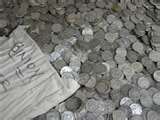
Binion died sometime in the late morning hours of Sept.17, 1998. It was no secret he'd struggled with drugs for years. The day before his death, Binion bought tar heroin from his drug dealer. His next-door neighbor, a physician, filled a Xanax prescription for him. So Binion's stately home wasn't treated as a crime scene after his body was discovered. The casual police behavior, compounded by people walking in and out removing valuables such as expensive fine art and silver coins, would come back to haunt the prosecution team: There was no smoking gun, and police gathered no hard evidence from the scene.

But in the days following Binion's death, Sandy Murphy, his live-in girlfriend of three years, became a suspect, as did Rick Tabish. Tabish, Binion's friend, would eventually be linked romantically with Sandy. 

Spurred largely by Binion's baby sister, Becky Behnen, the district attorney indicted Murphy and Tabish in Binion's death. Becky had a bitter falling out with her brother before his death. The two hadn't spoken in months, and they were rumored to have taken out contracts on each other's lives. The rumors never substantiated, but to put it mildly, Ted and Becky didn't like each other. 

Many things struck me as odd while I covered the case as a journalist. For one, Las Vegas police allowed private detective Tom Dillard to take over and lead the police investigation. Granted, he was a retired homicide detective from the Las Vegas police department. Still, it was unprecedented. 

Add to that the fact that Dillard was paid a whopping $400,000 by Binion's estate to investigate the case, a point confirmed by Murphy's defense attorney Michael Cristalli in the documentary. Despite the odd involvement of the highly paid outside investigator, the case moved forward through the judicial system. I was fascinated by red flags in the case; I started writing a book about it while covering it for Reuters news service and the now-defunct APBNews.com. It had the makings of a made-for-TV movie (which, ultimately, it became).

The Binion family had a Wild West reputation, starting with Ted's father, Benny, (left) who once served prison time for killing a man in Texas. The younger Binion was also known for wild behavior. He also was accused of killing a man, but, unlike his father, he was never charged. So it came as no surprise when the media covered Ted Binion's death intensely. Court TV aired the first trial gavel-to-gavel. National and international TV and print reporters, along with a courtroom artist, filled the courtroom each day.

At the end of that trial, in 2000, Murphy and Tabish were each convicted of murder and of burglarizing Binion's underground vault to unearth his buried silver, which was worth millions (the Binions were known for burying their fortunes on family owned property). 

Murphy and Tabish appealed their convictions and, on a technicality, were granted a new trial by the Nevada Supreme Court. Once again, they were tried together. It was during the second trial, with Tabish represented by radical civil rights attorney J. Tony Serra, that the prosecution's case against the pair unraveled. 

During the first trial, circumstantial evidence presented by star expert witness Michael Baden all but sealed Murphy and Tabish's fate--that is, until Serra came along for the second trial. Serra questioned Baden at length about a so-called button mark left on Binion's chest. Baden testified during the first trial that the mark was made by someone sitting on Binion, compressing his chest, while simultaneously holding a hand over Binion's nose and mouth to suffocate him. In May 2000, Murphy and Tabish were each convicted of murder and of burglary of Binion's buried silver cache. Jurors interviewed afterward said Baden's testimony swayed them toward guilty verdicts.

During the second trial, however, attorneys Serra and Cristalli used enlarged photos to prove that the button mark on Binion's chest was actually a blister. In November 2004, the jury returned not-guilty verdicts on the murder charges but let stand the burglary convictions.
Today, Sandy Murphy lives in Southern California. After the second trial, she was granted time served for the burglary charge and released. Rick Tabish remains in a Nevada prison and is expected to be released sometime in 2010. Sandy continues, through the court system, to clear her name in the burglary case.

As I said during my interview with the Investigation Discovery Channel, I'm certain there was no murder, that Ted Binion instead died from a self-induced drug overdose. It was, as Tony Serra observed, "casino royalty" and the "Binion money machine" who convicted the pair.

The second edition of my book, Death in the Desert: The Ted Binion Homicide Case, will be released in the spring of 2010. 

Photos of the Binions courtesy of the Binion Collection.


Wednesday, July 15, 2009

INTRODUCING CATHY SCOTT & SHERYL McCOLLUM

Women in Crime Ink is pleased to introduce two new regular contributors: True Crime Author Cathy Scott and Crime Analyst Sheryl McCollum.

Cathy Scott is a best-selling author and award-winning journalist who's received more than a dozen awards from news organizations in California and Nevada. Her work—which has appeared in The New York Times, Reuters, George magazine, Los Angeles Times, New York Post, The New York Times Magazine, The San Diego Union-Tribune, and Las Vegas Sun—has taken her to Somalia, Saudi Arabia, and Panama. Dividing her time between San Diego and Las Vegas, Cathy also writes fulltime for Best Friends Animal Society's magazine and Web site. She is a member of the Authors Guild and the Society of Professional Journalists' national Speakers Bureau. She has served as the Nevada chairwoman of the Society of Professional Journalist’s Sunshine Committee, which works to keep government records open to the public. At the University of Nevada, Las Vegas, Cathy was an adjunct journalism instructor for five years, a position she gave up to stay on the Gulf Coast for nearly four months to cover the aftermath of Hurricane Katrina.
Cathy is perhaps best known as the author of seven nonfiction books, including the Los Angeles Times best-seller The Killing of Tupac Shakur as well as the critically acclaimed The Murder of Biggie Smalls. Her other crime titles include Death in the Desert: The Ted Binion Homicide Case and Murder of a Mafia Daughter: The Life and Tragic Death of Susan Berman. Cathy's latest, The Rough Guide to True Crime, is being released August 31. She is currently finishing the case of Barbara Kogan, a Manhattan millionaire's widow who was indicted late last year for the contract murder of her husband nearly two decades ago. The book is scheduled for release by St. Martin’s Press True Crime Library in spring 2010.
Cathy has appeared on Unsolved Mysteries, Oxygen network’s “Snapped,” the Discovery Channel, CourtTV, CNN, MTV, Uncovered TV, Talk Books, and National Public Radio.

Women in Crime Ink is also welcoming Atlanta-based Sheryl McCollum, renowned crime analyst and college professor. She is the Director of the Cold Case Investigative Research Institute. Under Sheryl's direction, the Institute has been responsible for helping renew interest in cases that were deemed unsolvable. Sheryl has been involved in a number of notable investigations, including the disappearances of Natalee Holloway, Chandra Levy, and Amber Hagerman, as well as historical cases such as the Atlanta Child Murders and the Moore's Ford Bridge Lynching.
Sheryl is also the Director of a Metro Atlanta Cold Case Crime Analysis Squad. During the 1996 Olympic Games, Sheryl was Coordinator for the Crisis Response Team, which planned and trained for four years and responded to the Centennial Olympic Park Bombing, providing victim services through the criminal trial seven years later. In the wake of 9/11, Sheryl was Director of the Georgia team that was sent to the Pentagon in Washington, DC (aftermath at left). She is a POST (Peace Officer Standards and Training) Certified Instructor, a Hostage Negotiator, a Crime Scene Technician, and a First Responder. Holding two Master’s Degrees, one in Policing and one in Criminal Justice, Sheryl is also a college professor, teaching Criminal Investigation, Crime Scene, and Forensics.
You can watch her as a regular guest expert on Nancy Grace. Sheryl has also been featured on Fox and Friends and CNN. Most recently, she is co-host of the new program "Fugitive Fridays" on the The Levi Page Show.
Read Sheryl's first piece for Women in Crime Ink on Thursday. And you can expect Cathy's first post a week from tomorrow, on July 23rd.
Please join us in welcoming our newest contributors!