Showing posts with label Antisocial Personality Disorder. Show all posts

Friday, June 10, 2011

There is only One Word for Casey Anthony: Psychopath


Give up attempting to understand Casey Anthony or what makes her tick; she is a psychopath and that makes her the kind of person you shouldn't waste time trying to figure out. The argument over whether psychopaths are born or made – nature versus nurture – will continue decade after decade, century after century. For all of our scientific progress, why a person becomes evil, chooses to murder simply for the fun or convenience of it, is something likely to remain a mystery forever. She is a snake, a snake who needs to be caged or exterminated if found guilty of murder, regardless of how she turned into a serpent.

Let's take a look at the nurture aspect of Casey. Many think that her home was severely dysfunctional. I tend to agree that there was a bit of a twisted dynamic going on there, a battle of wills and a fight for power and control between Cindy and Casey; the two men, George and Lee basically just got out of the of the line of fire. Cindy appears to have a pretty high level of narcissism herself, which is not unusual to find in one parent of a psychopathic individual. An absent or distant father figure, either physically or emotionally, also is often in the mix.

Usually, if there is a set of parents in the home, we tend to find one parent, usually the male, who is cold, stern or uncommunicative with the child and the other parent, usually the female, who then overcompensates by giving far too much and coddling the child as she is growing up. Sometimes, that female is actually narcissistic, and what looks like love can be more about being the winner within the couple, getting more of the attention from the child, and controlling what happens. We sometimes see this narcissism lead to Munchausen syndrome by proxy, a personality disorder in which the caretaker of the child uses the child as a pawn to gain massive attention, sometimes even causing the child to become ill or die just to get a jolt of importance.

Then again, sometimes we don't see too much amiss with the parents at all, and, yet, they are still stuck with a psychopathic kid who they have no idea what to do with.

We also see an increase in psychopathy when there is some kind of attachment disorder occurring at a very young age; children who have been abandoned to orphanages or tossed around the foster care system so often that they have trouble connecting with human beings. This can lead as well to serious personality disorders.

Then, we mix in the individual personality and the cultural issues, financial issues, etc., stir, and whammo, a psychopath emerges, usually by the age of eight, if not by the even earlier age of five, which I have observed in children not even in school and find quite disconcerting. What then? Well, not much, because at this point treatment usually fails and the only thing that has an effect of sorts is behavior modification.

Essentially, once you are dealing with a psychopath, the only way to improve their choices is to show them a way to get what they want in a way that will be less trouble. You can't impress upon them that doing right is a good thing or making others happy is worth it, but you can help them find a way to get what they want in a less destructive way. Dr. Stanton Samenow who spent years at St. Elizabeth's Hospital in Washington, DC, recognized how the criminal mind was rigidly set, could not be changed, and, therefore, he set out to find ways to deal with what simply was a reality.

So, I don't know how Casey Anthony got to be a psychopath, but there she is-lying, manipulating, ignoring how others feel, seeking constant attention, and wanting to have her way all the time. She exhibits the hallmarks of psychopathy; total narcissism and complete lack of empathy for anyone else, including her own daughter. When she does act like she cares, she is doing just that: acting. This is a recognizable trait of a psychopath that Casey exhibits because one can see how quickly she can change mood or expression.

I remember walking in on a "friend" I later realized had a serious personality disorder. She was sobbing on the phone to her boyfriend, telling him how horrible she was feeling, how upset she was. When she saw me, she put the phone down in her lap, flashed me a big smile and mouthed "I'll be with you in a sec!" and then went back to sobbing on the phone. When she hung up, she turned to me just as cheerful as ever, lit a cigarette, and started chatting about our evening plans. The friendship didn't last long after that. I didn't trust much genuine was going to come from this particular woman.

Sound like Casey? You bet. And you can see those same behaviors in murderers like Darlie Routier, Scott Peterson, Karla Homolka, and just about any serial killer you can think of.

If the jury takes a look at Robert Hare's list of psychopathic traits, I am sure they can check just about every one of them off for Casey.
  • Glibness/superficial charm
  • Grandiose sense of self-worth
  • Pathological lying
  • Cunning/manipulative
  • Lack of remorse or guilt
  • Shallow affect (genuine emotion is short-lived and egocentric)
  • Callous/lack of empathy
  • Failure to accept responsibility for own actions
  • Need for stimulation/proneness to boredom
  • Parasitic lifestyle
  • Poor behavioral controls
  • Lack of realistic long-term goals
  • Impulsiveness
  • Irresponsibility
  • Juvenile delinquency
  • Early behavior problems
Why is it important to know what Casey Anthony is? Because knowing she is a psychopath means she is perfectly capable of murder. The jury needs to recognize this, add this information to the body of physical and circumstantial evidence the prosecution has presented, and convict the snake.

Not all psychopaths are murderers, but most murderers are psychopaths. I believe Casey Anthony is both and needs to be removed from society permanently so she can't do any more harm. And, Caylee, innocent little Caylee, deserves justice.



Monday, April 4, 2011

The Crime/Animal Cruelty Connection

Animal Cruelty
by Gina Simmons, Ph.D. 

Earl got a kick out of lighting firecrackers after placing them in the rectums of neighborhood dogs. He also hung cats by the neck. Earl Kenneth Shriner later raped, stabbed and mutilated a seven-year-old boy. 

Brenda Spencer loved to set fire to the tails of dogs and cats. She later opened fire on an elementary school in San Diego, killing two people and injuring nine others.

Sharon McDonough, 44, tortured and murdered dozens of pets and ran what her son called a "concentration camp for the animals." After her adult son turned her in, her seven children were placed in foster care. Judge C. Randall Hinrichs lamented he couldn't sentence her to more than the 2 year maximum sentence saying, "The penal law is inadequate to adequately address the true magnitude of the actions here."

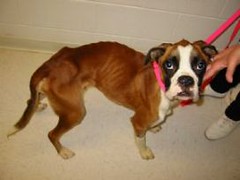
dog_abuseThe link between animal cruelty and crimes against people is well established. Children who harm animals tend to grow to abuse people. When a pattern of cruelty appears in children, they typically qualify for a diagnosis of conduct disorder. These kids often engage in vandalism, violence against others, and property crimes. When they grow up, they most often meet the criteria for antisocial personality disorder (APD). These are the psychopaths who lack empathy and find satisfaction from sadistic acts of cruelty.

Several states have proposed legislation for an animal abuse registry. California's bill, introduced by State Senate Majority Leader Dean Florez (AB 1277), sits in limbo because of California's budget woes. A registry like this can help law enforcement track those with this history and potentially prevent crimes against people. Of course the current economic climate makes passage of this legislation unlikely.

DNAIn March, a New York court was the first to use animal DNA to convict criminals of animal cruelty. Two young men doused a cat with lighter fluid and set it ablaze. Another young man beat a cat to death with an umbrella. The American Society for the Prevention of Cruelty to Animals (A.S.P.S.A.) has collected animal DNA for six other cases. This trend can only grow, protecting both animals and humans from these sadistic criminals. 

Research shows that animal abusers often suffered physical and sexual abuse and witnessed domestic violence as children. Some of these children, with early intervention, might be helped. Teachers, counselors, neighbors and relatives of children with this problem can advocate for early mental health treatment. Care that coordinates law enforcement, counseling, child protective services and support can save some of these tormented youth. If these children obtain placement in a safe home early enough, many can grow to lead healthy, productive lives. 

Photos courtesy of Stoooi, DoubleNJenn and The fly over zone.


Tuesday, August 18, 2009

Criminal Profiling Basics

by Andrea Campbell

In John Douglas’s book, Mindhunter, he describes how he and others on an FBI team compiled the 1992 Crime Classification Manual, one of the most valuable tools used by profilers today. Douglas tells us about the operative style, which involves interviewing convicted murderers and rapists across the country. The task at hand: 1) study the crime, 2) talk to experts, 3) talk to perpetrators, 4) interpret those clues and 5) draw conclusions from patterns.

Douglas says the first step in profiling is advance preparation: checking police files, studying crime-scene photos, discerning autopsy protocols, reading trial transcripts, and looking for clues to motive or personality.

One of the first hurdles FBI agents faced in prison interviews was cutting through self-serving or self-amusing games convicts played. Douglas found he had to portray a persona, to sell the subjects his ideas to keep them interested so they would go along. He also says that contrary to popular belief, “just because someone acts like a maniac, doesn’t mean he doesn’t know exactly what he’s doing.”

Part of the interview process replicated that used by any good reporter: the who (who are the victimizers, who are the victims?), what, where, when, how and why of any story. Key here, along with drawing out the narrative, was observing interviewees’ behavior, including body language, and being able to pounce first. Sexual killers, for example, become skilled in domination, manipulation and control. Some can be quite charming, according to those who met with Ted Bundy. Some were so convincing, Douglas hesitantly admits, that after many interviews, agents went back, checked the killer’s record, and even contacted police in the jurisdiction where the crime occurred, to ensure they had locked up the right guy!

Some of the things FBI researchers found in the course of their conversations: victimizers often had relationship problems with women, and they often dealt with other stressors, such as financial problems or debt. Some had abilities above their job level, some drank heavily, some felt helpless in the face of life's frustrations. Many had a terrible childhood or upbringing. Often agents found killers had taken photos or other souvenirs from their victims. Some visited their victim’s grave site or even rolled in the dirt to relive the pleasure of killing. In the end though, Douglas concludes that serial killers and rapists are hardest to catch of all violent criminals because their motivations are more complex. The patterns are more confusing, since they feel no compassion, guilt or remorse.

Profiling Basics

The premise that all profilers operate under is this: To know the offender, look at the crime. Or, as Douglas says, “If you want to understand the artist, look at his work.” The trick is that there is no trick. Simply put, the criminologist is collecting a bunch of disparate and seemingly unrelated clues and turning it into a convincing narrative. But there is more to it.

In addition to evaluating a wide range of evidence and data, they must walk in the shoes of both offender and victim. They recreate crime scenes in their minds; learn as much as possible about the victims to imagine their horror -- to put themselves in the victims' place and feel the emotions they experienced as they screamed with no hope for help. The other watchwords for the process include: Behavior reflects personality.

First off, the offender is an unknown subject, hereafter referred to as UNSUB. As part of the basic background the criminologist needs to know:

  • What’s in the medical examiner's report, such as the nature and type of wound or wounds, cause of death, whether there was sexual assault, and if so, what kind?

• What was in the preliminary police report?

• What did the first officer see? Was the scene altered? Were there any changes (i.e., dignity moves like covering the face)?

• What do crime-scene photos and schematic drawings (where all directions and footprints are noted) show?

• Time of day, condition of location, signs of a fight, documents, letters, etc.; telephone calls made, position of the victim, check of closets, furniture, blood spatter, collecting of physical, trace, or impressions evidence.

• Anything taken? Even subtle objects like a lock of hair, a barrette, etc. need to be anticipated. (And so as not to be influenced on first pass-through, profilers always request that police notes should be on the back of photos.)

The “victim profile” is prepared. Some questions to be answered are: High- or low-risk victim? What did she say or do? Did she fight back? Why was she selected over all other potential victims? How? Who? In actuality, the victim profile can be every bit as extensive as the killer’s.

Methodology Means more Questions

Criminal (and victim) profiling is knowing about race, personality, job, home life, car, hobbies, familiarity with the area, relationship to police. Was the criminal organized or disorganized? Is there a violent crime in the past? Is the criminal on parole? Are there known stressor factors, such as a commemorative date? Is there any evidence of posing or staging? So many questions, so little time.

As Dr. Park Dietz says, “. . . none of the serial killers . . . has been legally insane, but none has been normal either. They’ve all been people who’ve got mental disorders. But despite their mental disorders, which have to do with their sexual interests and their character, they’ve been people who knew what they were doing, knew what they were doing was wrong, but chose to do it anyway.”

Definitions of some terms involved in criminal profiling:

psychotic — being legally insane, out of touch with reality. (“. . . voices made me do it.”)

psychopath or sociopath — knows right from wrong and consciously chose to do wrong. Lacks conscience or remorse.

necrophilia — sexual stimulation from seeing, touching corpse.

necrostuprum — theft of corpse for sexual pleasure.

lust murder — sexual compulsion to kill.

psychometric tests — administered by a forensic psychologist, they involve motives, background, family life.

modus operandi — What the perpetrator does to commit the crime. It is learned behavior, and it can change.

signature — What the perpetrator has to do to fulfill himself; it doesn't change.

staging — Offender tries to throw off investigators by making them believe a different crime occurred. I.e.: A rapist tries to make his intrusion look like a burglary.

posing — The signature; leaving the victim in a certain posture

serial offender — Doesn't stop till caught or killed. Learns by experience, tends to get better. Virtually all are male.

anthropophagy — Sexual gratification achieved through cannibalism

gerontophilia — Sexual obsession in which elderly victims are raped and murdered.

pedophilia — Having sex with children

Myths or common beliefs:

• Serial killers want to be caught. Not really. They're demonstrating their power over society by coming close to getting caught, and then showing their smarts by evading capture. They keenly desire infamy, but they would rather their fame be anonymous.

• Crime is all about people who know each other. Not any more, although family associations are statistically still the most violent.

• Witches, werewolves and vampire stories may be about actual murderers. True.

• Compulsion to kill: When circumstances didn't favor the success of their crime, perpetrators refrained from committing it. They were not compelled to act.

Bibliography: • Douglas, John and Mark Olshaker. Mindhunter: Inside the FBI’s Elite Serial Crime Unit. New York: Scribner, 1995. • Feldman, Philip M. Criminal Behavior: A Psychological Analysis. New York: John Wiley & Sons, 1978. • Kelly, Delos. Criminal Behavior: Text and Readings in Criminology. New York: St. Martin’s Press, 1990. • Mactire, Sean. Malicious Intent: A Writer’s Guide to How Murderers, Robbers, Rapists and Other Criminals Think. Cincinnati, Ohio: Writer’s Digest Books, 1995. • Roth, Martin. The Writer’s Complete Crime Reference Book. Cincinnati, Ohio: Writer’s Digest Books, 1990. • Territo, Leonard and Max. L. Bromley and James B. Halsted. Crime and Justice in America: A Human Perspective, St. Paul, Minnesota: West Publishing Company, 1995. • Wingate, Anne, PhD. Scene of the Crime: A Writer’s Guide to Crime-Scene Investigations. Cincinnati, Ohio: Writer’s Digest Books, 1992.


Tuesday, October 14, 2008

Is Casey Anthony Another Susan Smith?

by Lucy Puryear, M.D.

I am often asked by the media to comment on cases where mothers have harmed or killed their children. I frequently am called by attorneys asking for help in their cases where a mother has killed her child.

Because of my work in the Andrea Yates case it is hoped that I may be able to offer some psychiatric defense for other defendants. If the alleged murderer was suffering from psychosis then a verdict of Not Guilty by reason of insanity may be successful. Many attorneys wrongfully assume (or hope against hope) that if the mother they represent has killed her child then she must be "crazy." I am sure she is "crazy" in some form, but not always in a way that mitigates her responsibility for the crime.

It is impossible for me to forget the case of Susan Smith. It was October of 1994, and I was a second-year resident in psychiatry at Ben Taub Hospital in Houston. I was learning how to diagnose psychiatric illness and treat psychiatric emergencies. We were also being trained in detecting whether someone was fabricating or exaggerating their illness for some secondary gain. It was not at all unusual to interview persons who were trying to get prescription medications from naive young doctors, or who wanted to be admitted to the hospital for a warm bed and three free meals.

But as I watched Susan Smith on television tearful and begging for the lives of her children, I felt tremendous sorrow and grief for her. I could only imagine how devastating it would be if I had been accosted and my children kidnapped. Her grief felt in sharp contrast to the drug addict trying to convince me they were terribly anxious and needed me to prescribe Valium. I knew one women was in real pain, and the other just trying to manipulate me.

The nation and I were shocked to learn that while Susan Smith sobbed, her children were strapped in to their car seats, at the bottom of a lake. The person responsible for their deaths? Their mother.

In the Casey Anthony case we have a mother who allegedly killed her child, stored her daughter's body in the trunk of the car, and then began to party. Only when questioned did she report that her daughter had been missing for some time.

Unlike Susan Smith, we never saw her on television begging for her child's return. We did see her at the disco and at Target, acting as if life couldn't be better. Even if she didn't murder her cute-as-a-button daughter, why is she acting so blase about the fact that her daughter is missing? Unexplainable.

What are the possible reasons a mother could kill her child? From a psychiatric point of view, I think there's something seriously wrong with someone who murders her own child. It doesn't mean I think they shouldn't be punished, but I also think that a diagnosis of some type can be made. Let's start with the "easier to make the connection" psychiatric disorders:

1.
Psychosis: A person hears voices telling them to harm their child or has a delusion that makes them believe their child needs to be saved from evil or their child is evil and the world needs to be saved. This was true in the Andrea Yates case; she believed her children were being taken over by Satan, and in order to save them from hell she had to send them to heaven while they were still innocent enough for God to take them. This can happen to women who become psychotic for the first time after delivery, or in patients who have previous diagnoses of schizophrenia or bipolar disorder. This can be prevented with appropriate psychiatric intervention and medication. Mothers can be treated and children do not have to die.

2. Depression: A mother can become so severely depressed that she wants to kill herself but feels that her children would suffer without a mother. She kills the children before she attempts to kill herself. Sometimes she is unsuccessful at taking her own life and must face the emotional and legal consequences of her choice. This can happen in severe postpartum depression or in cases where a mother is depressed due to financial or marital stresses. She believes she is protecting her children from being left behind to suffer. Depression can also be identified and treated and lives saved.

3. Borderline Personality Disorder: This is a complicated diagnosis and varies in severity from individual to individual. The characteristics of this diagnosis are mood lability with terrible feelings of depression, loneliness, emptiness, and despair. This mood symptoms are often accompanied by substance abuse, risk-taking behavior, and suicidal thoughts with less serious attempts. These attempts are often seen as cries for help. Persons with BPD form intense chaotic relationships which are often passionately good early on and then become disappointing and passionately bad later on. This disorder usually occurs in people who have histories of childhood abuse, abandonment, parents with disorder, or other chaotic, "not safe," inconsistent attachments to caretakers. Borderline Personality Disorder is hard to treat. The treatment consists of long-term psychotherapy and medication.

Although I have not personally interviewed Susan Smith, this is most likely her diagnosis. She was raised by a violent alcoholic father who later committed suicide when her mother divorced him. Her mother remarried a man who molested Susan for many years without reprisal. Susan began to engage in relationships with married men while she was in high school and was in the middle of a divorce and rejected by her lover when she released the parking brake in her car and watched her children drown. She knew what she was doing was wrong, but at that moment was feeling such despair and hopelessness that it felt like a way to make life less complicated. She also believed that without her two children her boyfriend might take her back. She was terrified to be alone without a man in her life to allow her to feel complete.

4. Narcissitic Personality Disorder: This is an unfortunately common personality disorder that often does not cause the person who has it much discomfort. Persons with this type of character have little regard for needs or feelings of others, but use others to meet their own needs and desires. Often those with this type of disorder are successful in their business or careers and can appear outgoing and charismatic, but they draw people to them for their own personal gain. If a loved one or colleague stops being useful to them then they can be easily disposed of without much pain. If there are problems in their lives, they are blamed on the inadequacies of others. Narcissistic individuals have a hard time taking personal responsibility. The causes for this disorder are not entirely clear, but often there is a childhood history of being highly adulated by parents, not made to take responsibility for mistakes with parents often helping to cover-up or fix problems, and having things given without having to learn the value of hard work and disappointment.

I don't know Casey Anthony's history, but her behavior certainly fits one who has little regard for others, is primarily interested in her own welfare and happiness, and will go to great lengths to escape consequences or punishment. Susan Smith confessed to what she had done and felt remorse. Casey Anthony continues to lie and deceive.

5. Antisocial Personality Disorder: These are the people who fill our jails. People without conscience, morality, or the ability to live within societal norms. I can give too many examples of this. . . . Mothers who drown their kids to get back at cheating boyfriends . . . Mothers who leave their kids alone to go hang out at the crack house . . . Mothers who abuse and torture their children for . . . enjoyment. At the moment there is no treatment for this disorder. Therapy as an adult doesn't work. Early childhood intervention is most likely the key. There has been one study published that links those in jail to having had mothers who had postpartum depression. By the time someone reaches jail it is mostly too late.

Mothers will continue to kill their children. Jail may most certainly be appropriate for some individuals, but it is not a deterrent to other mothers. Fortunately there are some causes of maternal filicide that are very treatable with proper screening, identification, and treatment.

The Mother's Act in Congress failed but will be brought out again for another vote. This law would require more money be earmarked for the recognition of, treatment for, and research of postpartum psychiatric disorders. (If only it been part of the "pork" in the bailout, like the Parity bill which mandates insurance companies pay equally for psychiatric illnesses.)

Early childhood intervention to prevent child abuse, neglect, ensure quality education and day care, and support for single mothers could go a long way towards decreasing the incidence of antisocial personality disorders. Susan Smith could have benefited from intensive therapy and intervention by someone to stop the abuse by her stepfather. We have the means and the knowledge to stop some of these heinous crimes.

Casey Anthony? There was a book written in 1954 called The Bad Seed. A good read.