Showing posts with label jury duty. Show all posts

Tuesday, August 16, 2011

'Not Guilty'

by Katherine Scardino

I have read about all I care to read about Casey Anthony. But, it appears that the news media and every other American citizen have opinions about this woman.

The bottom line is this: Twelve members of a jury listened to every single word of the testimony and examined every single piece of evidence presented by the state of Florida in an attempt to convince each of them to render a verdict of guilty to capital murder. Each of those 12 people, plus the alternates, sat in the courtroom and listened to every single word each lawyer said to them during voir dire (jury selection).


Jury selection is the only time during a trial when the jurors and the lawyers, both for the defense and for the state, get an opportunity to have a conversation. That means that if there is any part of the conversation they do not understand, the juror can stop the lawyer and ask any question he or she wants answered. Their questions sometimes include the meaning of a legal term, or it might be a question about a hypothetical situation that a lawyer presents to the group of potential jurors in an effort to educate each juror about the facts they will be deciding, without giving the specific facts about their case.

In other words, a defense lawyer or a prosecutor is not allowed–at least in Texas–to stand in front of the jury panel and tell them the facts of their particular case. The lawyer may only present facts to them in a hypothetical situation to try and determine how that specific juror feels about a certain topic or whether that juror has had any experience with that specific topic. The easiest example would be a driving-while-intoxicated trial. The defense lawyer wants to find out the drinking habits of the juror, or whether he or she is a member of MADD (Mothers Against Drunk Driving). So, the hypothetical would contain facts close to, but not exactly the same, as the case on trial.

The Casey Anthony jury was sequestered. That means they went to a hotel each night with no televisions of any kind and no newspapers. They did not listen to all the Nancy Grace hype and the other screaming “talking heads,” nor did they read any of the newspapers relaying every opinion from every goofball who appeared in Florida to stand on the street in front of the courthouse each day.

Because of the sequestration, they were forced to make a legal decision based solely on the law given to them by the lawyers and, more importantly, by the judge without the extraneous information the rest of the world got. That is the way our rules and our Constitution are set up to prevent jurors from being influenced by outside opinions and the popular news media. The Constitution enforces our laws that state an accused person should be judged based solely on the law and the facts.

So, can we please accept the fact that Ms. Anthony’s jury acted fairly and nonprejudicially, and rendered a verdict in accordance with their instructions from the judge. You do not have to agree with it, nor do you have to like it. But, it is what it is. If you will stop for a moment and remember all the exonerations we have read about within just the last year. For a while there in Texas it seemed like we were releasing people on a weekly basis from prison after many years for a crime that person did not commit. Our system is not 100-percent perfect–ask my client, Anthony Graves, who was released after 18 years on death row once it was concluded by prosecutors after a first-time only competent investigation that he was in fact innocent. Many people have been released who have spent more years locked up than Mr. Graves.

So, if we all believe Casey Anthony is guilty but the jury believed otherwise, accept the jury’s verdict and get on with your lives. The system worked perfectly here. The 12 jurors did not believe the prosecutor proved beyond a reasonable doubt that she murdered (intentionally taking another person’s life) her baby girl. They rendered a verdict they believed was the right one.

Now the news media is all in an uproar about the fact that Ms. Anthony is having to return to Florida to complete her probationary period. That is not much for murder. But remember, this probation is not for murder; it is for theft–stealing her friend’s checkbook, or some such thing. You want her to be inconvenienced in some manner for taking the life of her baby. But I don’t believe this will do it for you.

Take a deep breath. Remember our Constitution and our rules that we all have to obey. And, leave Casey Anthony alone. It is over. The jury has rendered a true verdict. And, these jurors do not have to answer to anyone, and especially not to Nancy Grace or any of the other media. Their deliberation and their verdict is their secret. It is really none of our business now.

Photo Credits: turtlemom4bacon; Caveman Chuck Coker; Lee Bennet


Tuesday, November 30, 2010

My Right to Jury Service

by Katherine Scardino 

As I experience various things in my life, I usually sit down and tell all of you my feelings. This week, I experienced jury duty for the first time in many years. Although I did not get picked to actually sit on a jury, which I would have loved, the mere experience of showing up was something that got me to thinking about women and our right to even be in a jury room with a man.

Did you know that it was not until 1920, with the passage of the 19th Amendment to the United States Constitution, that women were even allowed to vote? Isn't it amazing, looking back at all the accomplishments women have made over the last 100 years, to think that we were looked down upon as second class citizens. Remember the classic movie Twelve Angry Men, not six men and six women or some combination thereof, but a 100-percent male jury. Can you imagine living in a world where you were looked down upon based solely on the fact that you were unfortunately born female? In today’s world, it is hard to even imagine.

The passage of the 19th Amendment did not solve all the women’s issues of the time. It actually had surprisingly little impact on a women’s citizenship status or on the American constitutional order. Women believed that if they had the right to vote, then they would gain equal citizenship by being allowed to assert their political interests, such as serving on a jury. Jury service is democracy in action. Juries help to protect individual liberty and serve as an institution of self-government in which citizens 
apply the law to members of the community.

The amendment helped to lessen the distinctiveness between male and female citizenship, and gave women some recognition as public persons. But, it did not create equal citizenship for both sexes. The 14th Amendment was adopted in 1848, long before 1920. It was used, unsuccessfully, by women's rights advocates to claim both the right to vote and the right to serve on juries as protected rights of citizenship. Even as early as 1872, Susan B. Anthony and several other women went to their local polling places to attempt to vote. But, just as Rosa Parks was prosecuted for trying to use public transportation, Susan B. Anthony was prosecuted for casting an illegal ballot. At her trial, she was not allowed to testify nor was the all male jury allowed to judge her. Instead, they were directed by the Judge to deliver a verdict of guilty.

The liberal interpretation of the Constitution that Anthony hoped for was one in which voting, jury duty, and professional licensing were all among the privileges and immunities of national citizenship. Unfortunately, during her era, a jury of one’s peers excluded one-half of the population.

There is not enough space for me to outline the hard road that women before us have tread so that we may have the right to sit in a jury room and deliberate the fate of one of our peers in the community. I sat in the large gathering room this week and listened to conversations other people were having about why they were there. One woman was talking about the advice she had been given on how to get out of doing her civic duty. I thought about what Susan B. Anthony and other women would have thought about that conversation. How quickly we forget the struggle to gain the right to vote and to sit on a jury.

We have become such a throw-away society. If it is inconvenient to us, we simply throw it away. No one wants to do it anyway. For just one second, think about what our society would be like without a jury. Who decides the punishment for committing crimes? Who decides which person should to pay in a landlord/tenant dispute? Would we have a Judge Judy sitting around every day to make all the decisions for us? That is a great idea. Let’s give the responsibility of making all the important decisions in our lives to the king, only one person. That did not work so well a few hundred years ago, and, I dare say, it would not work well today.

So, my ending thought is this: When you get that summons to appear for jury duty, look at it, smile and say, “Thank you, Susan! Good job.”


Tuesday, June 1, 2010

Can New Instructions for New Times Change Old Habits?

By Robin Sax

Face it; juries think that a crime occurs and is reported, investigated, filed, prosecuted, deliberated, and sentenced in one hour.  Judges have been so concerned about outside influences in cases that they have resorted to sequestering juries, to granting change of venue motions, and to admonishing jurors to consider only the evidence in front of them.  It is routine practice (and even law) for judges to instruct jurors not to discuss any aspect of the case, consult outside sources or do independent research. But experienced trial lawyers know such warnings often aren't followed. Jurors frequently talk to a spouse, may call a lawyer friend, go take a look-see at the scene of the crime, or even worse ... use the Internet.


Never has doing one's own research been so easy, so anonymous, so undetected. Before the days when, with a fews strokes of the keyboard, one could find information from around the globe, a disobedient juror would have to do original research -- dig information out of newspaper or library morgues, talk to witnesses, consult experts. And if jurors are anything like county employees, the sheer amount of work may have scared them off this path. But today, the technology that makes it so darn easy to violate jury instructions has forced jurisdictions to update rules to address the reality of this new ease of access.

Before lawmakers could even tweak the instructions to incorporate the realities of the Internet in general, newer software has allowed jurors to investigate in real time while the case is still being presented to them. No longer do people need to wait to return to their desktops to peek. With websites like Twitter, YouTube and Facebook, combined with sophisticated cell phones and applications for them or technology like iPads, Kindles and netbooks, jurors can do their sleuthing while court is in session, while witnesses are still on the stand, and while the wheels of justice are supposed to be turning fairly.


Ohio decided that its courts were no longer going to handle these technological issues after the fact.  Instead, it would update and keep current jury instructions, no matter what, and address all of the modern issues floating around ... including the not-so-new issues of TV's  legal and criminal procedural dramas.  Not a bad idea, Ohio.  While it amazes me that we even need such instructions, better to get it all out in the open than to count on our jurors (remember -- they are our voters and drivers) to do the right thing on their own. 

So, if you happen to be sitting on a judicial committee, heed some advice from your friends in Ohio, and consider adding instructions like they did in these sections:

WARNING ON OUTSIDE INFLUENCE. The effort to exclude misleading outside influences information (sic) also puts a limit on getting legal information from television entertainment. This would apply to popular TV shows such as Law and Order, Boston Legal, Judge Judy, older shows like L.A. Law, Perry Mason, or Matlock, and any other fictional show dealing with the legal system. In addition, this would apply to shows such as CSI and NCIS, which present the use of scientific procedures to resolve criminal investigations. These and other similar shows may leave you with an improper preconceived idea about the legal system. As far as this case is concerned, you are not prohibited from watching such shows. However, there are many reasons why you cannot rely on TV legal programs, including the fact that these shows: (1) are not subject to the rules of evidence and legal safeguards that apply in this courtroom, and (2) are works of fiction that present unrealistic situations for dramatic effect. While entertaining, TV legal dramas condense, distort or even ignore many procedures that take place in real cases and real courtrooms. No matter how convincing they try to be, these shows simply cannot depict the reality of an actual trial or investigation. You must put aside anything you think you know about the legal system that you saw on TV.


WARNING ON OUTSIDE INFORMATION. In addition, you absolutely must not try to get information from any other source. The ban on sources outside the courtroom applies to information from all sources such as family, friends, the Internet, reference books, newspapers, magazines, television, radio, a computer, a Blackberry, iPhone, smart phone, and any other electronic device. This ban on outside information also includes any personal investigation, including visiting the site, looking into news accounts, talking to possible witnesses, re-enacting the allegations in the (Complaint)(Indictment), or any other act that would otherwise affect the fairness and impartiality that you must have as a juror.


Those are the warnings, and now the big question: Are these Ohio bar instructions  going to resonate with jurors? Stay tuned.


Monday, April 19, 2010

We are All Criminal Profilers of Sorts

by Pat Brown

There is a lot of misunderstanding about what a profiler is and isn't, even within the profiling community. Hollywood hasn't helped much, with shows like Profiler!, CSI and Criminal Minds. The shows may be entertaining, but they distort the profession and process of profiling, turning criminal profilers into glamorous detectives who are a cross between psychics and Freudian psychologists. The methods used to catch the killer are exciting and usually contain some incredibly clever piece of forensic evidence.

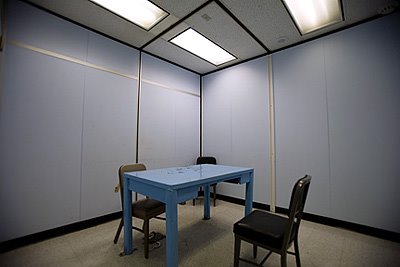
In reality, life for criminal profilers and the cases we work rarely involve dangerous confrontations, chases, and slick labs. We sit in our offices or, if we go to a police department to work, we are put into an interrogation rooms consisting of a table and a couple of chairs. We don't even get nice windows to look out.

If I am on location, I usually stay one week, arrive at eight or nine each morning and leave at five or six in the evening. I come out of my box for bathroom breaks and lunch. I go out to the crime scenes to observe the areas; sometimes I do interviews; occasionally I will do some kind of experiment.

On my last case, I drove my rental car at excessive speed from the crime scene to a convenience store on a curvy country road, timing how long it took me. I had to do the run a dozen times, waiting in the parking lot of the building where a mass murder went down, revving my engine and waiting for a moment when traffic lightened up, when the last car passing left my view and the next car was a good gap behind. Then just before that car reached me, I floored it, sped onto the road and hauled ass toward the convenience store. If someone pulled out in front of me and slowed me down too much, the experiment failed, and I had to do it again. Finally, I got the three fastest times I could manage and drove back to the station.

I was relieved when the detective told me there were no speed cameras on the road, so I wasn't going to have to beg him to "take care of " a thousand dollars worth of fines on behalf of my investigative work. I learned from my experiment that one of my suspects could be cleared; he couldn't have driven from Point A to Point B from the time the crime went down to the time his vehicle passed the camera at the convenience store.

When the week ends, I return to home base and spend hours in my office reviewing the information and analyzing the evidence until I am satisfied. Sometimes I role-play to act out part of the crime so I can see if it could really happen that way. Sometimes I consult with experts to get a more seasoned explanation of forensics or culture or some technical issue I am not that familiar with. When I have a profile that is accurate and clearly explains my determinations and investigative findings, then I am done -- unless some new evidence or information comes to light that changes my conclusions.

There are two methods of profiling: inductive and deductive. The inductive method, which became an FBI methodology, relies on statistical research to determine the likelihood of a certain type of offender or a certain trait to be linked to a crime. The old adage that all serial killers are Caucasian came from this kind of profiling. Research, which included interviews of incarcerated serial killers, concluded that most of these kinds of criminals were white; therefore a crime committed by a serial killer pointed to a white offender. The DC Sniper case caught a lot of inductive profilers off guard. They'd profiled the offenders as white, but they turned out to be African-American. FBI profiles tend to be lists of offender traits developed more from generalizations about percentages of similar crimes rather than a thorough analysis of the individual crime.

Deductive profilers analyze the forensic evidence and the behavioral evidence at the scene and draw conclusions specific to the particular crime. Each element of the profile must be supported by that particular crime and not be drawn from general theories. Of course, deductive profilers have studied the research and understand how this knowledge can apply to the case, but they still have to keep in mind not every case will fit, and there will be anomalies. They must depend on the evidence to prove the point.


The murder of Sandra Cantu was one of these cases where inductive profiling would lead to the conclusion that a man committed this sex crime. However, Sandra's killer was a female, a church woman. The evidence actually didn't prove whether the killer was male or female; there was penetration but no semen, so all one could say, deductively, was that someone sexually assaulted the child with a solid object of some sort. On television, most of us commentating tossed out inductive theories as we had no access to the evidence. We said the police were likely looking for a male sex offender in the community. Inductive profiling alone will get you in trouble!

The processes of inductive profiling and deductive profiling are somethings all of us do in daily life. We inductively gather information about people and behaviors, and when we are confronted with a new situation and don't have time to think, we apply these generalizations and hope they are right. With more time and evidence, we are able to analyze more thoroughly, and we become deductive profilers.

Juries end up in a terrible situation because they must become profilers overnight. They don't have time to do research to increase their general knowledge of criminals and their crimes; they don't have time to study forensics, psychology, and crime scene reconstruction in order apply good deductive skills to the case; and they have lawyers from both sides, along with prosecution and defense experts, confusing them and sometimes lying to them about the evidence and its meaning.

After going through this crash course in profiling, taught by questionable practitioners, they must render a verdict and decide the course of a human life. And people wonder why I am a proponent of professional juries!

If you want to learn more about profiling crimes and give it a whirl yourself, tune into my new Blog Talk Radio show, Profile This! every Sunday evening at 9 PM EST.


Tuesday, June 2, 2009

Your Dog Won't Get You Out of Jury Duty (unfortunately)

by Laura James


About 15 or so years ago, many states in the United States moved from voter registration to driver's licenses to choose jury pools. This decision has had terrible consequences for the criminal and civil courts. The worst: the quality of the average jury has plummeted.

It was an understantable move. In the interests of increasing racial diversity in jury pools, driver's licenses were seen as a way to broaden the pool.

But in doing so, they picked up every felon who isn't eligible to vote -- and every citizen (and non-citizen) who cares so little about current affairs that they don't bother to register. People who lack enough interest in government to cast a ballot get to cast ballots in murder cases. Go figure.

If you ever find yourself puzzled over some high-profile verdict, if you ever find yourself wondering about the quality of the average jury today, well, here may lie part of the answer.

It's very, very unfortunate. Yet the decision will probably never be reversed.

On the other hand, the excuses for getting out of jury duty may have gotten more creative since the switch. This gem recently emerged from the courts of Montana. It's an affidavit completed by someone chosen for jury duty who didn't want to serve -- and the resulting court order by a teed-off judge, and it's making the legal rounds of lawyers these days via email.

In it, a fellow declares: "Apparently you morons didn't understand me the first time. I CANNOT take time off from work. I'm not putting my familys well being at stake to participate in this crap. I don't believe in our "justice" system and I don't want to have a goddam thing to do with it. Jury duty is a complete waste of time. I would rather count the wrinkles on my dogs balls than sit on a jury. Get it through your thick skulls. Leave me the f**k alone."


And the resulting court order read as follows:


CITATION FOR CONTEMPT
THE FREEDOM AND LIBERTY THAT MR SLYE ENJOYS DEPENDS UPON THE VOLUNTARY SERVICE OF JURY DUTY, THEREFORE, IT IS HEREBY ORDERED THAT ERIC SLYE BE AND REMAIN IN THE COUNTY JAIL FOR 20 DAYS OR UNTIL HE RECANTS HIS CONTEMPTUOUS CONDUCT IN OPEN COURT. MR. SLYE'S FAMILY MAY VISIT HIM ON WEEKENDS BUT HIS DOG SHALL STAY AT HOME UNMOLESTED BY THE DEFENDANT.


Tuesday, February 17, 2009

Jury Duty and How NOT To Get Picked

by Kelly Siegler

How do you feel when you get that familiar jury summons to appear in court on some future date? Excited? Nervous?

Maybe you're one of those people who simply toss it into the trash?

If you are one of those people, why are you avoiding jury duty? Because you think you have too much going on that day or because it will cost you money if you show up rather than go to work? Or maybe because that is a civic responsibility "for other people"?

Ever thought about what would happen in our criminal justice system if every responsible citizen thought they were too busy or too "important" to report for jury duty?

The system would utterly collapse; that's what would happen. Can you imagine what our juries would be like if they were totally made up of citizens who wanted to be on a jury?

When someone who resides in
Harris County and who is either a registered voter OR has a Texas driver's license gets summoned for jury duty, the procedure they are required to follow is pretty typical. They are encouraged to visit a Web site where they can read all about what exemptions they can legally use or what might truly disqualify them or how to reset their jury duty if their designated date is not convenient for them.

As a lawyer with enough experience picking juries or should I say, "trying to pretend like I knew what the heck I was doing when I picked juries," let me give you a clue. . . .

There is a really easy way to get out of being picked for a jury by either side's lawyers.

It's called answering the questions. Answering every question. In minute detail. Ad nauseum. Until everyone gets tired of hearing the sound of your voice.

Because the more you talk, the more you increase the odds of being struck by one side or the other, if not both. Remember jury "selection" is not really that at all; no individual juror is selected at all.

In reality, the six or twelve people lucky enough to make the final jury are really "what's left" when all of each side's strikes are gone and their juror numbers happen to be low enough in the panel to make it on the jury.

Why do I say talk and answer the lawyer's questions A LOT? Because a good many years ago when I was a new prosecutor in felony district court and on a day when I was charged with the responsibility of picking a jury in a routine no-big-deal possession of
crack cocaine case, I made the big mistake of NOT listening to a lady called down for jury duty.

I selected (which really means that I did not exercise a strike on) a very verbose, very opiniona
ted, but very state's oriented lady on the panel because I was so busy focusing on her answers that I did not listen. Had I listened I would have appreciated that she was SO opinionated and SO strong and SO disagreeable that eleven other people would never be able to stand being in the same small room with her long enough to come to two (guilt AND punishment) independent verdicts!!

But I was young, and can we say naive? The very experienced and wise judge who presided over that trial called it in a heart beat and asked me what I was thinking as soon as all twelve jurors were seated in the jury box. I responded that she gave all "state's oriented" answers to all of the questions put to her. And he sagely replied, "Maybe so, but they will be ready to strangle her before they're done."

And he was right.

Since that day and that trial, which I pretty quickly lost, I have given a name to jurors like that lady with personality traits like hers. I call it the "bow-up" factor.

Bow [Bo] up.

You know. People who "bow up" over any little thing, who are always getting worked up over things that most others would consider petty or insignificant. People who enjoy arguing. Who like to be contrary and difficult.

We all know people like that. If you're one of those kind of people, just let your true colors shine through if you get called down for jury duty. You ought to be safe.

If you aren't one of those people and you want to
get OFF of jury duty, then the first step is to keep on talking.


Monday, January 26, 2009

What Makes a Good Trial Lawyer

by Kelly Siegler

The opinions of individual trial lawyersif asked what makes a lawyer a good trial lawyer—would be as varied as their own egos. Most laymen and the average citizen called down for jury duty probably assume that all lawyers are good trial lawyers or ought to be anyway. Isn't that what they are paid to do? And way too many lawyers who call themselves trial lawyers, when they aren't, would in some way try to describe themselves in answering the question.

The simplest answer I've given before when asked this question is "
preparation." While that is certainly true and a huge part of what makes any trial lawyer good at what he does, preparation alone could never explain it completely. Or even come close. Lots of lawyers try their hardest to be prepared. But does that necessarily carry over to the "presentation" aspect, the part that catches a juror's attention convincingly? Does preparation lay the groundwork for a sought after verdict, even most of the time?

Probably not.

Then what does?

Eloquence perhaps. Tenacity. Aggressiveness. Intelligence. All of these qualities would seem to answer the question.

So do qualities like having a photographic memory or having a way with words. Having a commanding presence in the courtroom certainly helps.

Whatever adjectives you or others might use to try and describe what makes one lawyer a successful trial lawyer where another is not are probably all good answers. But what is that ONE quality or trait or characteristic without which a given trial lawyer fails to pass the test most of the time??

I believe it is the ability to know people.

To empathize with them. To understand what they must be thinking as you put on your case. To appreciate their unique perspectives. To see and hear your evidence and the opposing lawyer's case as if you were inside their minds and their hearts.

To evaluate what is going on inside the courtroom critically from someone's point of view besides your own.

Where does anyone, lawyer or not, get such a trait or ability?

Are you either born with the ability or not? Can a good trial lawyer lose such an ability the more successful he becomes if he allows himself to lose touch with his "old" way of thinking? Don't some people simply have no clue of what it means to understand others' perspectives?

Are how you are raised and where you are from two of the most important contributors to being able to understand, empathize and appreciate other people's opinions?

I would say that they are. For whatever reason someone might have been forced to or called upon to "get along" in the world or "adjust" to a difficult situation, contributes directly to making him deal with human nature. Because to deal with human nature, you have to try and understand it.

Then, when it comes time as a lawyer in a trial to critically decide which citizen would best serve as a favorable juror, you have a better understanding of that juror's possible perspective in viewing your evidence. As any witness testifies, you have a better appreciation of how that witness comes across to twelve, normal citizens. As you interview and prepare your witnesses for their time on the stand, you can prepare them in ways that others might not be able.

If you understand people, you have a different grasp of the words that not only might appeal to them, but also sing to them and stay with them.

Long after any trial lawyer has left the courtroom.


Tuesday, December 30, 2008

Jury Duty: Drama and Trauma

by Donna Pendergast

The paperwork has arrived, the die has been cast: You have been summoned for
jury duty. Unless you are excused by the court because you fit one of a few limited exceptions, you will be pulled away from your daily routine to report to the courthouse at the date and time indicated, ready to fulfill your civic duty. But are you really prepared for what fulfilling your civic responsibility may entail?

Imagine being the juror who has to listen to testimony about a serial murderer and his/her path of death and destruction. Try to comprehend being a juror in the trial of Jeffrey Dahmer (mugshot right) and having to listen to testimony about multiple murders and cannibalism.

The
juror experience is a unique one, especially in a criminal case involving death or violent physical injury. Unlike television, in a courtroom, the horror and gore are for real. Jurors in a way become victims of the crime. They have front row seats where they see the blood, hear disturbing testimony, view the horrific photographs, and become a part of the crime scene in a way that becomes very real to them.

Those horrific details can leave jurors emotionally depleted. Crimes involving physical violence to children or the death of a child can be especially traumatic to jurors who are not prepared to deal with the emotional impact of that sort of grizzly testimony.

In
death penalty cases where jurors have a life in their hands the stress factor is usually considerably magnified. Jurors watch as defendants' families and friends beg for mercy while weighing those pleas against horrific and brutal facts. They then contemplate taking the life of another human being and ultimately render a life or death judgment.

Studies have found that trial-induced stress—related to disturbing testimony, concern over personal safety issues (especially in violent gang-related crimes), and the court's prohibiting jurors from discussing troubling issues with their normal support network—can affect mental health and cause post-trial psychological problems. While some jurors may go away from the jury experience relatively unscathed, others may have a much harder time dealing with what they have seen and heard. Stress-related maladies ranging from anxiety and sleeplessness to
Post Traumatic Stress Disorder have been reported by jurors.

Traditionally, jurors end their jury service by coming to an exhausting and usually emotionally charged decision.
They are then sent home to resume their daily routines without any assessment of whether or not the events of the trial might have had any impact on their mental and emotional health.

Increasingly, courts are recognizing that compelling jurors to take part in a gruesome or high-profile trial situation can result in juror trauma and are offering counseling to jurors who might want help sorting through issues related to the trial. This trend, known as
jury debriefing, is usually offered to jurors by professional counselors immediately following the trial.

The debriefing counseling can take many forms—ranging from a group talk session where jurors are reassured that their feelings are normal, to more intensive individualized counseling sessions. The counselors are also adept at spotting individuals who might be more severely affected by the impact of what they have seen and heard and can assist them in accessing more resources in the future if necessary.

In Washington State, Seattle's
King County Court system was one of the first jurisdictions to offer juror counseling beginning in 1998. They have an ongoing contract with a local mental health center to provide services to jurors who may be traumatized by the juror experience. In Texas, a bill offering up to ten hours of juror counseling was approved by the legislature and signed into law on September 1, 2008. Other jurisdictions, including Florida, Minnesota, New York, Oregon, and Wisconsin, have implemented programs which give jurors access to counseling services to help counteract the negative psychological effects which may result from jury service.

Despite a demonstrated need, the implementation of programs offering counseling services to jurors has been hampered by a lack of funding sources necessary to pay for those services. The economic recession has resulted in lean state and local government budgets leaving no room for discretionary services.

Which leaves us asking the question: What is the judicial system's responsibility to jurors who have fulfilled their civic duty by serving on a jury and paid a high psychological price in the process?

That question is still being answered.

Statements made in this post are my own and are not intended to reflect the views, opinions, or position of the Michigan Attorney General or the Michigan Department of Attorney General.