Showing posts with label jury selection. Show all posts

Thursday, May 19, 2011

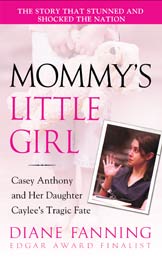
Interview with Diane Fanning, Author of Casey Anthony Book

As the jury selection in the Casey Anthony trial came to a screeching halt this week, WCI's own Diane Fanning sat down with us for a question-and-answer session. Diane authored Mommy's Little Girl, a critically acclaimed, serious look into the disappearance of 2-year-old Caylee Anthony. When court adjourned May 18 in the midst of jury selection, Diane shared her insights about the murder that grabbed the nation's attention as Caylee's mother Casey was charged with the death of her little girl.

Q: Diane, what's your take on the difficulty in seating jurors in this case?

DF: The latest is that Judge Belvin Perry suspended jury selection at lunch time on Wednesday, May 18. Many in the jury pool say she's guilty. One potential juror was released because he posted on Facebook that he was writing a book; another, because she admitted watching Nancy Grace's daily TV [case] coverage

The Casey Anthony case has received more pre-trial publicity than any case, including the O.J. Simpson trial. Surprisingly, though, Mommy's Little Girl has been the only book published on this case. This widespread publicity has made it difficult to find jurors who have not already reached a conclusion in this case. I think the judge would have had a bit easier time if he had paid attention to the media survey that showed the least media coverage in the state was in the Pensacola area. I think he made a mistake going just 100 miles away in Clearwater for the jury panel.

Q: Do you think the media attention in this case has tainted potential jurors?

 
DF: I think it has had an impact on some, but it is still possible to find people who have not been as absorbed in this case and are still capable of making a decision based on the information presented in the courtroom. Personally, if I were on Casey's defense team, I would challenge strongly for cause against any juror who has read my book.

Q: A cottage industry -- mostly T-shirts with a variety of sayings, good and bad, key chains, coffee mugs -- has exploded. Have you seen anything like this before?

DF: Certainly not to this extent. The products started coming out within a month after Caylee was reported missing by her grandmother, Cindy Anthony. Early products included voodoo dolls with Casey's face on them. Now they are everywhere. The two most common you see are ones that say "Justice for Caylee" and others with "Casey Did It." If I were Casey's parent, I would not be bothered by the former, but I would by the latter.  For some reason, though, it is the "Justice for Caylee" merchandise that has raised the Caseys' ire and legal action.

Q: Given your book, Mommy's Little Girl, and your probe, what is the most damning evidence against Casey?

DF: I do not think the jury can ignore Casey's lies or her behavior after Caylee's disappearance. She partied like a single 21-year-old without a care in the world. She never reported her child missing.  Forensically, I think the combination of the testing in the trunk of her car, the anecdotal remarks like the spontaneous utterance of Cindy Anthony ("It smells like a dead body in that car") and the response of the cadaver dogs definitely placed the blame for the death on Casey. The duct tape around Caylee's skull proves murder with malice. Casey's computer searches on ways to kill a child months before Caylee's death seal the premeditation.

Q: As Casey sits through the jury selection process each day, she fusses with her hair, flexes her hands, smiles and jokes with her team of attorneys. What do you make of her behavior?

DF: She is obsessed with herself and she is nervous. Can you imagine sitting in a courtroom looking into the faces of people who say to the court they are capable of sentencing you to death? Casey's stress must be over the top, as well it should be for any guilty person.

Q: Cindy and George lost their granddaughter, but, with the trial and a possible conviction, they face losing their only daughter, should the death penalty be handed down. Do you think that's why they're supporting Casey?

 
DF: They should not abandon their daughter no matter what she has done. But they have gone beyond that by proclaiming her innocence and even obstructing justice when you consider the hair brush incident.  Cindy intentionally gave law enforcement a hair brush that had been used by Caylee and others instead of giving them the one that was Caylee's alone. I think they have adopted the idea that they have lost a granddaughter and now do not want to lose their daughter, too.

Q: Casey refused to see her parents before the jury selection began. Why do you think that is?

 
DF: Only her mother asked for a visit and she did so on the day before Mother's Day.  I think it was heartless to deny that to any mother. But I think the reason Casey did it is because her legal team told her to do so. They knew Casey could not control her temper, could not control her mouth, and was incapable of doing anything during that visit that would not place her in a bad light.

Q: In your in-depth coverage of this case, what was your experience like when dealing with police, private investigators and contacting the family for interviews?

DF: I was knocked into a concrete wall by a member of Jose Baez's entourage. I was threatened by private investigator Dominic Casey. George and Cindy refused to speak to me. The State's Attorney Office was very helpful, and interviews with relatives outside of the immediate family and with friends and neighbors were very worthwhile.

Q: What was the family's response to your book?

A: The family has made no response to the book. I do know from someone who was close to them that they read the book, but I know nothing more. However, I am fairly certain that they did not like it at all.

Thanks, Diane!

Watch for updates about the Anthony case on Diane Fanning's blog, Writing is a Crime, as well as here on WCI.


Thursday, August 12, 2010

Will Casey Anthony’s Physical Appearance and Body Language Help Spare or End Her Life?

by Dr. Lillian Glass

As a body-language and communication expert, I have spent more than 20 years studying human behavior. I know a great deal about how people think and what they perceive about others. This information has been valuable to attorneys who've have used my consulting expertise, especially when it comes to picking a jury and preparing witnesses for trial.

In jury selection, the way a person looks or speaks can have a great impact on how the jury perceives them. My research has shown that a person who speaks well is perceived as more physically attractive than those who do not speak well.

While we would like to think that decisions jurors make about the fate of defendants in a court of law are based solely on the facts and the evidence, the reality is that in many instances, this may not be the case.

Recent studies confirm what we have known for decades -- that the way a person looks and speaks can influence others' perceptions of guilt or innocence. As superficial and unfair as it seems, attractive defendants are judged more positively than unattractive ones.

In a survey done a few years ago, close to 95 percent of the respondents said that a defendant’s physical appearance shouldn't bias a jury. More than 80 percent said only a defendant's character and previous history should influence jurors' decisions.

However, in a mock jury trial, it was found that physically attractive defendants were evaluated with less certainty of guilt and received a less severe punishment than for those perceived as unattractive defendants.


Studies, however, have also shown that female jurors tend to be less sympathetic towards female defendants when they perceive that the woman on trial has used her good looks to her advantage.


So if female jurors are able to see photos of Casey Anthony’s partying, hear testimony of her past behaviors, and believe she used her looks or charm to manipulate family members, friends, and especially boyfriends to get what she wanted, a majority of them will not look favorably upon her.


On the other hand, male jurors' reactions are often the opposite. They tend to give attractive women the benefit of the doubt. Based on what we have seen in jailhouse letters sent to Casey behind bars by male fans, she has received a considerable number of compliments about her attractive physical appearance.

Some of these infatuated men, all of whom she has never even met, think nothing of adding money to her jailhouse account. Others want to date her; some want to take care of her. A number of men want to go away with her, while others write that they want to marry her.


If male jurors in Casey's trial on charges she murdered her own two-year-old daughter, Caylee, also find Casey physically attractive, this may have a significant implications, not only in whether or not she's is found guilty, but also in the degree and severity of her punishment if she is. Thus her physical attractiveness could be a key factor as to whether or not she gets the death penalty.

Perhaps the attorneys might want to ask all potential male jurors whether they find Casey Anthony physically attractive, by using a Likert-type five-point rating scale. Those who give her the top score of 5 will most likely be the ones to spare her life.

But the only thing that will equalize Casey’s looks and how people perceive her is her body language. As the old saying goes, “pretty is as pretty does.” As we have already seen in Casey’s body language in the courtroom these past two years, she has some pretty negative behaviors. When they leak out, they can’t help but alienate jurors. So in the long run, her looks will be balanced out by her body language.


The evidence in the Casey Anthony case should definitely speak for itself. But like it or not, based on the results of research on physical appearance which has been documented through the years, chances are that it may not be the only thing that jurors are evaluating when it comes to deciding Casey’s guilt or innocence or whether she will live or die.


Tuesday, June 2, 2009

Your Dog Won't Get You Out of Jury Duty (unfortunately)

by Laura James


About 15 or so years ago, many states in the United States moved from voter registration to driver's licenses to choose jury pools. This decision has had terrible consequences for the criminal and civil courts. The worst: the quality of the average jury has plummeted.

It was an understantable move. In the interests of increasing racial diversity in jury pools, driver's licenses were seen as a way to broaden the pool.

But in doing so, they picked up every felon who isn't eligible to vote -- and every citizen (and non-citizen) who cares so little about current affairs that they don't bother to register. People who lack enough interest in government to cast a ballot get to cast ballots in murder cases. Go figure.

If you ever find yourself puzzled over some high-profile verdict, if you ever find yourself wondering about the quality of the average jury today, well, here may lie part of the answer.

It's very, very unfortunate. Yet the decision will probably never be reversed.

On the other hand, the excuses for getting out of jury duty may have gotten more creative since the switch. This gem recently emerged from the courts of Montana. It's an affidavit completed by someone chosen for jury duty who didn't want to serve -- and the resulting court order by a teed-off judge, and it's making the legal rounds of lawyers these days via email.

In it, a fellow declares: "Apparently you morons didn't understand me the first time. I CANNOT take time off from work. I'm not putting my familys well being at stake to participate in this crap. I don't believe in our "justice" system and I don't want to have a goddam thing to do with it. Jury duty is a complete waste of time. I would rather count the wrinkles on my dogs balls than sit on a jury. Get it through your thick skulls. Leave me the f**k alone."


And the resulting court order read as follows:


CITATION FOR CONTEMPT
THE FREEDOM AND LIBERTY THAT MR SLYE ENJOYS DEPENDS UPON THE VOLUNTARY SERVICE OF JURY DUTY, THEREFORE, IT IS HEREBY ORDERED THAT ERIC SLYE BE AND REMAIN IN THE COUNTY JAIL FOR 20 DAYS OR UNTIL HE RECANTS HIS CONTEMPTUOUS CONDUCT IN OPEN COURT. MR. SLYE'S FAMILY MAY VISIT HIM ON WEEKENDS BUT HIS DOG SHALL STAY AT HOME UNMOLESTED BY THE DEFENDANT.


Tuesday, February 17, 2009

Jury Duty and How NOT To Get Picked

by Kelly Siegler

How do you feel when you get that familiar jury summons to appear in court on some future date? Excited? Nervous?

Maybe you're one of those people who simply toss it into the trash?

If you are one of those people, why are you avoiding jury duty? Because you think you have too much going on that day or because it will cost you money if you show up rather than go to work? Or maybe because that is a civic responsibility "for other people"?

Ever thought about what would happen in our criminal justice system if every responsible citizen thought they were too busy or too "important" to report for jury duty?

The system would utterly collapse; that's what would happen. Can you imagine what our juries would be like if they were totally made up of citizens who wanted to be on a jury?

When someone who resides in
Harris County and who is either a registered voter OR has a Texas driver's license gets summoned for jury duty, the procedure they are required to follow is pretty typical. They are encouraged to visit a Web site where they can read all about what exemptions they can legally use or what might truly disqualify them or how to reset their jury duty if their designated date is not convenient for them.

As a lawyer with enough experience picking juries or should I say, "trying to pretend like I knew what the heck I was doing when I picked juries," let me give you a clue. . . .

There is a really easy way to get out of being picked for a jury by either side's lawyers.

It's called answering the questions. Answering every question. In minute detail. Ad nauseum. Until everyone gets tired of hearing the sound of your voice.

Because the more you talk, the more you increase the odds of being struck by one side or the other, if not both. Remember jury "selection" is not really that at all; no individual juror is selected at all.

In reality, the six or twelve people lucky enough to make the final jury are really "what's left" when all of each side's strikes are gone and their juror numbers happen to be low enough in the panel to make it on the jury.

Why do I say talk and answer the lawyer's questions A LOT? Because a good many years ago when I was a new prosecutor in felony district court and on a day when I was charged with the responsibility of picking a jury in a routine no-big-deal possession of
crack cocaine case, I made the big mistake of NOT listening to a lady called down for jury duty.

I selected (which really means that I did not exercise a strike on) a very verbose, very opiniona
ted, but very state's oriented lady on the panel because I was so busy focusing on her answers that I did not listen. Had I listened I would have appreciated that she was SO opinionated and SO strong and SO disagreeable that eleven other people would never be able to stand being in the same small room with her long enough to come to two (guilt AND punishment) independent verdicts!!

But I was young, and can we say naive? The very experienced and wise judge who presided over that trial called it in a heart beat and asked me what I was thinking as soon as all twelve jurors were seated in the jury box. I responded that she gave all "state's oriented" answers to all of the questions put to her. And he sagely replied, "Maybe so, but they will be ready to strangle her before they're done."

And he was right.

Since that day and that trial, which I pretty quickly lost, I have given a name to jurors like that lady with personality traits like hers. I call it the "bow-up" factor.

Bow [Bo] up.

You know. People who "bow up" over any little thing, who are always getting worked up over things that most others would consider petty or insignificant. People who enjoy arguing. Who like to be contrary and difficult.

We all know people like that. If you're one of those kind of people, just let your true colors shine through if you get called down for jury duty. You ought to be safe.

If you aren't one of those people and you want to
get OFF of jury duty, then the first step is to keep on talking.


Saturday, April 26, 2008

Mystery Man - Robert Hirschhorn

by Robert Hirschhorn

Twenty-four years ago, I was a young criminal defense lawyer with an impossible case. I went to my mentor and asked him what I should do. He said to call Cat Bennett. I asked him who she was and he told me that she was the best jury consultant in America. When I asked him how she was going to be able to help, he told me to stop asking such stupid questions and to call her. I did, she agreed to help, we won the case, and I told her that she changed my life.

When Cat died in 1992, I had to decide whether to go back to practicing law where I could make a lot more money or to keep Cat's mission and message alive. I felt the latter was so much more rewarding. I'm pleased to share with you a snapshot of what I do.

When selecting a jury in a murder case, you first have to make an intelligent and realistic decision on what would constitute a win. If the prosecution has a weak case (i.e. - no physical or DNA evidence) or there is a strong defense (e.g. - self defense), obviously we want a jury that has the courage to find the defendant not guilty. In some cases, the best possible outcome, given the facts, is a hung jury. In other cases, the facts may compel a jury to convict.

What's unique about Texas is that the judge or the jury can assess the punishment to be imposed. (Prior to trial the defense must elect who should impose the sentence.) So there are some murder cases where you are expecting the jury to convict but you hope they will be lenient in their sentence (e.g. - "mercy killing" situations or "heat of passion" crimes).

To pick a winning jury, the first thing you have to remember is that you don’t get to pick who you want on the jury. Instead, what occurs is a de-selection process. That is, that lawyers get to eliminate those jurors who express a view or opinion about the case, the defendant, or the law, which indicates they cannot be fair. Removing a juror for this reason is called a challenge for cause. There is no limit to the number of challenges for cause that either side can make. It is completely up to the trial judge to decide if a juror should be removed for this reason.

Jurors can also be removed by virtue of a peremptory strike. In a murder case, the prosecution and the defense can each eliminate up to ten jurors for whatever reason they want. A lawyer doesn’t even need to state a reason for exercising a peremptory strike on a member of the jury panel, so long as the attorney did not strike the juror because of the juror’s race.

The question becomes: Who do you want to have left on the jury after challenges for cause and peremptory strikes? As a general rule, if we are running a technical defense, we like cerebral and analytical thinkers. If we are running a “put yourself in our shoes, what would you have done” defense, we like more emotional and spontaneous jurors.

Having said that, for the past twenty years, we have been constantly telling lawyers that
jury selection is art, not science, and that it is a mistake for lawyers to stereotype jurors. Henry Wade, the Dallas County District Attorney, many years ago taught an entire generation of prosecutors to “never take a juror whose job starts with the letter P - painters, plumbers, prostitutes.”

As ridiculous as these stereotypes sound, some lawyers still to this day follow them as the gospel. Some criminal defense lawyers stereotype jurors based on religion, race, age, education, and gender. We teach lawyers that jurors make decisions based on their value system and life experience.

Thus, if you want a great jury for a murder, you must first determine your goal, how you intend to accomplish your goal (we call that “the message”) and then comes the critical goal, with our help, of matching the message to the messengers: the jury. If you're interested in learning more, please visit our Web site here.


Friday, April 25, 2008

Mystery Man - Clue Box

Last week's Mystery Man was a private investigator, a detective who works behind the scenes, uncovering evidence in cases. Up next, we have a man whose work is mostly inside courtrooms, where he gathers information about you. This Mystery Man began his career as a criminal defense lawyer. What started as a nightmare of a case twenty-four years ago ended up opening the door to the career of his dreams: a trial and jury consultant.

His record of success in the nation's toughest cases is as inexplicable as his knack for picking a jury favorable to his clients, men and women whose lives have been on the line. His impressive roster of clients includes Mercedes-Benz murderess Clara Harris . . . former Senator Kay Bailey Hutchison . . . Enron CEO Ken Lay . . . accused sexual batterer William Kennedy Smith . . . Oklahoma City bombing conspirator Terry Nichols . . . and Robert Durst, the billionaire recluse who was found not guilty of murder after testifying that he'd shot, dismembered, and disposed of the body parts of his neighbor. And if the Durst acquittal seems an anomaly, consider another death penalty dismemberment-murder case that our Mystery Man helped win an acquittal on, one of two federal defendants who were spared the death penalty.

Tomorrow's guest contributor has written and co-authored several books and has also published articles. If you need another clue, it might be sitting on your shelf. Our Mystery Man can be found in a number of true-crime books. You've read his name countless times in USA Today, the Los Angeles Times, and the New York Times. And you've seen his face on Good Morning America, America's Talking, Cochran and Company, Court TV, CNN Morning News, Dateline NBC, MSNBC, 48-Hours, Rivera Live, the Oprah Winfrey Show, as well as many others.

He lectures throughout the United States to lawyers and judges on effective techniques of jury selection. As you read this, he is returning from Los Angeles after delivering a speech to the California Public Defenders.

This Saturday, he'll give you the nuts and bolts of his specialized profession and tell you how it all began. So check back here tomorrow. And take a good look at his photo. Maybe you'll recognize him the next time you're on a jury panel. If so, he'll know all about you. Don't miss your chance to learn something about him when we unmask our next Mystery Man.


Jury Deselection

by Donna Pendergast

Have you ever been a part of the jury selection process or sat through a jury selection and wondered what was really going on behind the scenes? Why does the prosecutor ask the questions that she/he asks? What are the papers that the attorneys are looking at? Why do the attorneys kick off the persons that they do? What are the attorneys looking for and why?

The jury selection process is targeted towards selecting jurors who can decide the case without bias against any of the involved parties. But that doesn't mean that both sides won't be trying to select jurors who are likely to be sympathetic to their respective side or spin on the case.

Jury selection (also called
jury deselection by many) is a science. Both sides analyze and interpret clues to determine who is likely to be sympathetic to their case and who is likely to be sympathetic to the opponent's case. As much as an attorney picks who serves on their jury, they are also picking who doesn't serve as well.

The jury selection/deselection process begins for the attorneys before prospective jurors ever walk into the courtroom. The background questionnaires that most jurors fill out when their summons comes in the mail are summarized in a list provided by the court to attorneys. Accordingly, the attorneys know a little bit about potential jurors before the questioning ever begins. Basic information like occupation of the prospective juror and spouse, prior contacts with law enforcement, and affiliation with agencies conducting the investigation are all things that the attorneys are looking at early on in an effort to get a feel for each prospective juror.

In an especially high-profile trial where there is a "hot button" issue or where there has been a great deal of pretrial publicity, potential jurors may also be given a more extensive questionnaire that delves more deeply into potential biases and prejudices specific to the case. In a
murder case that I tried where a man was murdered after revealing a surprise gay crush on another man during the taping of an episode of "The Jenny Jones Show," the in-depth questionnaire probed deeply into the potential jurors' attitudes about homosexuality. More recently in trials that I have prosecuted, questions about extramarital affairs, the alleged promiscuity of a victim, and pretrial media coverage were all put into the more in-depth questionnaires that the prospective jurors were required to fill out well in advance of the trial.

BIG BROTHER IS WATCHING YOU


The scrutiny begins from the moment that a jury pool walks into the courtroom. Attorneys look to things like dress, demeanor, even the reading material brought into the court by the prospective jurors to assess overt as well as subtle clues that may give insight as to the personality of the juror. The attorneys try to interpret these clues to determine who may be favorable to their side and who may not be favorable.

The purpose of questioning jurors is to get the jurors talking and to elicit as much information as possible. Although the exact procedures for questioning jurors will vary by jurisdiction, the goal remains the same. The attorneys on both sides will ask questions of the jurors in a manner calculated to gain as much information as possible to allow for deselection of unfavorable jurors and retention of favorable jurors. Through the questioning process the attorneys are attempting to understand who the jurors are as persons and what is important to them as individuals in an effort to evaluate how a potential juror may react to the facts of the case at hand.

Through questioning of the potential jurors both sides also attempt to educate the members of the jury panel as to the facts and the law pertaining to the case in a favorable way. The attorneys do this by explaining the law while sizing up the prospective jurors' comfort levels as they respond to questions pertaining to the attorney's explanations of the law and hypothetical questions. The prosecution will seek to diffuse deficiencies in their case by this process of educating jurors on the law while the defense will be attempting to highlight the problems or deficiencies in the prosecution's case.

It is also imperative during questioning that an attorney gain credibility with the jury. As much as an attorney is picking a jury, the potential jurors are picking an attorney as well. It is important that the attorneys present themselves in a manner that instills confidence in the prospective jurors so that the jurors will trust them. It is the hope of the attorneys that as the trial progresses the jurors will look to them as someone who is trying to bring out the truth. When questioning potential jurors the attorneys must also be careful about how they elicit sensitive or embarrassing information in the presence of the whole jury panel to avoid alienating potential favorable jurors.

As jury selection/deselection progresses the attorneys are also trying to assess how potential jurors may interact together. The dynamics of who will be a leader and who will be a follower as well as how different personalities may interact together are all important considerations for the attorneys to evaluate as they strategize on how to use their preemptive challenges tactically.

Preemptory challenges allow an attorney to reject a prospective juror without giving a reason as long as the rejection is not based on race, gender, religion, or sexual orientation. The number of preemptive challenges granted to each side is the same but varies in accordance with the severity of the charges. The court rules determine how many charges are allotted to each side. In more serious criminal charges such as homicide, each side gets more preemptive challenges than they do for trials on less severe charges.

Both sides in a criminal trial are granted an unlimited number of challenges for cause. A challenge for cause is exercised by an attorney when they can articulate a reason why a juror cannot be fair and impartial in a specific case.

It has long been understood that jurors come into a courtroom with preconceived opinions formed as a result of their life experiences. Jury selection/deselection seeks to ensure that both sides have an opportunity to screen a jury pool and ask questions that will uncover juror bias.

So the next time that you report for jury duty, report with the knowledge that you are indeed being watched and scrutinized for clues. If you get
kicked off of a jury don't take it personally, there may be reasons known to the attorneys that make you an unsuitable juror for one case but may make you the perfect juror for the case in the courtroom next door.

Statements made in this post are my own and not intended to reflect the views, opinions, or position of the Michigan Attorney General or the Michigan Department of Attorney General.