Showing posts with label The Judas Tree. Show all posts

Tuesday, March 10, 2009

Women in Crime Ink Celebrates First Year Online

Women in Crime Ink is celebrating its first anni-versary today, and we want to mark this special occasion by thanking all of our contributors—and especially our readers!

It’s been quite a year since we launched on March 10, 2008. Most of the crime news took a backseat to a fiery election campaign, but there was no shortage of crime stories. The Caylee Anthony saga took us by storm and may prove to be one of the most followed crimes of the decade. And the most-publicized crime of the '90s was given a final chapter with last year's conviction of O. J. Simpson. The newly discovered DNA evidence in the JonBenét Ramsey case kept us chirping through several posts, while Women in Crime Ink gave cases like those involving Becca McEvoy, Davina Buff Jones, and Belinda Temple the attention they deserve.

Of course, we haven't forgotten the disappearances of student Natalee Holloway or toddler Madeleine McCann. By offering new theories, we have attempted to keep these and other missing persons cases alive in the public consciousness.

Our regular contributors have also brought you some of our personal stories that led to our respective "lives of crime."

As serious and thought-provoking as we try to keep our posts, occasionally, we like to have fun with our readers. Were you one of those who fell for the April Fool's blog that Jimmy Hoffa's bones had been found in New York? You weren't alone—that prank post spread like wildfire in cyberspace, burning nearly all who read it. (Don't be caught off guard this coming April Fool's Day. . . .)

Also last spring, Women in Crime Ink had the honor of a brief "appearance" on Broadway, at least within the pages of the Playbill for the production of "The Judas Tree," the visually stunning true-crime musical based on the crimes of serial killer Dorothea Puente. (photo credit: Alex Moore)

Early this year, we stepped onto another stage, joining the Facebook frenzy. If you haven’t already, stop on over at our Facebook page and become one of our fans! There you will also find a bookstore where you can browse titles by our contributors.

Our fans and readers have also been contributors to Women in Crime Ink. WCI guest contributors have ranged from homicide detectives to a polygamy survivor. Who can forget our "Independence Day Series," which featured the harrowing first-person account of a man who was nearly executed for a crime he did not commit? And then there have been those special occasions when people we've written about—or their friends and family members—have surprised us with a response. Indeed, sometimes reader comments have taken over our posts. For example, the brief (130 word) announcement that Manson member Susan Atkins is dying of brain cancer has generated 25,000 words. Keep 'em coming. We love hearing from our readers.

So let us know your thoughts about our first year! Use the comments section to tell us what you like about the site . . . what you haven't cared for . . . stories you’d like to see more of . . . and any ideas you have as to how we can improve.

Thanks, everyone, for reading and for contributing to Women in Crime Ink. And a special thank you to Cole Stevenson for designing the site and to Rex White for creating our Justitia logo and original art. These talented men helped the women of WCI get up and running . . . and our contributors and readers have kept us going strong. Thanks!


Sunday, May 4, 2008

Ink Blotter - "The Judas Tree" & Polygamy

Ink Blotter

Join us this afternoon for a live chat that should be anything but garden variety. Today's subjects are polygamy and "The Judas Tree," a play based on real-life serial killer Dorothea Puente. Our special guest today is the playwright of "The Judas Tree."

Mary Fenger Gail (pictured below) will discuss the process of adapting a play from an actual crime story. Mary will join us for the first half-hour, from 4:00 to 4:30, and she will be happy to answer your questions about the creative process of generating a surreal script from an all-too-real crime story.

"I think theater should take us to unfamiliar worlds in a magical way," Mary told the San Diego Tribune. "More magic, more madness, heightened passion, acting that's beyond verisimilitude." "The Judas Tree" certainly fits the bill. At the center of the crime musical and courtroom drama is a mystical garden where flora burst from the surface and corpses dance below, giving testimony from the grave. If you missed Diane Fanning's post on the actual woman serial killer whose crimes were discovered when authorities spotted corpses in her garden, visit here.

The New York Times calls the production "a mythical play of operatic proportion," characterizing the world premiere as "a tale of magic, murder and seduction." MultiStages Theatre says it's a "multidisciplinary feast for the senses." And audiences are responding. Opening night was a sellout. "The Judas Tree" runs through May 11 at the CSV Cultural Teatro La Tea in Manhattan. Women in Crime Ink thanks MultiStages Artistic Director Lorca Peress for giving our crime blog some play in the Playbill.

The last half of the Ink Blotter will feature a discussion of the child custody issue with the Eldorado polygamist sect. At 4:30, WCI's Defense Attorney Katherine Scardino and our Policewoman / Novelist Stacy Dittrich will heat up the discussion. The question at issue: Did the government have a lawful right and/or a moral obligation to remove children from their families? This should be a spirited chat between our former sex-crimes cop and WCI's criminal defense lawyer. If you missed Kathryn Casey's post on the polygamist sect, click here.

See you in the blue "Ink Blotter" box along the right sidebar, nearly halfway down the page.


Monday, April 28, 2008

Staged Murder - Similar to '80s Serial Killings

New York - Tonight marks the opening of the world premiere of "The Judas Tree," an unusual crime musical by Mary Fengar Gail. The inspiration for this play about a fictional Latina landlady was the real-life serial killer Dorothea Puente.

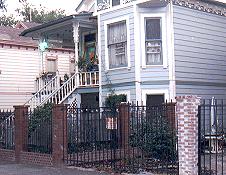
Puente (pictured below) committed her first murder when she killed her business partner Ruth Monroe in Sacramento, California, in 1982. She got away with that crime when the coroner ruled it a suicide but a month later she went to jail for drugging elderly people in order to steal from them. Although the judge who issued her sentences of five years in prison banned her from the company of the elderly, she started a correspondence with 77-year-old Everson Gillmouth while she was still behind bars. When she was released in 1985, Gillmouth picked her up. He planned to marry her. He gave her access to his checking account. He didn’t survive the year. His body was found in January 1986, beside the Sacramento River. His corpse lingered in cold storage until he was identified three years later. With this murder, Puente joined the list of the black widow killers.

With Gillmouth out of the way, Puente set up a business in a big Victorian house, in a neighborhood gone to seed, just two blocks from the governor’s mansion. She went into business renting rooms at cheap rates. Social workers soon counted on her for the placement of difficult homeless clients on their case management lists. Many of these individuals were elderly—in direct violation of Puente’s parole. But no one complained.

And no one was surprised when her lodgers suddenly disappeared. They were elderly or sickly or addicted to drugs. Puente displayed concern for their well-being and checked up on them when they took to their beds. No one realized that they were ill because they’d been poisoned by their kindly landlady.

People did notice the nasty smell. Puente claimed the odor was caused by dead rats under the floorboards, backed up sewer lines, and the fish emulsion she used to fertilize her well-maintained garden. Everyone in the neighborhood accepted her excuses. With each former tenant planted in the flower bed, Puente’s discretionary income increased allowing her to buy expensive perfumes and dresses and get a face lift. At the end, she was raking in $5000 a month in government checks written to the people she murdered.

When a missing persons report sent investigators to her boarding house on November 11, 1988, they discovered a disturbed patch of earth in the backyard. They found seven decomposing bodies in Puente’s beautiful backyard flower garden. She was ultimately charged with murdering nine of her boarders in order to steal their Social Security checks.

The jury hung on six of the charges but found her guilty on three of the homicide counts. She is now serving life without parole in the largest female prison in the country, Central California Women’s Facility near Chowchilla.

Her despicable crimes gave birth to a play that is part courtroom drama and part macabre romance--filled with Latin-influenced music and punctuated by dancing corpses. The New York Times calls it "a mythical play of operatic proportion," characterizing the world premiere as "a tale of magic, murder and seduction." MultiStages Theatre says it's a "multidisciplinary feast for the senses."

"The Judas Tree" runs from April 24 through May 11 at the CSV Cultural Teatro La Tea in Manhattan. Directed by Lorca Peress. For tickets and more information, visit here.


Sunday, April 27, 2008

Ink Blotter

Ink Blotter

In last week's Ink Blotter we discussed the case of 12-year-old Becca McEvoy (pictured left) after Becca's story was written about by sex-crimes prosecutor and WCI contributor Robin Sax. WCI thinks this case deserves more attention and we hope you join us today to continue the discussion.

Other WCI Blogs inked this past week include our Mystery Man--jury and
trial consultant, Robert Hirschhorn; the jury "de-selection process" by contributor and murder prosecutor Donna Pendergast; and the opening this past Thursday of the New York stage production of The Judas Tree. Contributor Diane Fanning told us the story behind the play which is based on real-life female serial killer Dorothea Puente.

On Wednesday, Kathryn Casey wrote about the subject of polygamy and the recent raid in Eldorado, Texas, of the FLDS (Fundamentalist Church of Latter Day Saints) compound. Andrea Campbell posted on the FBI's use of billboards featuring most wanted fugitives. And Pat Brown brought us the story of Cheryl Cottle, the apparent Black Widow who married the transplant recipient of her previous husband's heart. Finally, Donna Weaver dismantled the complex issue of the FBI's mishandling of confidential informants, an insidious issue that resulted in murder charges against former FBI agent John Connolly and others.

So please stop by WCI later this afternoon and let's talk about what's on your mind.