Monday, June 27, 2011
Does She or Doesn't She Want to Testify?
Monday, January 26, 2009
What Makes a Good Trial Lawyer
by Kelly SieglerThe opinions of individual trial lawyers—if asked what makes a lawyer a good trial lawyer—would be as varied as their own egos. Most laymen and the average citizen called down for jury duty probably assume that all lawyers are good trial lawyers or ought to be anyway. Isn't that what they are paid to do? And way too many lawyers who call themselves trial lawyers, when they aren't, would in some way try to describe themselves in answering the question.
The simplest answer I've given before when asked this question is "preparation." Wh
ile that is certainly true and a huge part of what makes any trial lawyer good at what he does, preparation alone could never explain it completely. Or even come close. Lots of lawyers try their hardest to be prepared. But does that necessarily carry over to the "presentation" aspect, the part that catches a juror's attention convincingly? Does preparation lay the groundwork for a sought after verdict, even most of the time? Eloquence perhaps. Tenacity. Aggressiveness. Intelligence. All of these qualities would seem to answer the question.
So do qualities like having a photographic memory or having a way with words. Having a commanding presence in the courtroom certainly helps.
Whatever adjectives you or others might use to try and describe what makes one lawyer a successful trial lawyer where another is not are probably all good answers. But what is that ONE quality or trait or characteristic without which a given trial lawyer fails to pass the test most of the time??
I believe it is the ability to know people.
To empathize with them. To understand what they must be thinking as you put on your case. To appreciate their unique perspectives. To see and hear your evidence and the opposing lawyer's case as if you were inside their minds and their hearts.
To evaluate what is going on inside the courtroom critically from someone's point of view besides your own.
Where does anyone, lawyer or not, get such a trait or ability?
Are you either born with the ability or not? Can a good trial lawyer lose such an ability the more successful he becomes if he allows himself to lose touch with his "old" way of thinking? Don't some people simply have no clue of what it means to understand others' perspectives?
Are how you are raised and where you are from two of the most important contributors to being able to understand, empathize and appreciate other people's opinions?
I would say that they are. For whatever reason someone might have been forced to or called upon to "get along" in the world or "adjust" to a difficult situation, contributes directly to making him deal with human nature. Because to deal with human nature, you have to try and understand it.
Tuesday, December 2, 2008
What Ever Happened to Jane?
by Vanessa Leggett Last fall, I wrote about a writer friend of mine who'd found herself in a moral quandary. The subject of her first true-crime book was on trial for murder. Again. My friend's publisher wanted her to attend the second murder trial for an updated version of her book. That was all well and good—until my friend learned she would not be able to cover the proceedings. She had been named as a witness. So that we're all on the same page, we'll revisit my first story, "Jane's Affliction," and then I'll fill you in on what happened with my friend:
Meet Jane I have this friend. We'll call her Jane. She's a journalist and true-crime author. For reasons that will shortly become evident, Jane would prefer to remain anonymous. Actually, she'd rather be forgotten altogether, and by one person in particular: a prosecutor who recently tagged her.
See Jane Subpoenaed
I learned of Jane's predicament by e-mail. In my Inbox was a message with the subject line "Whoa! What does this mean?":
I just got my mail out of the box and found a big package from the [redacted] DA's Office. In it was the transcript of my interview with [the Defendant] and a note that said here are copies of your reports and transcripts of your involvement in the [redacted] case. . . . What does this mean? Is this a hint that I'm going to be called to testify?
During Jane's research ten years ago, she'd interviewed the man who would go on trial for his life a second time—not for the murder Jane wrote about, but for another killing. In the 2007 capital murder trial, the prosecution wanted Jane's testimony to show a consistent modus operandi in the separate slayings.
For Jane, the sticking point was that the prosecution stated its intent to seek the death penalty. Jane is against capital punishment.
See Jane on the Fence Jane sought my advice because she remembered a subpoena I received in a murder case. I was practically in tears when I discussed my situation with her. So when Jane e-mailed me, she expected I would empathize. And I did, to a degree.
But my dilemma had been different from Jane's. My concern was with protecting my sources. Jane is bound to protect a core belief. And she is tormented by the thought of violating it:
The more I think about it the more uncomfortable I am. They're going for the death penalty. And I'm just not sure I can help put someone to death, even if he is a murderer. . . .
Something about reading an official document that "commands" you to do something you consider fundamentally wrong messes with your mind. Reason tends to leave as abruptly as the subpoena arrives.
I tried to break things down into terms she could live with. I reminded Jane that this type of proceeding, a capital case, contains two trials: In the first, called the "guilt/innocence phase," a defendant's culpability is determined, and if found guilty, the accused is convicted. In the second stage, known as the "punishment phase," a penalty is assessed.
In my reply, I tried to ease Jane's conscience: "You need to put the death penalty out of your mind. Prosecutors may seek it, but it's up to the jury to choose death as a punishment."
See Jane Take a Stand(?)
[I]n my heart, mind, in every limb of my body and soul, I think the death penalty is wrong, utterly wrong. So how can I grease the wheels to it? . . . Beyond my moral and ethical beliefs, I also disagree with their death penalty decision because it gives [the Defendant] what he wants. And it seems to me that to [him] the greater punishment, the more horrible punishment, would be life in prison since that's the very thing he did not want.
See Jane ______________
So what did Jane do? . . . It's not a secret anymore, nor is the identity of my friend, Suzy Spencer. Today, her publisher re-released her first book, WASTED, and you can read all about the capital murder trial that Suzy was caught up in.
An Austin Chronicle reviewer called the book "everything a true crime book should be: lean, fierce, and unsparing." The story is riveting. From the back cover:
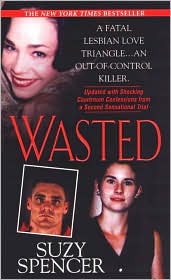
In 1995, Austin, Texas was rocked by the brutal murder of a lesbian princess named Regina Hartwell. Even though Regina's body was burned beyond recognition, within days police had two suspects. One was the beautiful ex-cheerleader who was the object of Regina's desire. The other was a man who would take the fall for murder. . . . In this new edition of her bestselling book "Wasted", true crime master Suzy Spencer chronicles a fatal love triangle—and lives driven out of control by sexual desire, drugs, and shocking childhood demons. Four years after Regina Hartwell's murder, a new charge was brought against one of her suspected killers. Now, Suzy Spencer adds a new chapter to "Wasted"—detailing a killer gone wild, a nerve wracking legal standoff, the shocking twists that would take place in a second, explosive trial. . . .
Long story short, Suzy did not dodge the trial. She flew to California, not in compliance with the prosecution's subpoena, but at the request of the defense. Her presence meant she would have been available for questioning by either side, though she might have refused to answer for the State. She did not end up testifying at all. Court was canceled that day—in part, Suzy explained, because Justin didn't want any witnesses testifying on his behalf for fear it would ruin his chance of receiving the death penalty.
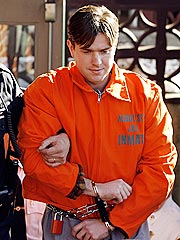
In the end, Justin Thomas was convicted and sentenced to death. Without putting Suzy on the stand, the State opted to use a portion of the transcript from her taped interview, which was introduced in the punishment phase. As it turned out, Justin's own words netted him a death sentence.
After Suzy's legal battles with this book and with BREAKING POINT, on the Andrea Yates case, she considers the 10th anniversary edition of WASTED her "good-bye" to true crime. Her entry into true crime—hitting the New York Times best-seller list with her first book—was as unconventional as her exit. The "true crime master" has converted to sex book mistress, working on a memoir of sex in America for Berkley. Few would blame her for trading Draconian courtrooms for Hedonism resorts.
As for Justin Thomas, he is now #G11032 at San Quentin State Prison, home of Scott Peterson and Richard Ramirez. Like most prisoners of California's Death Row, Justin will probably die waiting to be executed (assuming the current moratorium is lifted). If so, his "death sentence" will have been converted into what he feared more: the rest of his life in prison, with little hope of his suffering cut short.
That statistics indicate Justin Thomas will not be executed at all should bring Suzy some measure of relief. But not enough to stay in true crime.
TweetThursday, November 6, 2008
Spector's Specter
The runaway roller coaster of a murder trial against Phil Spector, the aptly named celebrity songwriter and record producer, is off and running again.
Testimony began Monday in the trial where Spector, 68, is charged with killing 40-year-old former actress Lana Clarkson in 2003.
Merriam-Webster's dictionary defines the word specter as "something that haunts or perturbs the mind" and there is no question that this case does both.
After three dates on a single night, Spector met up with Clarkson,
down on her luck and working as a hostess at the House of Blues on Sunset Boulevard in West Hollywood. Clarkson (pictured right) left the club with Spector shortly after midnight the evening of February 3, and was later found shot at the mansion where he lived alone in the Los Angeles suburb of Alhambra.Emergency responders to the scene found Clarkson dead in the foyer of Spector's mansion with a single gunshot wound to the mouth. Spector claimed that Clarkson had accidentally shot herself when she tried to kiss his gun. Kiss his gun? Give me a break.
While awaiting trial Spector remained free on a million-dollar bond. After numerous postponements, the first round of the circus called a murder trial began with a month-long jury selection in April 2007. Twelve jurors, including nine men and three women—along with seven alternates—were ultimately seated to hear the case.
When the trial progressed to testimony, the courtroom became a theater of the bizarre. The frock-coated defendant with electrified hair watched from the hot seat as a strange parade of self-promoters postured and preened in the limelight of the high-profile celebrity trial. From Clarkson's so-called best friend Irene "Punkin pie" Laughlin whose attire gained as much attention as her testimony . . . to convicted Hollywood madam Jody "Babydol" Gibson . . . the colorful cast of characters parading in and out of the courtroom seemed more suited to a television sitcom than to the seriousness of a murder trial.
Lost in the translation was the clear-cut evidence of Spector's guilt. Multiple witnesses testified about Spector's long history of violent confrontations with women, his obsession with guns and his previous trigger-happy threats to shoot various women in the head. The Medical Examiner found bruising on Clarkson's tongue consistent with the gun being shoved in her mouth and testimony from Spector's chauffeur revealed that shortly after the shooting Spector exited his mansion saying "I think that I shot somebody."
At the conclusion of last year's testimony, after a week-long impasse, jurors delared that they were deadlocked. A mistrial was declared on September 26th 2007. Spector remained free on bond awaiting retrial while all previous members of his defense team—with one exception—either resigned or were dismissed by Spector.
In a bizarre post-trial twist, Spector, apparently eager for another courtroom fight, sued his first attorney Robert Shapiro civilly to recoup his million-dollar retainer fee. Spector alleged that Shapiro had used the case for the purpose of garnering publicity for himself. Spector further claimed that Shapiro abused his trust and that he might not have been charged with the crime but for Shapiro's self-promoting actions.
The retrial, thankfully, is already showing signs that it will be a toned-down version of the first trial's debacle. Spector's disjointed legal team of the first trial has been replaced by veteran attorney Doron Weinberg. The jury selection was accomplished in half the time that it took in the first trial and both sides project that the trial will take about half of the six months that it took to try last time.
Even Spector's appearance is considerably toned down this time around. His "finger in the electric socket" hairstyle has been replaced by a much flatter and more modified style, while his frock coats have been replaced by long-coated suits.
Let's hope that this time the focus is where it belongs, squarely on the actions of a man whose history, words, and behavior scream out for a guilty verdict and on the fact-pattern that screams out for the justice that has been eluded for far too long.
Statements made in this post are my own and are not intended to reflect the views, opinions, or position of the Michigan Attorney General or the Michigan Department of Attorney General.
Friday, October 24, 2008
A "Well Deserved" Guilty Verdict
by Tina Dirmann When the guilty verdict finally came for Skylar Deleon, he didn't weep. He didn't sigh. He didn't blink. Skylar just stood there, staring blankly, with the same cold expression I imagine he wore when he callously took the lives of three people whose biggest failing in life was to trust him.
On Monday, an Orange County jury took just two hours to deliberate before announcing that Deleon was guilty in the murders of a retired couple, Tom and Jackie Hawks, and the slaying of a former pilot, Jon Peter Jarvi. The details of the crimes, which I recounted in the book Vanished At Sea, are chilling, to say the least.
I remember, when doing press for the book, I often told interviewers that in all my 15 years as a
crime reporter, I'd never covered anyone so bereft of humanity as 27-year-old Skylar Deleon. This is a man who, minutes after slitting the throat of one victim, boasted to a relative, "You're dealing with the devil now." Indeed, if evil does exist in this world, it is embodied within the skin of Skylar Deleon and
his wife, Jennifer Deleon, 25, who was convicted for her part in the murder in late 2006. The case that got the most attention from the media involved Tom and Jackie Hawks, who turned up missing in November 2004, shortly after posting an ad to sell their home, a 55-foot yacht they called Well Deserved. Skylar and his young, pregnant wife, posing as buyers, answered the ad. After gaining their trust, Skylar arranged to return to the boat with a few associates to take the Well Deserved for a test ride.
But while at sea, Skylar used a taser to overpower the couple, then handcuffed them and held them at gun point while forcing them to sign a document transferring the boat title and power of attorney to Skylar.
With the help of associates Alonso Machain and John Kennedy, Skylar then tied the couple to one of the boat's anchors and, while Jackie tearfully begged for their lives, dropped the anchor overboard. The couple was hurled overboard and sank to their deaths.
Skylar, an unemployed bit-part actor, and his wife, a hair dresser, insisted they bought the boat and the Hawks drove off to Mexico. The Hawks' loving family knew their relatives—responsible, respectable, outgoing people—would never drop out of touch. They assumed the worst. And that worst was confirmed when accomplice McCain, a guy more dumb and naive than evil, confessed to police.
No less horrific was the death of Jon Jarvi, whom Skylar befriended only to swindle him out of $50,000 in a bogus real-estate deal. Skylar lured Jarvi to Mexico, supposedly to surf and talk over this "deal of a lifetime." But once there, Skylar drove Jarvi down an isolated dirt road, calmly slit his throat, then left him to bleed out, alone, on a deserted roadway.
It took nothing short of heroic investigative efforts on the part of the Newport Beach Police Department to tie the murders back to Skylar and his main accomplice, the innocent-looking Jennifer Deleon, who, at every turn, covered for her husband and lied to the police.
In the end, Skylar and all of his accomplices landed in jail. Jennifer is serving life behind bars. Alonso and another accomplice will probably get reduced sentences for cooperating in the investigation.
But death will surely come for Skylar, and, likely, John Kennedy, who notably kicked Tom off his feet so he would more easily slide off the boat and into the frigid waters that tragic night—then grabbed a rod onboard and fished all the way home. Kennedy, a known Long Beach gang member, will face trial next year.
Skylar's death penalty case begins on Wednesday. You can bet his attorneys will drag out all the details of Skylar's terrible childhood. Basically, his dad was a drug dealer who verbally abused his son. Yeah, his tender years were rough. But I can't imagine that's going to be enough to excuse his sins.
This jury already got it right once. I'm sure they will again.
And I know, no one is more anxious to see the ultimate penalty pronounced than the Hawks' son, Ryan, who is the spitting image of his deceased father. "Let's just get on with it," Ryan said simply after the verdict was announced. I couldn't agree more. . . .
Thursday, October 9, 2008
Broken Circle of Friends
Residents of the upper-class neighborhood never feared violent crimes occurring. Until July 18, 2003, that is, when four young lives were taken from the community and families were changed forever.
Christine Paolilla, now 22, is on trial not only for the death of her best friend Rachael Koloroutis, 18, but also for three more victims who were shot multiple times and left for dead in their homes. Paolilla is facing life in prison since she was only seventeen at the t
ime of the murders. In opening statements, Harris County prosecutor Rob Freyer stated that Paolilla shot her best friend, Koloroutis (pictured right), then returned to the home and pistol whipped her as she was crawling to get to the phone to call 911. The other murder victims were 18-year-old Tiffany Rowell, her 19-year-old boyfriend Marcus Precella, and his cousin Adelbert Sanchez, 21.
According to Sgt. Tom Ladd, a veteran homicide investigator for nearly three decades with the Houston Police Department, was taken aback from the “gory scene” where the victims were found in their home. He stated that all the victims sustained multiple gunshot wounds and that there were over 20 shots fired.
Investigators initially believed the murders were drug-related. According to witnesses, Sanchez and Precella were selling drugs out of their house and there were people in and out of the house. Investigators interviewed witness after witness and followed up with leads until all leads were exhausted. There was even a $100,000 reward raised by family members and friends for any information leading up to the murder charges of their loved ones.
As months went by, investigators diligently continued following up leads and any tips they would receive. Until one day in 2006, investigators received the call they were waiting for. The investigation led to Christine Paolilla and her boyfriend, Christopher Snider, who were developed as suspects. On July 20, 2006, approximately three years to the date of the murders, Paolilla was arrested in San Antonio. Snider committed suicide in Greenville, South Carolina shortly after he learned he was charged with the quadruple murders.
Paolilla in her st
atement to Sgt. Breck McDaniel stated that Snider forced her to shoot and kill her friends and that she was afraid he would kill her if she didn’t. Defense attorney Mike DeGeurin (pictured left with Christine) told jurors in his opening statement stated that Paolilla was "a lost, sad little girl, alone in the world and she was influenced by bad guys who became her boyfriends.” He further went on to state that after Snider finished firing his gun, he forced a pistol into Paolilla’s hand and made her shoot the victims. Paolilla stated she heard multiple gunshots and heard the girls screaming. She just wanted the gunfire to stop. Paolilla stated that Snider held the gun in her hand and made her shoot her friends.
After Paolilla left the house, she went to work at Walgreen’s in Seabrook, Texas. She started crying and became hysterical when she saw blood on her hands.
But years later, after Paolilla married, she gave her husband, Justin Rott, another version of how the murders took place. According to Rott, Paolilla told him that she went back to the house after the shooting and found that Koloroutis was still alive. Rott said that Paolilla finished the job by beating Koloroutis to death while she was gasping and choking on her own blood. Cell phone records revealed Koloroutis attempted to call 911 on her cell phone at 3:12 p.m., a few minutes before she died.
Trying to Control the Uncontrollable
Ever thought about what it feels like to be the person in charge of a trial? The orchestrator, if you will, of the witnesses and of the evidence? The person who should by all appearances have the presentation completely planned and under control? What does it really feel like to be the prosecutor trying a serious case?
I can tell you. In a word, miserable. Not fun. Sick to your stomach. Scary.
The truth might surprise a lot of people. It might even surprise a lot of long-time prosecutors. Yeah, yeah, we know. . . . We've all heard the lectures and the stories about how "exciting" and "challenging" and "exhilarating" it is to be a trial lawyer. Anyone who truly enjoys being in a trial is to be admired. I wish I could feel that way.
Truth is there aren't a lot of other situations in the job market very much like the stress that comes with preparing for and enduring a jury trial. Throw into that conflict the fact that a heck of a lot of prosecutors tend to like to CONTROL their world as much as possible and their "world" is loaded with not
Least in our control are the witnesses, as much as we like to think we can prepare
them. . . . Other uncontrollables: the jury we ultimately end up with, because we kid ourselves that we picked them—funny; the Judge whose courtroom we find ourselves attempting to orchestrate our "symphony" in; the defense attorney, whose sole purpose it is to try to derail our carefully laid plans; the scheduling, the timing, the cross-examination of every, single witness. . . . Geez, I'm getting sick just thinking about all of it.
And what about the part over which we really think we have control? Our own performance?? How brilliantly we PLAN to make a point or argue our case or kick some butt. . . .
Maybe all of our angst and nerves and stress are the reasons why we resort to such lame and even silly attempts to convince ourselves that we are truly in control. It is pretty amusing to know that a lot of us have ourselves convinced that wearing a certain color on the "big" day will bring us luck or that wearing a certain color will ward off evil spirits. Think I'm making this up? WCI's defense lawyer Katherine Scardino recently disclosed she has a fairy wand.
Believing that if we eat the exact same food every single day of trial or placing our trial "tools" on the table in the courtroom the exact same way every day will guarantee a successful resolution are other "tricks of the trade." Following one of those "tricks" led to a friend of mine getting really sick of eating red Jell-O after three weeks in a trial.
The most commonly seen "side effect" of being in trial is losing weight. We even call it a "trial diet." There aren't too many prosecutors out there who are able to eat a real meal while trying to put on a "perfect" presentation of evidence. Heck, most survive on Diet Cokes and don't eat at all! It once got so bad during a trial that the jury asked the bailiff to see if there was something wrong with me because I was starting to look so lousy after about week five.
So now you know. The next time you see a prosecutor looking ever-so-cool in the middle of a trial . . . nothing could be further from the truth.
Wednesday, October 8, 2008
An American Girl on Trial for Murder Trial in Italy - The Amanda Knox Case
On November 1, 2007, Meredith Kercher, 21, was found semi-naked with her throat cut in her bedroom of the student house she shared with Knox (pictured center) in the Italian hilltop town of Perugia.
Her Italian ex-boyfriend, Raffaele Sollecito (above, to Amanda's right), and another man, Rudy Guede (left), are accused of sexually assaulting, brutally murdering and stealing money from Kercher, Knox's British roommate in Perugia, the ancient learning hub near Rome where Knox was spending a year abroad from the University of Washington.
Pre-trial hearings are ongoing in this case–and a murder trial is finally on the horizon.
Peter Van Sant is a correspondent with me at 48 Hours–he has been working on this case for months. For those who missed the Mystery Man column he wrote for us in April, here it is. For our regular readers, here's a primer on an upcoming trial worth following.
by Peter Van Sant
Amanda Knox is the classic all-American girl. She was a straight-A student at Seattle Prep, one of the top Jesuit high schools in the country. She plays guitar and has a wonderful singing voice, starring in a production of "Annie."
A tall brunette, Amanda's beauty turns heads wherever she goes. Her smile radiates. The twenty-one-year-old's biological parents divorced when Amanda (pictured right) was very young, but the family remained close. Mom is a math teacher. Dad is in management at a major department store. Her step father is in finance. All are good people. Amanda went on to attend the University of Washington in Seattle, where she discovered her true passion in life, languages. She speaks fluent German (her grandparents on her mother's side are from Germany), Italian and some Japanese and Russian. Her friends describe her as friendly, helpful, someone who is concerned about others.
While studying in Seattle, Amanda learned about a school in Perugia, Italy, called the University for Foreigners. Perugia is a beautiful medieval town about a two-hour drive north of Rome. The university offers students from around the world an opportunity to study in Italy. For Amanda, who was always interested in learning about different languages and cultures, it seemed the perfect place to go.
So while attending the University of Washington, Amanda worked three part-time jobs on the side. Eventually, she saved up more than $7,000. She was accepted into the University for Foreigners, and late last summer, she arrived in Perugia to begin a year of study abroad.
Six weeks later, Amanda was in prison—a suspect in the murder of her roommate, Meredith Kercher of greater London, England. Meredith (pictured left) was a lot like Amanda. She attended Leeds University in the U.K. and dreamed of studying abroad. She got her chance last year and moved to Italy, where she attended a different school from Amanda's, the University of Perugia. Meredith needed a place to stay, and she eventually found a house she could rent with two Italian students and a young woman from Seattle, Amanda Knox.
On the night of November 1, 2007, Meredith was last seen walking home after having dinner with friends. Amanda wasn't home. She was spending the night at her boyfriend's house.The next morning, Amanda claims she went home to shower and change her clothes. She was upset that someone had left the front door open. After her shower, when she came out of the bathroom, Amanda says she noticed some blood on the floor. She tried calling her roommates, but no one answered their cell phones. Meredith's bedroom door was locked.
Amanda called her Italian boyfriend, Raffaele Sollecito, who walked over to the house. Just then, police arrived. Meredith's two cell phones had been found in someone's yard. Police had come over to the house to return them.Amanda told the police of her concerns. They broke open Meredith's door and discovered her body lying on the floor, covered with her bedspread. There was blood everywhere, including bloody finger stains on a wall.
Meredith's throat had been slashed. Authorities believe she may have taken nearly two hours to die. In the room were some tantalizing clues, a bloody fingerprint and a shoe imprint left in Meredith's blood on the floor.
Amanda Knox wa
s questioned by police. She was later taken back to the crime scene with her boyfriend. Police wanted to see how they would react. They held each other and kissed several times, quick pecking-style kisses. Since Amanda's house was now a crime scene, she didn't have access to her clothes. Later, the two went to buy underwear for Amanda. The clerk claimed they were talking about having steamy sex that night. Authorities thought the behavior was cold and insensitive.
Four days after the murder, Amanda and her boyfriend were brought back to the police station for questioning.
After an all-night, 14-hour session in which Amanda was denied sleep, food, or an attorney, she agreed to sign a statement saying she HAD been at the house that night and that she thought she remembered her boss, Patrick Lumumba, killing Meredith Kercher. You should read her statement. It's written in bizarre English, clearly not dictated by Amanda.Amanda, Patrick Lumumba, and Raffaele Sollecito were all arrested.
Police developed a theory of the crime. They claimed that Amanda, Patrick, and Raffaele wanted Meredith to participate in kinky four-way sex. When Meredith refused, she was assaulted and murdered. The theory was fed to the news media in Italy and Great Britain. For weeks, tabloid newspapers gave the case sensational front-page coverage. Italian television also did extensive coverage. Much of the country saw Amanda as "The Dark Angel of Seattle." That coverage made its way to the U.S. as well.
Through her parents, Amanda has proclaimed her innocence. 48 Hours Mystery hired a renowned private detective, Paul Ciolino of Chicago. The investigator went to Italy to examine the case against Amanda. Ciolino has spoken with witnesses, key investigators, and people who knew all the suspects involved. He has come up with a startling conclusion.
This is a railroad job from hell," says Ciolino, a cigar chomping, pug-faced detective, who specializes in wrongful arrest cases. "There's not a shred of evidence putting this girl at that murder scene. But they've gotta convict her now, or they look like fools."
48 Hours Mystery has learned disturbing new details of what happened during Amanda's 14-hour interrogation that led to her "confession," which was not recorded or witnessed by a third party.
Paul Ciolino also questioned one of the most important witnesses in the case, a woman whose story helped form the police theory. What the woman tells Ciolino, while a 48 Hours Mystery camera is rolling, turns the case upside down.
In Italy, a person can be held without charges for up to one year. Amanda has still not been charged with any crime. She sits today in a maximum-security prison, allowed to see her parents twice a week for a brief time. Her parents say she is frightened. This is as disturbing a case as I've ever covered. (Click here for the full story.)
Friday, August 15, 2008
When Cheating Becomes A Crime
ped to keep it a private matter. That, of course, is impossible if you’re running for public office. And the newest question is whether Hunter’s child was fathered by Edwards. He is denying—but, of course, his denials don’t carry much weight since he denied the affair for months and then admitted it in installments.Our blog is about crime, and I know this isn’t a crime—except against his wife and children. Unfortunately, it’s not even that surprising in this day and age. We have come to expect people to cheat—especially men in high-profile positions, it seems. Edwards said he just got to the point of being very narcissistic, so I guess he thought the rules didn’t apply to him.

In a Texas case near the Plano area, a man’s narcissism and tendency to cheat DID rise to the level of a crime—at least according to Collin County prosecutors. Last July, Philippe Padieu, 51, (left) was arrested at an Addison nightclub and charged with four counts of aggravated assault.
His crimes? He was dating several women at the same time—each of the women thinking they were in exclusive relationships. Some of these “relationships” had been going on for years. But as much as most of us women would consider that a crime, legally, it isn’t.
His crime, which his girlfriends/victims discovered over time, was knowingly spreading the HIV virus to each and every one of them, according to his charges.
Padieu tested positive for the human immunodeficiency virus, which causes AIDS, in fall 2005, a police sergeant told the local paper. Police said they believe he "intentionally, knowingly or recklessly caused serious bodily injury by creating a substantial risk of death by the exchange of bodily fluids."
He not only betrayed these women’s confidence and trust—he gave them what amounts to a death sentence. As a 48 Hours producer, I often speak to family members of victims who have been killed. But I’ve never spoken to the victim of a murder (even though it’s not called that legally) before he or she died.
When I first heard about this story, I was very sad for these women—all beautiful, independent professional women. They truly thought they were dating a nice man . . . and were shocked to find out he was cheating. Then imagine when they, one by one, discovered that they each had HIV.
This man has not yet been tried. And he, like everyone else in the country, deserves a fair trial. But I would not want to be him when each of those women likely takes to stand. She’ll describe their relationship, their discovery—and their sentence.
He is facing five to 99 years in prison for each count. My guess is the jury will lean toward the high side of those sentences.
Wednesday, July 23, 2008
KELLY SIEGLER ON INTERNET RADIO TONIGHT!
Tonight at 10:00 ET, tune in to "War on Crime Radio" to hear Kelly Siegler discuss a murder case that took prosecutors 27 years to make. Today, jurors began deliberating the fate of Aaron Foster, on trial in Minnesota for the shooting death of his girlfriend Barbara Winn in 1981. Last year, when Foster was finally charged, the victim's family stood beside the sheriff who accused the county prosecutor of "dragging his feet": "We are befuddled as to why they haven't pressed [charges]," the sheriff said at a televised press conference. "It's either lack of competency, lack of caring, lack of making it a priority. . . ."
Kelly will also discuss the worldwide controversy surrounding the upcoming execution of José Medellin for the sadistic slayings of Elizabeth Peña and Jennifer Ertman. Kelly was a prosecutor in the multiple gang-rape murder case. Listen to the live broadcast tonight at 10:00. Kelly will be taking callers' questions and will be joined by WCI's Policewoman / Novelist
10:00 p.m. ET / 9:00 p.m. CT
Monday, June 30, 2008
"Life" for Neil Entwistle Means Death in Prison (One Way or Another)
by Michele McPhee
e wall, just shy of his height. Entwistle was issued state-owned sheets, a pillow, and a blanket. The cell has a metal footlocker; a desk; and stool and one metal shelf hanging on the wall. He will be completely isolated with no contact with the general population at the prison, said Cara Savelli, a spokeswoman for the DOC.
enacts the murder. He jammed the door of Geoghan’s cell with a paperback book so correction officers could not stop him. He punched the priest in the face. The priest fell to his knees at which point Druce (pictured left) bound his hands behind his back with a white T-shirt. Druce pushed the priest to the floor, face down and proceeded to strangle him with a tube-sock tourniquet that he tightened with the priest’s own sneaker.
Saturday, June 14, 2008
Sex Addiction as a Motive? Notes from the Murder Trial of Neil Entwistle
E
ntwistle, 29, was arrested in E
ngland in February 2006, weeks after the bodies of his 9-month-old daughter and wife Rachel, 27, were discovered in the master bedroom of their Hopkinton home. Entwistle (pictured right) told investigators that he found them like that after running errands on a Saturday morning.In court Friday, prosecutor Michael Fabbri recalled the scene for jurors, recounting a phone conversation between a Massachusetts state trooper and Entwistle, who called from England. "After I came home and found them in the bed, I covered them up,'' Entwistle said.
E
ntwistle's parents, Yvonne and Clifford, along with his younger brother Russell, attended the court proceedings this week and told reporters that Neil was "one-hundred percent innocent."Y
esterday, as
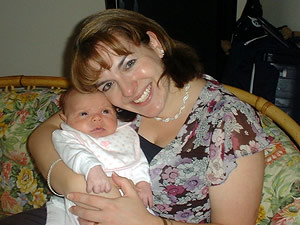
defense attorneys described Neil as a devoted dad who loved his wife and baby (pictured left), his mother wept behind him as her husband patted her leg. She has spent much of the week blowing kisses to the accused killer as he sits in a dark suit with a seemingly smug smile on his face. When Entwistle was arrested he was carrying a note to himself about selling the story of his murdered family "to the highest bidder!" He also had list of hookers and the scrawled phone number of an ex-girlfriend he tried to look up in England. W T
Tuesday, June 3, 2008
Reporters on Trial - Why I Won't Testify in the Murder Trial of Neil Entwistle
by Michele McPheeMartha's Vineyard is gorgeous this time of year. In fact, despite the real estate slump, the average hotel room on the island can still fetch upwards of $600 to $700 a night.
No wonder
Neil Entwistle's attorneys want to move his trial to Edgarto
wn Superior Court, a cozy, picturesque courtroom that serves Cape Cod and the islands of Nantucket and Martha's Vineyard. Entwistle is the Englishman charged with pumping a bullet into his 9-month-old daughter's belly, and his wife's head, on a cold winter's night in 2006. A
fter the
killings, Entwistle (pictured below with wife and child) fled the country, according to prosecutors, who say he even left traces of gunshot residue on a kitchen knife, bolstering investigators' theory that the plan was murder-suicide. Only Entwistle didn't have the guts to commit suicide. W
hy the change of venue? Well, Weinstein argued that my new book, Heartless, the True Story of Neil Entwistle and the Brutal Murder of His Wife and Child, released today, will make it impossible for him to defend his client from a prejudiced jury. And what better place to find a fair jury than a gorgeous seaside island at the height of the summer crush? After all, lodging for the accused British killer and his legal team would be picked up by the Massachusetts taxpayers – not by his attorneys, Elliot Weinstein and Stephanie Page.T
he selection of the jury who will decide Neil Entwistle's fate began yesterday and will continue this week. On Friday, Weinstein asked the Honorable Diane Kottmyer to consi
der a motion to change venue, to move the Woburn-based trial to the Cape, arguing that the book and the publicity surrounding the case will make it impossible for Entwistle (attorney and client pictured right) to get a fair trial. (With the British invasion of reporters from the United Kingdom flooding into Massachusetts right now, he hasn't seen publicity yet. I remember all too well the trial of the English au pair Louise Woodward who was convicted of shaking a baby to death that was in her care. The British press corps resemble European soccer fans, crushing and often over-zealous.) After seeing the strip mall that the Entwistle trial will unfold in, I can see why Weinstein would rather spend the summer on Cape Cod than in Woburn. B
ut I believe that the judge recognizes the court would be hard pressed to find a reasonable alternate location where a jury has not heard at least some of the details of this gruesome murder. And I think she also realizes that Rachel Souza's devastated mother, her brother, and her step-father have every right to attend the trail – without having to endure the additional hardship of a ferry ride, expensive lodging, and a crowded courtroom. That's why Kottmyer denied Weinstein's request.S

till, the lawyer is expected to ask again this week – armed with a copy of my book. Earlier this month, he hit me with a subpoena with a plan to compel me to reveal a confidential source regarding a suicide note his client had penned him from the slammer. That case was found to be moot after prosecutors said the suicide note would not be used in the Entwistle trial.S
o the case that will unfold this week is not just a horrible allegation of domestic violence. It's a case for First Amendment lawyers to watch closely so we can finally bring a reporter's shield law to Massachusetts. Thirty-two other states have laws protecting reporters from being forced – under the threat of jail or financial penalties – from revealing their sources. It's a critical First Amendment issue and one that could continue to unfold as the Entwistle trial gets underway.W
hy? Because Weinstein has told other reporters that he could hit me with another subpoena about the sourcing in the book. And, again, I will answer with the same refrain I have used as a crime reporter for two decades:I have never revealed a source, and I never will.