Showing posts with label Jose Ramos. Show all posts

Wednesday, May 18, 2011

WCI Featured Author: Lisa Cohen

Today, we’re kicking off our series featuring the authors of Women in Crime Ink starting with the fabulously talented Lisa R. Cohen. Lisa is best known for her book AFTER ETAN, which chronicles the disappearance of 6-year-old Etan Patz, who disappeared while walking to school in New York City on May 25, 1979. The disappearance of Etan Patz was one of the first cases that spawned a nationwide interest in missing children. Never found, Etan was declared dead in 2001. Prime suspect Jose Ramos is currently incarcerated for the sexual molestation of several boys—but he has never been charged with Etan’s abduction. However, in early 2010, the Manhattan District Attorney’s Office reopened the investigation into Etan's disappearance.

Lisa Cohen is also an Emmy-award winning television news magazine producer with more than 20 years of network news experience at ABC and CBS News. At “PrimeTime Live” and then for “60 Minutes II,” she produced reports for Diane Sawyer, Sam Donaldson, Peter Jennings, Cynthia McFadden and others on topics as diverse as the right to bear arms, have abortions and exercise the death penalty. She has covered some of the biggest moments in recent history including TWA 800, the Oklahoma bombing, and the September 11 terror attacks. Her 1996 one-hour documentary for ABC News PrimeTime Live, “Judgment at Midnight,” won multiple awards, including the NATAS Emmy; CINE Golden Eagle; International Film and Television Award; and the Foundation of American Women in Radio and Television “Gracie” award.

In addition to AFTER ETAN, Lisa is hard at work on a long-term documentary following one extraordinary woman who spent a year fighting (and beating) breast cancer, which then inspired her to take on the American health care system. Cohen is also a media consultant and teaches journalism/television production. She is an adjunct professor at Columbia University’s Graduate School of Journalism,and recently was a Princeton University Ferris Professor of Journalism.

Lisa has received critical acclaim and stellar reviews for AFTER ETAN, including:

"When our son, Adam, was abducted in 1981, my wife, Revé, and I felt no one could really understand what we were going through. Then we met Julie and Stan Patz and found that we were members of a horrible but exclusive club. Their courage inspired us then and inspires us now. Reading AFTER ETAN, made me even more grateful for dedicated public servants like the incredible prosecutor who ultimately produced some measure of justice for Etan. Every American needs to know Etan's story."
John Walsh, “America’s Most Wanted”

An engrossing account of a watershed missing-child case...

…The author tells the complete, heartbreaking story, from day one of the boy’s disappearance to his family’s continuing efforts to bring a rapist and killer to justice. First-time author Cohen, who covered the case for 60 Minutes and PrimeTime Live, admirably avoids a hysterical approach to the shocking subject matter. Instead, she lets the disturbing facts speak for themselves. The author had access to an astounding amount of information, including multiple interviews with Patz’s parents and former chief prosecutor Stuart GraBois…

...A masterful combination of deep human interest and detailed criminal investigation into a parent’s worst nightmare."
Starred Review, Kirkus Reviews

In the first-ever book on this celebrated case, Lisa Cohen finally gives us the answers behind the most vexing child kidnapping since the Lindbergh Baby. It’s a harrowing portrait of a family's grief and an engrossing detective story. A powerful lesson in humanity tested and triumphant.”
Nicholas Pileggi, author, Wiseguys, Goodfellas, Casino

For more on Lisa Cohen and AFTER ETAN, visit her website here.


Wednesday, June 9, 2010

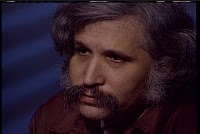
Get to know Jose Antonio Ramos


by Lisa R. Cohen

As I wrote in my last post, Cyrus Vance Jr. is beginning his new term as Manhattan's District Attorney by taking a different tack than his predecessor, the legendary Robert Morgenthau.

Morgenthau meted out criminal justice in New York City for three decades until finally retiring in January. Throughout almost his entire reign, he demurred from pursuing the infamous Etan Patz case. "Not enough evidence," he'd say, on the few occasions he even deigned to comment.

The case involved the disappearance of six-year-old Etan Patz off the streets of New York on his way to the bus stop, walking the two blocks on his own for the first time ever. He was never seen again. The mystery sparked a nationwide manhunt and a shift in our cultural sense of safety.

Even if you didn't read my last post, you would know from reading any one of numerous headlines, or watching ABC News Nightline's lengthy top story last Friday, that Vance has revealed he's taking a fresh look at the 31-year-old case with an eye to (hopefully) bringing charges against Jose Antonio Ramos.

Ramos is coming to the end of a very long prison stint in Pennsylvania for molesting two boys back in the '80s. He's due out in November 2012, unless a new charge can start the clock ticking again. Since there's no statute of limitations for murder, nor, in some situations, for felony kidnapping, the Patz case might be the way to do it. But people need to know more about Ramos to understand why people like Stuart GraBois, a former Assistant U.S. Attorney, have fought so hard for so many years to keep him locked up.

Ramos's mug shot, grim and forbidding, has been splashed across the tabloids for years, but few have ever really talked to him, or even met him.

I have, and it's not an experience I'd want to repeat. When he refused to talk to me for my book, AFTER ETAN, I was disappointed. But part of me was glad not to face the barrage of invective and crazy I'd been through on the first go round, for a prison interview I produced at ABC News back in 1991, the only time Ramos has ever talked on camera.

Ramos has been locked away since a June day, much like this one, in 1986, when he was arrested in his converted school bus by the side of a highway. He'd gotten stuck there when the bus sputtered to a halt, just as he was about to hit the interstate heading across state lines.

He was trying to escape the Pennsylvania State Police, who'd put out a BOLO (Be On the Lookout) for him, once they'd heard the story of a sweet faced eight-year-old I call Joey. Joey and his parents walked into a Western Pennsylvania barracks, sat down in front of a video camera, and with little hesitation and no artifice, Joey told police that over a period of two days Jose Ramos had anally and orally assaulted him several times.

Joey didn't appear traumatized, just slightly uncomfortable, mostly unaware that he would be affected for the rest of his life. That's exactly the kind of victim Ramos would go after. A boy, often, although one father I talked to said Ramos used to wheel his pre-verbal twin toddlers off to babysit for hours at a time, and we'll never know what happened to them on his watch.

But usually his target was a boy, one whose parents were either very open, absent or in some way marginalized - impoverished, or a junkie or alcoholic ... maybe just hapless.

Ramos was very attentive to both parent and child. He looked menacing, but his voice was soft and mellifluous. After a while, he'd offer to take the boy fishing, or to the movies, eventually on sleepovers; a welcome break for a beleaguered single mom. He talked about wanting to be a father figure, giving these little "friends" of his what they desperately craved - attention and affection.

On at least one occasion, another (four-year-old) victim told police Ramos threatened to kill him if he alerted anyone. But sometimes a child was so eager to please, he'd simply go along with Ramos's seduction, not understanding what was happening. Maybe some of it even felt good. That was the plan, to create a victim who had "participated" and so was just as much to blame. Joey hadn't been coerced in a classic sense, and in a way, that was part of the damage done.

I met Joey four years after Ramos had gotten to him. He was a likeable boy, but he seemed numb and slightly sad. In those four years, he'd been attacked countless times over, by other kids who knew what had happened, and who hurled offensive slurs, ostracizing him. His own brother, fearing he'd be tainted by association, was the worst offender. Joey's grades had tanked. He had recurring nightmares of Ramos chasing him. It was heartbreaking.

When I interviewed him for the book, Joey, now an adult, told me that was worse than the sexual abuse. By then he was old enough to understand what had really happened to him, to suffer anguish because he hadn't put up a fight, and to turn his loathing inward. His family hadn't had the resources to get him treated properly. Again, heartbreaking. Ramos left a swath of such victims around the country, wandering from one to the next. When I heard he'd settled for awhile near a home for Downs' Syndrome children, and even targeted some of them, it literally made me nauseated.

Since that June day in 1986, Jose Ramos hasn't had access to a young victim. In two years, if and when he walks free, he'll have been without for 27 years. Maybe he'll be too old, too wary, too chastened to stalk again. I very much doubt it.

I hope he never gets that chance. But if he does, take a good look. Get to know this face well.


Friday, December 18, 2009

Season of Mystery


By Lisa R. Cohen


In recognition of the holiday season, the following was adapted from AFTER ETAN: The Missing Child Case That Held America Captive (Grand Central Publishing/Hachette May 09). This section takes place three and a half years after six-year-old Etan Patz disappeared from the streets of New York City's SoHo area, as he walked two blocks to the school bus stop on his own for the very first time.

In this section, the case, which had slowed to a dead halt after several years, suddenly lurched forward when the holiday season brought fresh, if confusing, clues to the forefront. Clues which led investigators in circles before inadvertently moving the case further along:

On the last day of school before Christmas vacation of 1982, Etan Patz's mother Julie did the usual volunteer stint at her younger son Ari's school in the morning, then hurried home to prepare for the holidays before picking up Ari at his bus stop in the afternoon. After a weekend of packing, gathering presents and doling out plant watering duties to the neighbors, the Patzes would make their annual holiday trek to Massachusetts, for a long-awaited week with grandparents, aunts, uncles and cousins.

Twice a year, as the New York City skyline receded and they were finally on their way "home" – which is what Julie still called it – she could always feel the tension leave her body. The house Julie had grown up in, then escaped from, was now a refuge; there the Patzes would be surrounded by family. But by mid-afternoon Saturday, in a perverse twist of fate, news from Massachusetts would delay the family from traveling there. A Missing Persons detective was once again sitting in their front room with yet another photo to show them.


The cops typically didn’t tell them where these photos came from. If Stan and Julie made a positive ID, there’d be plenty of time to fill in the details; if not, why bother. But the detectives had received a report that two weeks earlier Massachusetts police had raided a summer cottage in the beach town of Wareham. Three missing area teenagers, one from the Bronx and two from New Jersey, had been found there amidst a cache of pornographic photographs, some depicting children in sex acts with adult men.

Among the photos was a headshot of a handsome blond boy, his arm stretched to the side, elbow bent, his hand propping up his head. He was wearing clothes and alone in the picture. He stared straight into the camera and wore a look that might be interpreted as sophisticated coy, with an ambiguous Mona Lisa curve to his lips. He had straight bangs that matched the ones in several pictures Stan had taken of Etan, and he bore a striking resemblance to the missing child.

Julie looked at the photo closely, and thought how hard it would be to recognize their son from a two-dimensional piece of paper with no life and no animation and to make a judgment without all the things you use to really know people. Etan was full of life and animation. This couldn’t be Etan, they said, this boy had a cleft chin and Etan didn’t. Julie and Stan looked at each other. Or did he? Julie was suddenly panic-stricken. What if they said no to a picture of their own son?

As the detectives walked them through the boy’s face, feature by feature, Stan and Julie became convinced this wasn’t Etan. Yes, agreed the Patzes, some features were similar but some were not. Besides, Stan had his own extra assurances. The style of the photography dated it at least back to the ‘70’s. And then there was the paper. They were looking at an original 8”x10” photo and the paper stock and borders just weren’t contemporary. The detectives were less sure. The photo would be sent to an FBI lab in D.C. where analysts would compare it to Stan’s pictures of Etan, examining facial shape and bone structure. Sorry to bother you folks, the detectives said, as they always did. We’ll let you know if anything further comes of it. The Patzes knew it wouldn’t.

But the next day, a reporter from the Boston Herald American called to ask about the picture, which she explained had been found in a Wareham, Massachusetts, police bust of a group who advocated for “consensual love” between adult males and boys and called themselves the North American Man-Boy Love Association, or NAMBLA.The acronym would soon enter the lexicon, but this incident was the first most people - certainly Stan and Julie - had ever heard of it.

They were astounded an association existed that actually sought to legitimize child molestation. Stan considered himself as tolerant as the next New York liberal, but the idea made his skin crawl. Thank God the boy in the picture wasn’t Etan, so the thought of their son being in NAMBLA’s clutches wasn’t something they dwelled on.

The phone started to ring sometime after dawn on Monday, just after the Boston Herald American ran the photo beside a headline nearly filling its front page, “Did Sex Club Trap this Boy?” At 6:45 a.m. New York Post reporters were ringing the Patzes’ front buzzer, but the family had rules – no advance request, no interview.

Ten pages of press calls were recorded in the Patz logbook that day, as the family pushed back their vacation plans, waiting to hear from the cops if anything had come of the photo. Camera crews and reporters milled around in the street below, in front of the door that still bore the Etan’s missing poster, one of the few left hanging in the neighborhood. It was a full-on siege, for a story that until the NAMBLA connection hadn’t warranted more than a passing mention in months.

Late in the day, Stan finally ducked out the stairwell entrance to the building, eluding the crowd. As he reached the end of the block and slipped around the corner onto Greene Street, he heard the sound of high heels pounding the cement sidewalk behind him and realized he’d been spotted. He registered the strange sensation of being chased – by a woman no less.

He turned around finally and recognized her as an on-air personality at one of the local TV stations. As she
drew nearer, he realized she was older than she looked on television, where the strong lights and heavy powder erased the fine lines he could see now starkly etched around her eyes and forehead.

He was embarrassed – to be sneaking out of his own home, and to be evading her, someone he’d almost certainly invited into his living room on an earlier occasion, eager then to get exposure for Etan. He was embarrassed for her, too. She was the one driven to loitering on street corners in the winter chill, chasing people up the street. He dispatched her quickly with a few succinct quotes – no there’s really nothing new here today – and went on his way. The next day, having heard nothing further from the cops, he and Julie set their answering machine, and fled for safe haven in Massachusetts.

As the Patz family were driving their rental car up the northern coastal route to the Boston area the next day, a 69-year-old retired cabbie named Chester Jones walked into the newsroom of the Daily News and told a reporter that the old photo of Etan they’d run in their paper next to the NAMBLA story had prompted him to come forward. He may have been, he said, one of the last people to see Etan Patz.

“I believe that I’m the cabdriver who picked up that boy in SoHo the morning he disappeared,” said Jones, pulling on a cigarette. "I have very little doubt in my mind that he was the boy I picked up.”

Daily News police reporter Jerry Schmetterer had covered the Patz case since the beginning, and he was skeptical to hear this lead coming in three years late, but he checked out the story through his sources. He was surprised to learn that there had been a very early report of a sighting that day, one of the hundreds that could never be substantiated, of a little boy and man getting into a cab. Why had Jones waited so long? He'd doubted his own memory, he said, and worried about getting involved. And he had didn’t think anyone would take him seriously anyway.

“Who’s going to believe an old black man like me?” he asked Schmetterer.

According to Jones, the two got into his cab and he overheard the man say something like, “I see you every morning from across the street. It’s a shame your mother lets you stand here on the street corner all alone.” The boy said, “My mother told me not to talk to strangers.”

They rode a few blocks north on West Broadway, and at Houston Street, Jones said, when the boy suddenly exclaimed, “This isn’t the way to go to school.” The man and the boy then got out of the car without paying and walked away.

Police questioned the cabbie for several hours. At the time they judged him a “credible witness,” although the conversation Jones had related between the man and boy didn’t match up with Etan's taking his first trip alone to the bus. This news, combined with the NAMBLA bombshell, brought Missing Person Case #8367 roaring back to life. The Missing Persons Unit recast the Patz task force, bringing in homicide detectives to start fresh, and adding back old hands. NYPD Detective Bill Butler was two days into a 16-day Christmas break when he got a call.

“Would you mind putting off your vacation to return to Missing Persons as part of the rejuvenated MPU task force?” the head of the force asked him.

“Of course not,” he said. Suddenly the new group was eight strong, up from one detective just a month before.

The Patzes passed a relatively oblivious holiday week in Massachusetts, hanging close to the house and watching the two kids reconnect with their cousins. Uncle George, the former Marine and now a Sudbury fireman, took Shira and Ari for a tour of the station, and they were delighted to sit up in the open cab of the lemon yellow firetruck and ring the bell. Julie might have converted to Judaism, but the Massachusetts family celebrated Christmas with all the trimmings. Her kids woke expectantly on Christmas morning to tear through stockings and gift-wrapped presents, welcoming neighboring cousins throughout the day, as each arrived with a new round of presents.

The family saw the newspaper accounts of Chester Jones’ story while still in Sudbury, and talked briefly to the police about it over the phone, but otherwise they worked hard to maintain a wait-and-see attitude so as not to spoil the holiday. But the Patzes arrived back in New York to a filled answering machine of media calls. Finally, an awkward press conference at One Police Plaza was convened, where Stan informed a room full of reporters that there was nothing to report.

There really was nothing to report. Ultimately, police concluded Chester Jones was one more dead end. After repeated sessions, they had begun to feel his story was changing -- including his description of the man -- enough to undermine his credibility. Jones couldn’t even give enough details about the man’s features to create a police sketch, and in one subsequent interview he told police the boy had actually given his name as Etan. Authorities considered hypnotizing Jones but anything he said under hypnosis might jeopardize his testimony in court.

The NAMBLA picture was discounted by police as well, but not before two outraged NAMBLA representatives held a press conference at a midtown Holiday Inn to indignantly assert that the police were on a witch hunt. They held up a 1968 "Boyhood Calendar" issued four years before Etan's birth, with the same photo of the boy who looked like Etan -- posing as January's model.

But both leads, fruitless as they were, served a critical purpose. As the New Year began, two homicide detectives on loan to the newly energized task force to provide fresh eyes sat in the Patz apartment one afternoon for a whole new round of debriefs. At their behest, Julie had compiled a fresh list of friends or colleagues for them to re-interview, although she was surprised to learn later some had never been questioned to begin with.

She particularly stressed the connection between Sandy Harmon* and Jose Ramos that had emerged the previous spring after an episode in a Bronx drainpipe. Ramos, an itinerant junk salesman, had been arrested living in the drainpipe after two young boys accused him of trying to entice them inside. Police had questioned the man after photos of blond boys were found among his belongings, and Ramos himself had volunteered that he'd dated a woman who'd taken care of Etan.

Yes, Julie said now, this woman had never been his babysitter, per se, but Julie explained the bus strike and Sandy’s temporary part-time hours walking Etan and his two friends home from school. That was the time frame directly preceding Etan’s disappearance, Julie pointed out, and if this woman was connected to Ramos as well as to Etan, then she was a direct link.

The cops were now eager to learn Ramos’s whereabouts and question him again. They looked for him in Brooklyn, at the address he’d given authorities back in March. They talked to acquaintances of Ramos in lower Manhattan who reported last seeing him at a New Year’s Eve party a few days earlier, looking fit, well-dressed and clean-shaven.

On January 12, 1983, Missing Persons detectives brought Sandy Harmon to police headquarters to ask about her relationship with both the Patzes and Jose Ramos. She later gave an angry account of this interrogation to authorities and described how police put her and her then-eight-year-old son Brendan into separate rooms and grilled them both for hours.

At one point, Sandy said, they led Brendan in and informed Sandy her son had just revealed years of sodomy at the hands of Jose Ramos. Sandy told the cops she was shocked to hear this, but they didn’t believe her. According to Sandy’s later account they then threatened to have her son taken from her. Seven hours after they’d brought her in, they told her they needed her back the next day, and she and Brendan were driven home to her East Village apartment at 2:30 a.m.


After less than five hours of sleep, Sandy was back at One Police Plaza, where she was questioned again. Still dissatisfied with her answers, police polygraphed her. Although she'd agreed to the test, she showed “signs of deception” as she denied any knowledge of Etan’s disappearance.

Polygraphs are not lie detectors, and Stan Patz hadn’t done so well on his either, but based on Sandy’s results, police certainly wanted to pursue her role in the case, as well as that of her ex-boyfriend Jose Ramos. She claimed to no longer see or know where Ramos was, although she did disclose they’d been together for a last sexual encounter less than two months earlier, over Thanksgiving. Again, police ended this round of questions by telling Sandy they had more to ask, but by this point, she’d had enough.


“I have a lawyer now,” she said when they came to get her the following day. “Any more questions – you go through him.” Sandy Harmon had little more to say about the case after that, but investigators couldn’t help seeing her as a nexus point leading to tantalizing clues beyond their reach. At the very least, authorities thought, she knew more than she was saying.


*Sandy Harmon's name has been changed, because her son turned out to be one of Ramos's victims.