Showing posts with label forensics. Show all posts

Wednesday, June 1, 2011

Sometimes It’s the Little Things: The Titterton Case


The Titterton case is interesting for several reasons. One, it took place in 1936 New York and demonstrates the abilities of forensic science and the tenacity of law enforcement at that time; and although the mystery had its twists and turns, it was a little thing that paid off.

The Victim
This case is about a fairly wealthy woman named Nancy Titterton. Ms. Titteron, 33 at the time, was an author of great promise. Her husband, Lewis Titterton, was an executive at the National Broadcasting Company and they lived at Beekman Place, a neighborhood comprised of New York artists and intellectuals. A devoted couple, they were married for seven years and part of a small circle of friends who were also interested in the arts—but Nancy had a propensity for shyness, so they were circumspect about socializing.

The Crime Scene
When police found Nancy Titterton, she was lying face down in an empty bath, naked except for a pair of silk stockings and her pajama top was knotted around her throat. There had been a sexual attack and ripped underclothes littered the floor. Two furniture men—Theodore Kruger and Johnny Fiorenza—who were delivering a renovated love seat, found the front door of the apartment open at four o’clock on Good Friday afternoon.

It was determined she had opened the door to her killer and let him into the apartment, an important clue. This baffling, fairly high-profile case would show the muster of police on follow-thru and demonstrate a pretty impressive arsenal of scientific and forensic aids. You have to remember that this was predicated by the famous Edmond Locard, a great criminologist who is known for an important forensic principle: ‘Every contact leaves a trace,’ meaning, the criminal leaves something of himself at the crime scene and also takes something away with him. The investigators were using silver nitrate to raise fingerprints on fabric, studying fibers under a microscope, and conducting blood groupings from seminal fluid in this era.

Assistant Chief Inspector John A. Lyons surveyed the crime scene and was hopeful of finding evidence. And one thing came to light immediately. When they lifted Nancy Titterton’s body from the tub, a 13-inch cord that had been cut with a sharp knife was discovered. The victim also had abrasions on her wrists indicating that her hands were bound before she was raped. The perpetrator, thinking he was smart, had cut her hands free when she lay face downward in the bath, and took the cord with him. In his haste however, he overlooked a short piece that had slipped under the body. Lyons set his men to checking every manufacturer in the immediate New York area for the source.

Other Potential Clues
There was mud on the carpet mixed with lint, but it was thought to have been brought into the apartment by the two delivery men. A small dash of green paint appeared on the bedding but the building was in the process of being painted, and a check of the painters lead nowhere—they were all cleared. A audio clue came from the maid downstairs who claimed she heard a woman’s voice call: ‘Dudley, oh Dudley!’ The building janitor was named Dudley Mings and although police could not verify an alibi, his apartment was searched and he was revealed to be a man of good character.

The Scenario
The cord search was labored but they did build a kind of scenario: The killer entered 22 Beekman Place through the front door, either by ringing the bell or manipulating a defective lock. They believed he was known to the victim. He clamped a hand over her mouth and jammed it with a piece of cloth. He tied her hands with the rope he brought with him, and carried her to the bedroom where he removed her blouse and skirt, threw her down on the bed and tore off her brassiere and panties. Then the attack. After the rape, he knotted a pajama jacket around her throat (and a red blouse), took her into the bathroom, cut the cord from her wrists and turned on the shower. He hurried out, leaving the door open behind him.

This was a planned crime as he had brought materials with him. He wiped his fingerprints off the knife used to cut things, and the police thought he must have blocked her breathing with fabric and used the shower to revive her. They suspected he was a spurned lover or someone who had an emotional interest, but queries with Nancy’s friends indicated she was not the type to engage in an affair. 

The Break
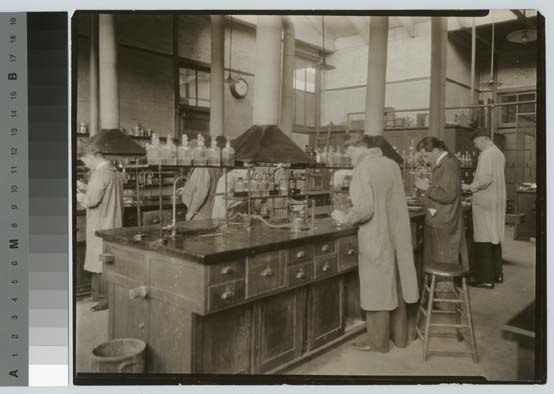
The break in the case came from the crime laboratory. The toxicologist, Dr. Alexander O. Gettler, found a piece of white hair on the bedclothes. It was less than a half inch long, stiffer than human hair, and when viewed under a microscope revealed it was horsehair, the type used to stuff furniture. In fact, it matched the love seat, delivered on the day of the murder. Lyons liked the furniture men for an interview at the very least. Both claimed to have not entered the bedroom. And since they had been together in the apartment until the police arrived, police surmised that one of them must have come to the apartment earlier in the day. It was found that Kruger had been in his upholstery shop, and he noted for police that his assistant was out until after lunch because he had to report to his parole officer in the morning. But Kruger stood by the young man's side and claimed Fiorenza had turned over a new leaf—his crime was basically taking a car—and he claimed that he was a good boy. Lyons wasn’t so sure.

Fiorenza Rap Sheet
Fiorenza’s record was checked: four times for theft, two years in Elmira for stealing, and a psychiatrist there had reported him an "emotional fellow." Also, Fiorenza had also been to Titterton’s apartment two previous times, and even though each time he visited it was with his employer, Nancy would have known and trusted him.

The Key
Finally, the results of the canvassing for the cord information came in. It was discovered to be a piece of venetian blind cord manufactured by Hanover Cordage and the wholesaler sold a roll to Theodore Kruger’s upholstery shop! When Fiorenza was confronted with the evidence, he confessed. He admitted to having become infatuated with the attractive authoress and he thought he needed to possess her. You know the result.

The jury arrived at a guilty verdict fairly fast and Johnny Fiorenza went to the electric chair in Sing Sing. Betrayed by a horsehair.

Photo's From Flickr Authors: New York Public Library; xavi talleda; Old Shoe Woman

See an original newsreel here.  


Friday, December 24, 2010

Coming Onto the Landscape: Veterinarians at Crime Scenes

by Andrea Campbell

I am one of those people who cannot watch animal cruelty television shows. If I think Animal Planet TV might be covering something on that order, I have to move on. It’s a good thing, though, that others can stomach the work. Melinda Merck is one of the founders of the first veterinary forensic science program in the United States. It takes place at the University of Florida in Gainesville. Merck is one of the few top veterinarian specialists who was trained in processing crime scenes involving animals.  You might remember her if you followed the Michael Vick case, because Melinda Merck was the person federal investigators called in to work the Vick dog fighting compound, where the remains of eight pit bulls were buried on the football star’s property.

Nicknamed “Animal CSI”


Many states today need the services of this type of investigator due to a good thing—the toughening of animal-cruelty laws. We’ve talked enough about behavioral profiling to know that it is not a stretch to understand that people who kill and torture animals are often a stone’s throw away from potentially harming people or committing other serious crimes, so the demand for animal investigators is growing.


 Other Assorted Animal Crimes


Crime scene processing and preserving evidence of abuse and neglect is also needed for puppy mill operations, animal hording, dog fighting, ritualistic animal sacrifice and other abuse pursuits. The skill sets are basically the same in terms of forensic evidentiary collection at human crime scenes: analyzing hair, fibers, blood splatter and instances of insect activity and plant growth, which are clues used to work the cases.

Merck said, “With animal cruelty, there are usually no witnesses—or reluctant witnesses—and certainly the victims can’t testify, even if they’re alive. So they’re always evidence-based cases.”


Training Ongoing


About 200 people have already been trained in this specialty due to a collaborative effort between the ASPCA and the University’s William R. Maples Center for Forensic Medicine. A certification program is ongoing and classes are running now regularly.

But, the process has evolved over time. Previously, Merck was a private vet in Atlanta who wanted to analyze some maggots found on animals to determine a time of death. She contacted Jason Byrd, a forensic entomologist who has traveled the world at the summons of other crime scene investigators, because she needed help interpreting the life cycles of insects—one of the telling clues on decomposing bodies. Merck then joined the ASPCA in Atlanta and continued to turn to Byrd for his expertise. Soon they organized workshops at the University of Florida, and it was helped along by the first international veterinary forensic science conferences in May of 2008. The ASPCA also funded the program to the tune of $300,000. Merck moved to Gainesville in August 2009 to jump into the new studies with both feet.

Dog-Fighting Ring Exposed


Last year, Merck brought together university trained science teams to work 25 different crime scenes for a reality-based crime. The investigation was essential in helping to dismantle the largest suspected dog-fighting ring in United States history. Some 400-plus pit bulls were rescued from six states and the whole endeavor led to 26 arrests.

The Vick Case Details


According to an interview Merck gave to Mitch Stacy with The Associated Press, some of the evidence found from excavating two mass graves in the Michael Vick case indicated that the killing of those animals on site was by hanging, shooting, drowning or slamming their bodies to the ground, in addition to the bites they had suffered, which were inflicted by the dog fighting. “’What we reconstructed was not consistent with his version of events," Merck says of Vick. Vick was convicted of conspiracy and running a dog fighting ring in 2007 and served 18 months in prison.

Other New Animal Detectives


Cheryl Clark of San Diego was a veterinarian for more than 30 years and took the course in Florida. Her group study unearthed potential evidence as they were assigned a typical crime scene scenario. One group might investigate animals being shot, while another group might stumble onto animal’s stabbings—all part of the training process. Clark admits that all vets see suspected abuse cases, but she claims her goal was to get more precise knowledge in order help other vets and increase widespread appeal for the discipline. Clark said, “I want to help animals on a more global scale, so I think the way to do it is to prosecute abusers and try to get laws changed and improved.”

We heartily agree.


Dr. Merck is the author of Veterinary Forensics: Animal Cruelty Investigations (Blackwell Publishing, 2007).  She is also the co-author of the book entitled Veterinary Forensic Investigation of Animal Cruelty: A Guide for Veterinarians and Law Enforcement (Humane Press).

Photo of states laws: Copyright © 2010 ANIMAL LEGAL DEFENSE FUND
Reprinted with permission of the ANIMAL LEGAL DEFENSE FUND


Monday, August 23, 2010

Arkansas Bombing Case & Verdict—For Now

by Andrea Campbell 

It is unusual that an individual is involved in a bombing, especially in Arkansas. A case that has captured the attention of crime followers nationally, this one has some strange elements to it.

It Begins
This story starts with an investigation, but one with another objective — sanctioning doctors. The Arkansas State Medical Board was looking into the conduct of a licensed physician in northern Arkansas named Dr. Randeep Mann. Mann, it was purported, had over-prescribed medications that resulted in the deaths of 10 of his patients.

The Board
The state medical board is made up of 14 members. This post is a governor-appointed position, and 11 of the members are doctors. This group oversees Arkansas’s 5,763 active licensed physicians.

The Agreement
In 2001, the medical board received some complaints about how Mann prescribed medication. Mann, nearing his fifties, specialized in internal medicine at Skyline Medical Clinic in Russellville, and several of his patients overdosed. There was also an alleged claim of sex for drugs by one of the overdose victims, plus several other female patients felt threatened. These and other infractions comprised a 22-page report. When two more patients died, the board issued an Emergency Order of Suspension and Notice of Hearing in July 2003.

The Sanction
Mann was never stripped of his medical license, but his prescription-writing privileges were revoked. He had prescribed methadone for the treatment of addiction despite not having the proper credentials, and he had violated other regulations in regards to amphetamines and methamphetamines. Originally the board was going to annul his license for five years. Instead, the board decided that if he surrendered his federal DEA permit to prescribe controlled substances for at least a year, got education on how to prescribe them, and paid a $9,500 fine for investigative expenses, that would be his punishment.

Soon after, the board agreed to reinstate him within a year, in July 2004, and many people thought that was unconscionable. Phillip Milligan, a Fort Smith attorney who represents survivors in one of two malpractice lawsuits against Mann, says, “If the medical board would have pulled his license the first time, instead of making a deal with him, that would have saved some lives.”

More Allegations
Just a couple months after Mann’s license was restored to an “unlimited and unencumbered” status, more patients started overdosing. Kevin Allen Curry, 43, went to Mann in 2005 for facial pain, and it is surmised he wound up dying from mixed drug intoxication. According to another report, Dr. George Richison told investigators that he treated several of Mann’s patients for overdoses when they arrived in the emergency room at St. Mary’s Regional in Russellville.

The medical board finally issued an emergency order suspending Mann’s license, and by April 2006, eight deaths were blamed on Mann’s negligence. His surrendered his certificate to prescribe, but his medical license was still intact.

The Story Continues
The loss of his drug-prescribing privileges caused Dr. Randeep Mann to go off the deep end. Naturally he lost patients who required pain management. He mounted a letter writing campaign explaining the difficulties this caused him and his practice. He had run into financial difficulties and wondered whether the board could help him find a job with a physician group. He claimed the military disqualified him from any jobs there, and the letters expressed desperation. He wrote: "This has not only involved my professional life, but my personal life as well. To be working less than a full schedule has been the hardest feat for me to endure since my graduation from medical school in December of 1980."

Board Denial
Then: a bomb set to kill the chairman of the Arkansas State Medical Board, Dr. Trent Pierce, went off as he was getting into his Lexus (below left) at his West Memphis home on the morning of February 4, 2009. Pierce survived, but with serious injury. Pierce had approached his car and went to move a spare tire that was leaning up against it. Moving the tire triggered an explosion that caused facial injuries and blindness in one eye. Reports are that Pierce's face is still dotted with shards of black rubber that were driven into his skin by the explosion.

Investigation
Police interviewed Mann within hours. Then, in March, police officers searched Mann’s home and found a large collection of weapons including grenade launchers and 98 grenades buried in his yard, and inside, in gun safes, 110 semi- and fully automatic firearms -- of which just two were unregistered. Mann, a federal firearms dealer, was arrested and charged with unregistered firearms, illegal possession of the grenades and a machine gun, and other crimes, but the main charge was using a weapon of mass destruction against Pierce.

Trial
Mann was recently convicted by a federal jury of the bomb attack against Pierce. Prosecutors painted a picture of a man who was embittered by the board's continual sanctions. But the forensic evidence was slight.

Forensics
The crime scene materials were tested. There was a spare tire, a hand grenade, duct tape—and the grenade, duct-taped to the tire was rigged to blow when some string pulled the pin. But nothing matched items in Mann’s home, and the three fingerprints found belonged to an FBI agent.

Prosecutors did present an email that Mann had sent to his brother in India. The word “Pierce” was in the subject line, the body of the message contained a photo of Pierce, and the note said, “I hope this picture is good.” Mann also had a friend and business partner who owned a Nissan Altima that was missing its spare tire — the same type of tire as was found with the bomb itself. That, witness testimony about Mann’s anger, and the military-grade weapons finally convinced jurors.

Oddly enough, Mann was found guilty of orchestrating the bombing, but the investigation as to who set the bomb continues. Mann could be sentenced to life in prison. His attorneys are filing an appeal.


Wednesday, June 30, 2010

The Airport Evidence are Heads


by Andrea Campbell

I always hate it when Arkansas has some strange news story ongoing. The state has a not so great redneck stigma to overcome, as many states in the South often do. But this is just, well, darn weird y’all (and I say that with love because I’m not even from here originally). One news story was titled: “Coroner holds on to heads in boxes.” Another was: “Human heads go nowhere for now.” Puleese, there is no grammatically sufficient way to convey this headline (ouch).

Bad Labeling, Strange Cargo

Just recently, a Southwest Airlines employee questioned the freight shipment documents for containers that were being sent from Adams Field in Little Rock and posted for Fort Worth, Texas. Yes, there were human heads in boxes at Little Rock Airport, lots of them. The Associated Press reported: “Officials say a Southwest Airlines worker stumbled across a few boxes of human heads at the Little Rock, Ark., airport.” How on earth do you stumble upon this, you ask?

Apparently the heads were being shipped by JLS Consulting of Conway, Arkansas, and the containers were brought in by General Delivery of Little Rock. But when they reached the Southwest Airlines cargo office, the deliveryman said he didn’t know what they contained. Okay, what do airlines ask you when you check baggage? You know, the “are you traveling with …” questions, and, "... did anyone give you an unknown package” speech. 

So you know this questionable freight answer is not going to fly, literally. And the airline's employees know the drill: in 2009, Southwest Airlines moved 182 million pounds of cargo. So the airline agent did what they're supposed to do and opened the containers. The agent found red bio-hazard bags and heads wrapped in absorbent pads. According to the airline's company spokesperson, Chris Mainz, the company wisely refused to ship them airfreight because they were packaged and labeled incorrectly. And he called the police. Enter one of our state’s coroners, Pulaski County’s Garland Camper.

Over to the Morgue

Camper took possession of the heads and had them transported to the county morgue, where they’ve been since June 9. There are between 40 to 60 whole and partial heads.

The shipment was bound for a Fort Worth medical laboratory that uses them for a continuing education program for doctors, said JLS founder Janice Hepler.

And Camper replied, “I’m not just going to release a bucket of heads to go across the country without verifying that these were indeed lawfully obtained.” The specimens were in three rubber containers.

The hang-up continues because Coroner Camper says he hasn’t been able to verify the information—the company can’t accurately describe the heads and there are inconsistencies. Hepler is cooperating and understands; she says nothing is wrong, that they see the coroner’s point of view, and they'll eventually present proper documentation.

Caution for Good Reason

Camper told reporters that in his 24 years with the coroner’s office, this was the first time he knew of a shipment of bodies being stopped. "We've come to the conclusion that there is a black market out there for human body parts for research or for whatever reason," Camper told NBC. "We just want to make sure these specimens here aren't a part of that black market and underground trade."

While the heads were donated to science by an undisclosed organization—the Medtronic project—their spokesman, Brian Henry, said the company uses the specimens for physician education and training and in the development of new surgical tools. He also talked about a similar holdup a few years ago involving incorrect labeling. He probably shouldn’t have shared that.

Practice Called into Question

Okay, if you’re in the business of shipping body parts, why aren’t you getting it right? The coroner had every reason to be suspicious and was just performing his due diligence. Henry remarked, “We certainly expect our suppliers to adhere to the required processes to safely ship or transport specimens,” adding that the company would “work with our suppliers to make sure that all future orders are properly labeled.”

Ethical Lapses and Administrative Mistakes

It just makes someone reconsider donating their body to science, now doesn’t it? (That and the horrible movie “Pathology,” but let’s not go there.) Still, federal law prohibits buying or selling body parts. Companies can charge for transporting body parts, but people, you must get it right. I mean, there is a certain amount of decorum here. While I'm sure anatomical materials are shipped frequently, I don’t think the public wants to hear about snafus in this regard.


There have always been horror stories and jokes told about human remains, but no one wants their loved one to be the subject of the story, now do they? Mary Roach, author of the book Stiff: The Curious Lives of Human Cadavers, thinks that good science outweighs any taboos we may feel. She writes: “… being carved into bits and chunks and shipped to a dozen different universities and institutions seems no more distasteful than decomposing in the dark underground or being burned to a char in a crematory retort. I'm all for post-mortem adventure and travel. (I'm told that if you donate your brain to the Harvard Brain Bank, for instance, it rides up front in the cockpit on the plane to Boston.)”

The Pro Camp and Cautions 

A website called Donating Your Body to Science has an article called “The Ultimate Donation: How to Give Your Body to Science and Keep It Safe,” by the New York Times' Tara Parker-Pope, and she says that bodies donated to science have helped create crash-test dummies and safer cars, protective gear for soldiers, and a better understanding of numerous diseases.

But she also cautions that: “… potential donors should also ask what happens to a body if a university doesn't need it, and whether auditing systems are in place to track how the body is used. … potential donors and family members should ask what happens to a body when the research is complete? Many medical schools cremate the bodies. Some hold memorial services, and family members may be allowed to attend. A few universities, such as Wayne State, promise to return remains to family members.”

Mr. Henry has since told reporters he believes the heads, which he described as “four cranial samples and 40 temporal lobes,” were mislabeled by the vendor, causing the mix-up.


Notes: Southwest flies to 69 cities in 35 states.
Donating your body to science: http://www.flatrock.org.nz/topics/older_and_under/death_wish.htm
TSA travel info: http://www.tsa.gov/311/index.shtm
Video and update on the Southwest story: http://www.wxii12.com/video/23957372/index.html


Thursday, February 11, 2010

Jazz Age Science Enters Courtroom


by Deborah Blum 

The first week of December 1926 was clouded in fog. The mist lapped along the rivers, muffled the harbors, made eerie the dry creak of boats rubbing against docks in the water. 

Far too early one morning a Brooklyn police officer patrolling along the East River caught a half-glimpse of a man hurrying through the fog.  As the figure neared the edge of a wharf, the officer could see that the man walked slightly bent as he carried a heavy-looking bundle. The patrolman shouted for the man to halt but instead he hastily dropped his burden and kicked it into the river.

The officer called again as the man fled. Together with a hurriedly approaching fellow patrolman, he tackled the fugitive to the ground. But the stranger refused to answer any of their questions. They took him to the station house where, in the sudden brilliance of a lit room, the officers suddenly realized that their captive’s trouser cuffs and socks were sodden with blood. Once they’d pried out his name, they hurried to his apartment.  The kitchen was a scene from a horror movie, complete with bloody cleaver and jagged saw on the table and a woman’s body on the floor.

Half a body, actually. Everything below the waist was missing – and the police now deduced, long lost in the East River.

I’ve had a love-hate reaction to this story ever since I discovered it in the forgotten archives of New York City history. It’s terrible and it’s tragic.  It’s soaked in blood, literally. But it has a really terrific twist at the end. And even more important, it’s a classic story of chemical detective work from a time when forensic science was so new that scientists were a peculiarity in the courtroom.

I’ve been working as a science writer for most of my career, first at newspapers (won a Pulitzer in 1992 for writing about primate research) and as a book author. In the past decade, I’ve published books on the biology of sex differences, on the science of love and affection, and on whether it’s possible to prove life after death. I sound, I know, like someone with a short attention span. Mostly I just like exploring the different ways that science changes our lives, alters our history, explains who we are today.

Of course, when I first started thinking about writing a book about poison and murder it was also because I just found the subject fascinating. I grew up with my mother’s collection of early 20th  century crime fiction: Agatha Christie, Dorothy Sayers, Georgette Heyer, Leslie Ford, all of whom found poison to be the most seductive of murder weapons. I liked the idea of trying to catch some of that seductiveness in a book that would also explain the science of how poisons actually work. 

But it wasn’t until I started looking at the early history of forensics that I found a way to tell the story.  My book, "The Poisoner's Handbook," would become the tale of two forgotten scientists – medical examiner Charles Norris and toxicologist Alexander Gettler -- from early 20th century New York City who helped launch the science of forensics in the United States and also solved some of the most famous murder cases of their time.

The 1920s was a treasure trove of innovative, dangerous chemistry.  There were compounds created by military innovations of the Great War, by industrial applications, research into new medicines, and the speakeasy culture born with Prohibition, with its smoky jazz clubs and dubious cocktails. Morphine went into teething medicines for infants; opium into routinely prescribed sedatives; arsenic was an ingredient in everything from pesticides to cosmetics.

Against that background, early forensic scientists literally had to invent rules of chemical detection as they went.  Alexander Gettler, for instance, wrote the fundamental paper on cyanide (still cited by the EPA), created the first tests that could prove intoxication at time of death, discovered how to detect chloroform levels in the brain of a dead person, and did some of the fundamental work on the still-dangerous gas carbon monoxide and how it kills us.  He’s still mentioned by experts as “the father of forensic toxicology in the United States.”

The twist on that dismembered body story I mentioned earlier comes from work done by both Gettler and his boss, Charles Norris. As it turns out, it’s not so much a story of death by hacksaw as death by poison. The toxic material in question turns out to be the very lethal gas, carbon monoxide.

Norris was the pathologist on duty the night Brooklyn police discovered the partial body of Anna Frederickson in the apartment of Francisco Travia. By the time Norris arrived at the scene, the police had already charged Travia, a longshoreman, with hacking the woman to death. But Norris, after looking at the body, insisted that they were wrong.

The woman’s face and what was left of her body was flushed an odd cherry red. People who bled to death, he pointed out, tended to be waxy pale. He took the half-body back to the morgue at Bellevue for autopsy and sent tissue and blood samples to Gettler.

If you know carbon monoxide, you know it’s characteristic for people poisoned by the gas to be flushed pink, even after death. Carbon monoxide crowds oxygen out of the blood stream. Its chemistry gives it a more effective grip on blood-borne proteins that normally distribute oxygen.  As the blood is saturated with the by-products of carbon monoxide, a unique chemical reaction causes to become a brighter, pinker color.

Not only does the skin of a carbon monoxide victim become strangely rosy but also internal organs are stained a deep cherry-red. This effect is so persistent that carbon monoxide saturated blood will often remain that startling crimson weeks or even months after death.

Before the Travia case, Gettler had run experiments proving that the body cannot absorb carbon monoxide after death. So when tests showed that Travia’s victim had lethal levels of carbon monoxide in her blood, it was obvious that she had to have absorbed those killing levels while still alive. In other words, she was dead of carbon monoxide poisoning before Travia cut her up.

Faced with the evidence, Travia confessed that he and the victim had been drinking (illegally, since this was during Prohibition) that night. Both had passed out and when he awoke, she was dead. Not realizing that his gas stove was leaky, he was afraid that he’d be suspected of murder. So he decided to make the body disappear, cutting it apart and putting the pieces in the river.

The police refused to accept his explanation or the new strange science of forensics. But when Travia went to trial, the jury believed his story. He was found guilty of illegally dismembering a body and sentenced to a year in prison. If convicted of murder, he would have been destined for the electric chair at Sing Sing prison. The chemical detective work of Norris and Gettler saved his life – and would go on to make forensic toxicology an essential part of solving crimes today. 


Monday, November 9, 2009

Handwriting Analysis: An Interview with Sheila Lowe

by Andrea Campbell

I studied handwriting analysis extensively and wrote a novel about a handwriting analyst character over 14 years ago, but could never get it published. Today I’d like you to meet our guest, Sheila Lowe, who has managed to do what I could not. (Sheila Lowe, pictured at left)


Q.: Sheila, for readers who don’t know you, could you talk a little about your background as a forensic handwriting specialist?


A.: I started studying handwriting more than 40 years ago while I was in high school, and subsequently spent 10 years reading every book I could find on the subject. Finally, I discovered Charlie Cole, an expert who taught correspondence courses in graphology, which I greedily devoured. I became certified by the American Handwriting Analysis Foundation in 1981 and four years later became qualified in the court system to testify as an expert in the field of handwriting. Dare I use a cliché and say, “the rest is history”?

Q.: What is the difference between graphology and handwriting analysis?


A.: Graphology is the generic term for handwriting analysis; however, the study of handwriting is generally broken into two different areas: personality assessment and handwriting authentication.

Q.: How are these disciplines used?

A.: Graphology is the study of handwriting to learn about behavior and personality—which includes the effects of life experiences on handwriting, as well as of illness, medications, aging, drugs, etc. Another aspect of handwriting analysis is forensic handwriting authentication, which is used in cases involving forgery. So, if you want to get better insight into your own or someone else’s motivations and needs, graphology can help. If someone has stolen your identity and forged your name, you need a handwriting analyst trained in the authentication side. Some analysts do one or the other, some (like me) do both.

Q.: Graphology gets a bad rap; can you explain?


A.: Because there is no licensing and no controls over the practice, anyone can set up shop and start analyzing handwriting after reading a book or two. There are thousands of web sites hawking graphology, many of them by people who would not be able to get a license, if only there were a requirement to get one! They have done a great deal of harm to the field and their clients. Also, there’s long been a misconception that graphology has something to do with fortune telling or occult arts. It doesn’t.

Q.: Will you talk about some of the characteristics an expert can discern using handwriting analysis?


A.: The general categories I cover in a personality profile include ego needs and ego strength, social attitudes, thinking style, fears and defenses—things like that. A lot depends on the purpose of the analysis. If I’m doing a report for an employer who has sent me handwritings of applicants, I would examine the areas specific to the job description. If the report were for a couple getting married, or for a mid-life career change, or for a child custody issue, the focus would be different.

Q.: Let’s get to your writing. What are your books? May we have a mini-synopsis?


A.: I write both non-fiction and fiction books. My non-fiction works are The Complete Idiot’s Guide to Handwriting Analysis (Alpha), which teaches the gestalt method of graphology and is like a mini course, and Handwriting of the Famous & Infamous (Thunder Bay), which has my thumbnail sketches of the handwritings of 75 well-known people from Galileo to the Son of Sam, from John Lennon to Hillary Clinton, and a whole lot of others. I also write mystery fiction — The Forensic Handwriting Mystery series (Penguin’s Obsidian) featuring forensic handwriting expert Claudia Rose. Dead Write, the third book in the series, was recently released, and I’ve just finished the next book, Unholy Writ, for release next year.

Q.: Who is your protagonist and what type of character is she?

A.: Claudia Rose is a modern single woman entering her forties, who, in the first book, Poison Pen, becomes involved with LAPD detective Joel Jovanic. Her handwriting analysis practice brings her in touch with crimes such as forgery, and using what she knows, she’s better able to understand the people, both good and bad, who are involved. Claudia has a hard time staying detached in cases where kids are in jeopardy, which is the case in Written in Blood and Unholy Writ. She’s warm and compassionate, but she’s learning to be tough when she needs to be. And she’s learning to allow herself to open up in a love relationship — one of her big challenges at the beginning of the series.

Q.: Do you use the misconceptions about handwriting analysis in your books?


A.: Yes. Claudia regularly has to answer the same questions and misconceptions that I do. I hope the series will help clear things up.

Q.: Does your character go into the courts?


A.: In Written in Blood there is a major courtroom scene that is very similar to testimonies I’ve given in my own practice. Claudia has to face the same challenges and stress of testifying that I do.

Q.: On the business side, how did you find a publisher? Did you start with an agent?


A.: I’ve had seven agents, and now I have a good one. I sold my fiction books and the first two mysteries on my own. It’s a lot easier to sell non-fiction without an agent, but I did a lot of studying on how to go about it before setting out. In fact, I read The Complete Idiot’s Guide to Getting Published, and following its guidelines may have made the difference. I tried for a long time and, as I said, a number of agents, to sell my first mystery, Poison Pen, to a major publishing house. Finally, I had an offer from a small startup publisher, Capital Crime. They got the book reviewed in Publisher’s Weekly. I was lucky enough to get a starred review, which attracted the attention of my then-editor at Penguin, who made an offer for the first two books, and later, two more.

Q.: What can you tell us about your publisher and your experience (e.g., contract, editing, promotion, anything such as that) with them?

A.: Considering my good experience with a small press (for fiction), I encourage anyone having difficulty getting picked up by a large publishing house to try them. You’ll have control over cover art and work closely with your editor. At large houses, you’re likely to get your book cover with a note that says, “Here’s your cover. We hope you love it as much as we do.” Luckily, so far, I have! Regardless of the size of your publisher you will be expected to promote the book yourself (and pay for the promotion yourself). If you’re not willing and able to do that, don’t even bother looking for a publisher. They need to know that you’re willing to invest your (probably small) advance in promotion. That means creating a web site and/or blog, printing bookmarks, attending conventions and speaking on panels, visiting bookstores, etc. One note about bookstores: unless you have a very well-known name, book signings tend to be a waste of time and the big box stores discourage them. It’s often more effective just to do a “drop-in” signing. Call in advance to make sure they have your books in stock.

Q.: Do you have any advice for writers who want to break into the field?

A.: Learn your craft. If you’re writing genre fiction, find out what the rules are so that you can break them. Get into a critique group in your genre, hire a private editor to read your material, and listen to what that editor has to say about your work. Oh, and leave out most of the adverbs (those pesky “ly” words that make the writing weak).


Q.: Is there anything you would like to tell WCI Readers?

A.: Buy books! Whether they’re traditional books that you can cuddle up in bed with, or a Kindle that you can take on a plane (where I’m writing this, on my way to Bouchercon, a mystery convention), support your favorite authors. When someone tells me, “I love your books. I pass them around to all my friends,” I remind them that authors don’t get royalties on borrowed books, and it’s those royalties that allow authors to keep on writing the stories they love to read.

Thank you, Sheila.


http://www.sheilalowe.com/ for handwriting analysis;