Sunday, December 21, 2008

Scared Monkeys Tonight


Sunday, December 21, 2008 - Tonight’s Guests: ADA Robin Sax, Tim Miller of Texas EquuSearch, Victims’ Right Advocate Wendy Murphy and Author Diane Fanning .

Tune in tonight LIVE at 9:00 eastern as Dana Pretzer welcomes the following guests:


Wendy Murphy, a victims’ rights, sex crimes, violence against women and children advocate and the author of And Justice for Some will be discussing the Casey Anthony case and the recent events in the discovery of Caylee Anthony.

Author
Diane Fanning will be discussing her new book The Pastors Wife the story of the Mary Winkler case. She has also just signed a contract to write a book on the Anthony case.

Tim Miller of
Texas EquuSearch will be discussing the Caylee Anthony case.


Friday, December 19, 2008

Breaking News: Caylee's Remains Identified

ORLANDO, Fla. - This just moments ago: Authorities announced today, Friday, that DNA tests confirm skeletal remains found in the woods near the Anthony home are those of two-year-old Caylee, who has been missing since June.

Dr. Jan Garavaglia, Chief Examiner for the District 9 Medical Examiner's Office in Florida, said at a news conference that the remains discovered last week by a meter reader match Caylee’s DNA profile. The death is considered a homicide.

How does this impact murder charges pending against the toddler's mother, Casey Anthony? Should prosecutors now go for the death penalty?


Speculation of the Talking Heads—Is it or isn't it Caylee Anthony?

by Stacy Dittrich

Unless you’ve been living in a cave, the breaking news in the Caylee Anthony case has the talking heads literally squawking. I can say this because I am one, and though I can't speak for the rest of them, it's my opinion that the speculations, predictions, and eventual outcomes have turned tiresome.

In case you’re one of those in the cave, just last week an Orange County Florida utilities worker stopped by a wooded area to use the restroom. As he walked back into the woods he saw a garbage bag and proceeded to kick it, sending a small human skull tumbling out. Obviously horrified, the man called 911. Needless to say, the human remains were found less than a quarter of a mile from the home of George and Cindy Anthony. Subsequently, the investigation into missing Caylee simply exploded—along with the media.

Now, for the last seven days, we have been subjected to expert after expert commenting on what the police could have possibly found, how it will be processed, whether or not the remains are really those of little Caylee, will the grandparents be charged or should they be charged, was there duck tape around the mouth or just on the garbage bag? These are just a few. As I’ve said, I am just as guilty but have grown weary of my own commentating as well as others. The bottom line is that the Orange County Sheriff’s Department has done a phenomenal job of keeping the evidence and circumstances surrounding the remains under lock and key—they’re doing their job. We can all speculate until the end of time, but we won't know a thing until the sheriff’s department gives us the information. Sorry, I refuse to get my information from the likes of Leonard Padilla.

The only information we know for a fact, at this very moment, is that an innocent 2-year-old girl is missing and is most likely dead—something we won’t know for sure until there's a positive identification. We know that her mother is sitting in jail and charged with the murder. We know that she has acquired her own dream team consisting of those anxious to jump aboard the Casey Anthony Circus and Media Magnet’s Train. We know that her parents have their own attorney, and the sheriff’s department is still processing the scene.

We will all know soon enough if the remains found at the scene were Caylee Anthony’s. As for the condition of the remains, and other evidence found, these are facts that will most likely come out at the trial—and we’ll all know then. Needless to say, we should all take a deep breath, sit back, and let law enforcement do their jobs effectively.

I apologize for such a short post but I have to run, I am a scheduled guest on a radio show giving my expert law enforcement opinion. The topic?

Caylee Anthony . . . I think my train is leaving now.


Thursday, December 18, 2008

Heaven is Hell for the Alamo Ministry Children

by Diane Dimond

Seventy-two-year-old Tony Alamo (below right), who got his start as a 'street preacher' in Hollywood in the 70's, is currently in federal lock up in Ft. Smith Arkansas. He is charged with violating the Mann Act - transporting six of his underage 'church' girls across state lines for immoral purposes, specifically pornography. His trial is set for February.

Women in Crime Ink contributor, investigative journalist Diane Dimond, has pieced together the sordid tale of Alamo from the early days to modern day. Here is an excerpt of her findings:

For at least 20 years the children of the Tony Alamo Christian Ministries have been tortured. That’s right – tortured – on the direction of “Papa Tony” himself. To date neither law enforcement nor prosecutors have punished Alamo for what he’s done to all those children.

Prosecutors have known about Alamo’s penchant for abusing children in the name of Christian discipline since the late 1980’s. Way back in 1988 authorities removed Justin Miller and three other boys from the Saugus, California compound and filed felony child abuse charges. Eyewitnesses reported that during a punishment session for 11 year old Justin he was suspended in the air by four burly adult men – each man roughly grabbing hold of one of the boy’s limbs – and beaten “baseball style” with a thick wooden paddle with holes drilled into it for maximum damage. Tony Alamo ordered the child to receive 140 whacks (euphemistically called ‘swats’) and when it was over, the boy’s backside was bleeding through his jeans. The child’s violation? He wore a scarf without permission and asked an unacceptable question during science class at the church run school.

In 1990 the Miller family sued Tony Alamo and his ministry and was awarded about a million and a half dollars by U.S. Circuit Court Judge Morris Arnold. At the time of ruling the judge was quoted as saying, “No feeling person could fail to be moved by the testimony in this case or be revolted by the cold-blooded and calculated manner in which the punishment was carried out."

Still nothing happened to Tony Alamo for ordering the brutal paddling, nothing happened to the four burly men either, even though law enforcement officials knew other young children had been similarly punished. Stunningly, the criminal child abuse charges against Alamo fell by the wayside when a strong tax evasion case was brought against the preacher. Alamo had failed to pay nearly 8 million dollars in back taxes on the uber-expensive, extravagantly decorated denim jackets his followers labored over and sold to celebrities. To authorities it appeared tax evasion was a bigger sin than child beating. Alamo was convicted and sentenced to 6 years in prison but all the while he retained a firm grip on church activities. Alamo served only four years and got out in 1998 to once again regain full control and resume his personal reign of terror.

Upon his release Tony Alamo began to re-build his fractured “church” away from the prying eyes of the now savvy California authorities. He beefed up his headquarters in Fouke, Arkansas, a tiny, isolated town in the far southwest part of the state. By several accounts Alamo began to practice polygamy and acquired multiple underage “wives” - all young daughters of his followers who somehow felt grateful that their spiritual leader would choose their child. Eye-witnesses and the families of girls as young as 9 have claimed their daughters were married off to Papa Tony. Repeated charges of physical child abuse seemed overshadowed by charges of sexual abuse of young girls. But still authorities did not move in to stop Alamo.

Tony Alamo had long written about and preached that any girl who had begun to menstruate was “ready for marriage.” Many members told me young girls in the cult were often given away as brides to older church cronies. One of those girls was 12 year old Jackie Garner - see her above on her wedding day to a decades older man.

Tony Alamo started publicly taking these under-aged brides nearly 15 years ago. Arkansas law enforcement authorities reportedly heard about it - from both escapees of the church and from townsfolk in and around Fouke - but chose to do nothing. Jael Sprinkle, a former member who was born into the church, testified in court that she was alone in a room with Alamo on Oct. 15, 1993, when he suddenly proclaimed they were married, taking her as one of the six wives he had at the time. Jael was 17, Alamo was 59. Never mind that she was already married and had just given birth to a baby. Earlier that week Alamo had suddenly and inexplicably kicked her husband out of the church and summoned young Jael to his side. Sprinkle, now 32, has told her story to authorities in great detail.

But there have been whispers about Tony Alamo’s deviant sexual behavior that go much further back. There is an explosive charge from Christhiaon that her step-father Tony raped her when she came to visit her mother in Las Vegas right after Susan married Tony Alamo. Christhiaon was just 16 years old. Could that be when his pattern of abusing young girls started?

The Southern Poverty Law Center has been following the exploits of the Alamo Christian Ministries for years and now designates it as a hate group stemming from Alamo’s frequent and very vocal anti-Catholic, anti-any-other-religion outbursts. In the SPLC’s March 2008 Intelligence Report a writer named Susy Buchanan excerpted a rare interview with Susan Alamo’s daughter Her claims of sexual assault by her mother’s new husband are raw and stunning.

Tony raped me in Vegas, and my mother didn’t believe it and told me to get my ass out and I was a liar and I was trying to take her man. [Editor’s note: No criminal complaint was ever filed against Alamo in the alleged rape of Chris Coie; however, she did testify about it under oath in a civil trial. Alamo has declined to respond to the Report’s requests for comment on this and all other matters.] So I left and I came to Los Angeles. The whole time I’m swearing I’ll never talk to her again because she knew I was raped. It wasn’t like I was just telling her something; she caught the tail end of the mess. And she reacted by looking at me and saying, “You little, fucking whore.” That’s how it started. “You little fucking whore.” It was just insanity, but it was such complete betrayal. I hurt.”

Christhiaon Coie testified at a U.S. District Court hearing in Los Angeles in April 1993. She spoke in detail about the rape by her step-father. Also at that proceeding one of Alamo’s former wives told the court that he had repeatedly beaten her, once breaking her nose and forced her into sex acts when they were married in 1986. U.S. Magistrate Kirtland Mahlum had the choice of keeping Alamo locked up, pending his tax evasion trial, but he chose not to. Two women’s tearful testimony, Mahlum ruled, was “not enough” to keep the one-time music promoter-turned-street-preacher in jail.

Pause here to put all this information into perspective: An allegation of rape in 1966, beatings and forced sex with followers in 1986, the beating of the Miller boy at the Saugus compound in 1988. Taking minors as wives in 1993 and 1998, reports of widespread polygamy and so many brutal beatings of children (and later adult members of his “church”) that the victims themselves have lost track of how many times they were brutalized in the name of God.

How was this allowed to go on for so long?


Wednesday, December 17, 2008

The Adam Walsh Case: Closed, Not Solved

by Pat Brown

"Florida cops solve Adam Walsh Murder," declares one of the many headlines announcing today's breaking news out of Hollywood, Florida. John Walsh, wife Reve and their children by his side, gave an emotional press conference in which John thanked Chief Chad Wagner and retired detective Joe Matthews for bringing closure to his family. "Not knowing was torture."

I feel for John and Reve. Years of working with victims has given me a ringside seat to the the pain they have suffered being left in limbo, the cases of their murdered loved ones going unsolved for years and years. I see the tears slip out of John's eyes and run down his cheek, his voice trembling as all his feelings of twenty-seven years rushed out, and I empathize with his relief that the years of questions and no answers has come to an end.

Unfortunately, when I separate myself from the tendency of us humans to accept what is the "nicest" answer, I feel uncomfortable with the conclusion of Walsh and the Hollywood police. I have worked on cases that have been administratively closed for a number of reasons - overwhelming circumstantial evidence exists but is linked to a dead suspect, limited circumstantial evidence that is linked to a dead suspect, and absolutely no circumstantial evidence but a dead suspect that is useful to pin the crime on.

The Adam Walsh case falls into the middle ground. Serial killer Ottis Toole was looked into as a possible suspect two years after Adam's murder, not because he came into their investigation through evidence or witness reports, but because they had convicted him on another homicide and pressured him to confess to other murders "he had committed". It is not unheard of for police detectives to offer attractive benefits for confessing to homicides regardless of guilt - better prison arrangements, notoriety, and trips out of jail complete with camaraderie and McDonald's treats. Often the police drop inside information about a crime and the convicted felon parrots back the details which "proves" he had knowledge of the murder "only the suspect would know".

So, Ottis Toole confessed a couple of times and recanted a couple of times. Interestingly, the one thing the police didn't know - where Adam's body was dumped - was something apparently Toole didn't know either. The location he told police was the final resting place of Adam's body was searched and no remains were found.

No physical evidence links Ottis Toole to the murder of Adam Walsh either. While the police claim they found a machete and carpeting in Toole's vehicle that had blood on them, they never scientifically proved that the blood was Adam's. Then that "evidence" went missing. Was it accidentally lost or did the blood turn out to exclude Adam as the contributor? Even if the DNA of that time was not as advanced, blood typing could have easily eliminated Adam Walsh as the victim connected to that evidence. It wouldn't be the first time a police department or prosecution misplaced evidence that would prove the desired theory wrong.

Jeffrey Dahmer was another possible suspect in Adam's murder. At least he was proven to be in the area at the time, drove a van that matched witnesses' descriptions of a vehicle they had seen at the mall when Adam disappeared. A man of his description was seen pulling a resisting boy into the van like the one he drove for his place of employment. Furthermore, a witness has claimed he saw Dahmer in Sears that day. While none of this proves Jeffrey Dahmer killed Adam Walsh, he certainly seems to have more possible connections to the Walsh murder than Toole. But, he makes less of a useful suspect post-death because he didn't "confess" to killing the boy.

Even John Walsh admits the police do not have any smoking gun evidence with which to link Toole to Adam's homicide, only a thread of reasoning which he was not privy to from outside the police investigation.

"If Ottis Toole was alive today, he would be arrested for the abduction and murder of Adam Walsh on July 27, 1981," claimed Hollywood Police Chief Wagner at the new conference. He added that there was no "magic" piece of evidence that caused Ottis Toole to now be labeled the one-and-only possible suspect. Worse, Chief Wagner offers so little evidence linking Toole to Adam's murder that no prosecutor in his right mind would have been willing to risk his reputation by taking such a pitiful case to court.

But, Toole is dead, the Hollywood police department would like to close this unfortunate blemish on the history of the department's investigative prowess. John Walsh would like to feel justice (perhaps by believing the man who killed his son is dead) has been served. The American citizens are happy because John is happy.

Closing this heinous case based on a "could of been him" conclusion, is not only egregious but dangerous. Cases should never been considered solved when there is nothing more than wishful thinking and political expediency. Worse, nailing Ottis Toole with Adam's murder without solid evidence proving he was involved, may leave a child killer on the loose. How will everyone feel if next year an aging pedophile named John Smith is arrested for the kidnapping and abduction of a small boy and when the police search his house they find pictures of him with a little boy named Adam Walsh in a basement safe?

As many times as I have heard the opposite on television news in the last few hours, justice has not been served and the killer of Adam Walsh has not been conclusively identified or linked to the crime. The investigation has no more evidence today than it did twenty-seven years ago and the only reason the case has been closed is because Chief Wagner wants it closed. Ending an investigation without a shred of proof is a travesty, not justice.


Tuesday, December 16, 2008

Seeking Truth and Justice . . . 25 Years Later

by Donna Weaver

Twenty-five years ago this month, my husband Gary suddenly vanished without a trace. This year, just as I have every year before, I find myself reliving the moments I last saw his face and heard his voice. And I become more determined than ever to find his remains and bring his killer to justice.

I met Gary in December of 1981. One year later we were married and the following spring we were blessed with the birth of our twin daughters. I was the luckiest girl in the world—I was in love and married to my best friend, and I had two beautiful, healthy, and happy babies. Like many new families just starting out, money was a little tight and when Gary was offered an opportunity to make some extra money fixing diesel engines in the Bahamas, I encouraged him to take the job, assuring him the girls and I would be fine for the 2 or 3 days he would be gone.

I last spoke to Gary on the morning of December 9, 1983 when he called to say he was almost finished with his work and had just purchased his plane ticket at the airport in Nassau to return home the next day. We happily talked of the plans we had for after I picked him up at the airport. We were going straight to my Mothers of Twins club Christmas party where the babies would sit on Santa's lap for the first time—something Gary was excited about as he had been eagerly anticipating the girls’ first Christmas almost since the day they were born. The following day, December 11th, was to be our first wedding anniversary. We were laughing on the phone about the prospect of eating the top of our wedding cake with the babies—all of us with our fingers! And I had a surprise for him—one of the babies had started to say Da-Da while he was away, and I couldn’t wait to see his face when he heard it for the first time. So many happy days ahead!

On December 10th, I stood eagerly waiting at the airport gate with the babies next to me in their double stroller. Gary didn't come home on the plane that day, and I never saw him again. He disappeared without a trace, and the last time anyone saw him was 45 minutes after I last spoke with him on the telephone the day before. I had very little information about who Gary was working for and where he was staying in the Bahamas.

It wasn't until the year 1999 that I learned Gary disappeared and was most likely murdered somewhere on Andros Island as a result of FBI Operation Airlift.

I learned of Airlift and its dirty little secrets by an amazing stroke of luck. I was working as a part-time bartender in Fort Lauderdale when I happened to see a copy of the weekly news magazine New Times laying on the empty bar when I arrived at work. Staring up at me from the cover was a full page photograph of an elderly man with the caption "Oldfella." I'm not sure why, but that face captivated me. I brought the paper home with me that night, but didn't pick it up again until two days later. After reading the feature article by Bob Norman, the circumstances of Gary's disappearance seemed to fit. Although I didn't recognize any of the names mentioned in the article, I felt certain that I would at last discover what had happened to my husband. I contacted Norman and asked him about other names he may have learned that were not included in his article, which told a tale of drug smuggling, murder, and a corrupt FBI agent. The first name he gave me was Randy Krugh. "Oh my God" I replied. "Randy Krugh was Best Man at my wedding!"

The corrupt former FBI agent in the story, Dan Mitrione Jr. went bad while heading Operation Airlift, a major undercover drug smuggling investigation. Immediately after resigning from the FBI in June 1983, Mitrione became business partners with his murderous confidential informant, Hilmer Sandini. Their business partnership dissolved when a plastic explosive was found under Sandini's car in 1984. Fortunately, the bomb was discovered before it went off, potentially killing many innocent people. Although it kept its findings secret at the time, the FBI issued an internal memo stating their belief that it was Mitrione who planted the bomb:

"This investigation, which is being conducted by a special FBIHQ [headquarters] investigative team, has been severely hampered by recent developments indicating a strong likelihood that Mitrione is culpable in the attempted murder of Sandini."

In March 1985, the former agent was convicted of violations of the bribery statute and drug trafficking. The special FBIHQ investigative team was headed by agent John Morris of the FBI's Boston office. At the time, Morris also supervised agent John J. Connolly who was recently convicted of murder in Miami, Florida. It was also discovered that Morris took bribes from his confidential informants just weeks before coming to Florida to head the Mitrione investigation.

Gary was not the only person to disappear and be murdered during the Airlift debacle. After Bob Norman's four part New Times series, "Finding Gary", I was contacted by the family of Jairo Sanchez (pictured right) who said their loved one disappeared the same day as my husband, and they did recognize the names, dates, and places in the articles. After meeting with them, Norman wrote a fifth installment to the series—"Finding Jairo."

Twenty-five years later we have almost all of our answers, and I believe that soon, those responsible for the murders of Gary Weaver and Jairo Sanchez will answer for what they have done.


Monday, December 15, 2008

All's Fair in Crime and Punishment?

by Kathryn Casey

Okay, first off, I've got to admit that I'm a bit envious. I'm doubtful that I'd be able to pull off dropping a decade from my looks to get the job done. That said, I'm wondering if what Doreen Giuliano, 46, did was kosher. And I'm curious about what you think about her actions. Was this New York wife and mother justified? Should what she uncovered make a difference?

For those of you unfamiliar with the case, Doreen is the mother of John Giuca, 25 (photo below, right). After he was convicted of murder, she started a Web site to argue his innocence. Then she investigated her son's jurors. Her goal: to find any juror misconduct that could win her kid a new trial and another shot at an acquittal. In the end, Doreen found her juror, but what's not certain is if she has enough on his tape-recorded confessions to spring son John out of prison.

Bet you can picture the movie based on the case already, right? Maybe with Sharon Stone playing the lead? As if to get it ready for central casting, Doreen gave her mission a name: "The Sting."

Here's the rundown: Doreen's son John Giuca was convicted of the 2003 murder of Mark Fisher, a 19-year-old college student from Andover, N.J. At his 2005 trial, prosecutors argued that Giuca was the self-appointed honcho of a make-shift gang called the "Ghetto Mafia," and that he targeted Fisher for dissing him. According to testimony, Giuca gave one of his followers a .22 and ordered him to "go show that guy what's up." Fisher's body was found dumped on a sidewalk the next morning covered by a yellow blanket, one taken from Doreen's house. The case against Giuca was circumstantial (and some charge politically motivated), based on the inconsistent testimony of a handful of his friends and a jailhouse snitch, but it took the jury only two hours to find Giuca guilty. Along with the gunman, a 17-year-old high school dropout, Doreen's son was sentenced to 25 years to life.

There's a great, in-depth piece by Christopher Ketcham on this case in Vanity Fair magazine's current issue (January 2009). That's where the photos are from, including the one above of Doreen with her bike by Harry Benson. (My summary probably doesn't do the case justice. I'd highly recommend the full article.)

Of course the primary victim in this case was Mark Fisher (photo left), whose young life was cut short in a cold-blooded execution. Secondly, our sympathy has to be for his family, who are forever deprived of someone they love. That, I'm sure, we can all agree on.

Yet, we shouldn't be without empathy for Doreen and the rest of John's family. I've interviewed defendant's families and watched them in courtrooms, and I can assure you that they suffer as well, albeit in a different way. Their loved one is alive but convicted of a heinous act. Many don't accept the verdicts, believing their loved one is wrongly convicted. Some fear that they share in the guilt, and there's the grief that comes from knowing that a son or daughter, brother or sister, husband or wife, will spend decades locked up in a cell. As I've said before in blogs, no one wins in a murder case. There's more than enough suffering to spread around.

So, getting back to "The Sting"; it seems that Doreen was determined to help her son win a new trial. First she targeted other jurors, but got no where. Finally, she gave herself an extreme makeover, dyed her hair blond, dropped extra pounds, and bought a sexy wardrobe to masquerade as a flirty, thirty-something named Dee Quinn. Wearing high heels and a push-up bra, Dee focused on 33-year-old Jason Allo, a construction worker and truck driver she labeled "The Target." Artfully, Doreen/Dee orchestrated a meeting on the street in Allo's Brooklyn neighborhood and quickly insinuated herself into his life, becoming his friend. Dee dedicated herself to the quest. To lure Allo into her web, she didn't offer sex but food, pouring good bottles of wine and dishing up yummy dinners in a little apartment she rented. At first, Allo said little about the case, but, after months of Dee's charade, he opened up and Dee had what she wanted, Allo's taped confession that he hadn't been entirely honest in the courtroom. In voir dire, the questioning of potential jurors before the trial, Allo never mentioned any connection to anyone in the case. But one night in the safe house, Allo said: "I'll tell you this, something I'd never tell anybody else. I had some type of information [about the case]." Then Allo went on to say that he hung out with guys who knew Dee's son, friends who told him prior to the trial that John Giuca was a "gang big shot." Allo further confided that he'd been the first on the jury to vote for a conviction.

"Technically, by law, I shouldn't have been on that jury," he admitted.

Will Allo's statements be enough to send the case back to a courtroom? The New York Times interviewed legal sources who say it's doubtful. In a piece by Manny Fernandez and Kareem Fahim, Stephen Gillers, a professor of legal ethics at NY University School of Law, discounted the importance of Allo's confession, saying New York courts have held that concealment by a juror is not "in and of itself" enough to overturn a conviction. A legal aid attorney named Steve Wasserman agreed, adding that "it is almost a given that some jurors will take a more dominant role than others" in a verdict.

So, it remains to be seen how successful Doreen's quest will ultimately prove. But what I want to know is: What do you think? Personally, I have to admit that in Doreen's situation, believing my kid is innocent, I would do whatever I could within the law to free him. What would you be willing to do for your kid? Would you be willing to take a leap like Doreen's, put yourself on the line to free a loved one? And what do you think the outcome in this case should be? Does John Giuca deserve a new trial?


Friday, December 12, 2008

Left for Dead


by Susan Murphy-Milano


Munk Caselow Willis has been incarcerated for approximately 8,047 days. His home for 22 years--the Alabama State Prison.

One person is particular, has counted the total hours and days Willis has been in prison. It is a woman Willis and two others kidnapped, raped, beat, shot, and
left for dead in an abandoned quarry.

On May 14, 1986,
Susan Waller, 21, was a student at the University of Alabama while holding down a job in a clinical laboratory. That evening, her girlfriend Emily came over to her apartment. Susan answered the door. Three young men burst into the door of the dwelling, knocking both women to the floor. Armed with shot guns and knives, the men tore through the apartment room by room, like a tornado looking for anything of value.

At gunpoint, the men kidnapped Susan and Emily, taking the women across town to another location.

After hours of rape, torture and beatings, the 3 men took the women to an abandoned trash filled quarry. Both Susan and Emily were ordered by the men into the water. The young women swam as quickly as possible.

Little did either realize the next move by the men was to shoot at them like target practice as they swam for their lives.

When the
bullets finally stopped and there was silence, Susan and Emily waited in the water, for what seemed like forever before swimming to the other side of the quarry. Once they reached shore, the women ran towards the bright lights up on the hill.

Suddenly, out from the darkness, the 3 men emerged. Susan and Emily begged the men for their lives, “please, please, we won’t tell anyone, just let us go.”

One of the men held a shot gun to Susan’s head. “I don’t care about you bitch.” Bang. The noise was so loud it scared one of the other gunmen and Emily was able to break away and jump back into the water and escape.

The men took Susan’s body, dragging it across the hard gravel. “The bitch aint dead”, said one of the men. "She will be" , remarked another. The men dumped Susan’s body into the water. Susan played dead, remaining conscious enough to keep her mouth out of the water.

The three men responsible have only served twenty-two years of two concurrent life terms for rape and attempted murder. Each man becomes eligible for parole every three to five years. On January 8, 2009 I must stand before the
Alabama Board of Paroles and ask them to deny parole to inmate Munk Willis. “It is my belief that this violent sex offender will not be capable of conforming to minimal standards of conduct within a community; and in fact poses a grave risk to society.”

Susan Waller ,
Stacy Dittrich, Robin Sax and myself are asking readers to sign a petition of protest (you need only be a citizen of the U.S. for your signature to count) supporting this request to the board. As a political machine, they are influenced by public opinion, and every signature will matter. The petition is a confidential document; viewed only by Susan Waller and the acting parole board members. Your signature will never be made public.

We are enclosing a link directly to the petition:

http://www.ipetitions.com/petition/denyparole_munkcaselowwillis/index.html

On Tuesday, December 16, 2008, Susan Waller will be a guest on
Justice Interrupted.


Thursday, December 11, 2008

Freedom of the Press vs. Sense of Decency

by Kelly Siegler

A sentence of death was recently imposed by a Wharton County jury against defendant James Garrett Freeman for the capital murder of Texas Game Warden Justin Hurst.

Jury selection began on September 8, testimony on October 20, and Freeman was sentenced on November 7, 2008. The most compelling and gripping evidence included the in-car video footage of the defendant getting out of his pick-up immediately after an hour and a half chase down the back roads of Wharton County.

The video showed him emptying 11 rounds of his Glock semi-automatic weapon and then retrieving his AK-47 and firing both at six different police cars. The clip ends when Freeman shoots out the camera in a deputy's car.

Because so many law enforcement officers were involved in the chase and gunfight, there were seven separate in-car videos from different vantage points offered before the jury. One of those videos is the one described above. Another video depicts the tragic death of Warden Hurst when he was shot by the defendant with his AK-47.

The point of discussion has to do with the fact that the video depicting James Garrett Freeman (pictured right) firing his weapons was posted on YouTube within a week or so after the trial concluded. I learned of this when I got a phone call from Freeman's lead defense attorney, a well-respected attorney from here in Texas, Stanley Schneider. I do not know how the posting of the video on YouTube came to Stanley's attention. I do know that we made a point of notifying Justin's family and his fellow Texas Parks and Wildlife "family" of its posting immediately.

They were upset. They were angry. Do you blame them?

But were they surprised? For the most part, not really.

And THAT surprised me. Maybe because I'm still proud of myself for being able to e-mail in this tech-savvy day and age. Maybe because I have looked at something on YouTube a grand total of two times with this being one of them. Admittedly, I am way "behind the times."

All of that is beside the point. As is asking ourselves the question regarding how a piece of evidence in a public trial could get posted on YouTube so quickly. The link is http://www.liveleak.com/view?i=7f4_1226297782. Doesn't really matter and we'll never know for sure.

The question that SHOULD be asked is . . . How will it make Justin's loved ones and friends feel when they see such a clip on the World Wide Web?

To you the "post-er": Did you think about that? Did it ever cross your mind? Did you contemplate the idea that Justin's wife and mother and father would have to deal with seeing that clip for years? That his now infant son would also be faced with the same tragic situation years from now?

From Stanley Schneider's point of view and that of Freeman and his family: Did you appreciate the effect of the posting from an appellate perspective?

In this media-hungry world, in this day of non-stop 24-hour "breaking" news, should we be surprised? Probably not.

Might we still hope that there exists some remnant of integrity and sense of decency when it comes to writing or posting whatever piques our interest? We can only wish.

I wouldn't hold my breath.


Wednesday, December 10, 2008

A Killing on the Streets of Houston

by Katherine Scardino

There really is not much surprise in a killing on the streets of Houston. That happens almost every day here. Texas, probably not unlike a lot of states in America, has many parts where the old violent "West" still lingers. Only, now - it is not so quaint nor the violence so understandable. In 1800 plus years, the people here fought for causes - like freedom from Mexico and our last stand at the Alamo. We fought to keep rustlers from stealing our cows and horses, because we needed them to eke out a meager existence on the plains. We fought the Indians - sometimes rightly, but mostly not justified but always with some reason. We hunted animals to kill to eat now or to eat during the cold Winters when the weather was so cold one could freeze if we stayed outside too long and the dirt was as hard as our concrete parking lots. The western garb has been replaced with baggy pants falling just one zillionth of an inch above the critical part of one’s behind, and oversized t-shirts with some rap singer’s picture on it.

Last Sunday, on a muggy day in Houston, a good man - a Houston police officer - was gunned down while he was doing his duty. By all accounts, Timothy Abernethy was a highly respected police officer, family man, and citizen who did nothing to deserve the death he received at the hands of a thug. No citizens like to hear of killings of any type - but when it is one of our police officers who risk their lives every day to be sure that we are kept safe and sound in our homes - we tend to get a bit aroused. And, not only was Timothy Abernethy killed during a routine traffic stop, but he was killed by a man with a criminal history. The public wants to know why was this man on the streets of our city? Why was he not in prison? Why was he paroled from prison early?

The man who was arrested and charged with capital murder is hated in this city now. He is the felon who was walking our streets and shot a man who was helping us; a family man, a cop. Some of you may be surprised to hear me talking like this...what if I were to get a call to defend this person? He couldn’t be less popular around here if he were Satan himself.

You know what my answer would be? Yes, of course I would defend this person. I would visit with him in the jail. I would make sure that he was being taken care of just like any other inmate in the jail. I would be sure that he received all his constitutional rights. And, I would fight like a tiger if one of his rights were violated. Oh yes, I know - what about Timothy Abernethy’s rights? He certainly had his rights violated, and that he did. Drastically. So much so that he is no longer around to complain about it. But, I do not represent Officer Abernethy. I would represent the accused person. And YOU and your family - We want to be sure that these same rights stick around. We do not want different rules for different people. The rules are the same - whether you are the killer of a police officer or whether you stole a dollar from the convenience store - or whether you were arrested for driving erratic on the way home from work one afternoon after a beer with the guys or girls....

But, this incident begs another question. Why do we have someone like this young black male who is accused of killing this officer? Why has he been in prison twice and jail multiple times? Why is he not in school? Where are his parents? Where is his incentive to work, to be educated, to have his own family?

I believe that we have allowed a culture of people to exist alongside us who live by a different set of rules. We get upset when one of those people break one of "our" rules. But, they laugh at us. They do not live by our creed or ethics or laws or rules. They have their own. And, we engender this manner of existence by throwing money at them for "disability" payments, to pay for their fifth baby born while unmarried or to buy their groceries because they will not get a job. And, PLEASE, do not write me about being racist or sexist. I am neither. I do not care if you are black, green, yellow or purple; I do not care if you are male, female or a combination of the two. If your world is one where you can justify murder because you don’t want to go back to jail, or you can justify selling drugs on the street because you just need a little "extra cash", or you can justify not working for any million reasons, but the real reason is that you just do not want to, then you are one of those people I am talking about.

I want the world back that I remember as a kid. I want a world where the adults work, bring home a paycheck, pay bills, get married, have children, and live by a set of rules. Was that so bad? A world where you really did not have to lock your front door. There was not much crime anywhere. I want that back. Yeah, right.....


Friday, December 5, 2008

A Look Behind the Camera

by Jenna Jackson

In January, it will have been 10 years since someone took the life of Belinda Temple (pictured left) and her unborn little girl, Erin, by putting a shotgun to the back of her head and firing. For nearly all of that time, it has been a tale with twists, turns and surprises – and, some feel, still a lot of questions.

I started working on the Belinda Temple murder case for
48 Hours in 2004, just after her husband, David, was arrested. Our show will finally air tomorrow night at 10 p.m. EST on CBS.

The case (and our show, by default) took years to unravel. And this is one of those cases where questions may always linger for some. Many think they know exactly who killed Belinda Temple and why. Her husband, David, was having an affair with another woman, a fellow teacher, at the time of Belinda’s death.
Kelly Siegler, also a WCI blogger, prosecuted the case. She is certain of David Temple’s guilt, as are the police, who investigated the case tirelessly for six years before the arrest.

But others – including his family and his defense attorney
Dick DeGuerin – are equally and vehemently as sure that Temple is an innocent man. And they point to another man who they say is the real killer.

Our show and the
web site give far more details on the case and how it unfolded. But what you won’t see on either of those is how the story process took place. At 48 Hours, we try to follow a story from as close to the beginning as we can get … until it has at least some sort of an ending. (Some stories continue to re-invent themselves. For example, I’m working on a brand new show about a case we followed five years ago – the case of Susan Wright, who was convicted and sentenced to 25 years for stabbing her husband 193 times. Kelly prosecuted that one, too.)

For the Temple story, I did the usual work at the beginning – I called the lawyers on both sides and met with them. We discussed whether they would be able to work with us – and I assured them that nothing would air until after his murder trial was complete. I don’t think anyone at that point knew how long it would take to get to that point. Because of a myriad of unforeseen delays, it ended up taking three years from the time of the arrest until Temple was tried.

Once the trial started, I sat through every day of it. I listened to testimony, took notes, talked to the lawyers on each side about how it was going – and occasionally filmed short interviews so that we could later keep our viewers posted on how this high profile murder trial was unfolding.

The trial was interesting, dramatic and tense. I literally had no idea what the verdict would be when the jury filed out to deliberate – and, generally, you have a pretty good idea of what the likely outcome is. In this case, it was a hard-fought case on both sides. The lawyers – who have a history of butting heads in the courtroom – were both especially devoted to this case.

The jury came back with a guilty verdict – our show will give you a better idea of how it happened. But once that verdict was announced, my real work began. We had filmed, along with every local news station in Houston, the closing arguments and verdict in the case. But we didn’t yet have a story, much less a full hour of television. My job was to get the main characters – notably David Temple – on camera to tell this story.

It is rarely easy to convince a defendant in a murder trial to sit down for a full interview. It becomes even more difficult when that person is convicted and about to head off to prison. The rules in Texas prisons regarding on-camera interviews make it nearly impossible to get a real, in-depth, nice looking interview.

So I had a very short window of opportunity to try to convince David Temple to speak to us before he was transferred to the prison system. He had been taken to the
Harris County Jail as soon as he was convicted – and that’s where he would stay until the prison system came to get him. The problem is no one (not even the jail) has much warning as to when this transfer will happen.

On the day of Temple’s motion for a new trial (which was denied by the trial judge, which is pretty standard), his attorney finally told me he would allow Temple to interview with us. I was elated. This would allow us to tell this story – it’s difficult to tell a person’s story if that person chooses not to participate.

My elation quickly turned to a sort of panic. The word was that Temple was likely to be transferred to prison within a day or two now that the motion for new trial had been heard and turned down. So I had to hustle. I immediately called our senior producer – and the correspondent on the case, Richard Schlesinger, and told them the plan. Richard hopped on a plane and headed to Houston – in the hopes that we would make this happen.

I started calling the jail – and booking two crews to come to Houston to be ready to film. After several phone calls and faxes (many of them pleading), the jail said yes. They would allow us inside to interview David Temple.

Our next goal was to make the jail look like anything but a jail. And to make Temple look like anything but an inmate. If the viewers saw him right off the top in a jail uniform, they would assume he’d been convicted – and there would be much less mystery in the show. The typical colors of inmate uniforms are bright orange (not flattering on anyone) and black and white stripes.

I breathed a slight sigh of relief when Temple walked into the room (set with three cameras and at least a dozen lights) in a yellow jumpsuit. We shot the interview as tightly as possible – so you see primarily his face – and hoped everything would come off without a hitch.

David Temple tells a compelling tale of how his life has unfolded. The attorneys on both sides are the best at what they each do. You’ve gotten a glimpse of the behind-the-scenes workings that make a show like this come together. Now I hope you’ll turn to CBS at 10 p.m. EST tomorrow (Saturday) night to see how the actual case takes incredible turns throughout the hour. And I have a feeling this one may not be completely over.


Wednesday, December 3, 2008

Hermano de Pistoleros

by Connie Park

In December of 2003, a missing person’s case was reported by family members of Ranferi Arizaga. Arizaga was last seen at his home located in the east side of Houston, Texas. Family members became worried when they didn’t hear from Arizaga for two days. On December 8, 2003, the family received a call from the police that Arizaga was found, but it wasn’t the news they expected. They learned that he was murdered and that his body was recovered in Galveston Bay approximately 50 miles from Houston. Further into the investigation, we learned the story had several twists, which gave insight into the lifestyle of prison gangs.

On December 8, 2003, two fishermen were fishing in Galveston Bay where they were expecting a good day of fishing, but they soon discovered something else more than fish. They observed a
big plastic bag floating in the bay and they reeled in the bag and put it in the back of their boat. After a couple of hours of fishing and without realizing there was something gruesome and an unexpecting surprise waiting for them. Once they reached the shore, the fisherman opened the plastic bag and shockingly discovered a decapitated head. Shortly after, a suitcase was found floating near their boat and inside the suitcase was a headless torso. Galveston police were called and they were able to identify the victim as Ranferi Arizaga. The next day the legs and arms were discovered in another section of the bay. At this time in the investigation, it was assumed that the murder and dismemberment of the body occurred in Galveston. However, witnesses came forward about witnessing a murder near the location where Arizaga was reported missing.

My partner, Sgt. Larry Hoffmaster, and I worked with Galveston police to follow up on the investigation and determine who were responsible for the murder and dismemberment of Arizaga. We learned that Arizaga was initially shot and taken to a different location where the suspects dismembered the body. Arizaga’s body was then placed in the plastic bag and the suitcase and dumped into Galveston Bay. According to the pathologist, the incisions and dismemberment of the body were done precisely and the person(s) knew exactly what they were doing.

Three possible suspects were taken in for questioning. Unfortunately, because of lack of evidence they were not charged with murder, but that of a lesser charge. The suspects identified the actual shooter as Raul Flores, but informed us that he fled to Mexico shortly after the murder. Five years later, we have information that Flores is still hiding out in Mexico and periodically crossing the border back into Texas. Flores is currently wanted for another murder that occurred in 2004 in Hildago County, which is located in south Texas near the Mexican border. Efforts have not slowed in locating Flores from the law enforcement agencies in Houston to the agencies along the border and South Texas.

The suspects were identified as proud members of a notorious and ruthless prison and street gang called the
Los Hermanos de Pistoleros. The HPL gang was mainly involved in drug trafficking and money laundering millions of dollars through the sale of contraband and cocaine.

Arizaga was the “Captain” of the Houston chapter but the higher level members of the HPL gang ordered a hit on Arizaga’s life. Needless to say, the prison gang didn’t care who they killed, regardless of whether or not they were affliated in their own gang. Another member was already appointed and ready to take Arizaga’s position. Throughout the investigation, we got a glimpse and insight to the culture of this prison and street gang and the loyalty of the members. The HPL gang was highly organized and efficient but they were not immune to criminal charges. After years of investigation and the efforts of several multi agencies ,
twenty-four high ranking members of the Houston and Laredo chapters were arrested and charged federally for drug trafficking and money laundering.

Alarmingly, the HPL gang is one of many organized prison and street gangs that exist in the Texas prison systems and the rest of the country. It is imperative that we come up with solutions for controlling and limiting the activities of these violent gangs.


Key Evidence Does Not Hold Water

by Susan Murphy-Milano

It was the morning of February 18, 2007. Melody Schmitt was walking her dog as she did each morning before going about her daily routine. Her cell phone rang, it startled her. It was a new phone and she had yet to figure out how to turn down the distracting ringer. Melody answered the phone. Melody’s hands trembled as she disconnected the call. At the end of the residential driveway, Melody fell to her knees. All Mothers have a special place where their children always reside when all is well. When a mother loses a child, it is like a violent surgery from within, without anesthetic.

Twenty-one years earlier, almost to the day, Melody gave birth to a beautiful 7 pound boy whom she named Joshua. Joshua Whittier was
found dead at 6:30 A.M. on February 18, 2007, in Navarre Beach, Florida. His body was lying face down in the sand at the water’s edge near Juana’s Pagoda Bar. His chin, knees and wrists were scraped as if he had been dragged there. A pack of (dry) cigarettes and a bottle of Corona beer were close by. His wallet, that earlier had contained $900 from a newly cashed paycheck stub, was found up the beach.

The Santa Rosa County Sheriff ‘s Office refused to investigate further. The case was shut when the ruling in the summary cases notes was officially entered; death by accidental drowning. They speculate that Josh, who had been drinking heavily, walked out to the end of the pier and fell into the water. If Josh had fallen off the pier, the tides and fierce winds would have swept his body in the opposite direction from where it was found. The cigarettes and the beer bottle would not have been next to him, and there would not have been wounds on those particular areas of his body. The autopsy report makes no mention of water in his lungs, they were clear.

Two witnesses who were physically present there when police
found Josh’s body have stated that Josh wasn’t even in the water. Investigators refused to interview the witnesses. They say his clothes were not wet, just damp from the sea wind, and there was a drag mark in the sand, that indicated he may have been dragged to the place where he was found. Joshua was dragged by his feet, his shirt and jacket had ridden up over his head. The cell phone in his jacket pocket was working perfectly, still receiving calls close to the time of death.

Two weeks prior Joshua signed with Ford Models of Miami and spent three weeks there putting together his modeling portfolio. He then got a job in Gulfport, Mississippi doing construction work. He came home to Navarre on weekends, and this particular weekend was a special one, as he’d just turned twenty-one. Joshua decided to spend Mardi Gras weekend partying with friends.

Josh and his companions started their drinking spree at 12:30 P.M. on February 17 and continued on into the early hours of the next morning.

At 3:30 A.M., a woman and her husband, who were delivering newspapers to Juana’s Pagoda, were startled when two men suddenly stepped out from under the Tiki style roof. The couple became nervous and got into their car and drove off. When David Craig of “Reality News” showed this woman pictures of
Josh’s companions that evening, she identified one of the men she had seen on the beach. She had not seen the second man well enough to recognize him.

Melody contacted the medical exaiminer
Dr. Andrea Minyard, informing her she suspected foul play. Minyard suspected that Josh had been held down and suffocated, she had taken nasal swabs, which she’d sent to a lab to determine if Josh’s nose was filled with sand.

In the report she filed three months later, Dr. Minyard called the manner of death “accidental drowning.” She also had the toxicologist at the University of West Florida
destroy the nasal swabs, because, according to her, they weren’t labeled properly. And she was standing by her decision, period.

The
Sheriff’s Department released Josh’s belongings to the family prematurely. Those items included his clothes and cell phone. On the front of Josh’s pants there is a blood stain. There’s no mention of that stain in police reports or in the ME’s report. There were no wounds on Josh’s body to coincide with that blood stain. And the bloody stained ball cap and sweater he was wearing have vanished.

In May of 2008, public pressure forced law enforcement to re-open the case.

But, no one has yet to interview the handful of key witnesses for which sworn notorized statements have been taken. The medical exaiminer's office has not reversed the ruling from "accidential drowning" to murder, even though Joshua's lungs contained no water. Ask where the information from the cell phone records or testing of the blood on the sweater, cap and pants are?

There have been promises, but to date, no one has returned calls to Joshua Whittier's mother.


Tuesday, December 2, 2008

What Ever Happened to Jane?

by Vanessa Leggett

Last fall, I wrote about a writer friend of mine who'd found herself in a moral quandary. The subject of her first true-crime book was on trial for murder. Again. My friend's publisher wanted her to attend the second murder trial for an updated version of her book. That was all well and good—until my friend learned she would not be able to cover the proceedings. She had been named as a witness.

So that we're all on the same page, we'll revisit my first story, "Jane's Affliction," and then I'll fill you in on what happened with my friend:

Meet Jane

I have this friend. We'll call her Jane. She's a journalist and true-crime author. For reasons that will shortly become evident, Jane would prefer to remain anonymous. Actually, she'd rather be forgotten altogether, and by one person in particular: a prosecutor who recently tagged her.

See Jane Subpoenaed

I learned of Jane's predicament by e-mail. In my Inbox was a message with the subject line "Whoa! What does this mean?":

I just got my mail out of the box and found a big package from the [redacted] DA's Office. In it was the transcript of my interview with [the Defendant] and a note that said here are copies of your reports and transcripts of your involvement in the [redacted] case. . . . What does this mean? Is this a hint that I'm going to be called to testify?

It was more than a hint, she soon discovered, when the subpoena arrived. Prosecutors wanted Jane to testify in a capital murder trial in California.

During Jane's research ten years ago, she'd interviewed the man who would go on trial for his life a second time—not for the murder Jane wrote about, but for another killing. In the 2007 capital murder trial, the prosecution wanted Jane's testimony to show a consistent modus operandi in the separate slayings.

Problem was, this writer did not want to testify. The issue was not over a breach of journalism ethics; Jane never promised this particular source confidentiality. In fact, what she learned during her interview had already been published in Jane's book.

For Jane, the sticking point was that the prosecution stated its intent to seek the death penalty. Jane is against capital punishment.

See Jane on the Fence

Jane sought my advice because she remembered a subpoena I received in a murder case. I was practically in tears when I discussed my situation with her. So when Jane e-mailed me, she expected I would empathize. And I did, to a degree.

But my dilemma had been different from Jane's. My concern was with protecting my sources. Jane is bound to protect a core belief. And she is tormented by the thought of violating it:

The more I think about it the more uncomfortable I am. They're going for the death penalty. And I'm just not sure I can help put someone to death, even if he is a murderer. . . .

See Jane Suffer Subpoena Syndrome

Something about reading an official document that "commands" you to do something you consider fundamentally wrong messes with your mind. Reason tends to leave as abruptly as the subpoena arrives.

I suspected that Jane, a best-selling author with many years on me in the business, was suffering from something that afflicted me early in my writing career: subpoena syndrome.

I tried to break things down into terms she could live with. I reminded Jane that this type of proceeding, a capital case, contains two trials: In the first, called the "guilt/innocence phase," a defendant's culpability is determined, and if found guilty, the accused is convicted. In the second stage, known as the "punishment phase," a penalty is assessed.

Jane was told she would testify as part of the case in chief, not during the stage in which the death penalty is considered. This meant that Jane's testimony should have no bearing on whatever penalty was decided. Even if she were to testify during the punishment phase, the decision as to whether the man will live or die would not be left to Jane.

In my reply, I tried to ease Jane's conscience: "You need to put the death penalty out of your mind. Prosecutors may seek it, but it's up to the jury to choose death as a punishment."

The way I saw it, the decision would be out of her hands. But Jane could see nothing but blood on her hands if she testified.

See Jane Take a Stand(?)

Taking the stand at any stage of a trial where execution is an option, Jane reasoned, amounts to helping the prosecution put a man to death:

[I]n my heart, mind, in every limb of my body and soul, I think the death penalty is wrong, utterly wrong. So how can I grease the wheels to it? . . . Beyond my moral and ethical beliefs, I also disagree with their death penalty decision because it gives [the Defendant] what he wants. And it seems to me that to [him] the greater punishment, the more horrible punishment, would be life in prison since that's the very thing he did not want.

Jane never expressed doubt about the man's guilt. What she's uncertain of is her ability to testify, if doing so might result in the state taking a man's life. But if she refused, Jane could wind up in a jail cell for contempt of court.

See Jane ______________

So what did Jane do? . . . It's not a secret anymore, nor is the identity of my friend, Suzy Spencer. Today, her publisher re-released her first book, WASTED, and you can read all about the capital murder trial that Suzy was caught up in.

An Austin Chronicle reviewer called the book "everything a true crime book should be: lean, fierce, and unsparing." The story is riveting. From the back cover:
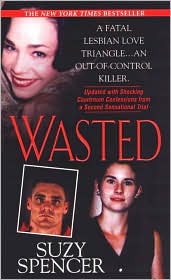
In 1995, Austin, Texas was rocked by the brutal murder of a lesbian princess named Regina Hartwell. Even though Regina's body was burned beyond recognition, within days police had two suspects. One was the beautiful ex-cheerleader who was the object of Regina's desire. The other was a man who would take the fall for murder. . . . In this new edition of her bestselling book "Wasted", true crime master Suzy Spencer chronicles a fatal love triangle—and lives driven out of control by sexual desire, drugs, and shocking childhood demons. Four years after Regina Hartwell's murder, a new charge was brought against one of her suspected killers. Now, Suzy Spencer adds a new chapter to "Wasted"—detailing a killer gone wild, a nerve wracking legal standoff, the shocking twists that would take place in a second, explosive trial. . . .

Long story short, Suzy did not dodge the trial. She flew to California, not in compliance with the prosecution's subpoena, but at the request of the defense. Her presence meant she would have been available for questioning by either side, though she might have refused to answer for the State. She did not end up testifying at all. Court was canceled that day—in part, Suzy explained, because Justin didn't want any witnesses testifying on his behalf for fear it would ruin his chance of receiving the death penalty.

In the end, Justin Thomas was convicted and sentenced to death. Without putting Suzy on the stand, the State opted to use a portion of the transcript from her taped interview, which was introduced in the punishment phase. As it turned out, Justin's own words netted him a death sentence.

After Suzy's legal battles with this book and with BREAKING POINT, on the Andrea Yates case, she considers the 10th anniversary edition of WASTED her "good-bye" to true crime. Her entry into true crime—hitting the New York Times best-seller list with her first book—was as unconventional as her exit. The "true crime master" has converted to sex book mistress, working on a memoir of sex in America for Berkley. Few would blame her for trading Draconian courtrooms for Hedonism resorts.

As for Justin Thomas, he is now #G11032 at San Quentin State Prison, home of Scott Peterson and Richard Ramirez. Like most prisoners of California's Death Row, Justin will probably die waiting to be executed (assuming the current moratorium is lifted). If so, his "death sentence" will have been converted into what he feared more: the rest of his life in prison, with little hope of his suffering cut short.

That statistics indicate Justin Thomas will not be executed at all should bring Suzy some measure of relief. But not enough to stay in true crime.