Tuesday, April 14, 2009

Can A Month Change The World?

by Diane Dimond

I’ve never been a joiner. As a child I lost myself in Nancy Drew mysteries and perfected my bubble blowing (left). I didn’t join the Girl Scouts or go out for cheerleader. I would never have considered joining the Math Club or commemorating Save the Earthworm Day. But as I’ve matured, I’ve come to realize that only when people band together around a specific cause or purpose do others become educated and aware. It’s only when passionate people form a movement that things truly change.

For example, it was the nationwide campaign highlighting the startling number of traffic deaths that got us to change our habits and wear seat belts. When a concerted campaign showed us the insides of our bodies and the harm done by cigarettes our national smoking rate began to plummet. And when drinking and driving, once tolerated and hardly punished, became the cause celeb of a group of women called Mothers Against Drunk Driving the rest of us began to change our thinking about this now taboo practice.
So, it’s with great fascination that I watch another group of women and their current campaign to change the way we view sex crimes and domestic abuse against women. Will their movement to stop the violence get traction?

Interestingly, their crusade revolves around something that happened thousands of miles across the ocean a decade ago.
A young woman in Italy took a driving lesson. Her 45 year-old instructor guided her to drive to a lonely country road. There, something terrible happened. She called it rape--he called it consensual. After he was convicted of rape his lawyers appealed all the way to Italy’s Supreme Court (which continues to express strange rulings about women and sex). In an astonishing turnaround, the justices ruled that since the 18 year old woman had been wearing “very tight jeans” it could not have been rape. She, they concluded, would have to have helped remove the jeans before any intimacies could occur.

When this true story made it to America, women’s groups here were outraged at the stupid notion that a woman wearing jeans cannot be raped. They began to discuss what they could do to show solidarity with the Italian woman and to educate people about sexual and domestic violence. In planting the seeds of their idea for a national campaign, they discussed different teaching tools they could employ. The jeans, they thought … the campaign had to revolve around those jeans!


Ten years later, the disciples of the movement have gotten the month of April declared “Sexual Abuse Awareness Month,” and during this month “Denim Day” will be marked in cities across the country. It’s a day during which all Americans are asked to wear jeans to work or school to spark a conver
sation about the problem.

If you think this movement has nothing to do with you, take a look at the bone-chilling government statistics on sexual assaults against both women and men. The FBI reports one in six women will be the victim of an attempted or completed rape in her lifetime. Imagine that - one in every six women! Most of the time it’s not the scary stranger who attacks, it is someone known to the victim. And the Centers For Disease Control reports 22% of victims are men. Your sons, daughters, brothers, sisters, nephews, nieces, and spouses are all at risk.

This month, Denim Day will be observed (on various dates) in states from Hawaii to Connecticut, from New York to California where April 22nd has been declared Denim Day. In Los Angeles the victim’s rights group Peace Over Violence is organizational ground zero, having inspired more than 250 thousand supporters to participate in last year’s event there. Nationwide, more than 600 thousand individuals and organizations signed up and this year organizers hope to double that figure. It’s beginning to look like a bona fide national movement.


Peace Over Violence Executive Director, Patti Giggans tells me, “Our goals are to support survivors, it’s never too late to heal … and to educate the public to prevent and end sexual violence.” Their slogan, which has now gone nationwide, is: “There is no excuse. There’s never an invitation to rape.”


But can a designated month and supporters wearing jeans really change human behavior? Can these groups attach enough shame to the act of sexual and domestic abuse to actually curb it? Are our children absorbing the lessons to never resort to physical assault? Are grownups that grew up with violence in the home suddenly able to turn on a dime and stop the ugly cycle? In a day and age where singing sensation Rihanna can be brutally pummeled by her boyfriend, Chris Brown, followed by teen age girls exclaiming, “Well she probably did something to make him mad,” I have my doubts.

Then again, I never thought I’d see the day when attitudes changed about seat belts and cigarettes.


Monday, April 13, 2009

Is Forensic Science Flawed: Experts or Faulty Testimony, What’s the Truth?

by Andrea Campbell

The National Academy of Sciences issued a major study on forensic science, “Strengthening Forensic Science in the United States: A Path Forward.” This congressionally mandated study, which began in 2007, caused discussion, denials, ruffled feathers and controversy that has yet to be quelled. An article by Solomon Moore for the New York Times said, “ The report says such analyses are often handled by poorly-trained technicians who then exaggerate the accuracy of their methods in court.

“People who have seen it say it is a sweeping critique of many forensic methods that the police and prosecutors rely on, including fingerprint, firearms identification and analysis of bite marks, blood spatter, hair and handwriting.”

The full congressionally mandated report, a 254-page document details a lot of territory, offering observations and recommendations about forensic science methodology and the way the industry conducts its business. It advocates a “massive overhaul” of the science tools behind criminal convictions.

Some of the report talks about the “
badly fragmented” state of the forensic science community and highlights these points:

That fingerprint science cannot guarantee that two analysts will obtain
the same results.

Matching methods for shoeprint and tire impressions lack statistical backing, making it “impossible to assess.”

In the absence of DNA, hair analyses show “no scientific support for the use of hair comparisons for individualization.”

That reviews of bullet match basics in regards to tool mark and firearms analysis show a scientific knowledge that is fairly limited.

Bite-mark matches display “no scientific studies to support assessment, and no large
population studies have been conducted.”

According to Katherine Ramsland, writing for
The New York Post, ‘Technically, forensic science is the application of scientific perspectives and methods to the investigative and legal process. However, it’s become an umbrella term that encompasses disciplines of skill rather than real science. More alarming are a serious backlog of work and a lack of resources to address the needs. If forensic science loses credibility, the situation will only get worse.” And there is the rub, defense attorneys will use it to challenge all sorts of situations and if you think there is a backlog in science, an examination of the courts may prove staggering at best.

A
2005 Justice Department survey reported there are 389 publicly funded crime labs nationwide handling approximately 2.7 million often-backlogged cases a year. The TV fallacy that cases are solved quickly and with next to no error are a slap in the viewing public’s face. The average armchair detective today is watching entertainment and real-life forensics never resembled ‘CSI” except perhaps in storylines that were ripped from the headlines.

So what does this mean for criminal justice? Is there a remedy and will the Justice Department, according to spokesman Matthew Miller, “…look forward to working with the law enforcement community and members of Congress to evaluate this report and consider how best to address its findings and recommendations.” Ah, more for the federal government to oversee—a pipe dream of hope, perhaps?

One suggestion has been to remove all public forensic laboratories and facilities from the administrative control of law enforcement agencies or prosecutors’ offices. Frankly to move their venue would not only cost an enormo
us amount, both financially and in loss of work productivity, but what good could come of a transition such as this? I don’t believe a change in venue is going to go a long way toward making personnel free of undue internal influence or bias. Science is and should be, based on testing, no matter where it’s performed.

I do think one criteria that would help to staunch the bleeding is to have standardization. A set of
uniform guidelines and criteria where every lab performs every procedure in the same way. That, and one suggestion made by the NAS that makes complete sense: the National Institute of Forensic Science should be empowered to uphold not only “best practice standards,” but that they set up mandatory certification and accreditation programs. So that crime labs can be independent of police departments and under the watchful eye of peer-reviewed research. So, as science editor, Kelly Pyrek, author of Forensic Science Under Siege, believes that forensic science will probably welcome NAS directives—but the question remains, will there be a commitment from lawmakers?

Next time we will look at the specific issues with the certain forensic science disciplines that were under question in the report.


Saturday, April 11, 2009

Criminal Profilers Don't Profile on TV

by Pat Brown

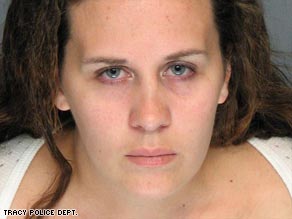
The Sandra Cantu case took a bizarre twist today with the arrest of a female suspect. A 26-year-old Sunday school teacher, Melissa Huckaby, (pictured left) has been charged with kidnapping and murder. I am more than glad there has been arrest in this case and that there will be some justice for the family of Sandra.

But, as I was reading comments posted about this morning's news story, I noticed quite a few haranguing criminal profilers and police experts who had appeared on television for theorizing the crime was committed by a male sex offender (A similar bashing occurred after some television talking heads (not me) said they thought that an angry white man was responsible for the string of shootings eventually linked to John Muhammad and Lee Malvo) This time, the posters are claiming the experts are sexist; always blaming men for violent crime and they also accuse profilers as profiling the crime incorrectly. Criminal profiling is said to be bunk, and talking heads are brainless morons.

Let me address the issue of being sexist first. Sorry, guys, but most violent offenders are men, and that is a fact. Yes, women do commit crime, and women do kill, but the majority of violent criminals are men. It is just biology-- get over it.

Now, to profiling the Cantu case wrongly.. No one on television profiled the Sandra Cantu case. Experts were asked questions about what they thought might be possible, based on publicly released information (and often this is misinformation). The experts responded with a 30-second answer--on a good day, maybe a whole minute. They addressed some probability based on what they heard five seconds ago from a reporter's update on the story. A good portion of the time, a talking head is unable to provide in-depth commentary, and so the viewing public only gets a quickly tossed out idea; a thought which can stir interest in the topic and add to the discussion, but can hardly be considered a scientifically derived, carefully analyzed explanation of the events.

The Sandra Cantu case is a perfect example of this. I did a lot of interviews this week for CNN. Not one time during the last seven days did I ever give a profile of the child's murder or a profile of the killer. How's that, you say? Didn't I hear you give an answer when the host asked you to profile the homicide or the offender? Yes, I gave an answer, but it wasn't a profile. It was commentary. A profile is something one spends hours working on, sometimes weeks, sometimes months. A profile require access to all the case files, all the crime scene and autopsy photos, all interviews and reports. One doesn't profile a case and hand over to law enforcement an analysis that isn't based on evidence and scientific methodology (well, one shouldn't anyway). The final criminal profile should have each inference explained carefully and supported by the facts. Investigative avenues are then suggested based on the conclusions the profiler has arrived at. The profile should never infer that investigators not pursue all leads-- even those not aligning with the profile. Any profiler's theory, like any detective's theory, can turn out to be wrong (which is why it is called a theory) because certain evidence was unavailable, a piece of evidence was tampered with, or because there could be two explanations for the same evidence. The profile is to be an aid, a tool, and not an absolute.

One cannot profile on television because one has such limited information, and a good portion of it often turns out to be untrue. Even when one is profiling a case for law enforcement, a new piece of information can completely change the theory of what occurred. So you can imagine how difficult it is on television to be one hundred percent correct with one's conclusions.

Here is what I said about the Sandra Cantu case:

The killer lived in the trailer park. I based this conclusion on the abduction, the body dump site, and the suitcase. Sandra was unlikely to have left the park on her own, so her killer had reason to be there. The body was dumped just down the road, meaning the panicked killer wanted to get rid of her body quickly, but didn't want to go to take too long to do it. The killer also wanted to be comfortable dumping the body in a familiar area. The killer did not abduct Sandra using his car because if she had been killed in the car or at some outside location, the killer wouldn't have needed a suitcase to transport her; he would have just opened the door and pushed her out.

The accused killer of Sandra did live in the park. Melissa Huckaby was living in a trailer with her grandparents, the pastor of a local church and his wife. Her daughter also lived in the trailer home and often played with Sandra. Sandra was not pulled into any car, but visited the Huckaby home. Melissa Huckaby was the last person to see her and told the police that Sandra had stopped by to ask to play with her daughter, but she had told Sandra her daughter had some chores to do and she couldn't play right then.

Next, I said the killer likely killed Sandra within an hour of her going missing. I based my statement on two points. The first one is a general truism: when a child is abducted by a sexual predator they are almost always killed within an hour or two and sometimes within minutes. The assumption by almost everyone at that point in the news cycle was that Sandra had been abducted by a child predator because almost all little girls who go missing are killed by serial killers. The other reason I believed Sandra was dead within a short period of time was because she was fully clothed. I surmised the killer might have lost control of Sandra for some reason and tried to subdued her or lost control of his emotions and was too rough with Sandra. Sandra might have been killed without a sexual assault ever happening.

I felt the offender was not all that experienced and did not plan the crime. The offender was sloppy and careless and it seemed like the dumping of the body was out of panic and not particularly well thought out. It seems Ms. Huckaby possibly went off on Sandra for some unknown reason at her home, killed her, and then hurriedly got rid of her body.

The last answer I gave on Friday night was concerning the suitcase Huckaby claims she had left outside in the driveway and which was stolen. During the interview I was led to believe that a report had been made to the police concerning the suitcase theft on the day Sandra went missing. This bit of misinformation prevented me from considering Huckaby as a suspect. If Huckaby had used the suitcase to dump Sandra's body, she would NOT have reported it missing to the police. She did not expect the suitcase to be found, and she would not want to draw attention to her home. Until she thought the suitcase could be linked to her, she had no need to mention it.

So, based on the "fact" the suitcase had been reported missing and was the suitcase Sandra was found in, I surmised three things. One, Sandra definitely was dead quickly on the day she went missing (because someone needed a suitcase THAT day); two, the killer did not plan the crime; and three, the killer was inexperienced and not all that bright. I said something to this effect on CNN Headlines: "He probably grabbed her, something went wrong, he killed her, and now he had a body in his house and no way to get it out without being seen. He remembers seeing a suitcase out by the Huckaby house and thinks, yeah, okay, I will grab that (and psychopaths often do things impulsively because they see something or think something will be useful to them or because they find stealing not a big deal). So he jumps in his car, snatches the suitcase, comes back, puts Sandra's body in it, and zips out of the park to get rid of her body.

Well, that probably would have been the scenario IF the story about the suitcase theft being reported had been true. The next morning, I learned that Huckaby had been arrested, and that she had not reported the suitcase missing, or even mentioned it, until after the suitcase was found and the police were ripping apart the Huckaby home. THEN she realized (if she is guilty of this crime) that she needed a good story as to why Sandra's body ended up in her suitcase, so she came up the suitcase theft story. Huckaby also gave a number of stories with conflicting information in police interviews, which no doubt made them focus on Huckaby as Sandra's killer.

So this crime turns out allegedly not to have been committed by a male nor a sex crime (that we know of). The case is an anomaly, much like the Elizabeth Smart kidnapping in Utah in 2002. The Smart case created a monster: families of missing children now believe their children will be found alive because Elizabeth Smart was. Proof that a child can be found alive after such a long time has created a huge amount of false hope and expenditure. And after she was found, television got raked over the coals for believing she was dead. An anomoly like Elizabeth may be wonderful for that particular victim and family and an anomly like the Sandra Cantu case may be fascinating and eyeopening, but we shouldn't base our law enforcement and criminal justice decisions on the extremely rare cases rather than the overwhelming number of cases to the contrary. Television commentators, while they realize anomolies exist, cannot add a disclaimer on each and every statement they make on air (considering the fact they already have such a short window of time to speak). Even a profiler doing true criminal profiling of cases using specific individual case evidence (and not just general statistics), will encounter the occasional case where all the evidence points to a male and not a female, or to a husband instead of a stranger, or to one race and not the other. And because of these anomolies, we have a court system that requires us to prove through evidence that the suspect is absolutely guilty. Even then, sometimes the anomolies slip through.

If Huckaby is convicted, Sandra Cantu will be the poster child for children getting kidnapped and murdered by women. Even if she is only one out of a thousand cases, every time a child is abducted in the future, we are going to be reminded it could be a woman "just as much" as it could be a man. No, this is not true; in almost every case in the future where a child is abducted by a unrelated adult, it will be a male. Sorry, guys. Women may drown their own children in bathtubs, dump them into ponds to run off with their boyfriends, smother baby after baby following their births, kill their patients at the hospital, and steal little babies just because they want one, but abducting little girls is just not something that is a popular female crime.

Finally, I repeat, profiling doesn't happen on television. Experts are just speculating based on the limited information thrown out, and commenting in the minuscule amount of time allotted. Comments are "for entertainment only" and are meant to educate and inspire the individual to want to learn more. Television is a sound bite world, and one should expect to get sound bite quality of information.

So why do I do television if I cannot really profile there and sometimes have to end up feeling like an idiot (and getting emails calling me such)? Because television, in spite of its flaws, is a great way to reach out to citizens. It is a wonderful tool for encouraging discussion about crime, sex offenders, safety, parenting, and, even though it is a bit risky, a way to show how criminals operate and cases are analyzed.

The Tracy PD did a fabulous job with this investigation. They got their man (oops...woman). They likely thought it was a male sex offender themselves in the beginning, but they focused on the evidence and when it led them to a different theory and a female suspect, they didn't ignore the facts. They changed their theory when new evidence came to light. They should be commended for their fine work.

Meanwhile, enjoy television for what it is: news and entertainment with a bit of education thrown in. But do not, I repeat, do not think you are being provided with true investigative and profiling analysis. Also, when you see me do my next television interview on the Sandra Cantu case, you will see me try to answer why I didn't "profile" the case correctly, and why I didn't consider the killer could be a female. I will try to explain it...in 30 seconds.


Cannon to the Wiz

by Donna Pendergast

Cannon to the Wiz. You are probably asking "What the heck is that?" A week ago I would have asked the same question. Today I know the unfortunate answer.

Cannon to the Wiz is a sophisticated
pickpocket and identity theft ring that travels around the country to various large events, often sporting events, to pickpocket and steal the identities of unsuspecting attendees. Based out of Chicago, this group is reputed to have up to 200 members. Smaller cells or teams from the larger group come into town for these well attended events with one intention, to rip people off by stealing their money, their credit cards and ultimately their identities.

I, unfortunately, was a victim of this ring last week. Those of you who read my post last Mon are familiar with my tale of woe. However, when I posted that article I had no idea what I was dealing with. Unfortunately I do now.


Flash back more than a week ago. The Michigan
State Police got a tip that Cannon to the Wiz was headed to Michigan to work the Final Four basketball game. The Michigan State Police put out an advisory to the public. Unfortunately, I never saw that advisory or I might not have even taken my purse downtown.

Before the Final Four games an individual was arrested just outside of Ford Field after someone summoned a nearby police officer pointing out an individual who had tried to take a wallet. As I lamented in my last post, I discovered my wallet gone once inside Ford Field on that same night. I still do not know exactly when my wallet was taken but I believe that my initial suspicions were wrong based on what I now know.

On Sunday, after the fact, I found out about the advisory issued by the Michigan State Police. I also read a little bit about the group that was in town, but I was still not convinced that it was related to my case.

On Monday I learned just how good these guys (and girls) are. I knew that they were good enough to get my wallet out of my purse. However, I didn't realize how sophisticated of a level that they were operating on. When I wrote my blog I still wasn't sure who was responsible for the theft of my wallet, I just knew that it had been taken right from my purse which had never left my shoulder.

Monday started out with me sending a copy of my blog to a friend who is a Lieutenant in the Michigan State Police because I had seen his name in the paper as being involved with the investigation. I wanted him to know that my wallet had been stolen just in case it was related to the ring that he was investigating.

Monday night before the Championship game, an astute store clerk at
Somerset Mall in suburban Detroit became suspicious of some individuals who were viewing diamond watches. These individuals fled with mall security in pursuit and shortly thereafter their car was pulled over by police in Royal Oak Michigan.

Inside the car police found three males and one female. Also in the car was a scanner, a computer with templates for identification from several different states and 43 credit card gift cards. The four individuals in the car were arrested. A search warant of their hotel room revealed much of the same. Computers, gift cards, you get the idea.

These individuals apparently have this down to a science. They get back to their car with your license and are able to generate a new license with your information and their picture instantly. How scary is that?

The credit card gift cards in the car and hotel were also of interest to me. My debit card was used to purchase the same thing at Walgreens the day before. I'm not suggesting that they were the same gift cards that were purchased with my debit card only that it was the same
Modus Operandi.

Later that same night the Michigan State Police viewed the footage from the transaction where my debit was used at Walgreens but it was unclear at that point whether that transaction was related to the ring. It was only several days later when they viewed the footage of a fraudulent transaction at Target that was related to the ring that they realized that it was the same individuals who had used my debit at Walgreens.

I'm glad that the individuals responsible for the theft of my wallet have been apprehended. However, it sends cold chills up my spine to know that they were members of a sophisticated identity theft ring. I guess that I will be looking over my shoulder for a long time to make sure that they don't wreak further havoc with my life.

One week ago today I woke up filled with anticipation over the big game. One week later I hope the worst is over. After beginning the week as a crime victim and ending it with a bout of the stomach flu I'm glad this week is done.

On a final note, a big THANK YOU to the Michigan State Police for a fantastic piece of police work. Without them having been all over this group from the time that they were warned that they were coming to town, the result would have probably been different. Once again, amazing police work that shut down a frightning ring, at least this time.

Statements made in this post are my own and are not intended to reflect the views, opinions or position of the Michigan Attorney General or the Michigan Department of Attorney General


Friday, April 10, 2009

A Community Responds the Way it Should

by Pat Brown

It might seem impossible to see any silver lining in the horrific abduction and murder of little eight-year-old Sandra Cantu, but I am actually ecstatic over one issue related to this case: family, community, and police response.

For once, we don't see a muted, shrug-shoulders, "stuff happens" reaction from anyone. I have been in this business for over a decade and I have been forever frustrated with the general acceptance of heinous crimes as passing sad events that we just have to accept. The answer is "WE DON'T!"

In 1998, biologist Christine Mirzayan was raped and murdered on a path near Georgetown University where Mirzayan was returning after a barbecue with friends. At the time, only a paragraph about her murder made the newspapers and no one at the university or the community made much of a ruckus about this crime. If you Google her name now, you will see a few articles, but only because reporters were criticizing the Chandra Levy case and her name was brought up because it was another unsolved murder of an intern. Of course, she had no family in the area and she was somewhat blamed for walking in the dark. I guess those are good reasons to ignore the fact innocent women are getting killed and a serial killer is on the loose.

Fourteen-year-old Nia Owens had a similar fate in 1996 (you won't find a picture of her on the Internet). She was strangled and left in some bushes near her school. She got two or three small stories. Perhaps the lack of concern had something to do with her being African-American and making the mistake of playing around with phone dating. But there still remained a serial killer in town.

Just a few miles down the road in Greenbelt, Maryland in 1995, seventeen-year-old Julie Ferguson (no picture around of her either), a very popular girl at the local high school, was abducted and found on the side of the road with her throat cut. She got a few more stories because she was white, local, and very pretty. Still, I don't remember citizens swarming about in protest of such a horrible crime in our community. Unsolved, a killer remained at large.

But, finally, we see the appropriate response to Sandra Cantu's murder. The community is furious. They are keeping the pressure up to find her killer. They are calling for "the monster" to be caught. Law enforcement has worked around the clock putting all the manpower they can into the investigation. They have put up roadblocks and checked cars and gotten search warrant after search warrant in an attempt to prevent Sandra's killer from getting away with his crime.

Finally, the mother of Sandra appeared on the Today Show (sitting on the right), and, for once, instead of the viewers seeing a parent struggling to stay composed and speaking calmly, a national audience got to see the depth of devastation the family experiences when their loved one is brutally murdered. Maria Chavez could get no more than a few words out as she choked up and hyperventilated. Her grief was so overwhelming that she gave the best interview I have ever seen; she couldn't put on an act, and just sat there unable to speak. I cried watching her and I am sure other viewers did as well. Ms. Chavez made people aware, even if unintentionally, of just how much damage these monsters in our society are doing.

I would like to see every community, family member, and police force go berserk when such murders are committed. I would like every jury to lose all sympathy for these son-of-bitches and give them the full punishment the law will allow (preferably the death penalty). These creatures deserve no sympathy, no breaks, no life. The killer gave Sandra Cantu, a totally innocent child, the death penalty without any trial or lawyer. He gave the family life in prison. He deserves the same response from us.


Thursday, April 9, 2009

Three Arrested in Death of Anna Nicole Smith

by Donna Weaver

With little fanfare, an important development in the Anna Nicole Smith saga occurred last month.

Anna Nicole Smith's lawyer and former lover Howard K. Stern, 40, and doctors Sandeep Kapoor, 40, and Khristine Eroshevich, 61, are free on bail after being arrested and charged with giving her the prescription drugs that led to her death. Smith, 39, was found dead in her hotel room at the Hard Rock Cafe in Seminole, Fl on February 8, 2007.

Under Florida law, Stern, Kapoor, and Eroshevich can be charged at least with manslaughter by culpable negligence, and at most, first-degree homicide for illegally providing Smith with the drugs that ultimately killed her.

Two years ago, the psychiatrist who treated Anna Nicole Smith, Dr Khristine Eroshevich, was under investigation by California authorities. At that time, California medical board spokesperson, Candis Cohen, confirmed that Dr Eroshevich was being investigated in connection with Smith’s death, but declined to provide further details.

As I read through the medical examiner's reports and timeline of events, I noticed some disturbing findings regarding the actions of Dr Eroshevich, and others, contained in documents released by the Broward County Medical Examiner’s Office. These findings raise questions that require answers.

The investigative report by Broward County Chief Medical Examiner, Dr. Joshua Perper contains a timeline of events beginning with the arrival of Smith and her companions, which included Dr Khristine Eroshevich, in Florida.

"…At 8:30 pm the party checked in at the Hard Rock Hotel in Hollywood. Maurice Brighthaupt, a friendand former body guard met them at the hotel. Anna’s temperature was taken by Dr. Khristine Eroshevich and was 105 degrees. Anna was told to have 911 call for transport to the hospital, but she categorically refused. She was given an ice bath and her temperature dropped to 97 degrees. She was given Tamiflu as well as 1000 mg of Ciprofloxacin with water. Chloral Hydrate was added for sleep. She fell asleep around 10 pm”

After Dr Eroshevich discovered Anna Nicole had a fever of 105, she told her “to have 911 call for transport to the hospital, but she categorically refused” Why did she ask an extremely ill patient with a dangerously high body temperature if she wanted to call 911? Then Dr Eroshevich proceeds to treat her for the fever and infection and give her a drug for sleep that is “a DEA Schedule IV controlled substance that is infrequently prescribed as a hypnotic agent which may cause respiratory and central nervous system depression, coma, convulsions, cardiac arrhythmias and death.

“3. Tuesday, February 6, 2007Anna Nicole Smith did not urinate and had a “pungent” odor and temperature of 100 degrees. She was at time depressed but she was able to watch television and appeared overall okay. She was given a bath and various fluids including pedialyte, chamomile tea and Fiji water. She felt well in the afternoon after a bath and was given chloral hydrate for sleep. She slept about two hours, then she watched television until 11 pm. She took another dose of chloral hydrate and asked for Soma, Klonopin, Valium, Topamax (unknown if she took these medicines).”

Anna Nicole still has a fever and is now presumably severely dehydrated evidenced by a lack of urination. Dr Eroshevich gives Anna Nicole fluids, a bath, and more chloral hydrate. Furthermore, autopsy test results show that Soma, Klonopin, Valium, and Topamax, were 4 of the 7 prescription drugs (plus 2 over-the-counter drugs for a total of 9), which included chloral hydrate, found in Anna Nicole’s system. It may be “unknown” if she took those medications at that time on February 6th, but she did take them in the days prior to her death.

“4. Wednesday, February 7, 2007Anna stayed awake in bed, watching television around 11 am. She was feeling better and ate breakfast/lunch (omelet of egg white and spinach). In the afternoon she was observed naked and sitting confused in a dry bathtub. She subsequently took a bath. In the evening she ordered 2 crab cakes and shrimp for dinner. Dr. Eroshevich left in the evening for California. Anna was upset and depressed over her friend’s departure. Maurice (“Big Mo”) Brighthaupt returned after Dr. Eroshevich left. Anna was still complaining of not feeling well. She was in the bathtub when Maurice Brighthaupt left for several hours returning between 8-10 pm. Anna was seen on the couch and Howard K. Stern was present but in the bedroom. Maurice went to sleep in the guest room and awakened around 4 am. When he checked the couch, Anna was no longer there and he assumed she had gone to sleep in her room.”

Soon after the still ill Anna is “observed naked and sitting confused in a dry bathtub”, no doubt due to a drug induced stupor, Dr Eroshevich leaves her with the 7 drugs that she has prescribed for Anna Nicole under false names and no medical supervision, then proceeds on her merry way back to California.

If this is how Dr Eroshevich “treats” her friends, who needs enemies.

The rest of Anna Nicole’s companions aren’t much better.

"5. Thursday, February 8, 2007Maurice woke up around 9 am. Around 9:30 am he went to Anna’s room and thought he saw her moving but was not certain. He told Howard he was going to have breakfast with his wife, Tasma. Mr. Stern awoke between 9-10 am and helped Anna to the bathroom. He then watched television in another room until King Eric called to inform him of his arrival at the airport. Mr. Stern then called Maurice to instruct him to pick up the guests (King Eric, his common-law wife, and another man). Upon the arrival of King Eric and his party at the hotel at around 12 pm, Mr. Stern called out to Anna who was still in bed to arouse her. One of the guests then urged him not to wake her so he did not call her again.”

Stern “called out to Anna who was still in bed to arouse her.” The least he could have done was actually enter the bedroom to check on her.

“Shortly after 12 pm, Maurice, Mr. Stern, King Eric, and the other male visitor left the room at the Hard Rock Hotel. Maurice left to take care of personal business and Mr. Stern, King Eric, and the other male guest left at the same time to pick up the boat. Maurice asked Tasma, his wife who is a registered nurse, to stay with Anna. She worked on the computer in Anna’s room while Anna remained in bed under the covers. King Eric’s common-law wife remained in an adjoining room. At about 1 pm Tasma Brighthaupt was on the phone with her husband, Maurice Brighthaupt. The boat captain’s wife, who had been in the guest room, came into Anna Nicole’s room because she thought Tasma was talking to Anna Nicole. When the captain’s wife realized Tasma was not talking to Anna Nicole, she went around Miss Smith’s bed and took a look at her. She then told Tasma to come take a look at Anna because she didn’t like the way Anna Nicole looks. Tasma hang up with Maurice and came around the bed. She saw Anna’s face slumped downward on her chest, her mouth open and without breathing sounds. Tasma Brighthaupt initiated CPR after calling her husband Maurice. She alternated mouth to mouth breathing with chest compressions, checking for a pulse until Maurice arrived.

1:38 pm Maurice returns to the Hard Rock Hotel and he took over resuscitation.

1:40 pm Seminole Emergency Medical Service was called.1:43 pm First patrol unit arrived to room 607.

1:46 pm Seminole paramedics arrived. CPR was continued.

2:43 pm Anna Nicole Smith arrived at Hollywood Memorial Hospital.

2:49 pm Anna Nicole Smith is pronounced dead and the Medical Examiner’s Office is notified.

4:15 pm Associate Medical Examiner, Dr. Gertrude Juste responds to scene of death pronouncement at the Hollywood Memorial Hospital.

4:59 pm Anna Nicole Smith’s body arrived at the Medical Examiner’s Office and is logged in.”

At about 1 pm, Mrs. Brighthaupt, who is a registered nurse, calls her husband before starting CPR, and does not call 911. The “Scene Report - Seminole Hard Rock Café” by Associate Medical Examiner Gertrude M. Juste, M.D. states information was initially provided by Seminole Detective Marian Bryant that Tasma Brighthaupt noticed something wrong with Smith at around 12:30 p.m. Maurice Brighthaupt arrives approximately 38 minutes later, and then 911 is called.

Dr. Perper’s final summary conclusions:

“D. HOW THE INCIDENT OCCURRED:

INGESTED EXCESSIVE AMOUNTS OF CHLORAL HYDRATE IN COMBINATION WITH THERAPEUTIC LEVELS OF OTHER MEDICATIONS.

E. PROBABLE TERMINAL MECHANISM:

RESPIRATORY DEPRESSION”

The report also states, “Chloral Hydrate was the most significant drug implicated in this fatality, however several other prescription medications also played a role in this death.7-10 Although the remaining pharmacologic agents were at therapeutic levels, each of these drugs is known to interact with chloral hydrate resulting in an increased risk of overdose.”

No matter what you think of Anna Nicole Smith and her behavior, in the eyes of the law, Anna Nicole’s life is no less valuable than anyone else’s is. Yes, Anna Nicole was an admitted abuser of prescription drugs, and this contributed to her death. However, this does not relieve Drs. Eroshevich and Kapoor of their responsibility for prescribing the potentially lethal combination of medications, or Howard K. Stern from giving them to the severely ill woman. Would Smith still be alive if 911 were called sooner so that she could receive proper emergency medical care? We will most likely never know, but the fact remains it was at the very least irresponsible, and at most, criminal, that help was not summoned sooner.


Wednesday, April 8, 2009

The Death Penalty - Revisited

by Katherine Scardino

Every once in a while, I do some serious thinking - not often, mind you, and even when I do, it is not some subject that all of you would find interesting.

Lately, in my work as a criminal defense attorney, I have had the opportunity to review the opinions of about 200 people on various subjects, but specifically, on their thoughts about the death penalty. It always gives me pause when I hear that people seriously believe the death penalty is a deterrent to crime in their area and therefore is a valid reason to kill a fellow human being. The only valid, real deterrence is to the person killed. He will no longer be a threat to you, me or anyone in our society. That is not a bad thing. However, if we are going to support a policy as serious as taking a person’s life because he or she took another person’s life, then we should be frank with ourselves.

There are generally two reasons why people support the death penalty. The first, for revenge. Think about the Casey Anthony case. This is the case in Florida where the young mother is in jail awaiting trial for her baby daughter’s brutal, cruel murder. She was photographed dancing and partying during the period of time her baby was missing, that is, before the authorities found her little decaying body in a local woodsy area. Now, I am certainly not saying that we should believe that she is guilty prior to her trial. But, if - and that is a big “IF” - she is found guilty, it would be hard not to think that she deserves to die. Then again, there has to be something inherently wrong with her. I am not a mental health expert and have no clue what it is, but I can assure you that she is not a normal young mother who was concerned about the safety of her child. She has a warped screw somewhere. I presume her mitigation specialist and mental health expert will find it. Maybe the jury will hear about it and find that she was/is incompetent/insane or will find some other reason to lessen her culpability. But, the point is, her case is a prime example of a “revenge” killing by the State.

Another reason why people support the death penalty is that they believe having this a law in their state deters deranged people who may be bent on committing heinous crimes. Think of Ted Bundy and other serial killers we have had roaming around among us in the United States. We certainly do not want those people out and about, possibly threatening our lives and the lives of our loved ones. The death penalty will certainly deter people who get a kick out of killing other people, right? Wrong.

There have been several studies about the effects of the death penalty on crime in the United States, some of which claim that the death penalty does have a deterrent effect. There have also been several academic critiques of this research.

Dr. Jeffrey Fagan of Columbia University describes numerous serious errors in the recent deterrence studies, including improper statistical analysis as well as missing data and variables that are necessary to give a full picture of the criminal justice system. He claims that evidence which shows that executions can exert a deterrent effect are flawed and unreliable.

Stanford Law Review published an article that examined deterrence studies. The article stated “aggregating over all of our estimates, it is entirely unclear even whether the preponderance of evidence suggests that the death penalty causes more or less murder” (58 Stanford Law Review 791 (2005)).

While doing some Google research, I found a lengthy study that showed the average murder rate per 100,000 people living in states that had the death penalty was 5.5 %, while the average murder rate of states without the death penalty was 3.1%. To summarize, in reality it does not appear that having the death penalty will make us safer as a society. People who are prone to commit crimes will not avoid committing those crimes just because the state where they live has the death penalty.

Why do we have the death penalty? Why do we say it is “fair” and “just” that we kill another person because that person killed someone else. How do we reason that it is the right thing to do? My answer is revenge. It is the only honest response to this question. We kill to avenge the unwarranted, senseless killing of another person in our community.

But, is that enough? Will that pass muster in our minds if we all were to start having some serious thoughts about this issue? Personally, my answer is “no”. However, I also know that some of you will quote the Bible - “an eye for an eye”. Isn’t that simple revenge? I doubt it.


Monday, April 6, 2009

Yes, It Could Happen to You

by Donna Pendergast

I was not planning to write this article today. In fact, I never planned to write this article at all. I had a post waiting to go, sitting in the queue all ready for today, but the events of the past two days have caused me to preempt it and write this piece instead. I think that this "public service announcement" is more important than what I intended to post originally. I will tweak the other post for a future date.

Flash back 48 hours ago to Friday night when I arrived home around midnight to find an e-mail message from an old friend who lives in New York. He is a Vice President for the NFL and was in town for the
Final Four basketball game. He had an extra ticket and wondered if I was interested in attending the next day's game. Hmmmm . . . yeah, right, like I had to think about it.

Saturday comes around and it is a beautiful day. I arrive in downtown Detroit, pay an outrageous amount for parking and trot over to the Irish bar where we had decided to meet. So far, so good—no, so far, so great. I was happy. I get to see my old friend, downtown Detroit is awash in a sea of green and white, and there is excitement in the air. Such a great day for a basketball game especially when the home team is in the Final Four.

Within a few hours everything would change.

My buddy and I arrived at the
Ford Field before the start of the game. You could feel the excitement in the air. I too was excited right up to the time that I went to the restroom and realized that my wallet was gone. My credit cards, my license, my debit card, $150 cash, you name it, it's gone.

In my initial panic I think that my car keys are gone as well but then realize that they are with the parking valet, thank God for small miracles. OK, at least even if they have my home address, they don't have my keys as well. I can get home and I can get in the house. The
Southfield police also reassure me that they will keep an eye on the house just to make sure that everything looks alright.

That's where my good luck ended, but I will get to that in a minute.

Needless to say the experience put a damper on the evening. Yes, my hometown team,
Michigan State, won their game but all that I could think about was my wallet and whose hands it might be in—always the prosecutor, I guess. However, I stayed to watch the first game and was even excited by the result despite my apprehension.

Increasingly anxious, I decided to go home after the first game ended. I got home, got in, and reassured myself that someone would take the money, dump the wallet, and go on their merry way.

I was wrong.

I spent Sunday morning cancelling credit cards. While I was on the phone with one company, my credit union monitoring agency called to ask if I has just spent $900 at Walgreens in Livonia, Michigan. Of course, I had not. Remember, I can't leave the house because I have no money, no debit card, and no license to drive.

As it turns out, nearly $1200 had been charged to my debit card before they were able to shut it down. That being said, I have been told that the credit union will refund that amount. I'm on the hook for $50.00 at the most and will probably not even be charged that amount. Once again, thank God for small miracles.

Being a prosecutor for 22 years, one would think that I am the last person who would be victimized. I know how things go down, I've seen it all before. Quite frankly, for the most part, to say that that being a prosecutor has made me a more cautious person is an understatement at best. But guess what? Even I am not immune to fraud and deception as knowledgeable as I consider myself to be.

I'm pretty sure in hindsight that I know when the wallet was actually lifted. As soon as I got into the bar a guy sidled up to where my friend and I were standing at the bar claiming that he was a small percentage part-owner of the bar and wanting to make small talk. My friend and I laughed at him, but he was harmless right? Not so right. The bar was mobbed, he continued to hover and at one point he made his way to the other side of me, the right shoulder side where I carry my purse.

I had a hobo purse with no top flap (you see where this is going, I trust). At some point another guy approached (an accomplice I'm sure), coming up to the bar to say that I had beautiful eyes. My friend an I were laughing but as it turns out we were probably being silently laughed at that very second. I am completely convinced that at that moment as my attention was being distracted my wallet was being lifted from the hobo purse.

It all seems weird in hindsight, but remember this was a happy crowd and everybody was high fiving each other and talking to everybody around them. What a perfect place to commit a crime.

And guess what? Someone knew in advance that these type of venues are a fertile haven for unsuspecting victims. The local news warned about pickpockets at the Final Four just the other night. I only half paid attention because I didn't anticipate being downtown and even if I was, I'm a prosecutor, so no one would dare touch me—right? I guess not so right.

Listen people, if it can happen to me it can happen to you. This is your wake up call.

I have taken the day off today and will be running from venue to venue. First, the credit union to get money so I can go to the
Secretary of State's Office for a new license and registration. That's only the beginning—the list goes on. More frightening is the ever-present shadow of identity theft that will now loom large for a long time to come. I am taking all of the appropriate precautions but I just want to cry.

I think these guys were out-of-town professionals because one of the early debit charges was a Hertz rental car. But I'm not quite sure because the other small charges that were incurred before the big charge (which prompted my monitoring company to call) were for $25 dollars at Bed Bath and Beyond and and a small charge at a local restaurant. My credit union monitoring company did tell me that often times a few small charges are made to test the waters before they go in for the "big bang." As the monitoring company told me, I'm lucky that the "big bang" was only $900 before we got them shut down. I'm sure that the next charge would have been for substantially more.

Be aware, readers, this can happen to you too. Once again, I could just cry—in fact I'm sure I will when I get to bed.

Statements made in this post are my own and are not intended to reflect the views, opinion, or position of the Michigan Attorney General or the Michigan Department of Attorney General.


Friday, April 3, 2009

Killer Books

by Caitlin Rother

I write about
murder cases day in and day out, and I’m often asked how I keep balance in my life. Readers and friends wonder how I sleep at night. Do I have nightmares? The answer is that I work very hard to relieve stress through exercise and other relaxation techniques—including watching romantic comedies and legal and medical dramas, although I can’t help but watch the occasional crime show as well. They seem to be on 24-7.

But the bottom line is that I am fascinated, not terrified, by these cases. I think many other people are, too, or true crime books wouldn’t sell, and we wouldn’t see so many of these TV shows. It’s just that most people don’t like to admit they like true crime, so they try to hide it as their dirty little secret.

Well, I admit it. It’s a matter of life and death, something we can all relate to, although, thankfully, few of us meet such a tragic end. I think we can all learn from these cases, many of which, as far as I can tell, seem to stem from bad parenting, abuse, and a lack of good role models. Drugs and alcohol often play a role as well.

I was a psychology major at UC Berkeley, and have always been curious to learn how murderers’ minds work. For the same reason I became an investigative reporter, I also love following along as I watch the details of a murder investigation unfold. I’m curious to learn how the killers carried out their plans and how they tripped up so that the investigating detectives could catch them. Watching a good detective at work can be educational as well.

My heart always goes out to the victims and their families, and often, to the killer’s family as well. They’re all losing a loved one, either to death or to prison. So, it’s not that I lack sympathy or empathy—by nature, I’m quite the opposite. But to do this job and to do it well, I have to compartmentalize and neutralize in my mind the actual details of the killing and what the victims must have felt in their last hours, just as any prosecutor, defense attorney, or police officer must have to. That is, until I put it on the page.

Until then, I focus on investigating the back story of the killers, trying to determine what, if anything, happened in their childhood and what in their genetic makeup may have contributed to this violent behavior. That’s because my ultimate goal with these books is to answer the primary question that I believe readers have, the reason they read these books in the first place: What made them commit such a horrible act?

Answering that turns me into an investigator in my own right, so it’s all circular.

Often, the biggest challenge to me is how best to reveal the story behind each case to readers, slowly and in great detail, building suspense and educating them about our justice system and the complex human condition along the way. I do this by using fiction techniques to write non-fiction, an approach I first learned when I worked for The San Diego Union-Tribune. Gradually, as my editors kept wanting shorter and shorter stories, I turned to books so that I could continue to grow as a writer and as a journalist.

So, here I am today, doing it full-time and teaching my students at the University of California San Diego Extension how much fun it is.

For those of you who are interested, here’s a quick run-down of my books:

My first was
Poisoned Love, the true story of the Kristin Rossum murder case, now in its sixth printing and the subject of at least five TV documentary crime shows. Rossum was a pretty toxicologist for the San Diego County Medical Examiner's Office, who was having three relationships: one with her husband, one with her married boss, and one with methamphetamine, which ultimately won out. High on meth, Rossum poisoned her husband with a lethal dose of fentanyl, an extremely potent narcotic painkiller that she stole from work. She then sprinkled red rose petals over his body and claimed that he committed suicide because he was depressed that she was leaving him.

Naked Addiction, a thriller about sex, drugs and murder set into San Diego beach communities, was my second book. Police detective Ken Goode investigates a series of murders of young beauty school students while faced with his own demons, a troubled but flirtatious witness, and a sister who goes missing. The publishing world isn't easy to break into—it took me 17 years to get this novel published.

Twisted Triangle, released in trade paperback in April, gives a whole new meaning to the term “good cop—bad cop.” This book provides a crazy but factual account of a kidnapping, attempted murder, and lesbian love triangle involving two married FBI agents—Margo and Gene Bennett—and a famous novelist, Patricia Cornwell.

My latest book, Body Parts, takes a psychological look at the life of serial killer Wayne Adam Ford, who killed four women, dismembered two of them, then did the rare deed of turning himself in to authorities to keep from killing again. He also confessed to detectives for several days straight without an attorney, helping to identify his victims.

Where Hope Begins, which I co-authored with TV reporter Alysia Sofios, will be released in September. Sofios risked her entire career by helping several surviving female members of the Marcus Wesson family to recover from a cult-like life of polygamy, incest, abuse, and the murder of nine children. Wesson is on Death Row along with Ford.

I’m currently working on my fifth nonfiction book, about the murder of Jackie and Tom Jackie Hawks, who were tied to an anchor and thrown over the side of their yacht off Newport Beach by a clan of outlaws led by Jennifer and Skylar Deleon.

To learn more about me and my books, or to contact me directly with questions or comments, please check my Web site.

Caitlin Rother is the author of four books and has just finished co-authoring her fifth. A Pulitzer Prize nominee, Rother worked for nearly two decades as an investigative reporter for daily newspapers, and has made numerous TV and radio appearances. She speaks to professional groups and teaches journalism and creative writing.


Thursday, April 2, 2009

Clear and Present Danger

by Susan Murphy Milano

Like most of us I am deeply disturbed by the escalating number of parents murdering their own families. This past weekend was no exception as police discovered 9-year-old Duncan Connolly (left) and 7-year-old Jack Connolly (right) were found murdered in rural Putnam County, IL. Their father was found dead not far from where his car was left. According to police sources, the boys' father had a rope around his neck when he was found.

The discovery brought to a close a
national three-week search for the man and the boys, precipitated by Michael Connolly's abduction of his sons following a weekend visitation.

The last time Amy saw her two boys alive, something was not right. Connolly was acting strange when they met at the police station. Amy refused to hand over her boys on March 7th, an officer threatened her if she didn't give them to their father, she would be arrested according to her lawyer.


Amy Leichtenberg filed orders of protection against Michael Connolly more than once after his repeated physical and emotional abuse in the later years of their marriage. Amy filed for divorce that year and moved out of their home. In a 2006, a petition for a protective order against her husband was filed, saying that his "controlling and obsessive behavior" included threats to kill himself and others along with a series of bizarre demands he made of her. Within a 15-month period, Connolly violated the orders of protection 57 times.


In 2007, Amy was awarded full custody of the boys with Connolly given supervised visitation. According to court reports from the family visitation center, Connolly's behavior was dangerous enough to temporarily cease all visits with the boys. In my experience, when a family visitation center terminates interaction between parent and child, it sends a red flag of danger. Connolly, the ever witty and clever abuser, was able to resume visits when his psychiatrist sent a "sympathy letter" to the judge "if my client is able to spend more time with his sons, Mr. Connolly's depression and outbursts would lessen."

The judge responded by setting a series of "behavioral guidelines." This included obtaining employment, housing and continued therapy.

"(He) tells me if I ever take the boys away he will hunt me and my parents down and cut us open," Amy Leichtenberg, then known as
Amy Connolly, stated in the 2006 petition seeking an order of protection. Amy said during their marriage Connolly had tried to isolate her from her family. A common characteristic among abusers.

Despite the 57 violations of the protection orders, dangerous behavior and deadly threats, McLean County
Judge James Souk "rewarded" Connolly unsupervised visitation with his sons.

Connolly filed numerous motions with the court, basically wearing the judge down. Despite pleas from Amy and her lawyer, which were ignored. This
mother’s plea for supervised visitation was dismissed without regard to serious safety concerns.

There is an automatic presumption that it is in the best interest of a child “regardless of court orders”, prior violence or threats, to maintain visitation with both parents. Victims of domestic violence face a double edged sword. Either expose their children to imminent danger, or defy the court system refusing to allow visitation. Like so many others before her, Amy tried to deal with a violent relationship in a family court environment.

In family court the two parties are presumed to be on a level playing field--law abiding individuals who have a disagreement over a private family matter. A core assumption of family law is that family disputes are not criminal disputes. As such, there are few
safeguards built into the family court system to protect against the criminal dynamics that dominate family disputes in cases of family violence. In addition, the accusations the victim makes in family court, no matter how serious, carry no more authority than one person's say so. One of the most serious consequences is that when a family violence victim opens a case in family court against her abuser, the abuser is given equal opportunity to fight back against the victim's accusations, often because the abusers past is not an issue. Unless, of course, he is brought in from county or state prison sporting an orange jump suit and leg shackles.

There are lawyers and
men’s groups who argue using domestic violence with a broad brush is not a reason to deny fathers visitation with their children. Accusing mothers of lying or making up stories to keep fathers’ from their children.

Under the current laws, a parent without custody is entitled "reasonable visitation." There is a high burden of proof as evidenced in this case when a court refuses to take into account dangerous abusers pose to their children.

Until we place the issue of labeling these cases as a "private matter" or an isolated incident, expect the death toll among children to rise. Expect the courts to continue to ignore clear and present danger signs when a victim of violence seeks a divorce.